Demographics
Region: Pilbara
LGA: East Pilbara
Industry: Mining
Other Names: Bamboo, Eight Mile Creek, Jarmans, Kitty’s Gap
Latitude / Longtitude: -20.93704, 120.21957
What3Words: ///identity.respectively.defectors
Settled: 1892
Gazetted: 1895
Abandoned: 1962
Abstract
This article explores the rise and eventual transition of Bamboo Creek, a significant gold-mining community located in the northern Gregory Ranges of Western Australia’s Pilbara region. Settled in the early 1890s, Bamboo Creek predates the discovery of gold at Marble Bar and serves as a poignant example of the boom-and-bust cycles that defined the era. The narrative focuses primarily on the community’s formative years, detailing the environmental challenges of extreme heat and seasonal flooding, the economic reliance on pioneering gold batteries, and the social structures that emerged, including the short-lived Bamboo Road District.
Key historical figures are highlighted, from the Byass brothers, who installed what is believed to be Western Australia’s first private battery, to individual prospectors and community members whose lives and tragic deaths are recorded in local lore and cemetery records. The article examines the impact of isolation on the town’s development, specifically the logistical difficulties of transporting heavy machinery from the port at Condon over treacherous terrain. By weaving together legal records from the Warden’s Court, administrative milestones, and personal anecdotes of the “stayers” who built the town, this history provides a comprehensive genealogical and social record of a community that was once the “pride of place” in the North West.
History
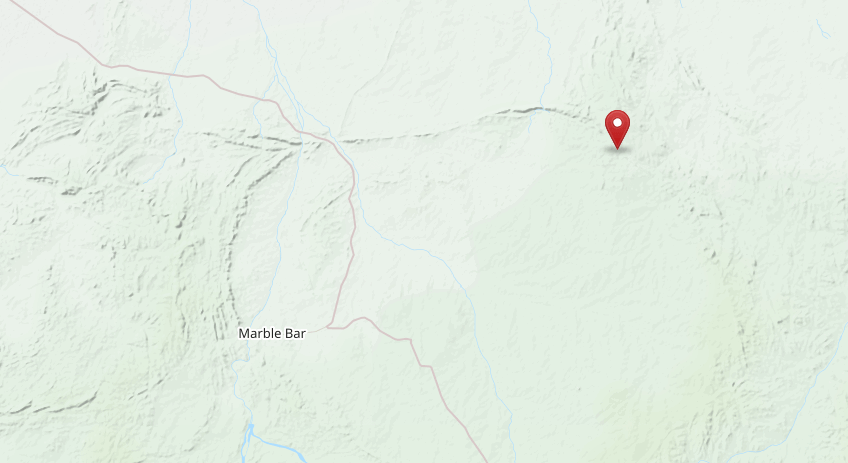
Deep within the northern Gregory Ranges, approximately 50 kilometres north-east of Marble Bar, lies the remains of a community that once served as the beating heart of the Pilbara’s gold industry. Bamboo Creek, named for the resilient vegetation that lines its watercourses, was a town born of sweat, grit, and the irresistible lure of “the yellow”. While it may now exist largely as a collection of mining relics and memory, its early history reveals a vibrant, albeit perilous, chapter of Western Australian settlement.2 3 4
Discovery and Early Rushes
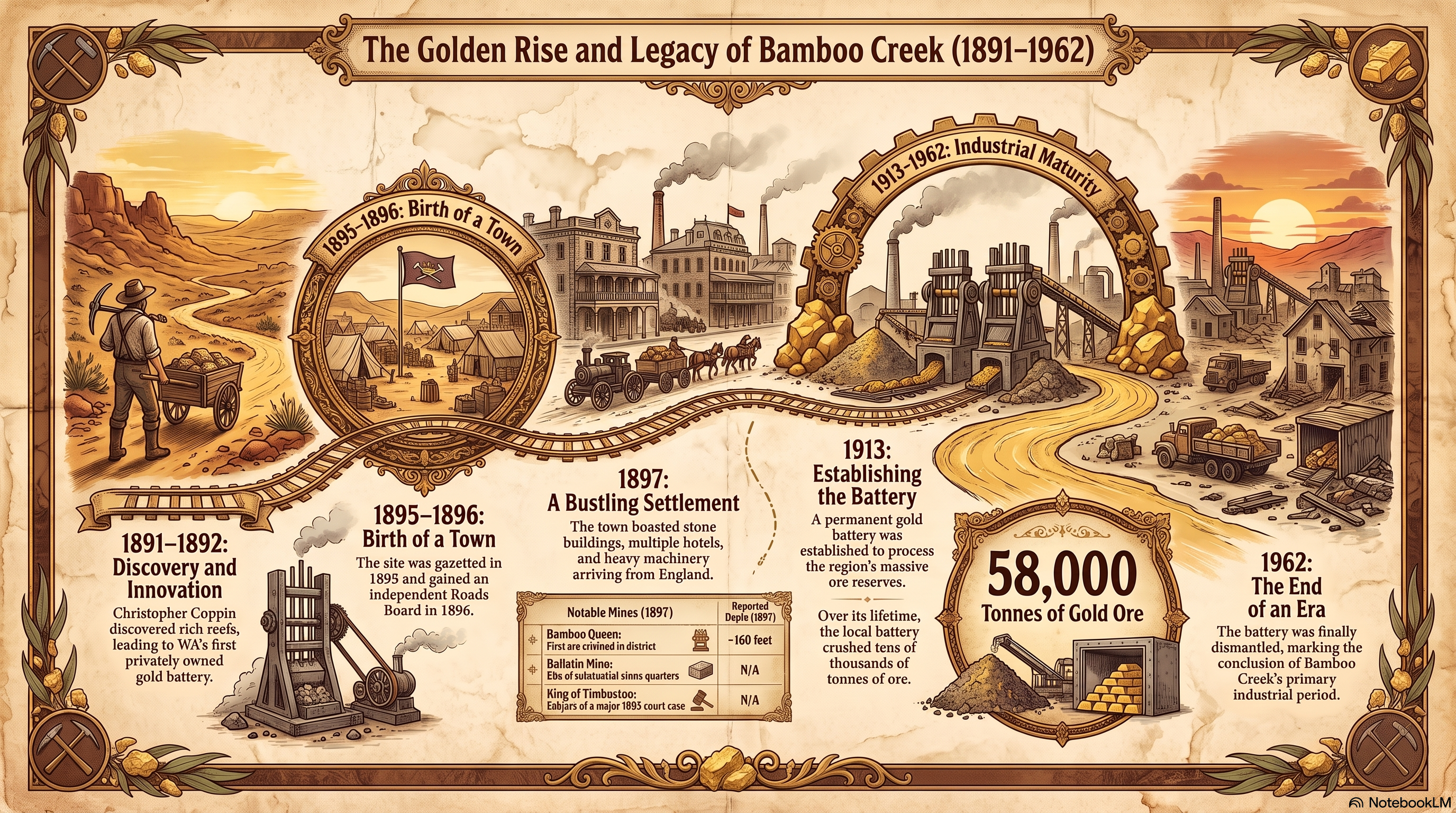
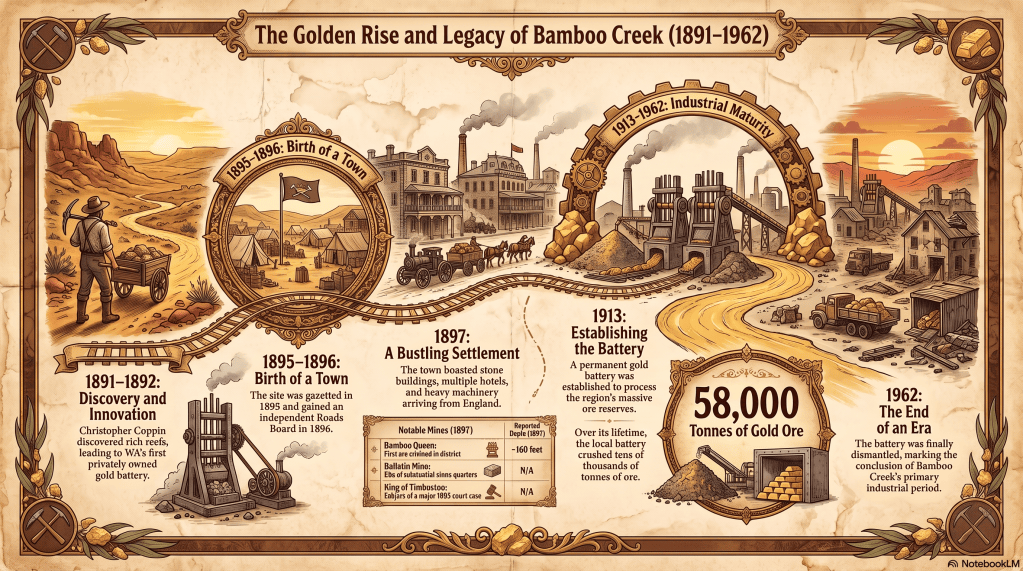
The origins of Bamboo Creek are synonymous with the nomadic prospectors of the late 19th century. While some records point to a discovery in 1895 at a place then known as Jarmans, earlier evidence suggests the creek was yielding its secrets as early as 1890. In July 1891, a prospector named Christopher Coppin arrived in Roebourne with 500 ounces of gold found at the Coongan and Bamboo Creeks. This find, and others like it, including one man “dollying out” £100 per week, triggered a frantic interest in the region.5 6
The early pioneers of the Creek were a hardy breed. Many, like Tom Byass and his four companions, had pushed their barrows all the way down from the Kimberley goldfields. Their arrival marked the beginning of a transition from scattered alluvial “rushes” to more permanent seam mining. By June 1893, despite the staggering isolation, the population of the combined Bamboo Creek and Marble Bar fields had reached 200 people.7
A Town Built of Stone and Ambition
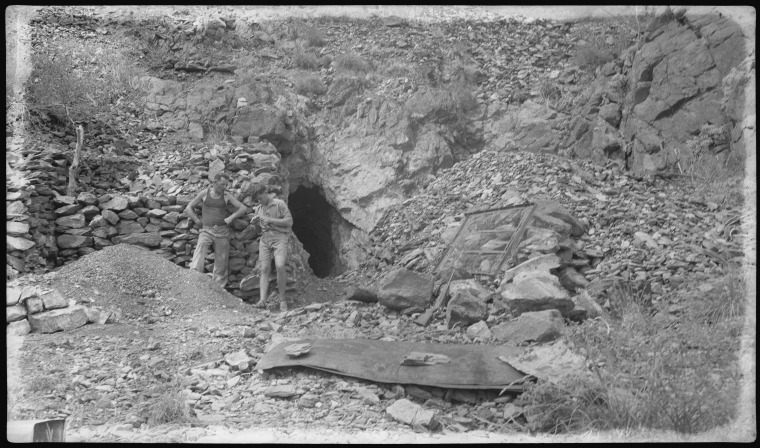
As the 1890s progressed, Bamboo Creek transformed from a rough camp into a bustling township. By 1896, the influx of miners necessitated the construction of substantial stone buildings, boarding houses, and two licensed hotels to support the growing community. The most prominent of these was the Mount Prophecy Hotel, managed at various times by Herbert Owen Coppin and George McDonald.9 10 11
The economic backbone of the town was its mines. Names like the Bamboo Queen, The Bulletin, King of Timbuctoo, and Nil Desperadum became household words among investors as far away as London. The Byass brothers, Thomas and Percy, were central to this industrial growth. In 1892, they installed the first mining battery at Bamboo Creek, which is believed to have been the first privately owned battery in the state. Their residence on the Bulletin lease was a substantial stone structure, the walls of which still stand today as a testament to their commitment to the field.12 13
The logistical effort required to sustain this industry was monumental. Machinery, often weighing hundreds of tonnes, had to be landed at the port of Condon and then hauled across the scorching Pilbara plains. Seasonal rains frequently turned the tracks into quagmires, trapping essential equipment in transit for months. In early 1897, for instance, heavy rains “materially interfered” with the delivery of an eight-ton plant for the Bulletin Block, forcing mine managers to wait while roads remained “exceedingly heavy”.14
The Bamboo Road District
Bamboo Creek’s status as a premier mining centre was confirmed politically in 1896. On 4 September of that year, the Bamboo Road District was established, granting the town its own Roads Board independent of the Pilbara Roads Board.15
The first election for this “all-important child” took place on 14 January 1897, amidst great local rejoicing. The successful candidates included R. O’Brien, L. Parkin, H. O. Coppin, W. Cummings, T. Byass, J. M. Rounsevell, and A. Gardner. Rounsevell was appointed Chairman, with A. E. A. Haste serving as the board’s first secretary.16
The board faced immediate challenges, primarily the state of the roads which were often described in “many adjectives” by the local teamsters. The board’s responsibilities were wide-ranging, from maintaining transit routes to levying taxes on the very wheels that struggled to navigate the stony terrain. However, the Creek’s political dominance was short-lived. In March 1904, the district was renamed the Marble Bar Road District, and the administrative seat moved to the neighbouring town, signaling a shift in the region’s economic gravity.17
Life and Tragedy on the Frontier
Genealogists and historians often find the true heart of a community in its cemetery, and Bamboo Creek is no exception. Life in the Pilbara was a constant battle against a harsh environment, and the local records are filled with tales of resilience and tragedy.
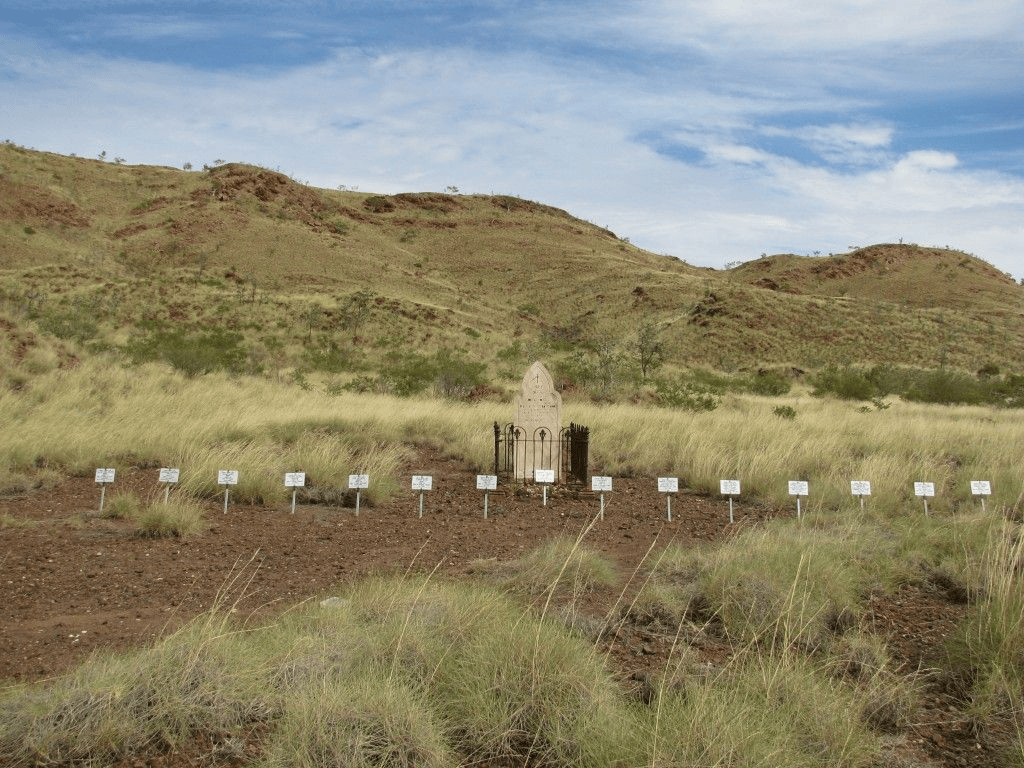
The Intolerable Heat: The Pilbara heat was a frequent killer. Margaret Straughan, the wife of a battery manager, died of heat apoplexy in 1897 within minutes of reaching Kitty’s Gap after a long coach journey from the coast.19 John McCarthy suffered a similar fate at the Mount Prophecy Hotel, his death marking the first inquest held in the town.20 Perhaps most tragic was the case of William Hayes, a teamster who was found dead just a few feet off the track after stopping his team to rest; heat apoplexy was the presumed cause of his sudden passing.21
Environmental Hazards: The creek that gave the town its name could also be its most dangerous enemy. During the Christmas of 1897, Ludwig Brockman was enjoying himself in town when he attempted to swim the flooded creek to return home. He was swept away by the strong current, his body discovered a mile downstream the following day.22
Mining and Misadventure: The industrial nature of the town claimed other lives. Joseph Rodgers was killed instantly when a dynamite charge exploded while he was sinking a government well.23 In a strange and tragic accident, John Stephen Metcalf, who was working on the State Battery, died from an accidental gunshot wound while examining a pistol with a mate; he left a sworn statement before he died, exonerating his friend of all blame.24
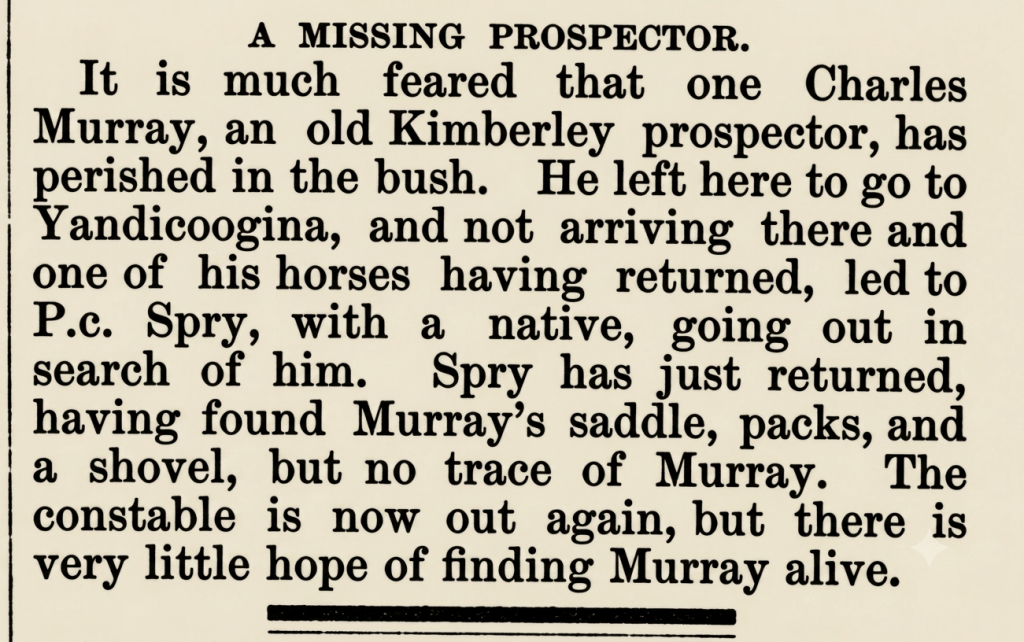
One of the most enduring mysteries of early Bamboo Creek was the disappearance of Charles Murray, an old Kimberley prospector. Murray left the Creek for Yandicoogina in January 1897 but never arrived. While a search party found his saddle, packs, and shovel, Murray himself was never seen again, vanishing into the vast Australian bush.25 26
Social Fabric and Personalities
Despite the hardships, Bamboo Creek was a community that looked after its own. When Samuel Burrows Hafford, known affectionately as “Old Sam,” passed away in 1892, a large number of residents turned out for his funeral. Hafford was a true pioneer of the Australasian colonies, having prospected in Victoria, Queensland, and New Zealand before settling at the Creek.27
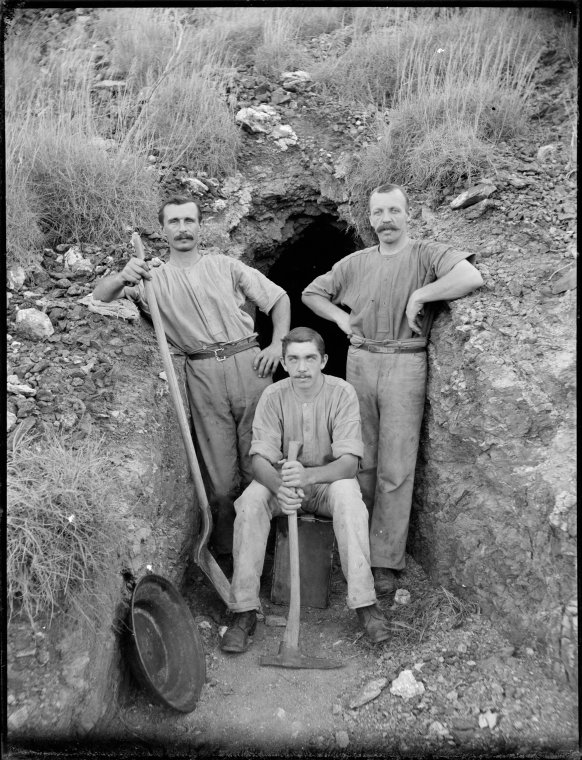
John MacKenzie (L), Percy and Hugh Jackson at the Kitchener Mine, 22 June 1911.28
The town was also home to complex social and legal dynamics. Mining was not just about digging; it was about “flotation” and high-stakes finance. A notable 1895 Warden’s Court case involved August H. Pontt and William E. F. Lacey suing Herbert P. Pearse over an agreement to purchase a share in the King of Timbuctoo claim. The testimony revealed the intricate web of partnerships and private agreements that underpinned the mining industry, including plans to take claims to London for flotation.29
The Infrastructure of Success
The success of Bamboo Creek was inextricably linked to its processing capabilities. After the initial Byass battery, a gold battery was established in 1913 that would serve the district for decades. Between 1913 and 1962, this battery crushed over 58,000 tonnes of ore.
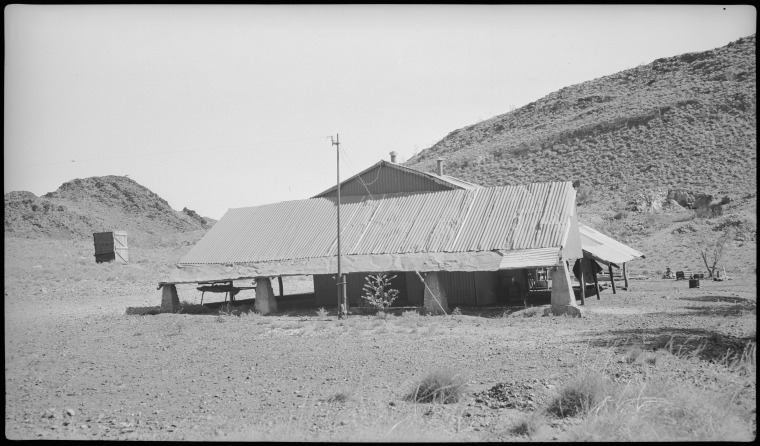
The town also saw its share of “modern” advancement. By the late 1920s, motor vehicles had begun to navigate the stony roads. Registrations from 1926-27 show C. R. Morlin driving an Overland and R. Watson driving a Ford, both registered through the Marble Bar Road Board but listing their address at Bamboo Creek.31
Decline and the “Ghost Town” Era
As the 20th century progressed, the intense activity of the 1890s began to wane. Mining continued on and off, with companies like Haoma Mining still active in the area as recently as 2014. However, the town itself slowly faded into the landscape.32
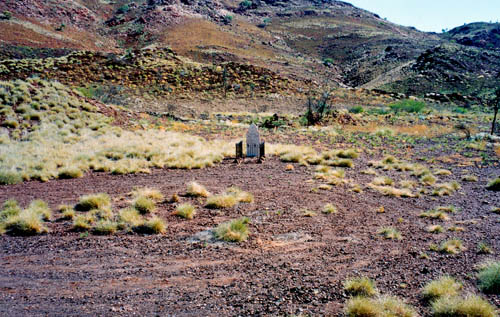
In 2019, an effort was made to honour those who had been buried in the town’s history. Plaques were placed at the Bamboo Creek Mine Cemetery by the project team from Outback Graves Markers to acknowledge more than 14 people buried there in unmarked graves. Today, the site is a heritage location, where visitors can still see evidence of seam mining in the hillsides and the remnants of the Byass brothers’ stone residence.
Conclusion
The history of Bamboo Creek is more than a simple record of gold yields and administrative changes; it is a story of human endurance against the backdrop of one of the world’s most unforgiving landscapes. From the first barrow-pushing prospectors to the sophisticated mining operations of the mid-20th century, the Creek represented the ambition and the resilience of the Pilbara breed. Though the sounds of the ten-stamp batteries have long since ceased, the stone walls and lonely graves of Bamboo Creek remain, a silent tribute to a community that once dared to build a golden future in the heart of the ranges.
Timeline
- 1890–1891: Gold is first discovered in the area; prospector Christopher Coppin brings 500 ounces of gold from Bamboo Creek to Roebourne in July 1891.
- 1892: The Byass brothers install the first gold-mining battery at the site, believed to be the first privately owned battery in Western Australia.
- 1893: The combined population of Bamboo Creek and Marble Bar reaches approximately 200 residents.
- 1895: The Bamboo Creek townsite is officially gazetted; Tom Byass and his party discover gold at the “Jarmans” site.
- 1896: The Bamboo Road District is established on 4 September to provide local governance.
- 1897: The first Roads Board election is held in January; the community sees a boom in construction, including stone buildings and hotels.
- 1904: The Bamboo Road District is renamed the Marble Bar Road District, and the administrative seat is moved to Marble Bar.
- 1913: A new gold battery is established at the site, which would operate for nearly fifty years.
- 1962: The gold battery is dismantled after crushing over 58,000 tonnes of ore during its lifespan.
- 2019: Memorial plaques are placed at the Bamboo Creek Mine Cemetery to honour those buried in unmarked graves.
Map
Sources
- Coate, Kevin (1986) Bamboo Creek Cemetery. Colour photograph taken by K Coate in Sep 1986 and published on Lonely Graves of Western Australia website. Retrieved 5 Aug 2026 from https://lonelygraveswa.wags.org.au/index.php/resting-places/small-cemeteries/small-cemeteries-1-40 ↩︎
- Heritage Council of WA (2017). Bamboo Creek Mining Relics. Retrieved 5 Aug 2026 from https://inherit.dplh.wa.gov.au/public/inventory/details/46bfcea9-7166-4dab-917d-41dada60f2bb ↩︎
- WA Now & Then (2026) Bamboo Creek. Retrieved 5 Aug 2026 from https://www.wanowandthen.com/Bamboo.html ↩︎
- Landgate (2022). Town Names. Retrieved from the Internet Archive on 5 Aug 2026 from https://web.archive.org/web/20220314101618/http://www0.landgate.wa.gov.au/maps-and-imagery/wa-geographic-names/name-history/historical-town-names#B ↩︎
- GENERAL NEWS, (1891, July 22). The Inquirer and Commercial News (Perth, WA : 1855 – 1901), p. 4. Retrieved August 5, 2026, from http://nla.gov.au/nla.news-article66229496 ↩︎
- MINING INTELLIGENCE. (1891, September 18). The West Australian (Perth, WA : 1879 – 1954), p. 2. Retrieved August 5, 2026, from http://nla.gov.au/nla.news-article3024877 ↩︎
- Morawa District Historical Society (2026). Bamboo. Retrieved 5 Aug 2026 from https://morawamuseum.org.au/ghosttowns/B.pdf ↩︎
- State Library of Western Australia (n.d.) Two men outside mine entrance, Bamboo Creek. Black and white photograph – 112837PD in Collection slwa_b4476521. Retrieved 6 Aug 2026 from https://purl.slwa.wa.gov.au/slwa_b4476521_1 ↩︎
- Advertising (1897, November 26). The Pilbarra Goldfield News (Marble Bar, WA : 1897 – 1923), p. 3. Retrieved August 5, 2026, from http://nla.gov.au/nla.news-article146127015 ↩︎
- Outback Graves Markers (n.d.) Ernest Henry Penkith FAIRHURST. Retrieved 5 Aug 2026 from https://outbackgraves.org/burial-records/person/530 ↩︎
- ibid : John McCarthy. Retrieved 6 Aug 2026 from https://outbackgraves.org/burial-records/person/526 ↩︎
- ibid : Peter LEWIS. Retrieved 6 Aug 2026 from https://outbackgraves.org/burial-records/person/6924 ↩︎
- WARDEN’S COURT. (1895, August 10). Northern Public Opinion and Mining and Pastoral News (Roebourne, WA : 1894 – 1902), p. 2. Retrieved August 5, 2026, from http://nla.gov.au/nla.news-article255733034 ↩︎
- BAMBOO CREEK. (1897, March 26). The Pilbarra Goldfield News (Marble Bar, WA : 1897 – 1923), p. 2. Retrieved August 6, 2026, from http://nla.gov.au/nla.news-article146125739 ↩︎
- WA Electoral Commission (2003). Municipality Boundary Amendments Register. p.19. Retrieved 6 Aug 2026 from https://www.boundaries.wa.gov.au/sites/default/files/content/documents//2003_municipal_boundary_amendments_register.pdf ↩︎
- BAMBOO CREEK. (1897, February 13). Northern Public Opinion and Mining and Pastoral News (Roebourne, WA : 1894 – 1902), p. 4. Retrieved August 6, 2026, from http://nla.gov.au/nla.news-article255735915 ↩︎
- Wikipedia (2020). Shire of Marble Bar. Retrieved 6 Aug 2026 from https://en.wikipedia.org/wiki/Shire_of_Marble_Bar ↩︎
- Outback Graves Markers (2019). Bamboo Creek Mine Cemetery. Retrieved 6 Aug 2026 from https://outbackgraves.org/burial-records/location/143 ↩︎
- ibid : Margaret STRAUGHAN. Retrieved 6 Augs 2026 from https://outbackgraves.org/burial-records/person/531 ↩︎
- ibid : John McCARTHY. Retrieved 6 Aug 2026 from https://outbackgraves.org/burial-records/person/526 ↩︎
- ibid : William HAYES. Retrieved 6 Aug 2026 from https://outbackgraves.org/burial-records/person/528 ↩︎
- ibid : Ludwig BROCKMAN. Retrieved 6 Aug 2026 from https://outbackgraves.org/burial-records/person/996 ↩︎
- ibid : Joseph RODGERS. Retrieved 6 Aug 2026 from https://outbackgraves.org/burial-records/person/532 ↩︎
- ibid : John Stephen METCALF. Retrieved 6 Aug 2026 from https://outbackgraves.org/burial-records/person/534 ↩︎
- BAMBOO CREEK. (1897, February 13). Northern Public Opinion and Mining and Pastoral News (Roebourne, WA : 1894 – 1902), p. 4. Retrieved August 6, 2026, from http://nla.gov.au/nla.news-article255735915 ↩︎
- Outback Graves Markers (2019). Charles Murray. Retrieved 6 Aug 2026 from https://outbackgraves.org/burial-records/person/999 ↩︎
- ibid : Samuel Burrows HAFFORD. Retrieved 6 Aug 2026 from https://outbackgraves.org/burial-records/person/533 ↩︎
- State Library of Western Australia (n.d.) Kitchener Mine 1911. Retrieved 7 Aug 2026 from https://purl.slwa.wa.gov.au/download/slwa_b2949850_6.jpg ↩︎
- WARDEN’S COURT. (1895, August 10). Northern Public Opinion and Mining and Pastoral News (Roebourne, WA : 1894 – 1902), p. 2. Retrieved August 6, 2026, from http://nla.gov.au/nla.news-article255733034 ↩︎
- State Library of Western Australia (n.d.) House at Bamboo Creek. Black and white photograph – 112837PD in Collection slwa_b4476521. Retrieved 6 Aug 2026 from https://purl.slwa.wa.gov.au/download/slwa_b4476521 ↩︎
- Carnamah Historical Society (n.d.) WA Motor Vehicle Registrations 1915-1928. Retrieved 6 Aug 2026 from https://www.carnamah.com.au/car-registrations?keyword=bamboo+creek ↩︎
- Hudson Institute of Mineralogy (2025). Bamboo Creek Mine, Bamboo Creek District, East Pilbara Shire, Western Australia, Australia. Retrieved 6 Aug 2026 from https://www.mindat.org/loc-8553.html ↩︎
- Open Street Map (2026) Bamboo Creek. Retrieved 5 Aug 2026 from https://www.openstreetmap.org/search?query=-20.93704%2C+120.21957&zoom=10&minlon=127.56774902343751&minlat=-32.21163915464705&maxlon=130.20446777343753&maxlat=-31.21162694596725#map=10/-21.1242/120.0998&layers=C ↩︎
Versions
| Date | Changes |
|---|---|
| 7 Aug 2026 | Version 0.1 – First draft |
| 6 Sep 2026 | Version 1.0 – First published |

