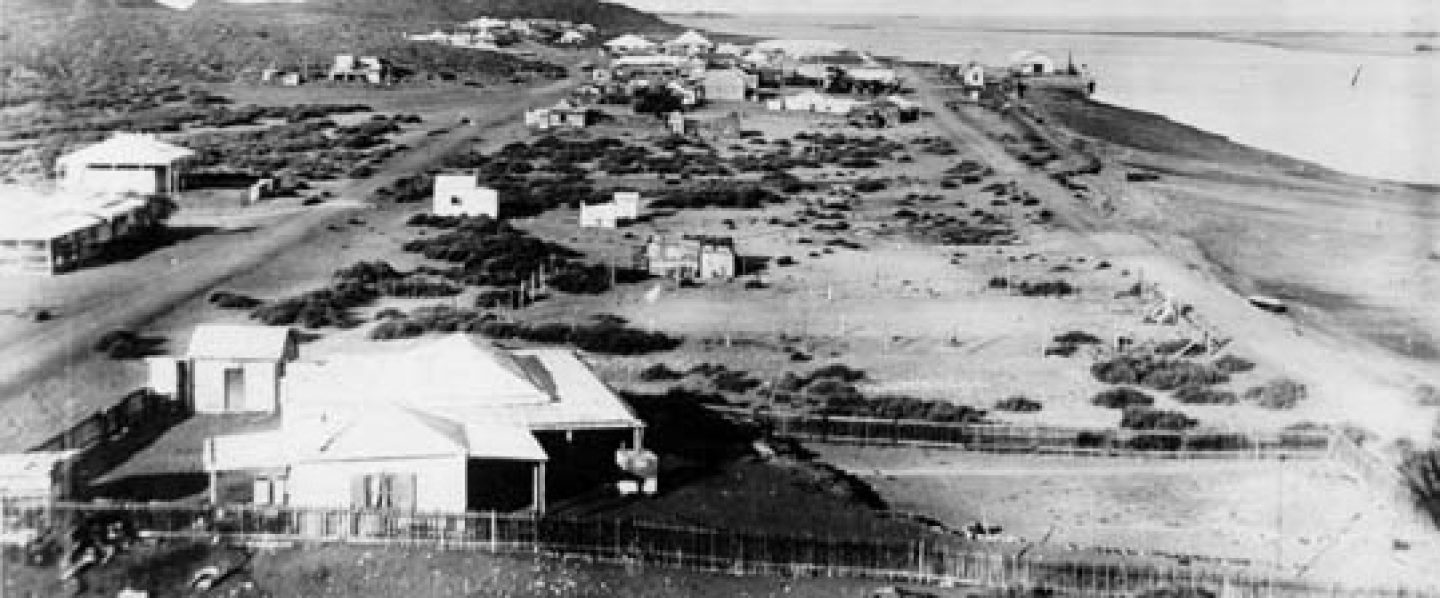
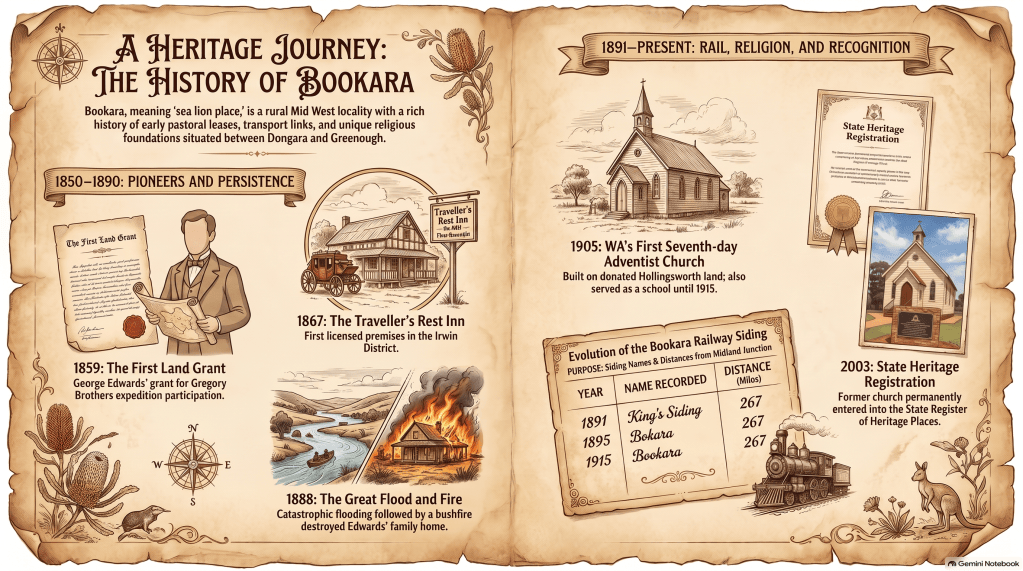
Christine Harris (2026)
Demographics
Region: Mid West
LGA: Irwin
Industry: Railway Siding
Other Names: Bookara Railway Siding, Bookara Flats, King’s Siding, Bokara, Bokhara, Dhungarra
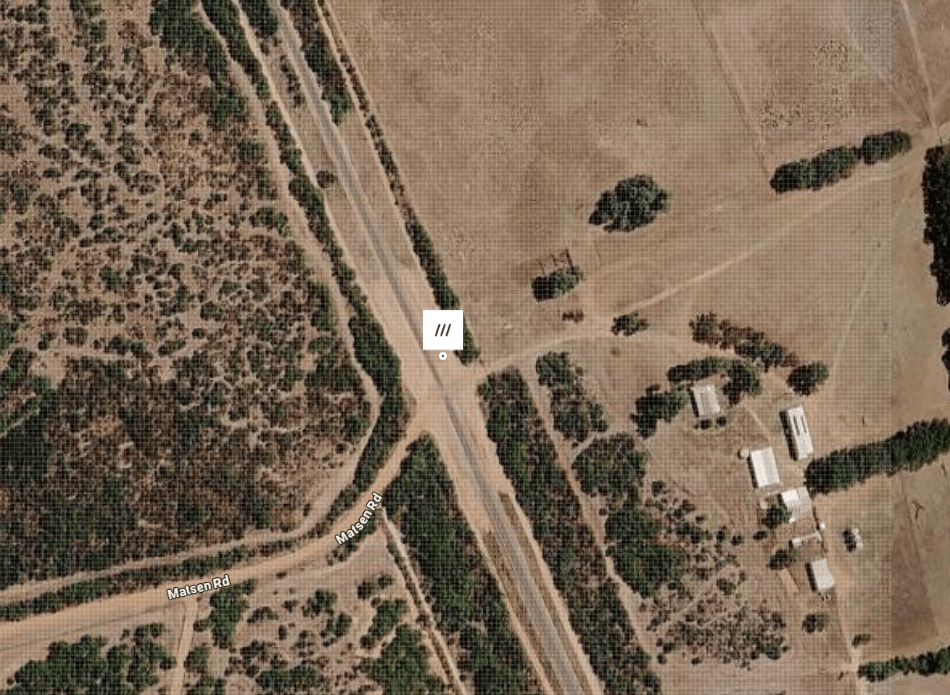
Open Street Map: -29.033659343341846, 114.89741496681836
What3Words: ///importantly.gateway.crooning
Settled: 1867
Closed: 1975 (the siding was closed to the public)
Abstract
The locality of Bookara, situated in Western Australia’s Mid West region, serves as a poignant example of the resilience required to settle the challenging landscapes of the Greenough and Irwin districts. Originally known to the Wattandee people as Thungarra, meaning “the place of seals,” the area was first formally explored by Sir George Grey in 1839. This article traces the evolution of Bookara, historically known by various names including Bokara, Bookara Flats, Dhungarra, and King’s Siding, from its origins as a large pastoral lease into a settled agricultural hamlet.
At the heart of early Bookara was the Traveller’s Rest Inn, established in 1867, which served as a focal social hub for travellers journeying between Dongara and Greenough until the arrival of the railway shifted transport patterns. The narrative highlights the lives of pioneering families, most notably Edward George Edwards, a literate former convict who sought to erase his past through hard labour on the flats. The community’s tenacity was tested by the environmental catastrophes of 1888, when the Great Greenough Floods and subsequent bushfires nearly erased the settlement. A significant cultural milestone was reached in 1905 with the construction of the state’s first Seventh-day Adventist Church, which provided a spiritual home for local families like the Hollingsworths and Stokeses. By detailing the economic shifts, religious transformations, and the modern restoration of its ruins, this article provides a comprehensive genealogical and historical record of a unique Western Australian community.
History
The rural locality of Bookara, resting along the scenic Brand Highway between Dongara and Geraldton, appears to the modern traveller as a tranquil stretch of the Mid West, marked by the evocative ruins of stone buildings. Yet, for those with roots in the region, Bookara represents over a century of endurance against the unpredictable forces of the Western Australian environment. Historically known by several names, including Bookara Railway Siding, Bookara Flats, King’s Siding, Bokara, Bokhara, and Dhungarra, his community’s story is a tapestry of pioneering grit, spiritual awakening, and the shifting tides of transport and industry.1
First Nations Heritage and Early Exploration
Long before European keels touched the shores of the Mid West, the land around Bookara was the country of the Wattandee people. The original name for the nearby Irwin River estuary was Thungarra (or Dhungarra), which signifies “the place of seals”. This name persisted locally even as colonial maps began to redefine the geography.2 3
European awareness of the area began in earnest with the harrowing journey of Lieutenant George Grey in 1839. Following a shipwreck at Gantheaume Bay, Grey and his party were forced to walk 650 kilometres back to Perth. During this desperate trek, Grey scaled a prominent sand hill east of the present Bookara townsite, naming it “Mount Pleasant” and designating the fertile surrounding valley as “The Province of Victoria”.4
Official settlement followed the exploration of the Gregory brothers in the 1840s. By 1850, the “Cattle Company”, a powerful partnership involving S. P. Phillips, Edward Hamersley, L. C. Burges, and B. Urban Vigors, had secured a massive 60,000-acre lease along the Irwin River. It was within this pastoral context that individual tillage leases were first promulgated in the late 1850s, allowing smaller settlers to gain a foothold on the land. Among these early arrivals was George Edwards, an expiree who was granted a 40-acre block at Bookara in 1859 as a reward for his role in the Gregory Brothers expedition of 1858. 5
The Traveller’s Rest Inn
As traffic between the burgeoning settlements of Dongara and Greenough increased, there arose a critical need for a waypoint. In 1867, Peter Reynolds built the Traveller’s Rest Inn (later known as the Bookara Inn) at the strategic junction where the eastern road from Mount Hill met the new coastal road to the flats. Constructed of random rubble limestone with a traditional shingle roof, it was the first licensed premises in the Irwin District.6 7
The inn was established following reports from Maitland Brown, the Resident Magistrate, who advised the Governor that a licensed premises was necessary to combat a flourishing “sly grog” trade worth an estimated £700 in the district. Despite its importance, the inn struggled economically. Most of its early publicans, including Sam Eakins, W. H. Linthorne, and Michael Carroll, were primarily farmers or labourers rather than professional hoteliers, and trade was rarely brisk.
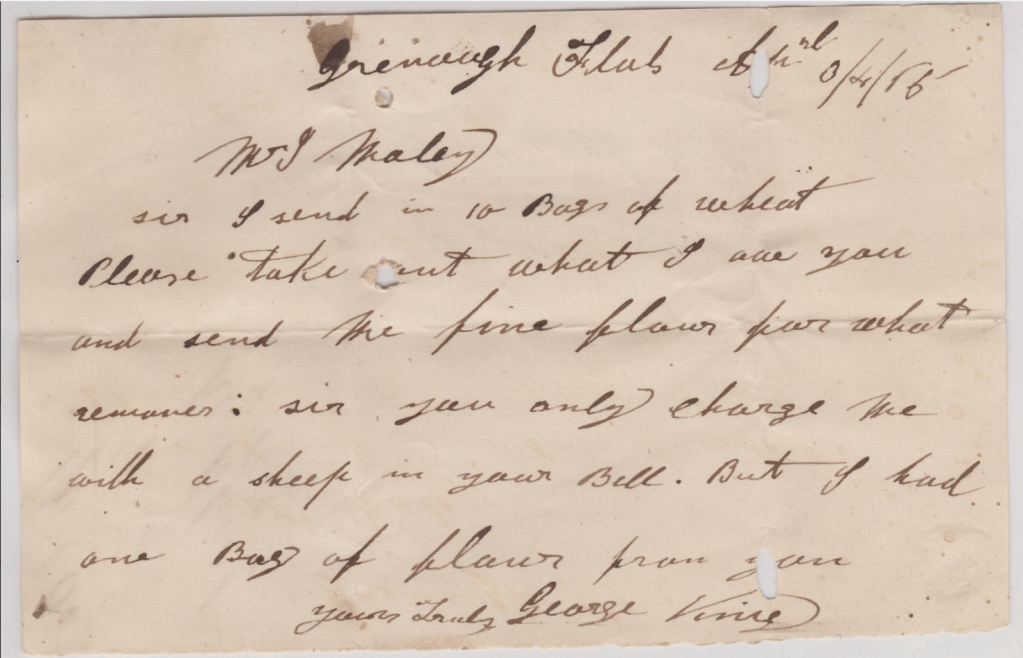
One landlord of the Bookara Inn was George Shouler King (1834-1901) who was convicted of larceny and sent to the colony on the “Nile” arriving 1/01/1858. His wife, Elizabeth, arrived in 1862. He later became the landlord of the inn at Bookara. A handwritten note from George King to John Maley from 1865 survives and an image of the note appears below:
In 1870, Reynolds petitioned the Governor for a reduction in his licence fee, citing the dire state of farming caused by fire, floods, and wheat rust. His plea was unsuccessful, but the inn remained a social lifeline, eventually adding billiard and bagatelle tables in 1881 to cater to the recreational needs of the community.9
The Trials of the Edwards Family
The story of Bookara is perhaps best personified by Edward George Edwards, a man whose life journey took him from the industrial smoke of Birmingham to the harsh Bookara flats. Born in 1835, Edwards was a literate scale beam finisher who was transported to Western Australia as a convict in the 1850s. After receiving his Ticket of Leave, he sought work in the Greenough district, eventually leasing land at Bookara.
In 1868, Edward married Rose Ann Poole, the daughter of another transported convict, John Poole, at the Middle Greenough Government Schoolhouse. The Edwards family, alongside the Poole and Stokes families, built a life based on manual labour and persistence. Edward slowly erased his convict past in official records, appearing as a respected settler who registered deaths and worked the land. However, the environmental instability of the region was a constant threat to their hard-won stability.10
The Great Flood and Fire of 1888
The year 1888 remains etched in Bookara’s history as a time of total devastation. The Great Greenough Floods saw the Irwin and Greenough rivers burst their banks, with water swallowing the flats entirely. The Bookara hollow filled with water that rose to the eaves of the Traveller’s Rest Inn, and Edward Edwards’ mudbrick home was utterly destroyed. Families were forced to flee to the eastern hills as their crops vanished and their wells collapsed.11
Recovery was slow and arduous; it took a full year for the Bookara basin to dry out. Maitland Brown supervised the use of gelignite to blast channels in a desperate attempt to drain the land. For the Edwards family, the tragedy was compounded when, six weeks after the flood, a bushfire swept through the flats and burned their remaining possessions to the ground. They were left, as a contemporary newspaper reported, “without a stick to call their own,” living in rags and using old packing cases for furniture.
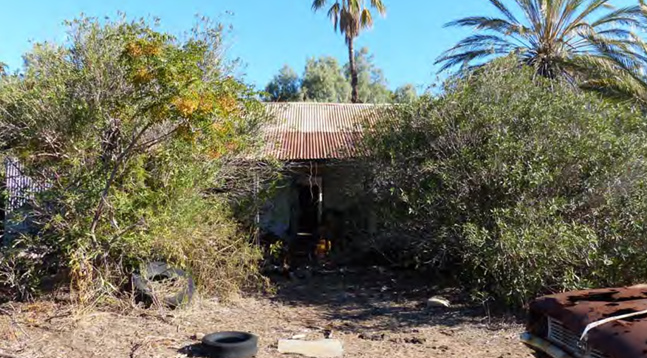
Writing to the editor of a newspaper in November 1888, Edward George Edwards expressed a controlled fury, stating that it seemed their case had been “quite forgotten” by relief funds. Yet, they did not leave. Using what materials could be salvaged, they built a new mudbrick cottage, the ruins of which still stand today as a marker of their endurance.
The Coming of the Railway
Bookara’s economic landscape was permanently altered by the construction of the Midland Railway Company of Western Australia (MRWA) line. The line from Midland Junction to Walkaway was completed in November 1894, effectively ending the era of the great wayside inns as road traffic declined in favour of rail.13
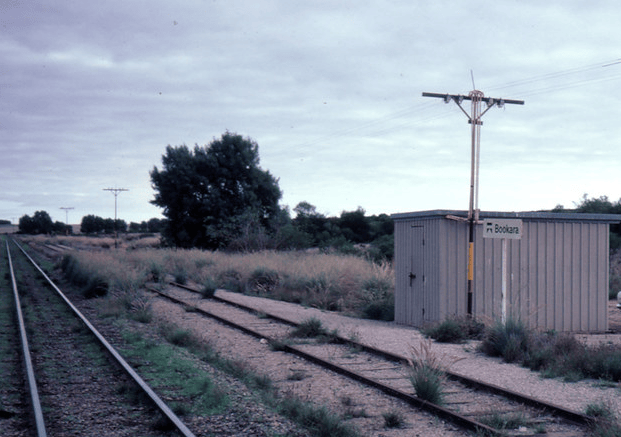
A siding was opened at Bookara in April 1891, initially named King’s Siding. By 1895, it was renamed Bokara, and it finally adopted the spelling Bookara around 1915. The siding provided essential infrastructure for local farmers, including an “Out-of-Shed,” a passenger platform, and stockyards for the transport of livestock.14 15
The siding became the new commercial heart of the locality. Prominent local families registered livestock brands at Bookara, including Thomas Bagley at Bookara Siding, W. S. Chittenden at Watty Valley, and Richard Hollingsworth at Bookara Farm. Other notable properties in the vicinity included “Success Farm” owned by A. H. Edwards and “Lake Logue” owned by Geo. Stokes Jnr.16
The First Seventh-day Adventist Church
As the 19th century drew to a close, a significant social shift occurred within the community. Many families in Bookara and the Greenough Flats, often marginalised by poverty or their convict backgrounds, felt socially excluded from the established Anglican and Catholic churches. In 1897, Seventh-day Adventist colporteurs began visiting the area, providing religious literature that convinced George Edwards that Saturday was the true Sabbath.17
In 1900, Pastor Jessie Pallant arrived from Perth and stayed with the Edwards family for three months, working quietly among local households. The result was the formation of a Seventh-day Adventist Company with twenty-five members. Initial meetings were held in the large kitchen of the former Bookara Inn, which had ceased operating as a hotel and was then owned by the Hollingsworth family.
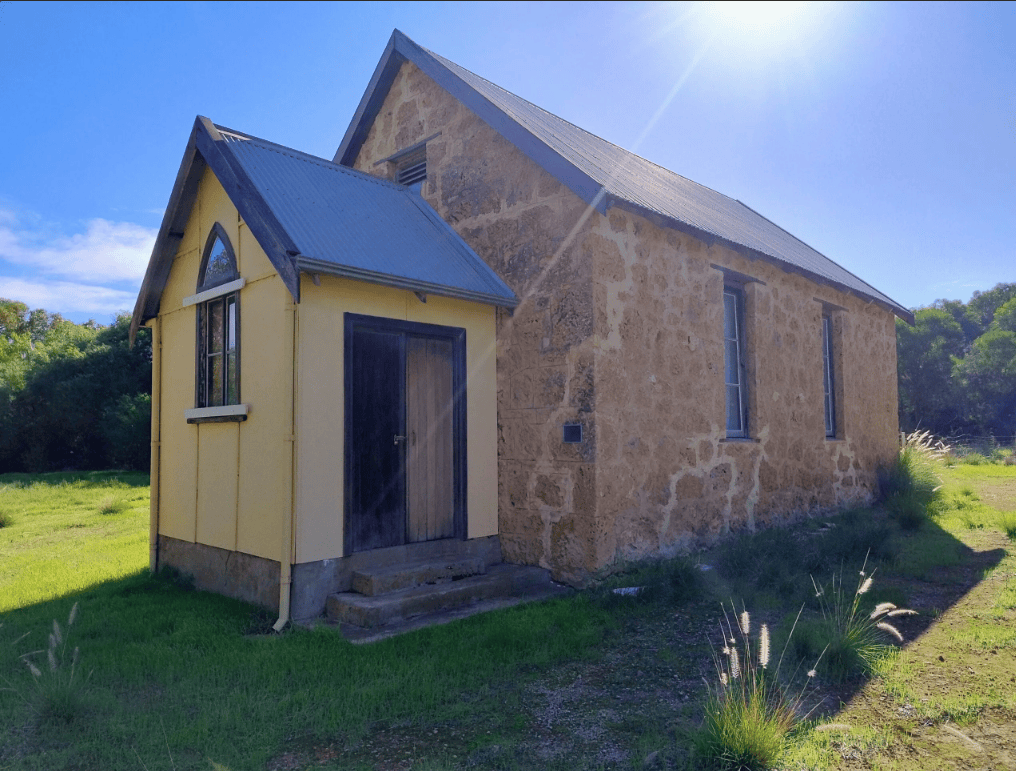
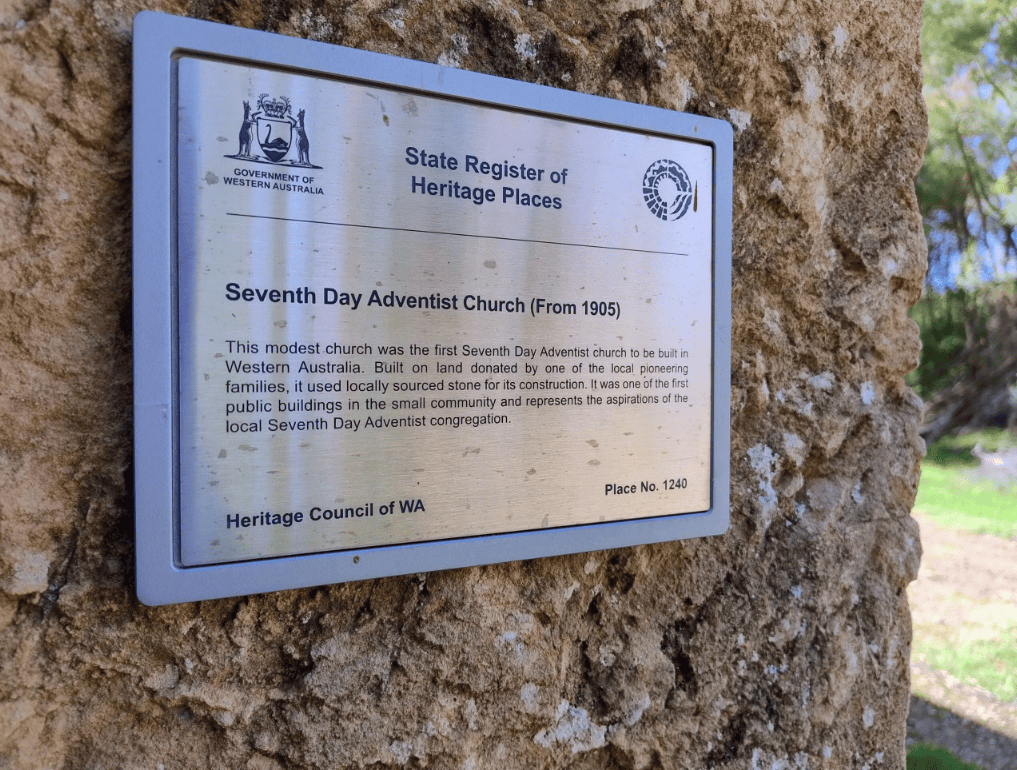
In 1903, the Hollingsworth family donated stone and land for a permanent place of worship directly opposite the inn. Construction began in 1905, led by builders Jack and Arthur Tetlow and an Englishman named Archibald Corker. Dedicated on 6 March 1905 by Pastor Lewis Finster, this simple Victorian-Georgian stone building was the first Seventh-day Adventist Church in Western Australia. Foundation members included names that still resonate in local genealogy: Hollingsworth, Edwards, Symonds, Corker, and Stokes. The church also hosted a primary school from 1908 to 1915, providing education for the children of the flats under teachers like Miss Markey and Miss Robinson.
Life in the Early 20th Century
By the 1920s, Bookara was a well-established farming locality. The impact of the machine age was evident in early motor vehicle registrations; T. A. Hollingsworth was a prominent local figure, registering a Ford (Plate IR-2) with the Irwin Road Board in 1922, followed by L. W. Anderson, who registered a Dodge (Plate IR-33) in 1927.19
Despite this progress, the community continued to face personal losses. In 1907, Edward Edwards’ son, Frank Victor Edwards, drowned off the coast north of Dongara. Edward himself lived until April 1915, dying of old age at eighty. He was found in bed by his son Jack, leaving behind a legacy of a man who had transformed from an “artful and dangerous” youth in Birmingham into a settler who spoke for justice and dignity in Bookara.
Decline and Preservation
The middle of the 20th century saw a gradual decline in the Bookara population. The Seventh-day Adventist Church ceased worship in June 1954 (or 1956, according to some records), and the building fell into a state of disrepair. The public siding at Bookara was officially closed on 22 September 1975, coinciding with the decommissioning of the old stone station at nearby Dongara as the railway was bypassed for the Eneabba mineral sands line.
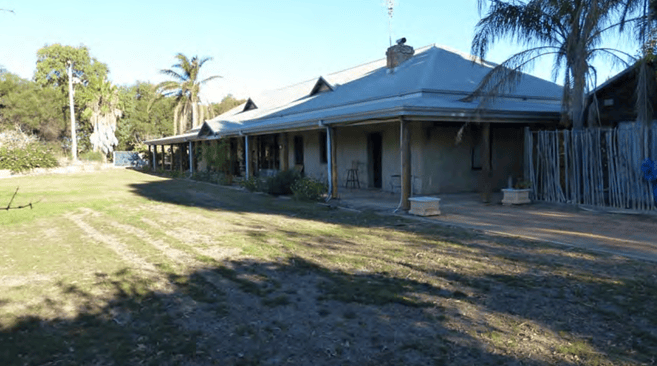
However, the late 20th century brought a renewed interest in Bookara’s heritage. In 1998–99, Len and Bette Metcalfe undertook the monumental task of reconstructing the ruined Bookara Inn. They joined two separate rubble stone structures and added a high-pitched roof and a verandah supported on tree-trunk posts. Their work, which transformed the inn into a bed and breakfast and later a private residence, was recognised with a Shire of Irwin Heritage Award in 2000.
Similarly, Christopher and Jennifer Zalmstra purchased the property containing the historic church in June 1998. They secured heritage grants to repair the stonework, reinstate windows, and reroof the building, ensuring the survival of the state’s first Adventist church. Their efforts were recognised with the Shire of Irwin Heritage Award in 2015.
Today, Bookara remains a “quiet retreat” that connects the present with Western Australia’s diverse cultural past. While the siding no longer bustles with livestock and the church school is silent, the restored limestone remains of the inn and the church stand as symbolic markers of the pioneers who once called the Bookara flats home. For the local historian and the genealogist, every mudbrick and random rubble stone in Bookara tells a story of survival against flood, fire, and the relentless march of time.
Footnote:
In May 2017, Bookara made the headlines for the wrong reason. International rugby league footballer, Setariki Rakabula, who had made his home in in Geraldton was killed when his car left the road and he was thrown out. 22
Timeline
- 1839: Explorer Sir George Grey scales “Mount Pleasant” and traverses the district after being shipwrecked.
- 1850: The “Cattle Company” takes up a massive 60,000-acre lease along the Irwin River.
- 1859: George Edwards is granted a 40-acre block at Bookara for his service in the Gregory Brothers expedition.
- 1867: Peter Reynolds builds the Traveller’s Rest Inn, the first licensed premises in the Irwin District.
- 1868: Edward George Edwards marries Rose Ann Poole, joining two pioneering convict-descendant families.
- 1881: Billiard and bagatelle tables are added to the Traveller’s Rest Inn licence.
- 1888: The Great Greenough Floods submerge Bookara to the eaves of the inn; a bushfire later destroys the Edwards family home.
- 1891: The Midland Railway siding opens under the name “King’s Siding”.
- 1895: The siding name is officially changed to “Bokara”.
- 1900: Pastor Jessie Pallant arrives, leading to the religious conversion of many local families to Seventh-day Adventism.
- 1905: Western Australia’s first Seventh-day Adventist Church is dedicated on land donated by the Hollingsworth family.
- 1908: A Seventh-day Adventist primary school opens at the Bookara church.
- 1915: The siding and locality name are officially standardised as “Bookara”.
- 1915: Edward George Edwards dies at Bookara at the age of eighty.
- 1922: T. A. Hollingsworth registers a Ford motor vehicle with the local road board.
- 1956: The Seventh-day Adventist Church closes for worship following a decline in the local population.
- 1975: The Bookara public siding is closed following the rerouting of the railway line to Eneabba.
- 1998–1999: Extensive renovations are undertaken to restore the former Bookara Inn as a residence.
- 2003: The former Seventh-day Adventist Church is entered into the State Register of Heritage Places.
- 2015: Restoration of the Seventh-day Adventist Church is recognised with a Shire of Irwin Heritage Award.
Map
Sources
- Carnamah Historical Society (n.d.) Midland Railway of Western Australia (MRWA) Stations and Sidings. Retrieved 17 Aug 2026 from https://www.carnamah.com.au/stations+sidings ↩︎
- Wikipedia (2024). Dongara, Western Australia. Retrieved 17 Aug 2026 from https://en.wikipedia.org/wiki/Dongara,_Western_Australia ↩︎
- Ramos, Ash (n.d.) Irwin River or Yarranoo Muraja. Published in “The Junction: University student journalism from Australia, NZ and the Pacific and retrieved on 17 Aug 2026 from https://junctionjournalism.com/2023/07/05/irwin-river-or-yarranoo-muraja/ ↩︎
- Wikipedia (2022). Greenough, Western Australia. Retrieved 18 Aug 2026 from https://en.wikipedia.org/wiki/Greenough,_Western_Australia ↩︎
- Shire of Irwin (2020). Local Heritage Survey: Edwards’ House. Place No. 060. Retrieved 18 Aug 2026 from https://bucket-irwinwebsite.s3.ap-southeast-2.amazonaws.com/wp-content/uploads/2024/06/22190833/draft-survey-2020-reduced.pdf ↩︎
- Wiki Australia (n.d.) Bookara, W.A. Retrieved 18 Aug 2026 from https://wikiaustralia.com/destination/bookara/ ↩︎
- Shire of Irwin (2020). Local Heritage Survey: Bookara Inn fmr Traveller’s Rest. Place No. 001. Retrieved 18 Aug 2026 from https://bucket-irwinwebsite.s3.ap-southeast-2.amazonaws.com/wp-content/uploads/2024/06/22190833/draft-survey-2020-reduced.pdf ↩︎
- Image of note from George King to John Maley. Contributed by Greenough Museum and Gardens to Collections WA and retrieved 17 Aug 2026 from https://collectionswa.net.au/items/e5c01f82-de7d-4920-9855-a4d694f8d649 ↩︎
- Heritage Council of WA (2017). Travellers’ Rest Inn (fmr) (ruin). Retrieved 18 Aug 2026 from https://inherit.dplh.wa.gov.au/public/inventory/details/53dee1f3-11a6-4bcc-8c60-2770e3c3cff3 ↩︎
- Geraldton Historical Society (Jan 2026). From Birmingham Streets to Bookara Flats. Retrieved 17 Aug 2026 from https://www.facebook.com/geraldtonhistoricalsocietyinc/posts/pfbid0MfrF7765KyALdYkdEFnZrn8vCfzaCQSiKALTrHbujoDmfRQJVtG61sq3GeobVDAml?rdid=yAxAHIemgUBKhPpq# ↩︎
- THE GREAT FLOOD ON THE GREENOUGH. (1888, February 7). The West Australian (Perth, WA : 1879 – 1954), p. 3. Retrieved August 18, 2026, from http://nla.gov.au/nla.news-article3116523 ↩︎
- Shire of Irwin (2020). Local Heritage Survey: Edwards’ House. Place No. 003. Retrieved 18 Aug 2026 from https://bucket-irwinwebsite.s3.ap-southeast-2.amazonaws.com/wp-content/uploads/2024/06/22190833/draft-survey-2020-reduced.pdf ↩︎
- Wikipedia (2024). Midland railway line, Western Australia. Retrieved 18 Aug 2026 from https://en.wikipedia.org/wiki/Midland_railway_line,_Western_Australia ↩︎
- Midland and Districts Historical Society Ltd (2024). Midland Railway Company of Western Australia Limited. Retrieved 18 Aug 2026 from https://irwinhistory.org.au/wp-content/uploads/2024/10/Midland-Railway-Co-of-WA.pdf ↩︎
- Hopper, Peter (n.d.) Summary of WAGR Weekly Notices Volume 1 1896-1920. Retrieved 18 Aug 2026 from https://www.railheritagewa.org.au/info/files/WAGR_WN_Summary_Hopper_1896-1970.pdf ↩︎
- Carnamah Historical Society (n.d.) WA Livestock Brands 1912-1962. Retrieved 18 Aug 2026 from https://www.carnamah.com.au/livestock-brands?keyword=Bookara ↩︎
- Shire of Irwin (2020). Local Heritage Survey: Seventh Day Adventist Church. Place No. 002. Retrieved 18 Aug 2026 from https://bucket-irwinwebsite.s3.ap-southeast-2.amazonaws.com/wp-content/uploads/2024/06/22190833/draft-survey-2020-reduced.pdf ↩︎
- Westwood, Neville (2025). Filming Bookara WA. Published in Right Around Australia Centennial 1925 and retrieved 18 Aug 2026 from https://rightaroundaustralia.tij.tv/filming-bookara-wa/ ↩︎
- Carnamah Historical Society (n.d.) WA Motor Vehicle Registrations 1915-1928. Retrieved 18 Aug 2026 from https://www.carnamah.com.au/car-registrations?keyword=Bokara ↩︎
- Melling, Phil (1983). Bookara Siding. Retrieved 17 Aug 2026 from https://www.flickr.com/photos/railwa/45779180481/in/photostream?fbclid=IwY2xjawRAkoVleHRuA2FlbQIxMABicmlkETE1QVR3a2UxOFV3TklPZDNrc3J0YwZhcHBfaWQQMjIyMDM5MTc4ODIwMDg5MgABHhevX6ThxMX5m22j6-JyJFrWAxF-BIZUG0VefDdIxUkJKo-mWcrwltkyH–H_aem_qJTGAO5hOHz4MxvNiI0-qg ↩︎
- Shire of Irwin (2020). Local Heritage Survey: Bookara Inn fmr Traveller’s Rest. Place No. 001. Retrieved 18 Aug 2026 from https://bucket-irwinwebsite.s3.ap-southeast-2.amazonaws.com/wp-content/uploads/2024/06/22190833/draft-survey-2020-reduced.pdf ↩︎
- Police name crash victim. Published in the Geraldton Guardian on 6 Jun 2017 and retrieved 18 Aug 2026 from https://www.geraldtonguardian.com.au/news/geraldton-guardian/police-name-crash-victim-ng-b88493885z ↩︎
- What3Words (2026). Bookara Railway Siding. Retrieved 17 Aug 2026 from https://what3words.com/importantly.gateway.crooning ↩︎
Versions
| Date | Changes |
|---|---|
| 18 Aug 2026 | Version 0.1 – First draft |
| 6 Sep 2026 | Version 1.0 – First published |

