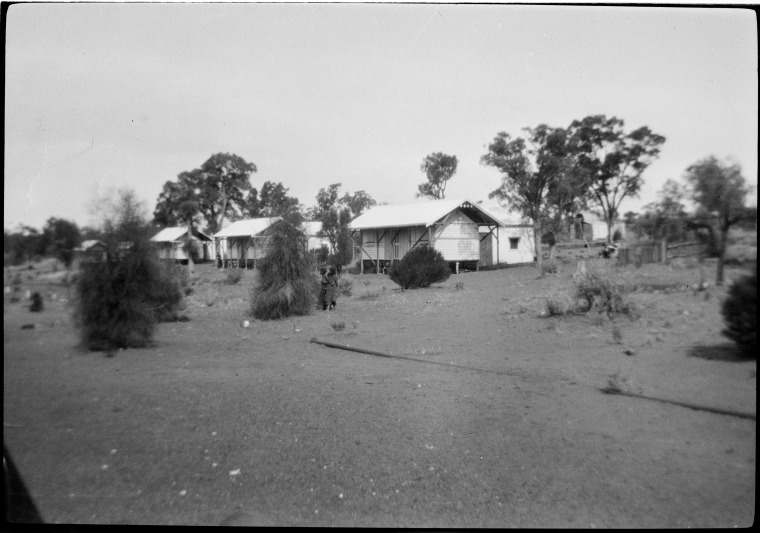
SLWA1
Demographics
Region: Goldfields-Esperance
LGA: Kalgoorlie-Boulder
Industry: Gold Mining
Other Names: Celebration
Open Street Map: -31.00778885964387, 121.58881944065959
What3Words: ///maids.latest.upswept
Established: 1919
Gazetted: N/A
Abandoned: 1923
Abstract
Celebration City was conceived and established in 1919 on Block 50 of the Hampton Plains Estate by Hampton Properties, Ltd., following a rush sparked by rich gold discoveries. Economically driven by the adjacent Celebration mine, the town was intended to be an “ideal” residential site for the incoming mining community, mitigating uncontrolled settlement or “squatting” seen elsewhere. Socially, the layout followed modern town planning principles, setting aside reserves for essential public facilities like a post office, church, hospital, and sanitary depot. The location on uplands provided good natural drainage, addressing environmental health concerns. However, the community’s existence was brief; the associated Celebration mine closed with the collapse of the share market at the end of 1923, leading to the rapid decline and quiescence of the area for decades.
History
Celebration City emerged during a brief but significant period of renewed gold excitement in the Western Australian Eastern Goldfields, following rich discoveries on Hampton Plains Estate’s Block 50 in 1919. Established by Hampton Properties, Ltd., the townsite was situated to the westward of the productive Celebration mine and was intended to capitalize on the resulting influx of miners and workers. The history of Celebration City is thus closely tied to the volatile economic, strategic, and environmental factors inherent to early 20th-century gold rushes in the region.2 3
Economic Drivers and Establishment
The establishment of Celebration City was a direct economic response to the gold boom of 1919 on Block 50.4 Hampton Properties, Ltd., the company responsible for the layout, invested in infrastructure necessary for a projected long-term settlement, including cutting two and a quarter miles of track that connected directly to Slater street, the town’s principal thoroughfare. The fundamental economic purpose of the settlement was stated clearly: to make the place attractive to the class of people who would come to the district for employment in the mines. The company was keen to work harmoniously with local governance to ensure public facilities were provided as required. The planned sale of lots, to a depth of 40 feet from the surface, further indicates the expectation of commercial development and permanent residency. This optimism was bolstered by the belief that there was sufficient available ground for Celebration City to become a “big place”.5
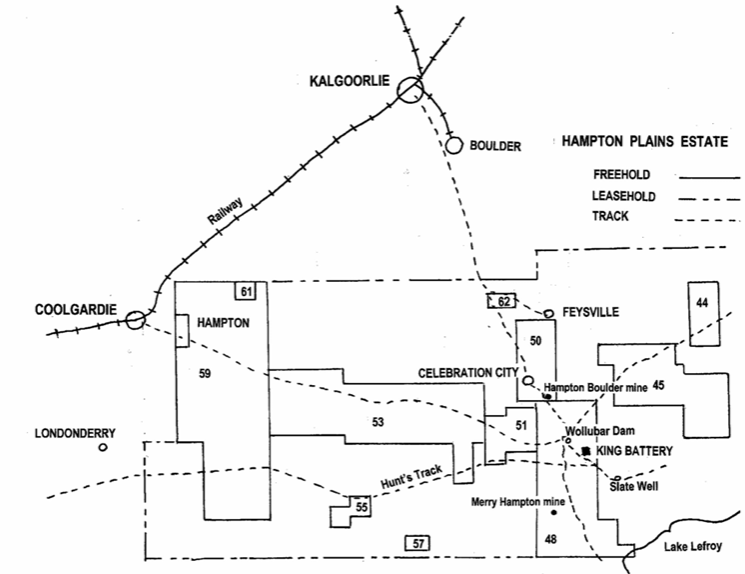
Gerard Macgill, 20046
Social Planning and Governance
The social structure and development of Celebration City were deliberately planned to avoid the informal, often chaotic, settlements typical of mining booms. The site was laid out by Messrs E. H. R. Macartney and Breen, adopting the forward-thinking principle of rounded-off street corners advocated by the State Town Planning Association. Hampton Properties, Ltd. explicitly stated its aim was to create an “ideal” town for both the business community and householders. Crucially, the company intended to actively manage settlement, hoping to prevent “promiscuous settlement” or people “squatting” around the leases, a problem previously experienced near the Golden Mile. The development included setting aside reserved sites for crucial public amenities, such as a post office, a church, and general reserves within the town site, alongside provision for a hospital reserve and a sanitary depot at a convenient distance.7
The town’s impending population growth necessitated official oversight. The Kalgoorlie Roads Board inspected the site in December 1919 because the district’s roads and health requirements would come under their jurisdiction. After the inspection, the board members were thoroughly satisfied with the layout. The board assured the company that it would not delay in assuming the responsibilities for road maintenance and health administration mandated by the Roads Board Act.8
Environmental Impacts and Considerations
Celebration City’s environmental setting and design were key factors in its establishment. The site was strategically located on uplands, which afforded a “splendid view of the surrounding country”. From a practical health standpoint, this elevation was vital, as the terrain naturally lent itself to allowing easy implementation of a good drainage system for carrying away sewage, a feature that satisfied the Roads Board. The region around the adjacent mines (Celebration and New Celebration) is characterized by a cold semi-arid climate.9 10
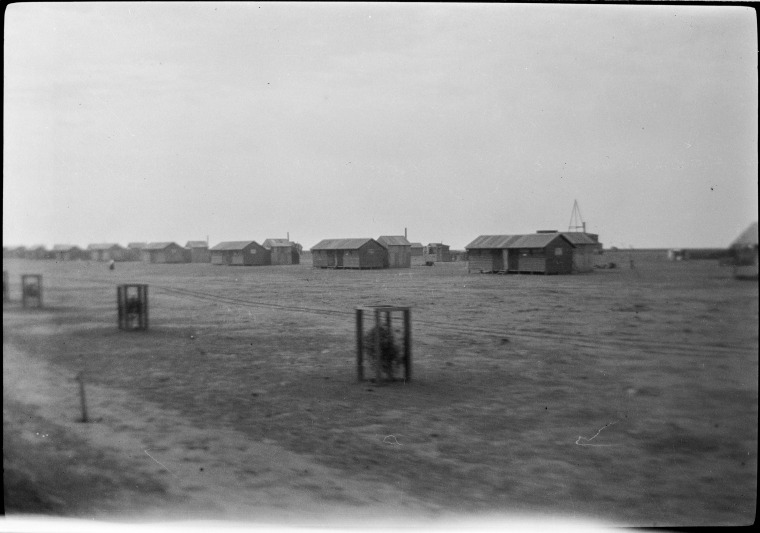
SLWA11
While the sources highlight the planned management of sewage and the environmental suitability of the high ground for the township, the broader environmental context of the Celebration area is defined by intensive resource extraction. The region is known for its gold deposits, with gold being an exploitable mineral commodity. The success of the Hampton Plains Estates, which owned the freehold title to the land, was contingent on mining. Later, mining in the immediate area led to the creation of pits, such as the New Celebration Gold Mine, which was eventually incorporated into the 1 kilometre long South Kalgoorlie Gold Mine pit, transforming the landscape.12 13 14
Decline and Modern Revival
Despite the careful planning and initial optimism, the period of growth for Celebration City was very brief. The prosperity of the associated Celebration mine was short-lived. By the end of 1923, the mine closed following a collapse of the share market. Following this economic failure, the area was “essentially quiescent” for decades until the 1960s nickel boom.15
The location, however, remains historically and economically significant. In the 1980s, the combination of technological advances in mining and higher gold prices allowed companies to profitably exploit previously uneconomic, lower-grade deposits on Block 50, including the Hampton-Boulder (the present New Celebration mine). Modern mining operations scaled up dramatically; a modern battery on Block 50 treated ore at nearly 14 times the rate of historic mills, confirming that the initial vision for vast productivity was viable, albeit decades later.16
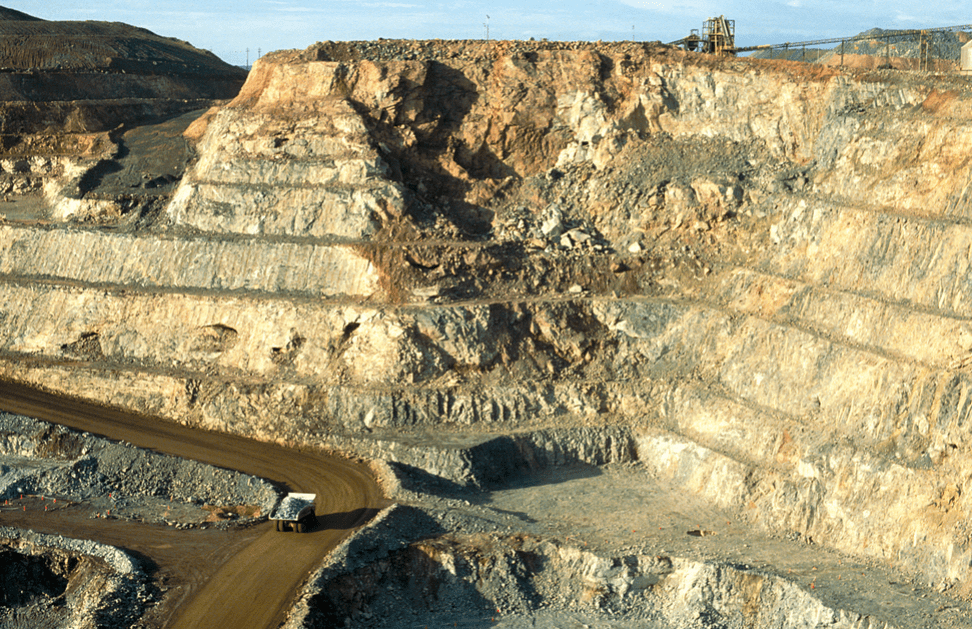
mindat.org17
Timeline
- 1882: The Land Act is passed, offering incentives for the development of Western Australia’s interior and granting freehold holders exclusive rights to minerals, water, and timber on their property.
- 1894 (October): Hampton Plains Estate Ltd (HPEL) is registered to exploit the mineral potential of the Hampton lands, including Block 50.
- 1919: Rich gold discoveries on Block 50 trigger a second boom on the Hampton Plains.
- 1919: Celebration City is created.
- 1919 (December 9): Members of the Kalgoorlie Roads Board inspect the site chosen by Hampton Properties, Ltd., on Block 50 for the establishment of Celebration City.
- 1919 (Post-inspection): The layout, which follows State Town Planning Association principles (including rounded street corners) and reserves sites for public facilities (post office, church, hospital, sanitary depot), is deemed satisfactory by the Roads Board.
- End of 1923: The Celebration mine, operated by Hampton Celebration (WA) Ltd., closes due to the collapse of the share market, initiating the decline of the associated town.
- 1923–1960s: The area is “essentially quiescent,” although the mine re-opens for short periods based on gold price increases.
- 1980s: Modern mining techniques and better gold prices enable the profitable exploitation of lower-grade deposits, including the Hampton-Boulder (present New Celebration mine) on Block 50.
- 1986: Modern mining operations commence at the New Celebration Mine.
- 2002: The New Celebration mine, along with Jubilee and Hampton-Boulder, is incorporated into the 1-kilometre long South Kalgoorlie Gold Mine (South Kal Mines) pit.
Map
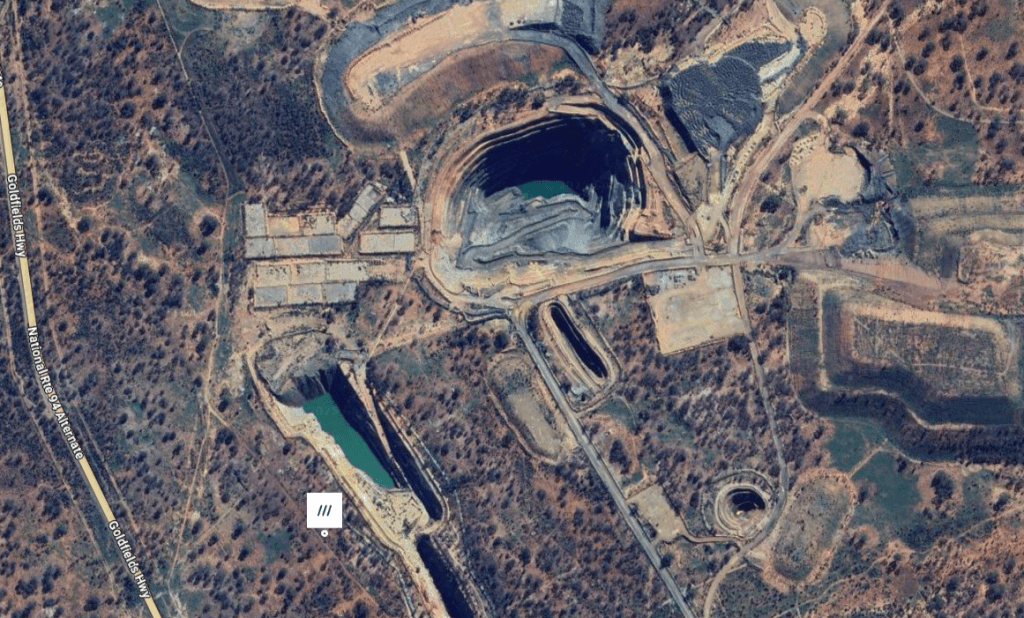
near the site of the present South Kalgoorlie Gold Mine pit
Sources
- State Library of Western Australia, n.d. James McKern collection of photographs, BA1678/2,6. Retrieved 6 Dec 2025 from https://encore.slwa.wa.gov.au/iii/encore/record/C__Rb3786985 ↩︎
- CELEBRATION CITY INSPECTION (1919, December 9). Western Argus (Kalgoorlie, WA : 1916 – 1938), p. 5. Retrieved December 5, 2025, from http://nla.gov.au/nla.news-article34215825 ↩︎
- Gerard Macgill, 2004. The King Battery and Mr Lidgey’s Grand Vision for the Hampton Plains. Published in Journal of Australasian Mining History, Vol.2, September 2004, p.186. Retrieved 5 Dec 2025 from https://www.mininghistory.asn.au/wp-content/uploads/11.-McGill.Article-11.2004..pdf ↩︎
- ibid, p.187 ↩︎
- Western Argus, 1919: refers to the economic drivers behind establishment of town ↩︎
- Macgill, p.189 ↩︎
- Western Argus,1919: refers to social and demographic factors ↩︎
- Western Argus, 1919: refers to social and demographic factors ↩︎
- Western Argus, 1919: refers to environmental factors ↩︎
- mindat.org, n.d. Celebration Gold Mine, South Kal Mines (South Kalgoorlie Gold Mine; HBJ), Woolibar Station (Hampton Plains Goldfield), Kalgoorlie-Boulder Shire, Western Australia, Australia. Retrieved 5 Dec 2025 from https://www.mindat.org/loc-272040.html ↩︎
- State Library of Western Australia, n.d. James McKern collection of photographs, BA1678/2,6. Retrieved 6 Dec 2025 from https://encore.slwa.wa.gov.au/iii/encore/record/C__Rb3786985 ↩︎
- ibid. ↩︎
- mindat.org, New Celebration: refers to exploitable minerals ↩︎
- Macgill, p.187 ↩︎
- Macgill, p.188 ↩︎
- Macgill, p.195 ↩︎
- Mindat.org, 2025. New Celebration Gold Mine, South Kal Mines (South Kalgoorlie Gold Mine; HBJ), Woolibar Station (Hampton Plains Goldfield), Kalgoorlie-Boulder Shire, Western Australia, Australia. Retrieved 5 Dec 2025 from https://www.mindat.org/photo-813249.html ↩︎
 People of Western Australia's Ghost Towns