Christine Harris (2026)
Demographics
Region: Pilbara
LGA: East Pilbara
Industry: Pastoral Lease / Wartime military base
Other Names: Corunna Downs Airforce Base, Corunna Downs Station
Open Street Map: -20.970571460982455, 119.84298078211745
What3Words: ///error.dates.delirious
Settled: 1886
Gazetted: N/A
Abandoned: RAAF closed the base in Jan 1946 but some pastoral activity continues.
Abstract
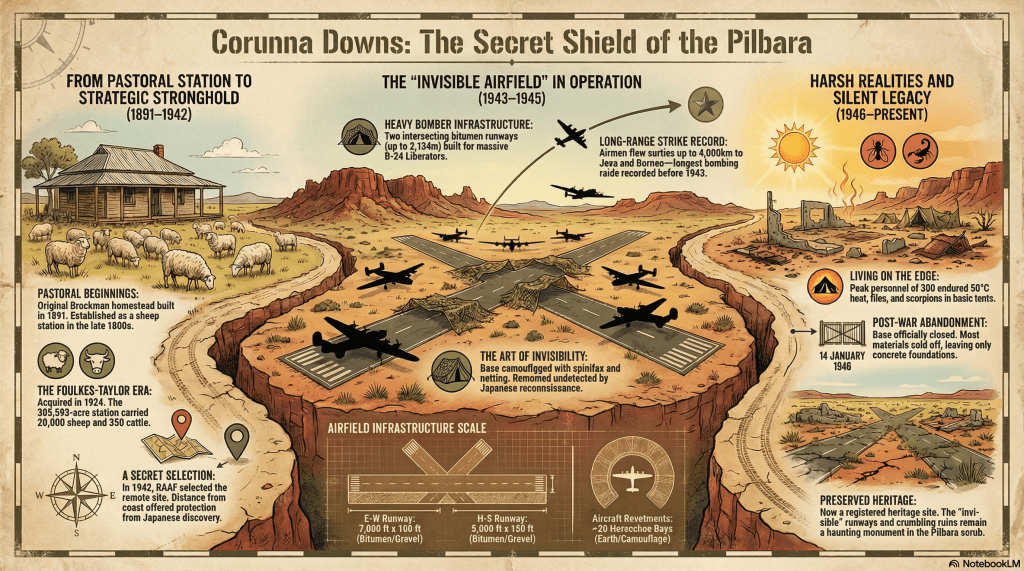
Corunna Downs, located in the unforgiving semi-desert of Western Australia’s Pilbara region, represents a unique intersection of Australian pastoral and military history. Originally established as a sheep station in 1891, the property was defined by its vastness and the extreme environmental conditions of the East Pilbara. Under the ownership of WWI veteran Ernest Samuel Foulkes-Taylor, the station became a significant economic entity before its strategic isolation made it the ideal location for a clandestine military operation.
During World War II, the site was transformed into a secret heavy bomber base known as ‘The Invisible Airfield’. From 1943 to 1945, it served as a critical staging ground for RAAF and USAAF B-24 Liberator squadrons, which conducted some of the longest-range bombing missions of the war. Despite its high level of activity, the base remained undetected by Japanese reconnaissance due to clever camouflage and natural heat haze. Following the war, the base was dismantled, leaving only runways and crumbling foundations. This article examines the social, economic, and political factors that shaped Corunna Downs, highlighting its transition from a remote homestead to a ‘strategically crucial’ element of Australia’s northern defence and its current status as a site of quiet historical remembrance.
History
Nestled within the rugged ironstone ridges and expansive spinifex plains of the East Pilbara, Corunna Downs is a name that resonates with two distinct identities. To some, it is a quintessential Australian pastoral station, born of nineteenth-century ambition and tempered by the blistering heat of the desert. To others, it is ‘The Invisible Airfield’, a ghost of World War II that played a clandestine but vital role in the defence of the Pacific. The history of this community—moving from discovery and growth to its wartime peak and eventual abandonment—is a testament to human endurance against a formidable environment.1 2
The Pastoral Foundation: 1891–1942
The story of Corunna Downs began in the late colonial era, amidst the expansion of Western Australia’s pastoral industry. Named after the Peninsular War’s Battle of Corunna, the property was established as a massive 300,000-acre sheep station. The heart of the community was the Brockman homestead, constructed in 1891. This period was marked by the economic drive to tame the outback, though the environmental reality was often overwhelming. Situated approximately 40 kilometres south of Marble Bar—notoriously the hottest town in Australia—the station faced temperatures regularly exceeding 50°C.3 4 5 6 7
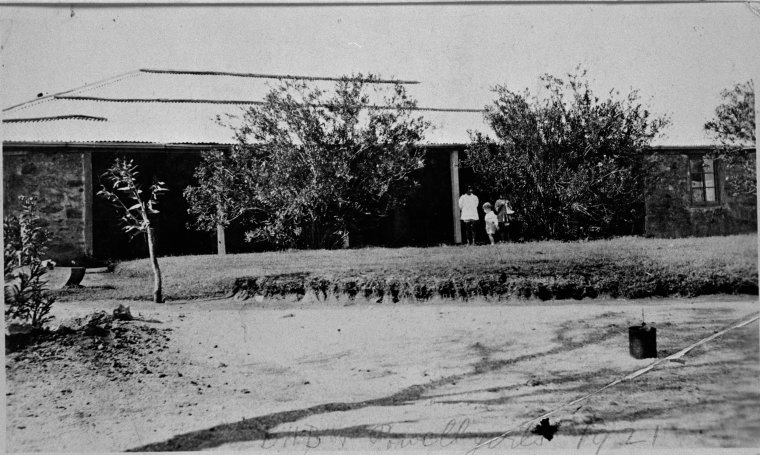
In 1924, the station underwent a significant transition when it was purchased by the Foulkes-Taylor family. Ernest Samuel Foulkes-Taylor, a veteran of the Great War, consolidated 13 separate leases into a single, cohesive pastoral empire. At this stage, the station was a bustling economic hub, supporting 20,000 head of sheep, 350 cattle, and a diverse array of working animals, including 175 donkeys and eight camels. 9
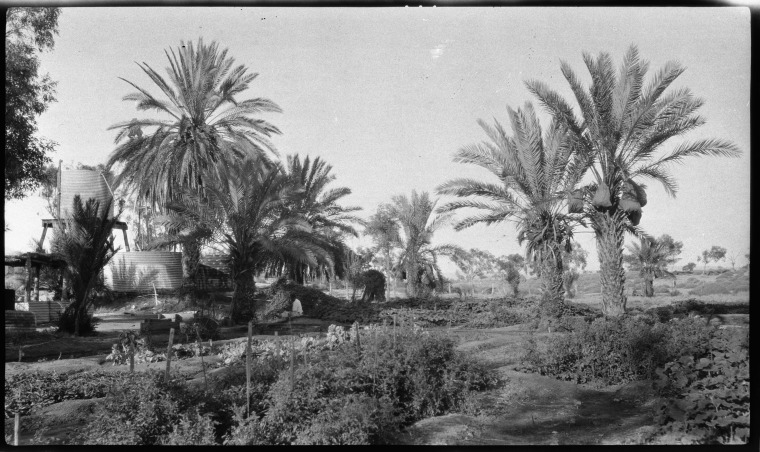
Life at the station was defined by social isolation and physical hardship. Foulkes-Taylor himself lived with the legacy of his wartime service; a head injury sustained in battle left him a ‘war neurasthenic’ with chronic headaches and naturally thick speech, traits that led to occasional social misunderstandings in the broader Pilbara community. Despite these challenges, he was an innovative manager, even applying for a patent for an ‘Improved Gate Fastener’ in 1927. The station’s operations during this era were a reflection of the political and economic stability of the interwar years, as pastoralists provided the wool and meat that fueled the Australian economy. However, the onset of global conflict in the late 1930s would soon shift the station’s destiny from agriculture to aviation.11 12
The Call to War: ‘The Invisible Airfield’
The entry of Japan into World War II in 1941 created a political and military emergency for Australia. The northern coastline was vulnerable, and the Royal Australian Air Force (RAAF) required remote, secure locations to launch long-range strikes. In 1942, the military looked to the Pilbara. The isolation of Corunna Downs, which had long been a pastoral challenge, suddenly became its greatest strategic asset.13 14 15
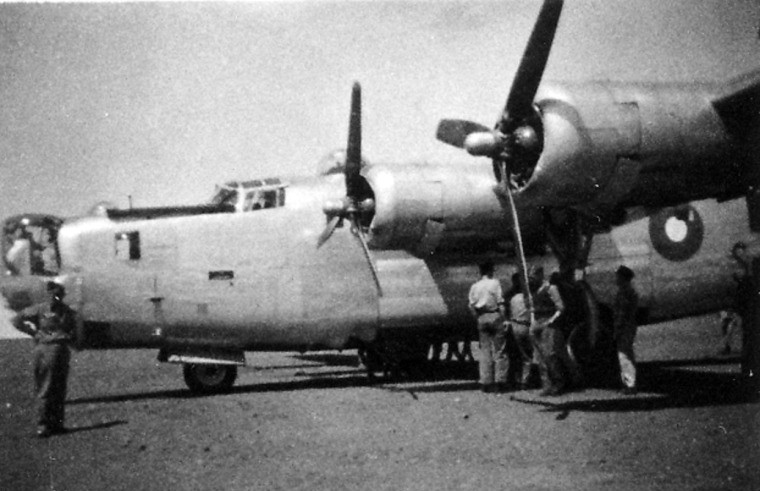
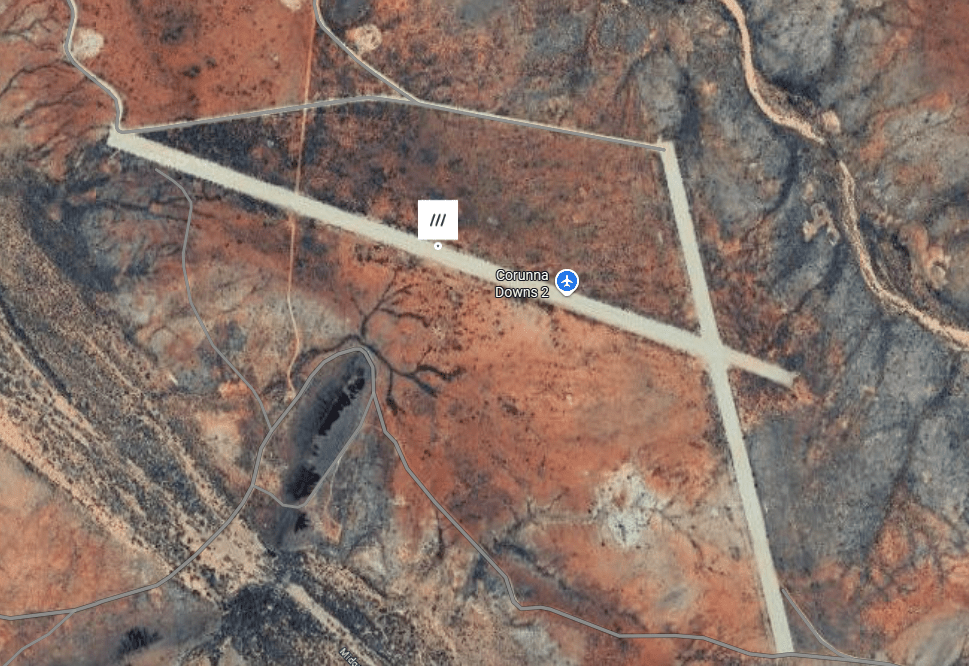
Adjacent to the 1891 homestead, the RAAF constructed a secret airbase designed for the heaviest four-engine bombers of the day. The infrastructure was significant: two intersecting bitumen runways, one measuring over 2,000 metres, were laid across the parched earth. To maintain secrecy, the base was heavily camouflaged. Aircraft revetments—horseshoe-shaped earthen bunkers—were covered with netting and native spinifex. Furthermore, the intense natural heat haze of the region served to obscure the runways from high-altitude Japanese reconnaissance, earning the site its nickname, ‘The Invisible Airfield’.16 17 18
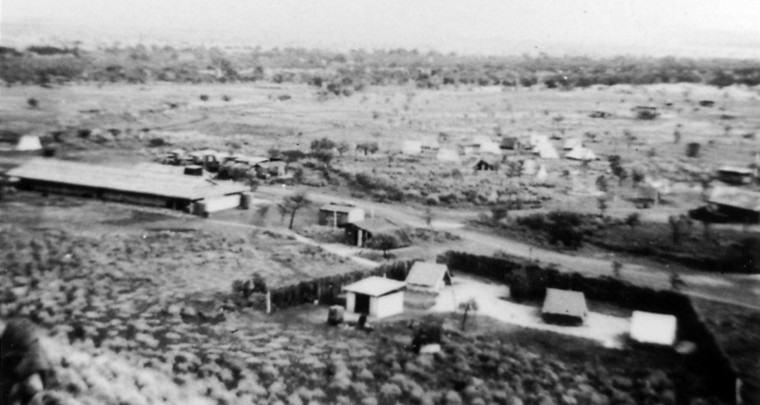
At its peak, the community at Corunna Downs grew to host approximately 300 personnel, including members of RAAF No. 24 and 25 Squadrons and the United States 380th Bomb Group. The social impact on the region was profound; the base provided a rare injection of personnel and resources into the East Pilbara. However, the daily life for these servicemen was ‘harsh and trying’. Living in basic four-man tents without refrigeration or air conditioning, the men were tormented by flies, scorpions, and snakes. Their water, sourced from a brackish bore, was often too hot for showers until late at night.20 21
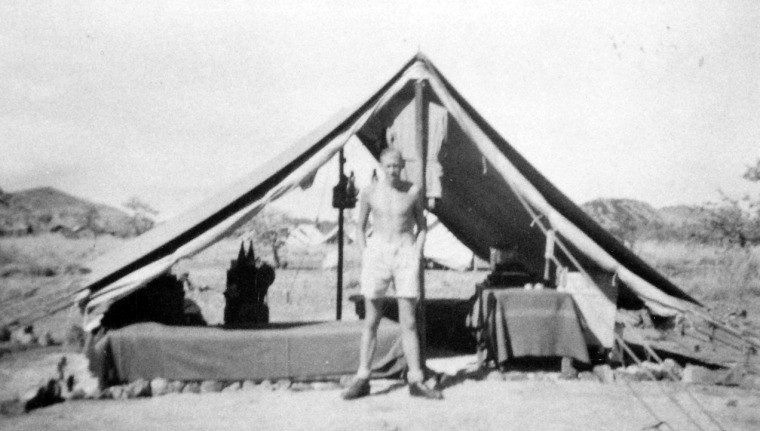
Despite these conditions, the base was ‘strategically crucial’ to the war effort. Between 1943 and 1945, over 200 operational heavy bomber sorties were launched from Corunna Downs. B-24 Liberators hammered Japanese shipping and base facilities across the Dutch East Indies, reaching as far as Java, Borneo, and Singapore. One round trip to Surabaya covered 4,000 kilometres, representing some of the longest bombing raids flown anywhere in the world before 1943.23
Decline, Abandonment, and Remembrance
The conclusion of the Pacific War brought an immediate end to the military community at Corunna Downs. The base was officially closed on 14 January 1946. In an era of post-war economic rationalisation, clearance sales were held later that year, and the majority of the base’s buildings were demolished or hauled away for materials. The intense roar of 1,200-horsepower engines was replaced by the ‘vast silence’ of the outback.25 26
Ernest Samuel Foulkes-Taylor returned to his pastoral duties, though his health continued to decline until his death in 1951, likely from his old war injuries. He was buried in an unmarked grave on the station he loved. Over the decades, the station transitioned fully from sheep to a cattle operation, and the former airfield was eventually excised from the pastoral lease to allow for public access.27
Today, Corunna Downs is a place of ‘quiet remembrance’. Visitors can still drive on the long bitumen runways and see the outlines of the horseshoe revetments where giant bombers once sat in secret. Scant remains, such as crumbling foundations and rusting fuel drums, offer a glimpse into the base’s historical significance. The grave of Sergeant Ernest Newton Cook, who died in a 1944 vehicle accident, stands as a lonely marker of the lives that once populated this desert outpost.28 29
The history of Corunna Downs reflects the broader Australian story: a struggle against a harsh environment, the sudden demands of global conflict, and the enduring legacy of those who lived and worked in the most remote corners of the continent.
Timeline
- 1891: Brockman homestead is built, establishing the pastoral foundation of the area.
- 1924: The Foulkes-Taylor family purchases the property, combining 13 leases into a single 305,593-acre sheep station.
- 1927: Ernest Samuel Foulkes-Taylor applies for a patent for an ‘Improved Gate Fastener’.
- 1942: The RAAF arrives to build a top-secret airbase adjacent to the homestead.
- 1943–1945: Peak operational period; over 200 heavy bomber sorties are launched against Japanese targets.
- December 1944: Sergeant Ernest Newton Cook is killed in a motor vehicle accident; he is buried at the site of the base ‘picture gardens’.
- 14 January 1946: The secret base is officially closed.
- 1946 (Late): Clearance sales lead to the demolition and removal of most base buildings.
- 17 August 1951: Station owner Ernest Samuel Foulkes-Taylor dies and is buried on the station.
- 1952: The airfield is briefly reopened to air traffic.
- 2006: The Corunna Downs Airfield is designated on the Western Australia Heritage Register.
Map
Sources
- De Leo, James (2024). The Invisible Airfield Corunna Downs, Western Australia 1942. Published in the blog “Backyard Battlefields” and retrieved 26 Feb 2026 from https://www.backyardbattlefields.com/the-invisible-airfield-corunna-downs-western-australia-1942/ ↩︎
- CMCA Ltd (2022). WA’s Wartime Secret. Retrieved 26 Feb 2026 from https://wanderer.cmca.au/destinations/western-australia-wartime-secrety ↩︎
- De Leo: refers to the origin of the name ↩︎
- Outback Graves Markers (n.d.) Ernest Samuel Foulkes Taylor. Retrieved 26 Feb 2026 from https://outbackgraves.org/burial-records/person/5527 ↩︎
- Wikipedia (2023) Corunna Downs Airfield. Retrieved 26 Feb 2026 from https://en.wikipedia.org/wiki/Corunna_Downs_Airfield ↩︎
- CMCA: refers to the environment ↩︎
- mindat.org (n.d.) Corunna Downs Station, Marble Bar, East Pilbara Shire, Western Australia, Australia. Retrieved 26 Feb 2026 from https://www.mindat.org/loc-273702.html ↩︎
- State Library of Western Australia (n.d.) Hubert H Brockman collection of photographs of the Kimberley, Pilbara and South West regions of Western Australia. Retrieved 26 Feb 2026 from https://encore.slwa.wa.gov.au/iii/encore/record/C__Rb2863753 ↩︎
- Outback Graves Markers (n.d.): refers to E Foulkes Taylor ↩︎
- State Library of Western Australia (n.d.) John K Ewers collection of photographs; BA1658/1/44-45. Retrieved 26 Feb 2026 from https://encore.slwa.wa.gov.au/iii/encore/record/C__Rb3388358 ↩︎
- Outback Graves Markers: refers to E Foulkes Taylor ↩︎
- Wikipedia, 2023: refers to RAAF ↩︎
- ibid: refers to WWII ↩︎
- CMCA: refers to wartime activity ↩︎
- Heritage Council of Western Australia (2017). Corunna Downs Wartime Air Base. Retrieved 26 Feb 2026 from https://inherit.dplh.wa.gov.au/public/inventory/details/21fbb34a-179c-417f-822c-3ced5ef334f4 ↩︎
- Wikipedia, 2023: refers to construction of the air base ↩︎
- CMCA: refers to location ↩︎
- Australia’s North West (n.d.) Corunna Downs Airfield. Retrieved 26 Feb 2026 from https://www.australiasnorthwest.com/explore/pilbara/marble-bar/corunna-downs-airfield/ ↩︎
- State Library of Western Australia (n.d.) Images of World War Two airbase at Corunna Downs near Marble Bar. Retrieved 26 Feb 2026 from https://encore.slwa.wa.gov.au/iii/encore/record/C__Rb4064818 ↩︎
- Wikipedia, 2023: refers to design of the base ↩︎
- CMCA: refers to harsh living conditions ↩︎
- SLWA: Retrieved 25 Feb 2026 from https://encore.slwa.wa.gov.au/iii/encore/record/C__Rb4064818 ↩︎
- Australia’s North West: refers to layout of air base ↩︎
- SLWA: Retrieved 25 Feb 2026 from https://encore.slwa.wa.gov.au/iii/encore/record/C__Rb4064818 ↩︎
- Heritage Council of WA: refers to remains of the base ↩︎
- CMCA: refers to ongoing secrecy ↩︎
- Outback Graves Markers: refers to Foulkes Taylor’s post-war health challenges ↩︎
- Tourism Western Australia (n.d.) Corunna Downs WW2 Secret Airbase. Retrieved 26 Feb 2026 from https://www.westernaustralia.com/au/attraction/corunna-downs-ww2-secret-airbase/677398e4f64f52d1095d12b1 ↩︎
- CMCA: refers to lovely grave ↩︎
- what3words.com (2026) Corunna Downs. Retreived 26 Feb 2026 from https://what3words.com/error.dates.delirious ↩︎
Further Reading
- Purser, Frank: “The Story of Corunna Downs”
- Duggan, Ian: “Black Swans Over Java”
- Cafarella, Antonio: “Corunna Downs – The Invisible WW2 Airfield”
 People of Western Australia's Ghost Towns