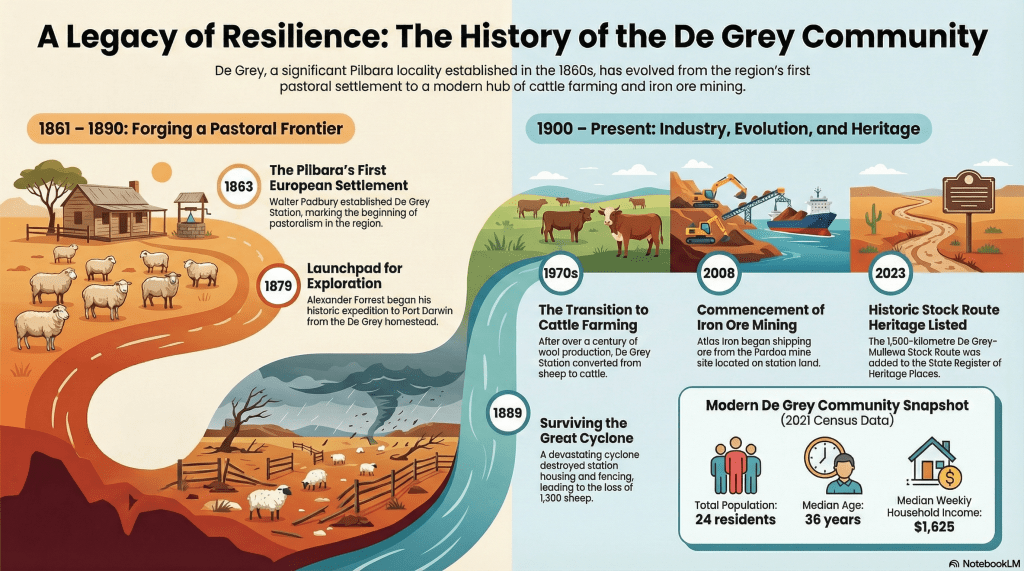
Christine Harris 2026
Demographics
Region: Pilbara
LGA: Port Hedland
Industry: Pastoral Lease
Other Names: DeGrey
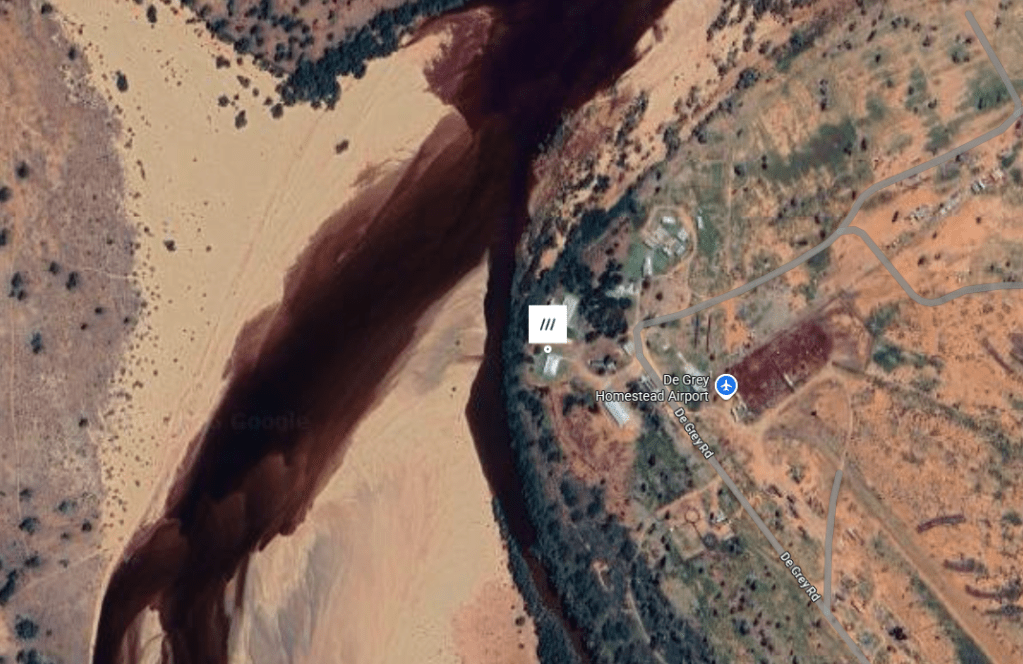
Open Street Map: -20.17615, 119.1905
What3Words: ///smearing.elder.smallish
Settled: 1863
Population (2021): 24
Abstract
Located in the rugged Pilbara region of Western Australia, De Grey represents a pivotal chapter in the state’s colonial and pastoral history. This account details the establishment of the De Grey River locality, named by explorer Francis Gregory in 1861, and the subsequent founding of De Grey Station in 1863 by Walter Padbury. As the first European pastoral settlement in the North-West, De Grey became a cornerstone of the region’s economy, initially dominating the sheep and wool industry before transitioning to cattle in the 1970s.
The narrative examines the profound social impacts on the traditional Aboriginal custodians, whose lives were disrupted by the gazetting of the De Grey-Mullewa Stock Route and the eventual shift toward Indigenous employment on the station. Economic developments are further explored through the lens of early wool exports for world wars and the modern-day influence of iron ore and gold mining. Environmental resilience is a recurring theme, as the community has historically contended with devastating cyclones, droughts, and invasive species. Today, De Grey remains a small but significant rural community of roughly 24 to 32 residents, serving as a site of historical heritage and a popular stop for outback travellers.
History
The locality of De Grey, situated in the vast Pilbara region of Western Australia, stands as a testament to the endurance of those who have lived and worked in one of the most demanding environments on Earth. Located approximately 75 to 80 kilometres east of Port Hedland, De Grey is defined by its eponymous river, its historic station, and a legacy that spans from ancient Aboriginal connections to the cutting edge of modern mining.1 2 3 4
Establishment and Early Exploration
The recorded history of De Grey begins with the 1861 expedition of explorer and surveyor Francis Gregory. On 16 August 1861, Gregory named the De Grey River in honour of Thomas de Grey, the 2nd Earl de Grey, who served as the president of the Royal Geographical Society at the time. Gregory’s reports of fertile, grass-rich lands along the riverbanks soon attracted the attention of southern entrepreneurs. 5 6 7 8
In 1862, De Grey became the site of the first pastoral lease in Western Australia. The following year, the community’s foundations were laid when Walter Padbury established the De Grey Station. Padbury, along with his party, arrived via the cutter Mystery and the barque Tien Tsin, bringing livestock to the North-West in a bold move that marked the beginning of the region’s pastoral industry.9 10 11
Social Impact and Traditional Custodians
Long before European arrival, the land was, and remains, the country of traditional Aboriginal custodians, primarily the Nyamal people, who maintain a continuing connection to its waters and community. The establishment of pastoralism brought immediate and profound social disruption. The gazetting of the 1,500-kilometre De Grey-Mullewa Stock Route in the late 1860s facilitated European settlement but led to significant conflict over land access and use.12
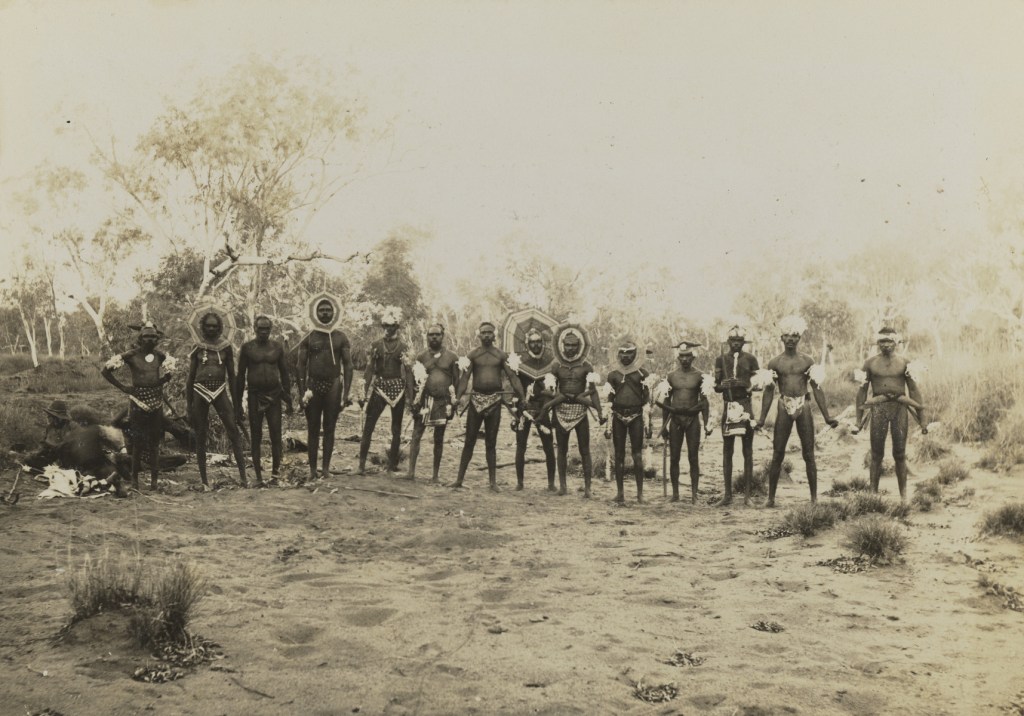
E. L. Mitchell (1876-1959)13
In 1886 a visitor to the De Grey Station reported that the Manager, a Mr Alex. Edgar, had a large number of aboriginal people working for him who he managed with “firmness and discipline tempered with kindness” He went on to report that a very severe outbreak of measles in 1885 had resulted in medical staff being brought to the station to set up a hospital in the shearing sheds. While fifty people fell victim to the disease, with Mr Edgar himself coming close to death, many more were saved.14
All visitors to this station admit that a happier lot of people could not be found.
Over time, the social fabric of the station evolved. By the late 19th and early 20th centuries, De Grey Station had become a social hub for the district, hosting race meetings and functions that brought together station workers and townspeople. Indigenous people, while initially displaced, became an integral part of the station’s workforce, and the site is now recognized for its potential to yield vital information about the lives of both Aboriginal and non-Aboriginal stockmen. 15
Economic Development: From Wool to Iron
Economically, De Grey was a powerhouse of the early Pilbara. In its 1886 heyday under the ownership of Messrs Grant, Anderson, and Edgar, the station sprawled across nearly 3,000,000 acres. It was primarily a sheep station, boasting 74,000 head by 1890. The Rubin family, who purchased the lease in 1912 for £100,000, played a critical role in global history when De Grey wool was used to manufacture uniforms for the British Expeditionary Force during World War I.16 17 18
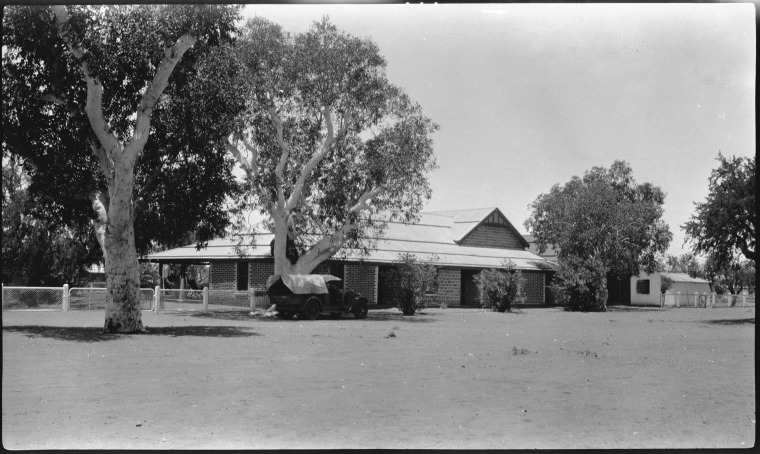
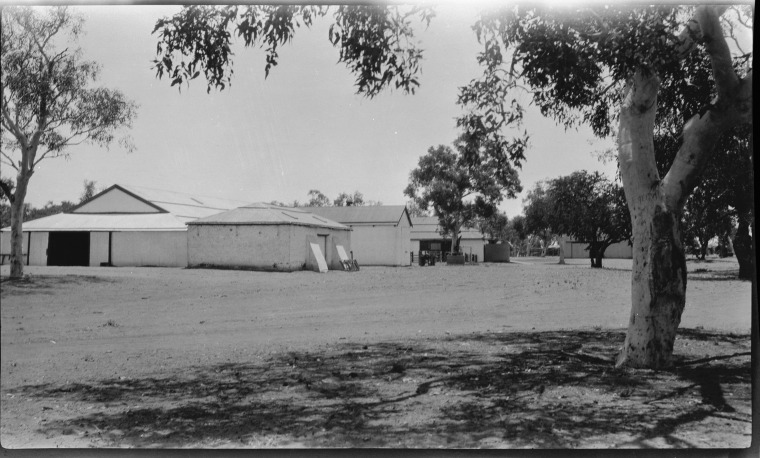
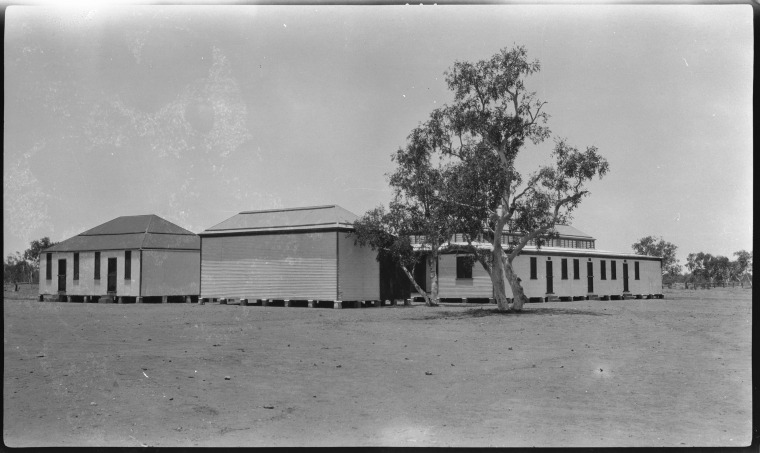
The community’s economic focus shifted in the 1970s. Following a trend across the Pilbara, De Grey transitioned from sheep to cattle, a status it maintains today with thousands of head of cattle grazing the vast plains. In the 21st century, the economy has diversified further into the extractive industries. Atlas Iron began mining iron ore at the Pardoo mine site on station land in 2008, and more recently, De Grey Mining’s Hemi Gold Project has injected new economic vitality into the locality.20 21 22
Environmental Factors: A Land of Extremes
The environment has always been the primary arbiter of life in De Grey. The De Grey River, which discharges into the Indian Ocean via Breaker Inlet, is a “lifeblood” that can transform from a dry bed of 100 metres wide into a powerful torrent during the wet season.23 24 25
Cyclones are a constant threat. As early as 1889, a cyclone destroyed houses, tore up miles of fencing, and killed over 1,300 sheep. This same cyclone was responsible for precipitating the decline and eventual abandonment of Tien Tsin port at Cossack. 26 More recent systems, such as Cyclones Veronica (2019), Ilsa (2023), and Zelia (2025), have continued this pattern of devastation, causing stock losses and significant damage to infrastructure.27 28 29
Beyond storms, the community has battled biological challenges. Locust plagues have historically stripped pastures, and pastoralists have had to manage invasive weeds like Parkinsonia and calotropis. In 2006, station manager Mark Bettini initiated environmental rehabilitation by re-establishing native Mitchell grass to combat invasive species and improve land hydration.30 31 32
Political and Administrative Evolution
Politically, the development of De Grey was supported by government intervention, such as the construction of 55 wells along the stock route using innovative boring technology to ensure the survival of stock in arid regions. Local governance also played a role; 1930 records from the Port Hedland Road Board show deliberations on funding for the De Grey River banks and the alteration of boundaries to bring the entirety of De Grey Station under a single administrative district.33 34
De Grey Today: A Community in Transition
According to 2021 Census data, the locality of De Grey is home to a small, resilient population of 24 people, with a median age of 36. Other sources suggest the population may be as high as 32. The community consists of roughly six families living in 22 private dwellings, with a median weekly household income of $1,625.35 36 37
The physical remains of the original settlement—including the Manager’s Cottage and the Station House—stand in poor condition, bearing the scars of past cyclones and time. Despite this, the area remains a significant destination for those interested in family history and the “romantic notions of the drover”. The De Grey River Rest Area is now a popular spot for travellers to camp under the Pilbara sky, fish for barramundi, and reflect on the deep history of a community that was the first of its kind in the great Australian North-West.38
Timeline
- 16 August 1861: Francis Gregory names the De Grey River after Thomas de Grey, 2nd Earl de Grey.
- 1862: De Grey is gazetted as the first pastoral lease in Western Australia.
- 1863: Walter Padbury establishes De Grey Station, the first pastoral station in the Pilbara.
- Late 1860s: The 1,500km De Grey-Mullewa Stock Route is established, facilitating settlement but causing conflict with local Aboriginal people.
- 1869: Pardoo Station is established as an outstation of De Grey.
- 25 February 1879: Explorer Alexander Forrest begins his historic expedition from De Grey River Station.
- 1886: The station reaches a massive size of nearly 3,000,000 acres under Grant, Anderson, and Edgar.
- 1889: A major cyclone destroys station buildings and kills over 1,300 sheep.
- 1890: De Grey records a peak sheep population of 74,000.
- 1912: The Rubin family purchases the property for £100,000.
- 1914: De Grey wool is used for British Expeditionary Force uniforms in WWI.
- 1928: The MacRobertson Round Australia Expedition visits the De Grey homestead.
- January 1930: The Port Hedland Road Board moves to include the entire station within the road district.
- 1970s: De Grey Station transitions from sheep to cattle.
- 2006: Station management begins re-establishing native Mitchell grass to combat invasive weeds.
- 2008: Iron ore mining begins at the Pardoo mine site on De Grey land.
- April 2023: Cyclone Ilsa hits the region, causing significant damage to nearby infrastructure.
- 2023: The De Grey-Mullewa Stock Route is added to the State Register of Heritage Places.
- February 2025: Tropical Cyclone Zelia impacts the Pilbara, causing further devastation to remote stations.
Map
Sources
- Wikipedia (2017). De Grey River. Retrieved 15 Feb 2026 from https://en.wikipedia.org/wiki/De_Grey_River ↩︎
- Wikipedia (2014). De Grey Station. Retrieved 15 Feb 2026 from https://en.wikipedia.org/wiki/De_Grey_Station ↩︎
- Wikipedia (2023). De Grey, Western Australia. Retrieved 15 Feb 2026 from https://en.wikipedia.org/wiki/De_Grey,_Western_Australia ↩︎
- wiki Australia (n.d.) Guide to De Grey, Western Australia, Australia. Retrieved 15 Feb 2026 from https://wikiaustralia.com/destination/de-grey/ ↩︎
- Mr. F.T. Gregory’s Expedition to the N. W. Coast of Australia. (1861, November 29). The Perth Gazette and Independent Journal of Politics and News (WA : 1848 – 1864), p. 3. Retrieved February 15, 2026, from http://nla.gov.au/nla.news-article2933556 ↩︎
- Explore Oz (n.d.) De Grey River – WA. Retrieved 15 Feb 2026 from https://www.exploroz.com/places/418664/wa+de-grey-river ↩︎
- Wikipedia, 2017: refers to the naming of the river ↩︎
- Landgate (2021). History of River Names. Retrieved 15 Feb 2026 from https://www0.landgate.wa.gov.au/maps-and-imagery/wa-geographic-names/name-history/History-of-river-names ↩︎
- Harris, Christine (2026). People of Western Australia’s Ghost Towns: Cossack. Retrieved 15 Feb 2026 from https://ghostswa.au/cossack/ ↩︎
- Wikipedia, 2014: refers to the granting of a pastoral lease to Samuel Mackay ↩︎
- Heritage Council of Western Australia (2022). De Grey Station Group. Retrieved 15 Feb 2026 from https://inherit.dplh.wa.gov.au/public/inventory/details/ed5bd4d4-ebd1-4531-ac08-ca0be9079e84 ↩︎
- Dept of Planning, Lands and Heritage (2023). De Grey – Mullewa Stock Route No. 9701. Retrieved 15 Feb 2026 from https://www.wa.gov.au/government/announcements/de-grey-mullewa-stock-route-no-9701 ↩︎
- State Library of Western Australia (n.d.) E. L. Mitchell album of photographs of the North West, Western Australia; BA2683. Retrieved 15 Feb 2026 from https://encore.slwa.wa.gov.au/iii/encore/record/C__Rb4577080 ↩︎
- THE DE GREY STATION. (1886, April 6). The West Australian (Perth, WA : 1879 – 1954), p. 3. Retrieved February 15, 2026, from http://nla.gov.au/nla.news-article3762475 ↩︎
- Heritage Council: refers to the historical significance of the area ↩︎
- Wikipedia, 2014: refers to station size and production ↩︎
- THE DE GREY STATION. (1886, April 6). The West Australian (Perth, WA : 1879 – 1954), p. 3. Retrieved February 15, 2026, from http://nla.gov.au/nla.news-article3762475 ↩︎
- Heritage Council: refers to primary role as a sheep station running 74,000 sheep ↩︎
- State Library of Western Australia (n.d.) John K. Ewers collection of pohotographs; BA1658/184-185, 188-189. Retrieved 15 Feb 2026 from https://encore.slwa.wa.gov.au/iii/encore/record/C__Rb3388385 ↩︎
- Heritage Council: refers to change to cattle station in 1970s ↩︎
- Wikipedia, 2014: refers to change to cattle station in 1970s ↩︎
- wiki Australia: refers to gold mining ↩︎
- Wikipedia, 2017: refers to influence of environment on water level of river ↩︎
- wiki Australia: refers to river as lifeline of people in the area ↩︎
- kiddle (2025). De Grey, Western Australia facts for kids. Retrieved 16 Feb 2026 from https://kids.kiddle.co/De_Grey,_Western_Australia ↩︎
- Harris: refers to 1889 cyclone ↩︎
- ABC News (2025). Residents of WA’s Pilbara pick up pieces after Tropical Cyclone Zelia. Retrieved 16 Feb 2026 from https://www.abc.net.au/news/2025-03-01/east-pilbara-still-counting-cost-of-tropical-cyclone-zelia/104990392 ↩︎
- Wikipedia, 2014: refers to 1889 cyclone ↩︎
- ABC News (2023). Pardoo Roadhouse bears brunt of Ilsa on WA’s Kimberley-Pilbara coast with severs tropical cyclone now downgraded. Retrieved 16 Feb 2026 from https://www.abc.net.au/news/2023-04-14/pardoo-roadhouse-bears-brunt-of-cyclone-ilsa/102223426 ↩︎
- ABC News (2018). Locusts swarm in the Pilbara and Kimberley, costing frmers thousands. Retrieved 16 Feb 2026 from https://www.abc.net.au/news/rural/2018-04-02/yellow-winged-locust-plague-swarms-northern-wa-stations/9603136 ↩︎
- Wikipedia, 2014: refers to rehabilitation of the environment ↩︎
- ABC News (2015). Weeding out calotropsis in the Pilbara and Kimberley. Retrieved 16 Feb 2026 from https://www.abc.net.au/news/rural/2015-05-26/pilbara-calotropis-threat/6490866 ↩︎
- DPLH: refers to the construction of wells on the stock route ↩︎
- Port Hedland Notes (1930, January 16). Northern Times (Carnarvon, WA : 1905 – 1952), p. 4. Retrieved February 15, 2026, from http://nla.gov.au/nla.news-article74899296 ↩︎
- Australian Bureau of Statistics (2021). 2021 Census All persons QuickStats: De Grey. Retrieved 16 Feb 2026 from https://abs.gov.au/census/find-census-data/quickstats/2021/SAL50398 ↩︎
- Australia’s Guide (n.d.) De Grey, Port Hedland, Western Australia. Retrieved 16 Feb 2026 from https://australiasguide.com/wa/location/de-grey/ ↩︎
- wiki Australia: refers to facilicies for travellers ↩︎
- Heritage Council: refers to the remaining buildings ↩︎
- what3words.com (2026). De Grey. Retreived 28 Feb 2026 from https://what3words.com/smearing.elder.smallish ↩︎
Further Reading
- Hasluck, Paul (1929), “The first year in the North-West”, Journal and proceedings, vol. 1, no. 4, Western Australian Historical Society, p. 1-16 — An account of the cutter Mystery and the barque Tien Tsin in taking stock for Walter Padbury and Henry Welland to De Grey in 1863, principally from the diaries of Charles Nairn and William Shakespeare Hall.
- Hall, William Shakespeare; Harold Aubrey Hall; J.M. Clifton, Papers of William Shakespeare Hall, 1861–1895, William Shakespeare Hall’s journal of the 1861 expedition.
 People of Western Australia's Ghost Towns