Christien Harris (2026)
Demographics
Region: Goldfields-Esperance
LGA: Coolgardie
Industry: Gold mining
Other Names: Coolgardie
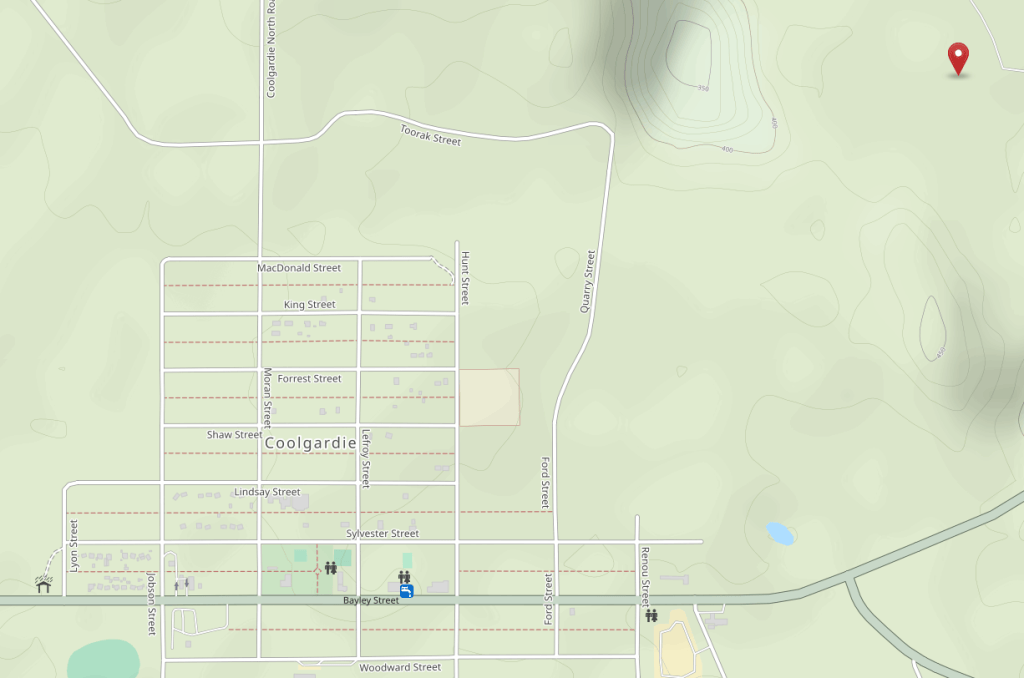
Open Street Map: -30.94310, 121.17875
What3Words: ///pudding.summit.subbed
Settled: 1863
Gazetted: 1893 (as Coolgardie)
Abstract
Fly Flat, situated in a harsh, insect-plagued desert, was first explored by Henry Maxwell Lefroy in 1863 and surveyor Charles Cooke Hunt in the 1860s. The area’s modern history began in June 1892 when prospectors Arthur Wellesley Bayley and William Ford ventured east from Southern Cross. In August 1892, Ford found a half-ounce nugget at Fly Flat. The pair gathered over two hundred ounces before registering their prospecting claim at Southern Cross on September 17, 1892, triggering the last great Australian gold rush. Controversy surrounded the find, with alternative accounts claiming that Dick Fosser, Harry Baker, and Albert Talbot made the discovery and were driven off by Bayley at gunpoint.
The rush brought extreme hardships, including water scarcity, famine, and a deadly typhoid epidemic where Nurse Mercy Taylor worked heroically. The early settlement was filled with colourful characters, like Crying Charlie and a fraudulent spiritualist professor, alongside an Afghan cameleer camp that provided camel transport. Bayley and Ford sold their lease to Sylvester Browne’s syndicate in March 1893, forming the highly profitable Bayley’s Reward mine. Gazetted as Coolgardie in 1893, the town peaked in 1900 with fifteen thousand residents and a vast commercial infrastructure. However, gold production declined after Paddy Hannan’s find at Kalgoorlie. The completed goldfields water pipeline in 1903 resolved water issues, but the original leases finally fell silent when mining officially closed in 1963.
History
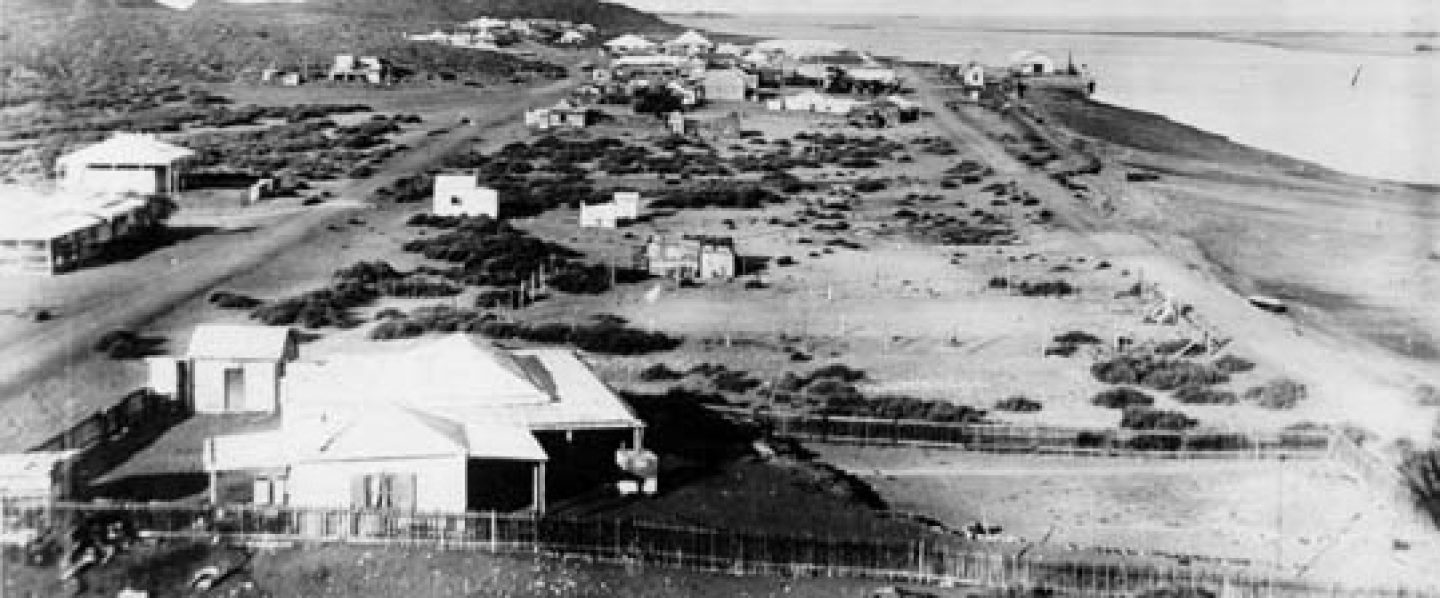
The history of Fly Flat, the legendary red claypan of the eastern goldfields of Western Australia, begins long before the modern seeker set foot on its arid plains. Sighted first by the explorer Henry Maxwell Lefroy in June 1863, the region was described as an expanse of metamorphic rock intersected by quartz reefs where gold was highly probable. Camping at the Gnarlbine Rocks, Lefroy crossed the dry terrain but left its mineral treasures undisturbed. Surveyor Charles Cooke Hunt followed up Lefroy’s work between 1864 and 1866, establishing soaks and wells to sustain future travelers. Hunt was accompanied by pensioner soldiers and a gang of convicts who, in a bid for freedom, attempted to escape overland towards South Australia. Although these convicts were recaptured with a small quantity of gold, they were unable to lead Hunt’s party back to the exact spot of their find.1
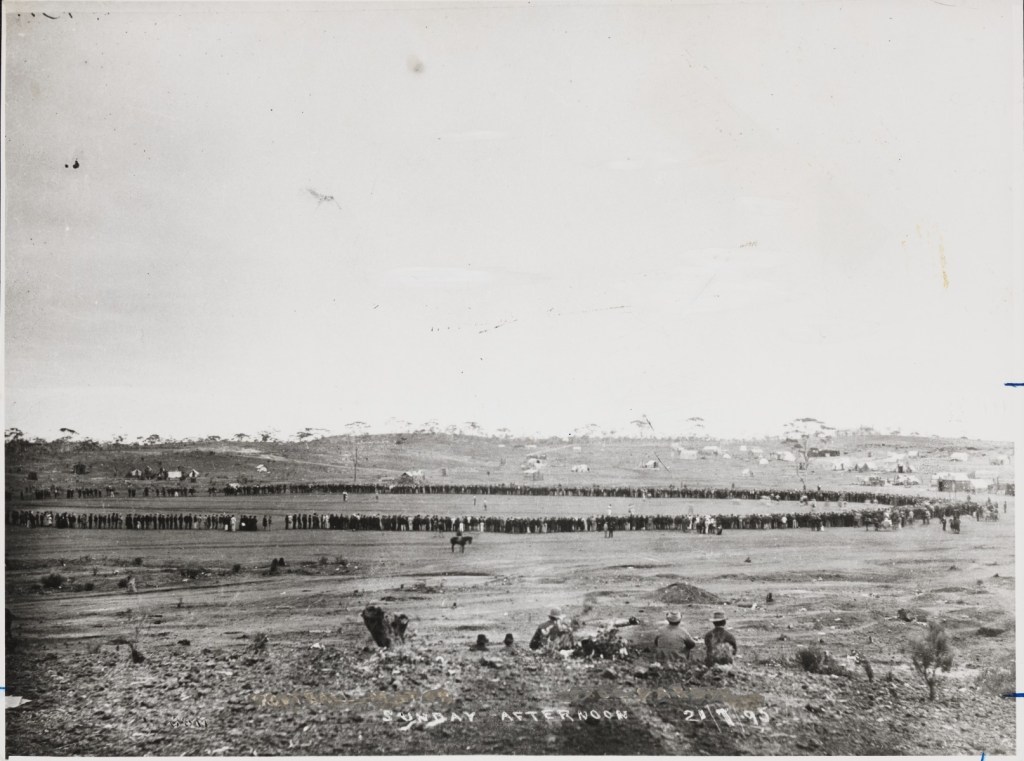
The land remained a quiet wilderness dominated by scrubby mulga trees, granite outcrops, and the ancient claypan depression that would soon become famous as Fly Flat. For early prospectors, the environmental features of this country were incredibly challenging; the ground was dry, water was scarce, and the persistent plagues of bushflies were so thick they were equal to a hundred common houseflies rolled into one. These flies would crawl into a man’s mouth, promenade over his face, and buzz into his ears until he was driven nearly mad. It was from these pestilential swarms, which looked like countless black specks against the red earth, that the flats received the name that would be forever etched into Western Australian history.2
The Fateful Finding of 1892
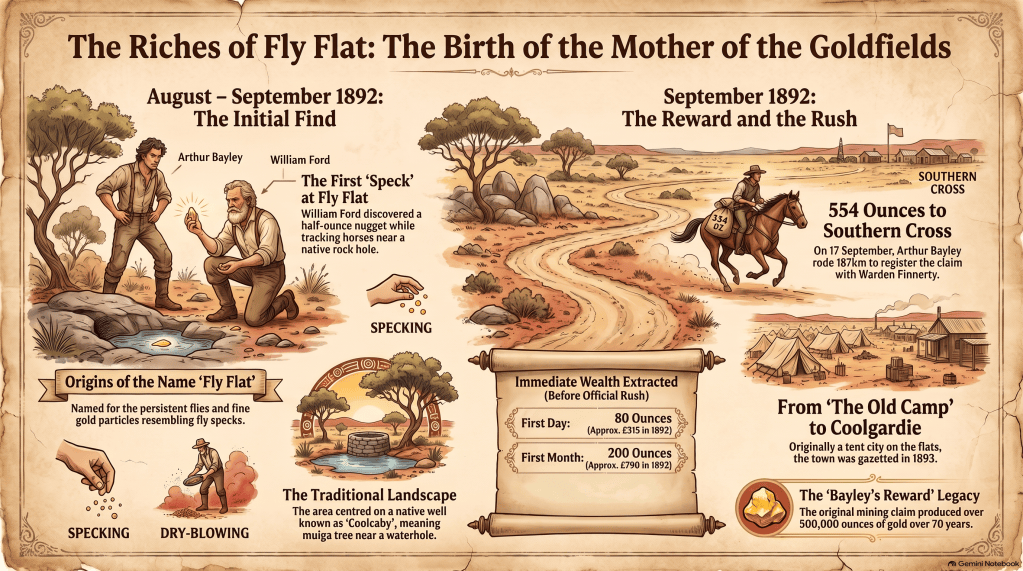
The spark that finalised the isolation of Fly Flat occurred in the winter of 1892. Fired by rumors of gold and utilising Southern Cross as their base, the experienced prospector duo of Arthur Wellesley Bayley and William Ford made plans to venture eastward. After a timely fall of rain in June, they set out with ten packhorses and eight weeks’ worth of provisions, tracking the granite outcrops where water could be temporarily conserved. Sighting the indistinct tracks of explorer David Lindsay and his camels, they eventually made their way to Gnarlbine Rock, resting for two days before striking northeast. During the third or fourth week after leaving the Cross, they encountered a native well, which was a natural rockhole capable of holding seven hundred to eight hundred gallons of water when full. They camped nearby, letting their horses out to graze while they walked the surrounding claypans.
One morning before breakfast, while searching for their horses, William Ford spotted a half-ounce nugget lying right on the surface of the dry earth. Ford called the spot Fly Flat, and the pair immediately commenced serious specking, gathering about twenty ounces of gold before dinner. Within a month, through diligent specking and dry-blowing, they had accumulated over two hundred ounces of gold. When their rations ran out, they returned to Southern Cross to replenish their supplies. They kept their secret close, but after returning to the flats on a Sunday afternoon, they struck a rich pocket of fifty ounces, prompting them to peg out a five-acre prospecting area the following morning.3 4
The Controversy of the Discovery
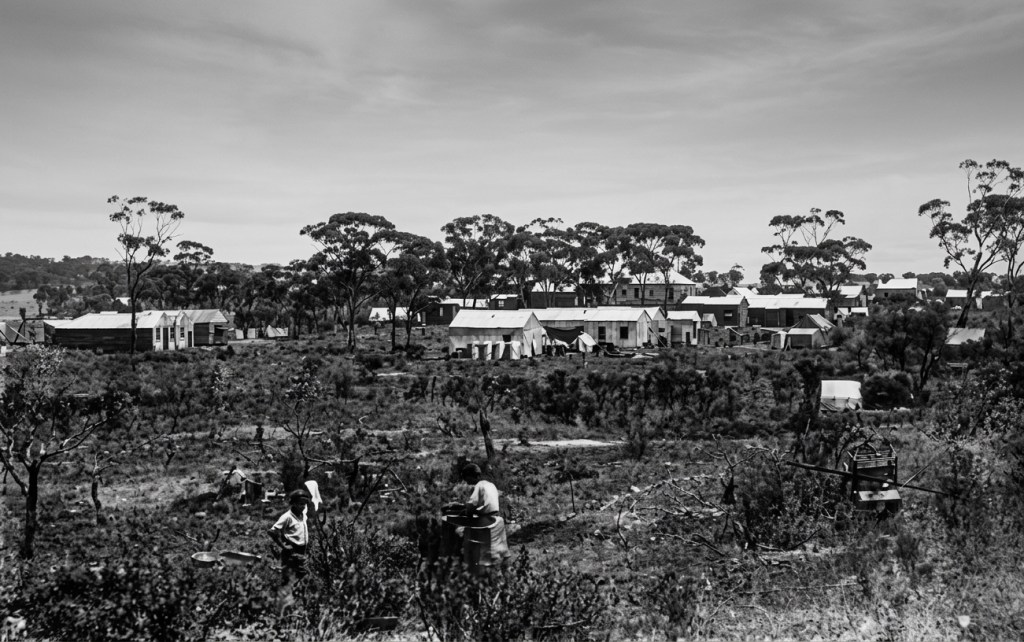
While Arthur Bayley and William Ford are officially accredited with the discovery of the first gold at Fly Flat, a cloud of controversy has lingered over who was the rightful discoverer. According to an alternative narrative signed by Dick Fosser, a party consisting of himself, Harry Baker, and Albert Jesse “Tommy” Talbot reached the Coolgardie area in 1892. Fosser claimed that they camped at the gnamma hole and encountered Bayley and Ford, who told them they had found nothing and were preparing to return to Southern Cross. On their way back to camp, Baker picked up a speck of gold, and they decided to give the place a trial, subsequently gathering about two hundred ounces of gold in large slugs. Fosser alleged that when they showed their find to Bayley and Ford, the latter pair secretly went out and pegged a claim of twenty-one acres surrounding the blow. When the young miners returned the next morning, they were confronted by Bayley and Ford, who claimed they were working inside their pegged ground.6
The story goes that Talbot, Baker, and Fosser were frightened off the lease at the point of a revolver. Another historical account suggests that Bayley and Ford shifted the pegs of their protection area overnight to include the rich outcrop discovered by the trio. Even before these disputes, there were claims of prior discovery, such as that of Fred Rudd and Alex Glass, who allegedly pegged a claim in 1889 just twenty yards from where Bayley and Ford eventually staked their reward mine. Regardless of who first picked up the gold, it was Arthur Bayley who rode back into Southern Cross on September 17, 1892, with five hundred and fifty-four ounces of gold to register the claim, unleashing the last great Australian gold rush.7
The Environment and Social Hardships of the Camp
The rush to Fly Flat brought thousands of fortune-seekers into a harsh desert landscape that heightened the risk of disease, dehydration, and heatstroke. The primary environmental challenge was the utter lack of drinkable water, which was highly polluted by human waste and the mining process. Water had to be carted in by horse and camel teams hauling huge condensing tanks, and in the early days of the rush, it was sold at prices of one to two shillings and sixpence per gallon. This lack of sanitation triggered a devastating typhoid epidemic in the mid-1890s, claiming eighty-four lives in 1894 alone. Amidst this suffering, Nurse Mercy Gregory Taylor did tremendous work tending to the sick, though she was later tragically murdered in a Sydney hotel room in 1906.8 9 10
Food was equally scarce and expensive; the typical digger’s diet was restricted to mutton, damper, and the ubiquitous “tinned dog”. Portions of boiled rice and damper without sugar were the common fare during frequent food famines. The New Zealand prospector John Aspinall, who kept a diary of his life on the flat in 1895, left vivid accounts of the environmental hardships. He described how the relentless flies would settle in the corners of a man’s eyes, and how a sudden fourteen-hour deluge of rain converted the dry claypan of Fly Flat into a temporary lake. While the diggers rejoiced at the chance to conserve water, the streets were completely flooded, tents were swamped, and the local shopkeepers were swamped out.11
Colorful Characters of the Flat: Anecdotes of the Early Community
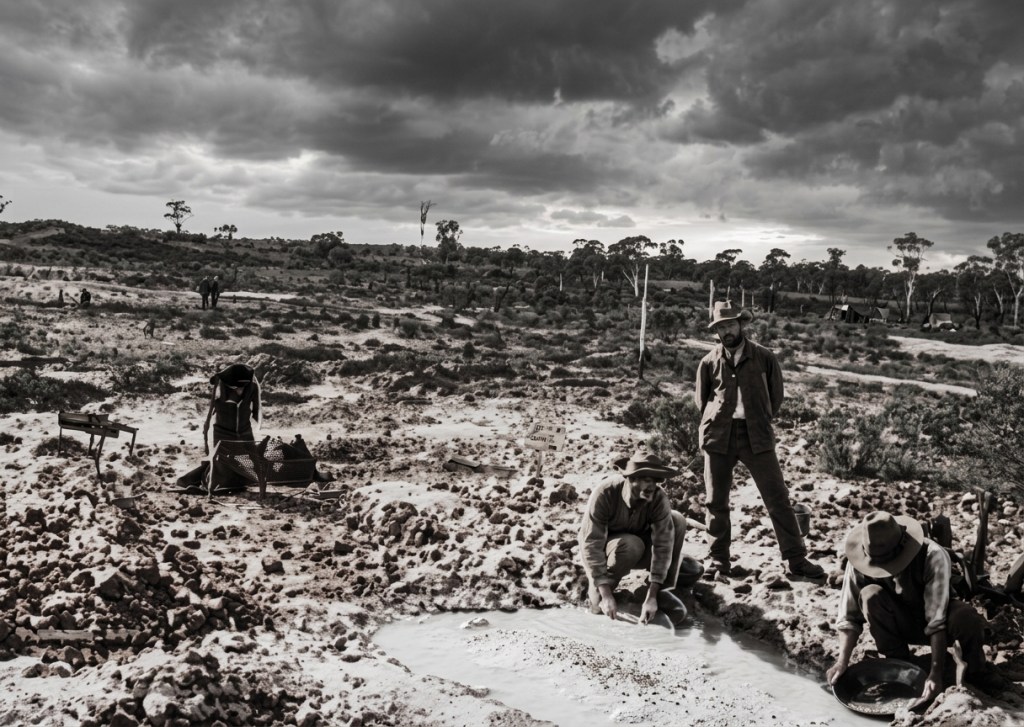
Despite the privations, the community at Fly Flat was highly colourful, populated by a diverse mix of miners, ex-convicts, doctors, and lawyers. Tim Riley was a typical old gold-seeker who spent his pensive old age reflecting on the early nineties, when Coolgardie was the beacon of Australia. Another local character was Jack McGinty, who would sit on his shovel and spin yarns to other diggers. McGinty spent his gold as fast as he found it; on one occasion, he lamented spending a two-ounce slug in a local hotel, cursing the publicans who welcomed him with open arms when he had money but threw him out when his purse was empty. McGinty was fond of telling the story of “Crying Charlie,” a prospector who wept more the more gold he got. Charlie spent a whole week on his knees turning and drying his claypan wash-dirt, only to have some unknown thief cart it away in the night. The tracks were traced into town but lost, though local rumor suggested the dirt had been washed in the Government dam and yielded two and a half ounces to the thief.13
McGinty also told of “The Professor,” a lazy mate of his who claimed to speak seven languages but would do no stroke of work. The Professor made mud bricks of slop water and scratched figures on them, which he called “uniform descriptions”. He held a spiritualist séance in a darkened room, kicking McGinty to make the table rock and tricking the gullible girls and single men by producing “apports” from Egypt, which were actually his own mud bricks. He completed his tricks by producing a dead snake, a flying fish stolen from Davison’s fish store, and a gold slug. After collecting the attendees’ money for a spiritualist society, the Professor left for Perth with the best girl in town, leaving “Hill to pay”.14
Then there was “Fly Flat Frederick” Justel, a German carpenter. Fred meandered into Perth’s Great Western Hotel with sixteen sovereigns and nineteen half-sovereigns, representing nine months of hard labour in the timber country. Two barmaids persuaded Fred to buy expensive Monopole champagne, and while being lifted onto the counter, John Webb stole his purse, receiving two months of hard labour. These individuals were typical of the early community, where fortune and folly walked hand in hand.15
The Afghan Cameleers and Transport
The severe environmental constraints of the Western Australian interior made traditional horse transport incredibly expensive and difficult to maintain. Consequently, the backcountry was opened up by camel carriers, and Fly Flat became the site of a large and busy Afghan camp. All the stores for the mines and the early township were carried by camels imported from Karachi in India. Camels of all types, including pack camels, riding camels, and racing camels, fetched excellent prices, rising in value from about six pounds in India to as much as one hundred and fifty pounds on the goldfields.
The cameleers were colourful figures, dressed in gorgeous plush over-garments, white baggy nether-garments, and waistcoats handsomely trimmed in green and gold. Hadji, the High Priest, was a major buyer of these camels, though on one occasion in 1897, a Hindu firm sent over forty camels that were discovered to be mangy, causing their value to drop.
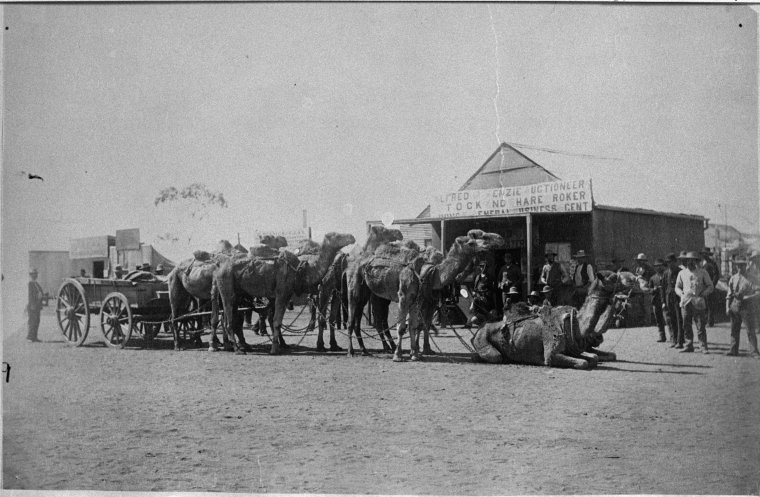
A manuscript from 1897 recounts a humorous incident where the cameleers crowded into a small room to cancel a contract with a merchant named “Mallagatawney”. The room became so stuffy that a window had to be opened to let the camel odor out, and the giant priest sat on the table while Mallagatawney shivered in fear that the cameleers would cut his throat and throw his body down an alluvial hole on Fly Flat. The cameleers played a vital role in the survival of the community, carrying freight across the dry sandplains where horses would have perished of thirst.18
Economic and Political Dynamics of the Early Goldfields
The economic impact of the gold found at Fly Flat was monumental, reviving Western Australia’s struggling pastoral economy and almost quadrupling the State’s population within a single decade. The transition from alluvial “specking” in shallow potholes to deep reef mining occurred rapidly. In March 1893, William Ford and Arthur Bayley sold their five-acre lease to a company represented by Sylvester Browne and Gordon Lyon for six thousand pounds and a one-sixth interest.
This claim became the famous Bayley’s Reward mine, which eventually produced over five hundred thousand ounces of gold over the next seventy years. The spectacular richness of the reef attracted immense capital from London, and in April 1896 alone, eighty-one Western Australian gold mining companies were floated on the London Stock Exchange. This influx of corporate capital brought political and legal friction.19
The original lease of Bayley’s Reward was “jumped” several times by parties of out-of-work miners from Southern Cross, who held protest meetings on the ground and allegedly stole six hundred to seven hundred ounces of gold from the lease at night. Arthur Bayley had to stand guard with a revolver to protect their interests, and Warden Finnerty was called upon to settle the disputes, subsequently recommending that the jumping was an impudent attempt to rob the discoverers of their rights. There was also political tension between the independent alluvial miners, known as “kickers,” and the corporate leaseholders. The Warden’s refusal to grant certain leases kept Fly Flat open to the alluvial diggers, allowing them to earn a living treating the surface dirt rather than having the field closed by large companies.20
The Peak, the Pipe, and the Final Curtain
By 1893, the bustling camp at Fly Flat was gazetted as the town of Coolgardie, which quickly grew to become the third-largest population centre in Western Australia. At its peak in 1900, the town boasted twenty-three hotels, three breweries, six banks, and two stock exchanges. The early tents of the flat were replaced by fine heritage buildings constructed of jarrah, stone, and brick. However, the discovery of gold at Kalgoorlie by Paddy Hannan in 1893 shifted the focus of the goldfields farther east to the famous Golden Mile reef. As the alluvial gold of Fly Flat began to lessen, the population of Coolgardie began to diminish.
The environmental challenge of water was finally resolved in January 1903 with the completion of the Goldfields Water Supply Scheme, designed by engineer Charles Yelverton O’Connor, which pumped water three hundred and fifty miles uphill from the Helena River near Perth. Genealogists often trace the families of the miners who worked these fields, such as Herbert Ernest Wright, a student of the Zeehan School of Mines who arrived in Western Australia in the late 1890s. Wright worked as a winding engine driver and state battery manager at Lennonville, Black Range, and Nannine, representing the thousands of skilled workers who sustained the goldfields before finally retiring to Perth. The big mine shafts on Fly Flat finally fell silent in 1963, when the original leases of the Bayley’s Reward mine were officially closed, marking the end of an era that had transformed Western Australia into a prosperous State. Today, the heritage place of Fly Flat remains a quiet monument on the outskirts of Coolgardie, where visitors can still see the red earth hummocks left by the dry-blowers of the roaring nineties.21 22
Timeline
- 1863; Explorer Henry Maxwell Lefroy travels east from York and notes that the region’s quartz reefs are highly likely to contain gold.
- 1864 to 1866; Surveyor Charles Cooke Hunt establishes essential wells and soaks along the track to assist future travelers.
- August 1892; Prospectors William Ford and Arthur Bayley discover gold at Fly Flat, gathering over five hundred ounces within weeks.
- 17 September 1892; Arthur Bayley registers his reward claim in Southern Cross, officially sparking the last great Australian gold rush.
- 30 October 1892; Warden Finnerty formally declares the townsite at the Coola Garbi gnamma hole; it is later gazetted as Coolgardie in 1893.
- March 1893; Bayley and Ford sell their five-acre lease to Sylvester Browne and Gordon Lyon for six thousand pounds and a one-sixth interest.
- 6 February 1894; Underground water is successfully struck on the Fly Flat claims at a depth of one hundred feet.
- June 1896; Coolgardie becomes the first town in the goldfields to have electric street lighting switched on.
- 29 October 1896; Arthur Wellesley Bayley dies of illness in Victoria at the age of thirty-one.
- May 1897; Lignite and a ten-foot thick seam of shale are discovered at a depth of two hundred feet in a bore on Fly Flat.
- 1899; Coolgardie hosts a massive World Exhibition celebrating the mining industry, attended by more than sixty-one thousand visitors.
- 1900; The town reaches its zenith as the third-largest population centre in Western Australia, boasting twenty-three hotels and six banks.
- January 1903; The Goldfields Water Supply Scheme designed by engineer Charles Yelverton O’Connor is completed, bringing fresh water to the fields.
- 1932; William Ford passes away quietly in Sydney at the age of eighty.
- 1963; Mining operations at the original Bayley’s Reward leases officially cease, and the big shafts finally fall silent.
Map
Sources
- Eastern Goldfields Historical Society (n.d.) Coolgardie. Retrieved 5 Sep 2026 from https://www.kalgoorliehistory.org.au/towns/Coolgardie/ ↩︎
- Drain, John (n.d.). Coolgardie – The rush that saved the west. Retrieved 5 Sep 2026 from https://www.goldgemtreasure.com.au/articles/coolgardie-the-rush-that-saved-the-west ↩︎
- Discovery of Coolgardie (1936, August 8). The Groper (Perth, WA : 1930 – 1937), p. 4. Retrieved September 5, 2026, from http://nla.gov.au/nla.news-article266867646 ↩︎
- Motherhen (2021). Coolgardie Mother of the Goldfields. Retrieved 5 Sep 2026 from “Australia So Much to See” at https://www.australiasomuchtosee.com/20213f.htm ↩︎
- No Title (1899, February 11). Coolgardie Pioneer (WA : 1895 – 1901), p. 21. Retrieved September 5, 2026, from http://nla.gov.au/nla.news-article251969869 ↩︎
- COOLGARDIE’S DISCOVERY (1926, April 25). Sunday Times (Perth, WA : 1902 – 1955), p. 3 (First Section). Retrieved September 6, 2026, from http://nla.gov.au/nla.news-article58240576 ↩︎
- Discovery of Coolgardie (1936, August 8). The Groper (Perth, WA : 1930 – 1937), p. 4. Retrieved September 6, 2026, from http://nla.gov.au/nla.news-article266867646 ↩︎
- Encyclopædia Britannica Inc (2026). Australian gold rushes. Retrieved 6 Sep 2026 from https://kids.britannica.com/students/article/Australian-gold-rushes/631682 ↩︎
- In the Doll Shadow of the Somme, Some Soldier Phantoms of the Great War (1937, May 15). The Groper (Perth, WA : 1930 – 1937), p. 5. Retrieved September 6, 2026, from http://nla.gov.au/nla.news-article266864408 ↩︎
- Sharp, Moya (2017). Herbert Ernest Wright – a family story. Retrieved 6 Sep 2026 from https://www.outbackfamilyhistoryblog.com/herbert-ernest-wright-family-story/ ↩︎
- Eastern Goldfields Historical Society (2026, 2 Mar). A letter from Hannan’s rush. Retrieved from Facbook Group on 6 Sep 2026 https://www.facebook.com/share/p/19HDx9BpQD/ ↩︎
- No Title (1898, September 10). Coolgardie Pioneer (WA : 1895 – 1901), p. 18. Retrieved September 5, 2026, from http://nla.gov.au/nla.news-article251963490 ↩︎
- A FLY FLAT EPISODE (1909, December 19). The Sun (Kalgoorlie, WA : 1898 – 1929), p. 3 (THE SUN CHRISTMAS NUMBER). Retrieved September 6, 2026, from http://nla.gov.au/nla.news-article211132237 ↩︎
- THE SPIRITUALIST OF FLY FLAT. (1910, January 16). The Sun (Kalgoorlie, WA : 1898 – 1929), p. 15. Retrieved September 6, 2026, from http://nla.gov.au/nla.news-article211131764 ↩︎
- FLY FLAT FREDERICK. (1907, June 29). Truth (Perth, WA : 1903 – 1931), p. 2 (CITY EDITION). Retrieved September 6, 2026, from http://nla.gov.au/nla.news-article206696052 ↩︎
- State Library of Western Australia (n.d.) Weekend News Flashback series 3314B/23. Retrieved 5 Sep 2026 from http://purl.slwa.wa.gov.au/slwa_b6270578_2 ↩︎
- Hemus & Hall (1894). Views of the Eastern Goldfields. In the collection of photographs from the Royal Western Australian Historical Society at the State Library of Western Australia. Retreived 6 Sep 2026 from https://purl.slwa.wa.gov.au/slwa_b2256341 ↩︎
- State Library of Western Australia (2023, 16 Jun). Author Unknown. Retrieved 6 Sep 2026 from https://www.facebook.com/share/p/19dw2yDczS/ ↩︎
- Mazzucchelli, Richard H. (2025). The Coolgardie Redemption gold mine, Western Australia: Portent of a ghost town. Published in “Journal of Australasian Mining History” Vol.23, Oct 2025, 155-167. Retrieved 6 Sep 2026 from https://search.informit.org/doi/abs/10.3316/informit.T2025101500009600826274758 ↩︎
- Sharp, Moya (2025). Coolgardie’s Pioneers: The Untold Story of Bayley and Ford. Retrieved 6 Sep 2026 from https://www.outbackfamilyhistoryblog.com/coolgardies-pioneers-the-untold-story-of-bayley-and-ford/ ↩︎
- National Trust of WA (n.d.) The Golden Pipeline : Fly Flat. Retrieved 6 Sep 2026 from https://www.goldenpipeline.com.au/see-do/fly-flat/ ↩︎
- Fly Flat Today (1950, August 26). The West Australian (Perth, WA : 1879 – 1954), p. 23. Retrieved September 6, 2026, from http://nla.gov.au/nla.news-article47882817 ↩︎
- OpenStreetMap (2026). -30.94310, 121.17875. Retrieved 6 Sep 2026 from https://www.openstreetmap.org/search?query=-30.94310%2C+121.17875&zoom=9&minlon=113.88153076171876&minlat=-29.59973009438042&maxlon=119.15496826171876&maxlat=-27.535064863939912#map=13/-30.95450/121.18898&layers=C ↩︎
Further Reading
- Ware, H. G. J. (1984) – Out of the Past : Historical Memorabilia
Versions
| Date | Changes |
|---|---|
| 5 Sep 2026 | Version 0.1 – First Draft |
| 6 Sep 2026 | Version 1.0 – First Published |
| 7 Sep 2026 | Version 1.1 – Typographical error corrected |

