Christine Harris (2026)
Demographics
Region: Goldfields-Esperance
LGA: Coolgardie
Industry: Mining
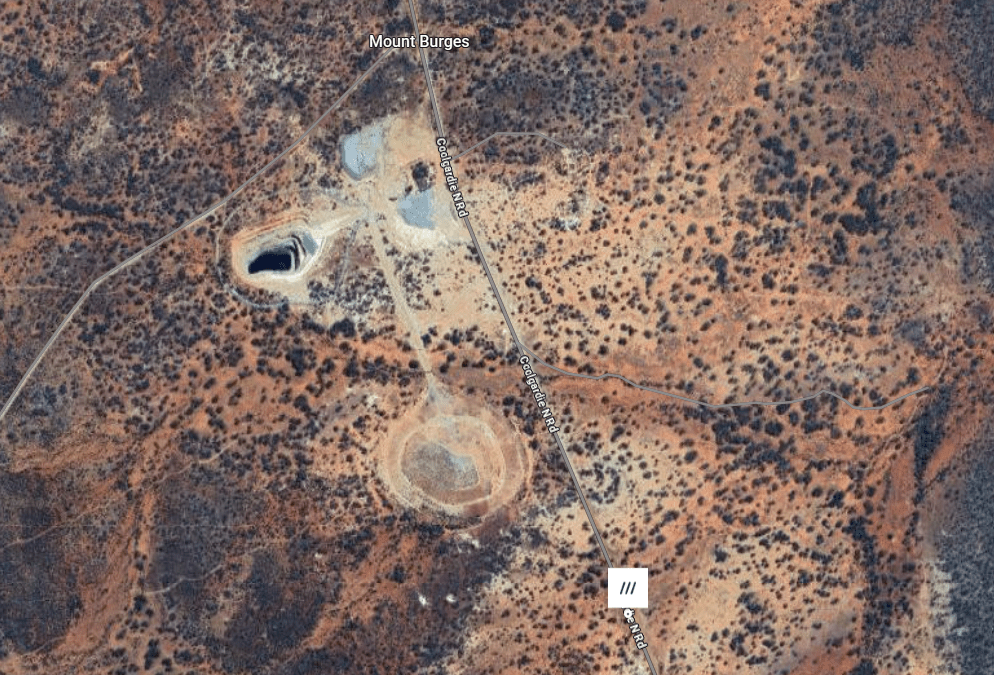
Open Street Map: -30.550003047458656, 121.0252439066207
What3Words: ///improbably.careers.foxhole
Settled: 1894
Gazetted: 1897
Abandoned: 1931 (closure of the school)
Abstract
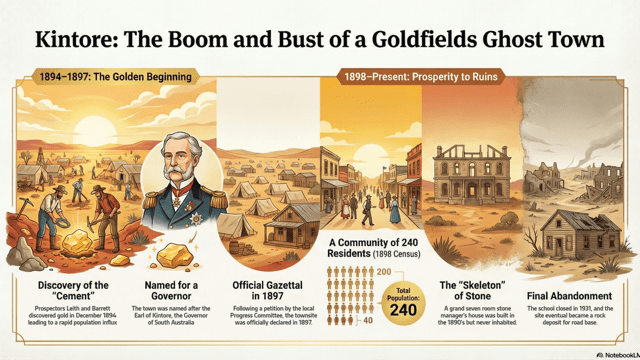
The community of Kintore, located in Western Australia’s Goldfields region, represents a poignant chapter in the state’s late 19th-century mining history. Discovered in 1894 by prospectors Leith and Barrett, the area was named after the Earl of Kintore, the retiring Governor of South Australia. The settlement’s growth was driven by a unique geological feature: gold-rich alluvial deposits held within a conglomerate known as “cement”. This led to a swift influx of English capital and the formal gazettal of the townsite in 1897.
History
The history of Kintore, situated 46 kilometres north-west of Kalgoorlie along the Coolgardie North Road, serves as a quintessential example of the volatile nature of the Western Australian gold rushes. Like many ephemeral communities in the Goldfields-Esperance region, Kintore was born from high-stakes discovery, nurtured by an influx of international capital, and ultimately doomed by the depletion of the very resources that defined it.1
Discovery and Early Speculation
The community’s origin dates to December 1894, when prospectors Leith and Barrett discovered gold in the area. The timing of this find was significant; the fabulous wealth of sites like Bayley’s and the Wealth of Nations had created a feverish investment climate in London. When a peer of the realm, Algernon Keith-Falconer, 9th Earl of Kintore, sponsored the venture while visiting Western Australia, the share list for the Kintore Group was heavily oversubscribed. Capital was easily obtained, and by May 1895, the primary mine was already changing hands under new management with a capital of £50,000.2 3 4 5
Kintore’s initial fame was not based on traditional quartz reefs but on the alluvium found in “cement,” a conglomerate material consisting of detritus held together with calcium or siliceous material. This unique environmental factor provided a substantial initial yield, leading to rapid population growth that necessitated the formal declaration of a townsite.6 7
Growth and Townsite Development
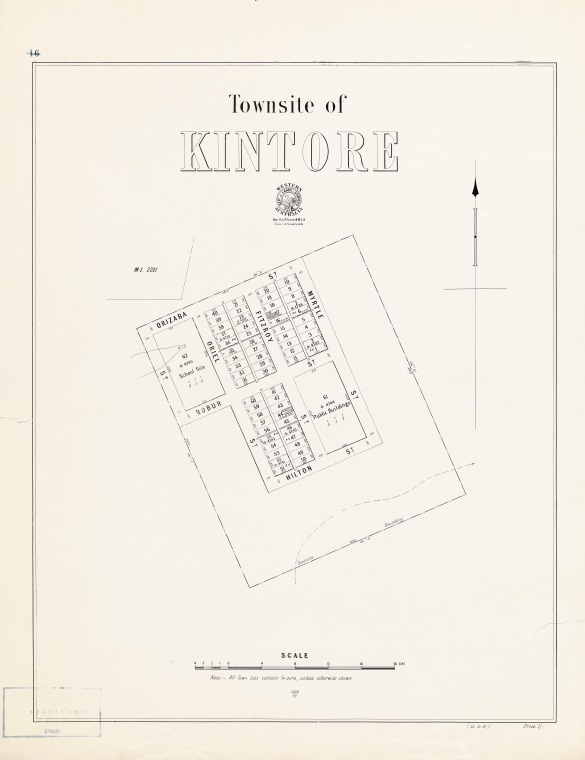
The Kintore Progress Committee petitioned for the declaration of a townsite in 1897, which was gazetted later that same year. By 1898, the census recorded a population of 240 residents, comprising 200 males and 40 females.9 This demographic imbalance was typical of the era’s mining outposts, where life was harsh and social milestones were rare; indeed, only one marriage was ever celebrated in the town, between John Messer and Susan Kirkham in 1899.10
A pretty wedding (writes a correspondent) took place at Kintore on the 23rd instant when Miss Kirkham was united to Mr John Messer, of Kunanalling. In the absence of the bride’s parents, the ceremony took place at the residence of Mr Bobert Crawford, the Rev C. J. Fry officiating. The bride was attired in a pretty gown of pale cream, with a spray of orange blossom in her hair. The bridesmaids were the Misses Messer, sisters of the bridegroom, Mr Fred Daughter acting in the capacity of best man. The weather was all that could be desired, and if the old adage ‘ Happy is the bride that the sun shines on, can be relied upon, the future of this happy couple will indeed be a bright one. After the ceremony the host and Mrs Neill sister-in-law of the host, held a reception in the Reading Hall, where a number of relatives and friends sat down to a tastefully arranged wedding breakfast, at which the usual toasts were honored. The wedding presents, which made a handsome display, were artistically arranged in the hall. In the evening the hospitable host and hostess entertained their numerous guests at a dance, which proved a great success. Mr and Mrs Messer, amid a shower of congratulations and good wishes, left for Albany for their honeymoon.11
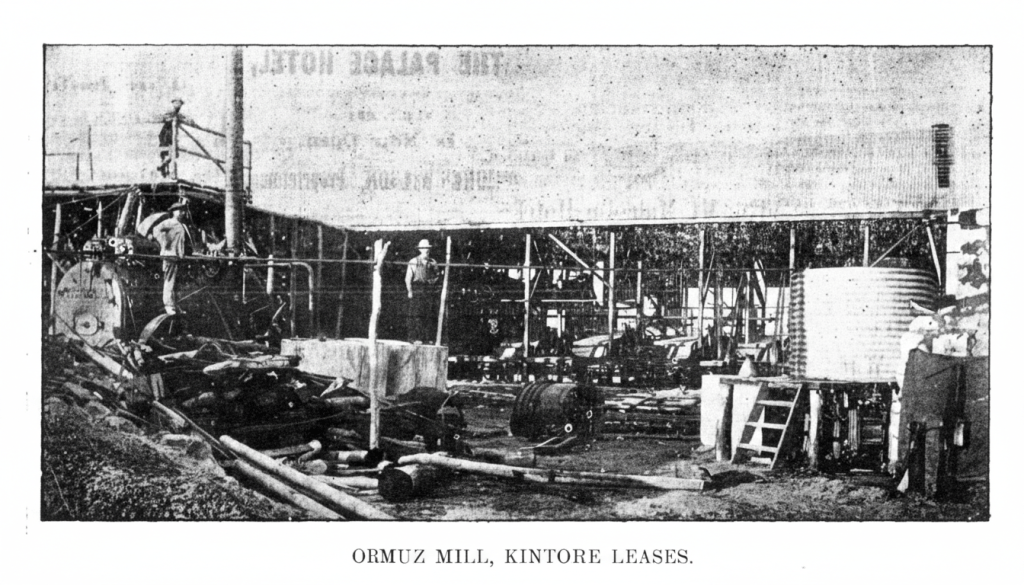
The town boasted several professional residents by 1904, including a spirit merchant, a publican, and several miners.12 Political and economic life was centred around mining regulations. One of the most significant political events in Kintore’s history was the “alluvial troubles” of 1898. A dispute arose on the Ormuz lease when alluvial miners challenged the company’s rights to the ground. Warden Finnerty eventually issued permanent injunctions against the miners, ruling that the “cement” deposit peculiar to the locality was not legally considered “alluvial,” thereby securing the economic position of the major leaseholders at the expense of individual prospectors.13
The Skeleton of Stone: A Social and Economic Landmark
Perhaps the most enduring symbol of Kintore’s history is the “Skeleton of Stone,” an imposing manager’s house perched on the lip of a breakaway. Built around 1896 by an inexperienced mine manager from a noble family, the house was intended to impress visiting directors from England. The structure was an architectural marvel for the desert: walls 27 inches thick made of buff limestone, granite foundations, a Moorish-style centre court, and even a built-in bath.
However, the house became a monument to folly. While the stone walls were being raised, the mine’s battery ran out of ore. The rich veins that had attracted investors proved to be “squibs” that did not extend to depth. The capital ran dry, the battery fell silent, and the imposing house was abandoned, possibly without ever being inhabited. Over time, its roof and woodwork were scavenged for use in more permanent centres, leaving only the stout stone walls that remained a landmark for decades.15
Decline and Desertion
The exhaustion of payable ore led to a swift decline. By 1898, some major mines had already been abandoned and were being worked only by small parties of prospectors. The town’s extinction followed the typical cycle of the Goldfields: brief success followed by disappointment.
Despite the general abandonment, Kintore saw minor activity in the early 20th century. Prospectors pegged new leases in the 1930s, and companies like the Gold Fields Development Company (1937–1940) and Sterling Gold Mines NL (1946) attempted to revive the old workings. These efforts yielded little ore, as the gold remained “very erratic”.16 During this period, the area also transitioned to pastoral use, with parts of the old townsite serving as a commonage for livestock belonging to local residents like Geo. Sheedy and James Doyle.17
Modern Use and Environmental Context
Today, Kintore is an abandoned townsite where virtually nothing remains of the historic settlement. The site has been largely bulldozed and used as a rock deposit site for road base. The environment remains a hot semi-arid steppe climate, where the average maximum temperature in January reaches 33.7°C. Despite the historical devastation caused by resource exploitation, the area remains ecologically rich, supporting a variety of wildflowers, including the Native Poplar, Native Foxglove, and the Orange Immortelle.18
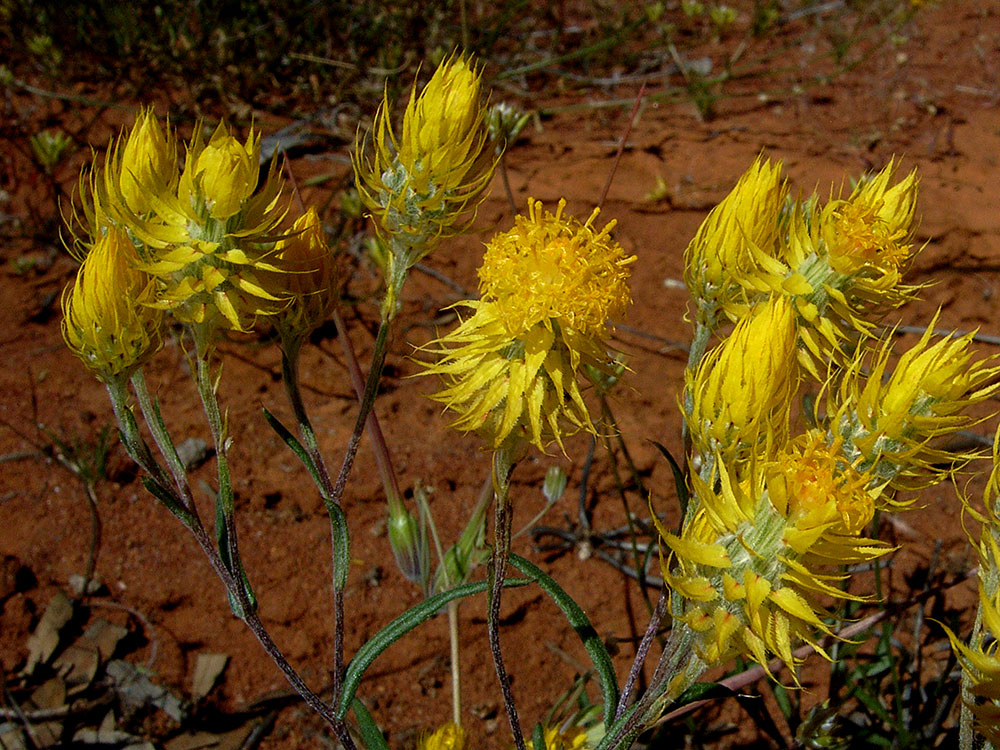
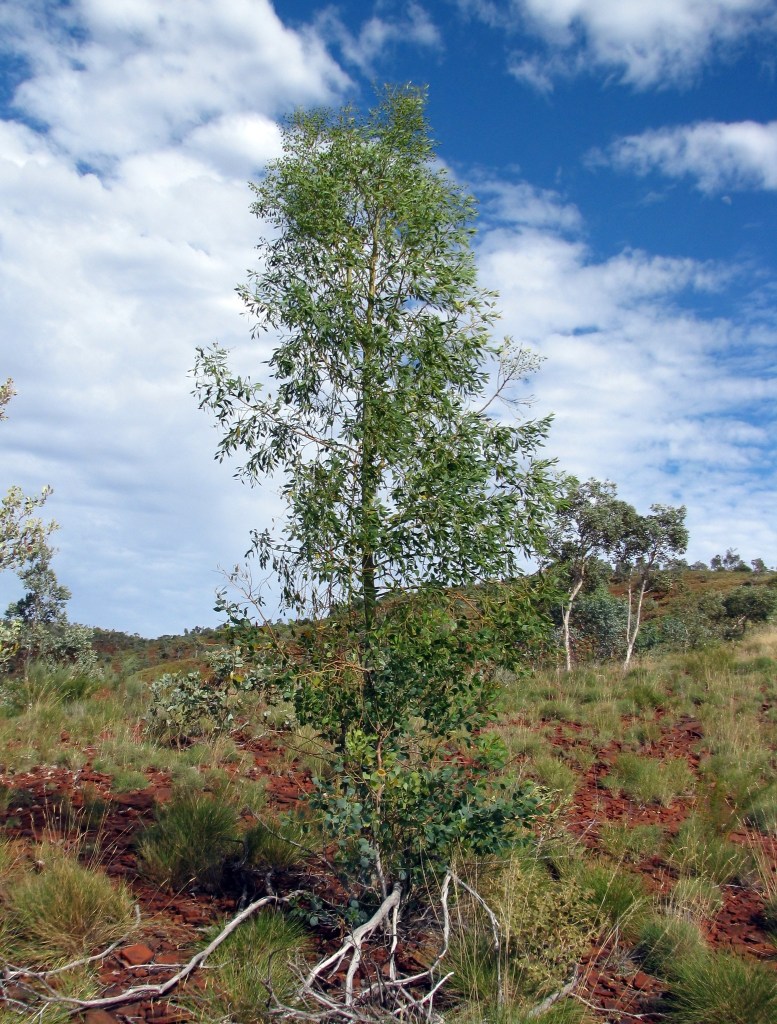
(Native Poplar)20
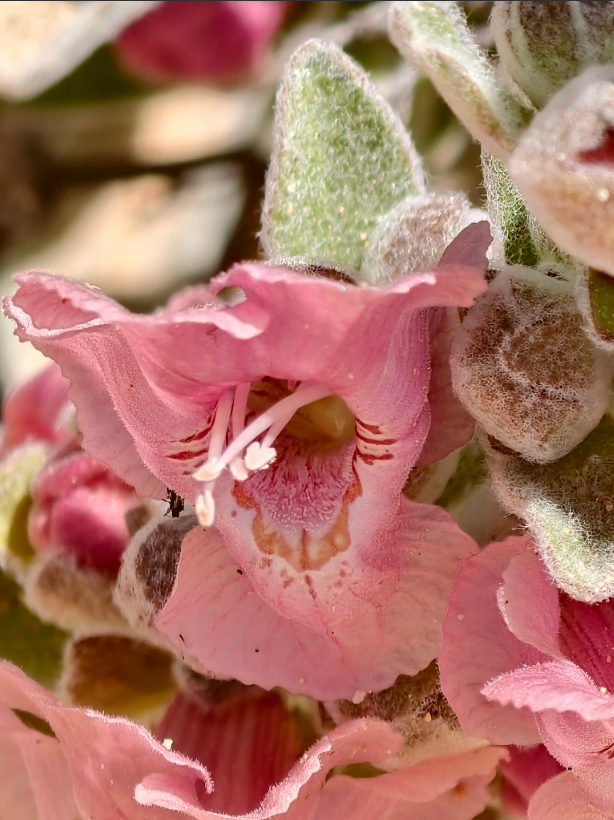
Kintore’s story remains an integral part of the Goldfields narrative, reflecting the social ambitions of the boom years and the economic reality of resource depletion. While the town itself has vanished, its heritage is preserved in the records of the Shire of Coolgardie and the ruins that once served as a testament to the dreams of a bygone era.
Timeline
- • 1889: The Kintore Range is named by explorer W.A. Tietkins after the Earl of Kintore.
- • December 1894: Gold is discovered in the Kintore area by prospectors Leith and Barrett.
- • 1895: Mining activity begins in earnest; an English company abandons the mine to new owners with £50,000 capital.
- • February 1896: Shares in “25-Mile Developments” (near Kintore) change hands at record lows.
- • Late 1896: Construction begins on the “Skeleton of Stone,” an imposing stone house for the mine manager.
- • 1897: The Kintore Progress Committee petitions for a townsite; Kintore is formally gazetted.
- • 1898: Census records a population of 240 residents.
- • June 1898: Legal dispute over the Ormuz lease; Warden Finnerty grants injunctions against alluvial miners.
- • 1899: Only recorded marriage in the townsite occurs between John Messer and Susan Kirkham.
- • 1904: Electoral roll lists a spirit merchant and a publican still active in the community.
- • 1912: Geo. Sheedy and James Doyle register livestock brands for use on the Kintore commonage.
- • Early 1930s: Prospectors return to the area to peg new leases.
- • 1937–1940: Gold Fields Development Company attempts to rework the old Kintore mine.
- • 1946: Sterling Gold Mines NL takes an option on the mine, but little ore is found due to erratic gold distribution.
- • 1962: Last recorded pastoral brand registration associated with the Kintore property.
- • Modern Day: The site is abandoned and bulldozed for road-base deposits.
Map
Sources
- Wikipedia (2021). Ghost towns of the Goldfields of Western Australia. Retrieved 25 Feb 2026 from https://en.wikipedia.org/wiki/Ghost_towns_of_the_Goldfields_of_Western_Australia ↩︎
- Wikipedia (2020). Kintore, Western Australia. Retrieved 25 Feb 2026 from https://en.wikipedia.org/wiki/Kintore,_Western_Australia ↩︎
- Sharp, Moya (n.d.) Kintore Western Australia AKA The Cement. Retrieved 25 Feb 2026 from https://www.outbackfamilyhistory.com.au/records/record.php?record_id=666&town=Kintore ↩︎
- HOUSE WITH A HISTORY (1933, October 28). The Daily News (Perth, WA : 1882 – 1955), p. 3 (FINAL SPORTING). Retrieved February 25, 2026, from http://nla.gov.au/nla.news-article85001161 ↩︎
- mindat.org (n.d.). Kintore Gold Mine, Castle Hill Group, Kintore-Kunanalling Goldfield, Coolgardie Shire, Western Australia, Australia. Retrieved 25 Feb 2026 from https://www.mindat.org/loc-266393.html ↩︎
- ExplorOz (2026) Kintore – WA. Retrieved 25 Feb 2026 from https://www.exploroz.com/places/61580/wa+kintore ↩︎
- Wikipedia, 2020: refers to rapid growth ↩︎
- State Library of Western Australia (n.d.) Townsite maps, Western Australia. Retrieved 25 Feb 2026 from https://encore.slwa.wa.gov.au/iii/encore/record/C__Rb1902416 ↩︎
- POPULATION OF WESTERN AUSTRALIA. (1898, April 22). Western Mail (Perth, WA : 1885 – 1954), p. 20. Retrieved February 25, 2026, from http://nla.gov.au/nla.news-article33153441 ↩︎
- Sharp: refers to Messer/Kirkham wedding ↩︎
- LOCAL AND GENERAL. (1898, November 28). Coolgardie Miner (WA : 1894 – 1911), p. 4. Retrieved February 25, 2026, from http://nla.gov.au/nla.news-article217328387 ↩︎
- Sharp, Moya (n.d.) Kintore 1904 Electoral Roll Western Australia. Retrieved 25 Feb 2026 from https://www.outbackfamilyhistory.com.au/records/record.php?record_id=208 ↩︎
- MINING NEWS. (1898, June 18). The West Australian (Perth, WA : 1879 – 1954), p. 3. Retrieved February 25, 2026, from http://nla.gov.au/nla.news-article3211172 ↩︎
- No Title (1897, July 24). The Menzies Miner (WA : 1896 – 1901), p. 10. Retrieved February 25, 2026, from http://nla.gov.au/nla.news-article233109494 ↩︎
- HOUSE WITH A HISTORY (1933, October 28). The Daily News (Perth, WA : 1882 – 1955), p. 3 (FINAL SPORTING). Retrieved February 25, 2026, from http://nla.gov.au/nla.news-article85001161 ↩︎
- mindat: refers to erratic ore deposits ↩︎
- Carnamah Historical Society and Museum (n.d.) WA Livestock Brands 1912-1962. Retrieved 25 Feb 2026 from https://www.carnamah.com.au/livestock-brands?keyword=Kintore ↩︎
- ExplorOz: refers to the landscape of Kintore today ↩︎
- By Raygday – Own work, CC BY-SA 3.0, https://commons.wikimedia.org/w/index.php?curid=17306974 Retrieved 25 Feb 2026 ↩︎
- Western Australian Herbarium (2025). Native Poplar. Retreived 25 Feb 2026 from https://www.facebook.com/share/1AdxoBZzmv/ ↩︎
- Watkins, Rhys (2025). Dasymalla axillaris. Retrieved 25 Feb 2026 from https://inaturalist.ala.org.au/photos/585240328 ↩︎
- what3words.com (2026). Kintore. Retrieved 25 Feb 2026 from https://what3words.com/improbably.careers.foxhole ↩︎
Further Reading
- Heritage Council of Western Australia – Kintore Town Site
 People of Western Australia's Ghost Towns