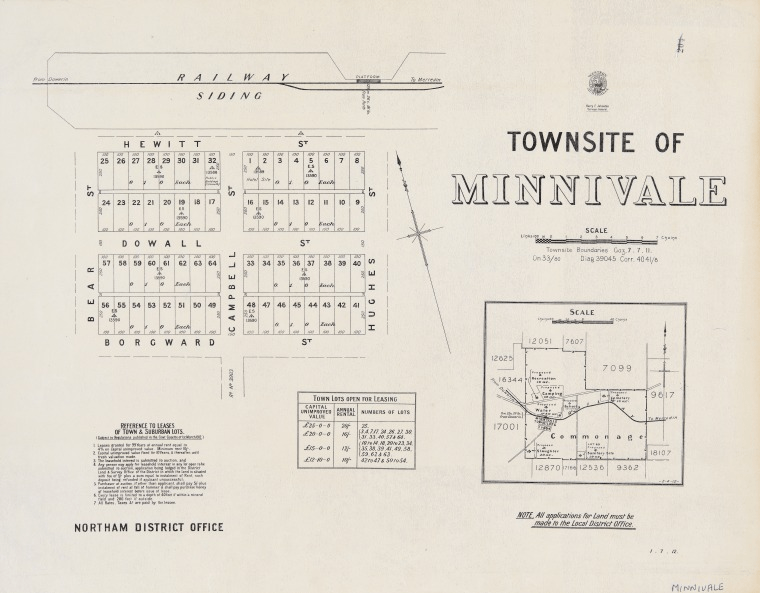
State Library of Western Australia 1
Demographics
Region: Wheatbelt
LGA: Dowerin
Industry: Agriculture & Railway
Other Names: Nenin Railway Siding, 36 Mile Post of the Rabbit Proof Fence
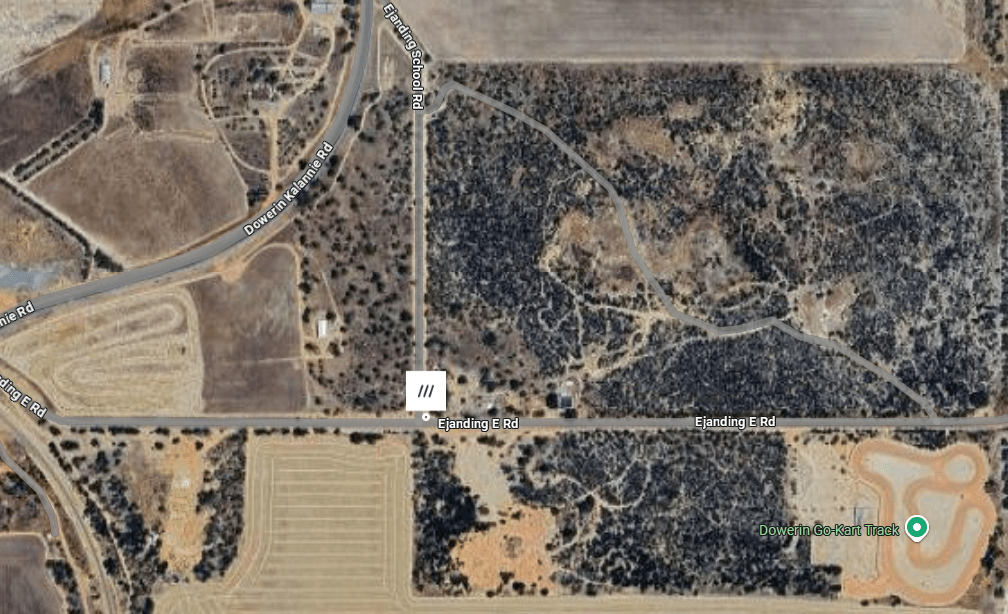
Open Street Map: -30.964963878885893, 117.12174083923527
What3Words: ///estimates.himself.posted
Settled: 1880s
Gazetted: 1911
Abandoned:
Introduction
Minnivale, a small locality nestled north of the Dowerin to Wyalkatchem road in Western Australia, is often viewed today as a example of the decline of rural communities. Once a bustling town, it is now primarily characterised by a wheat silo, three or four houses, and a historical church. Despite its decline, Minnivale has become a focal point for heritage, particularly concerning the district’s rail and agricultural history.2 3 4 5
History
The town is situated within the Dowerin Shire and is located approximately 18km from the Dowerin town site. For visitors, Minnivale offers a spectacular array of wildflowers between July and October. Originally known as 36 Mile Post on the Rabbit Proof Fence, a railway siding was constructed in 1911. The railway siding was initially called Nenin but the name was changed to Minnivale when the townsite was gazetted.
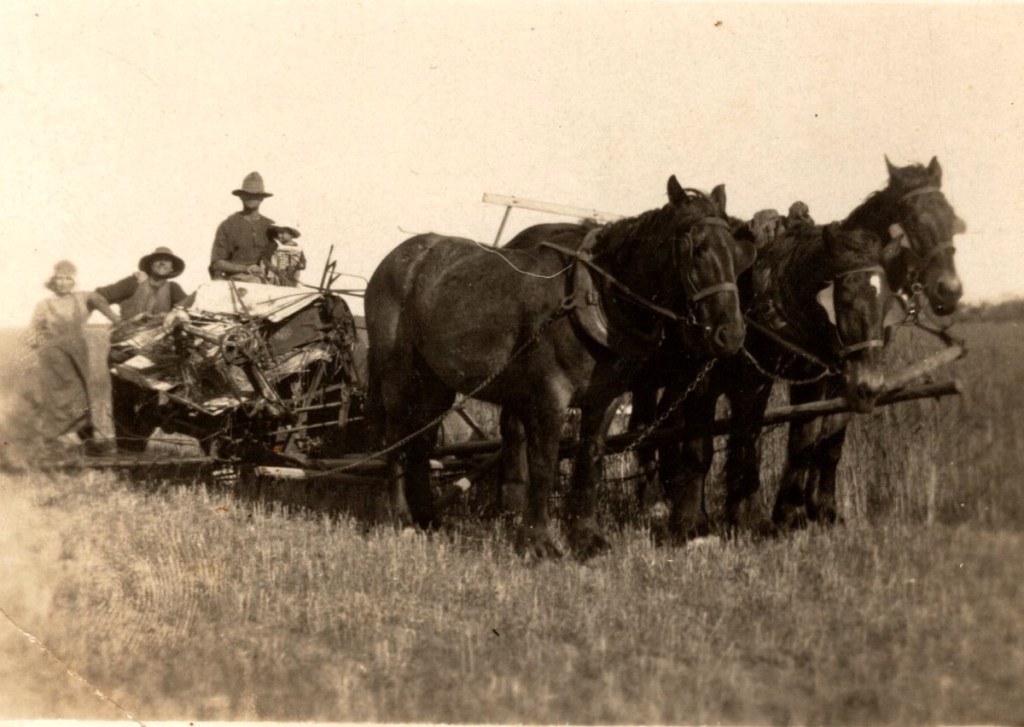
Photograph donated by Ian Barnes from a family collection
Built in 1914, the Minnivale Hall was the social centre of the community. Weddings, balls, polling booths and welcomes to returning soldiers took place in this hall. Amateur dramatics, musical events and films were performed or shown here. The hall is still used for an annual Christmas function and is occasionally let to groups for parties. 6
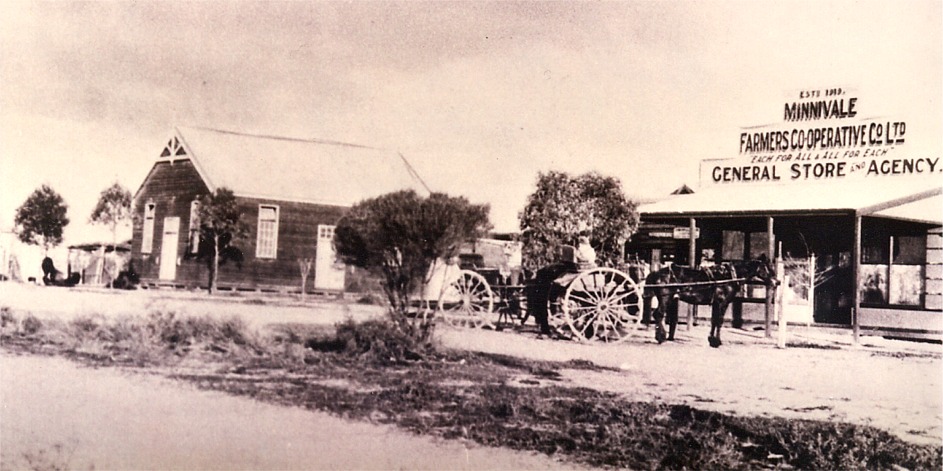
Photograph donated by Ian Barnes from a family collection
Establishment and Early Growth
Minnivale’s origins predate its gazetting as a town, initially being recognised as the 36 Mile Post on the Rabbit Proof Fence.7 The Rabbit Proof Fence No. 2, which runs north/south through the eastern third of the Shire of Dowerin, was constructed in 1907/1908.8
The town was formally established around the railway.9 A railway siding was constructed in 1911. This siding was first known as Nenin. 10 The townsite was gazetted in 1911, and the name was changed from Nenin to Minnivale. The name Minnivale is said to honour Miss Minnie Fraser, the daughter of the Commissioner of Crown Lands. Alexander Forrest is credited with naming the locality, either in 1880 or 1911. The arrival of the railway in Minnivale in 1911 was considered a significant development in transport for the district between 1897 and 1914, as the line looped from Dowerin to Wyalkatchem and beyond.
During its early years of growth, the community developed essential services:
- The Minnivale Hall, a local heritage place, was built in 1914.11
- A brick store was constructed in 1921.
- A school operated in the town for over 50 years, existing on the site between 1923 and 1974.12
- The Minnivale Church was originally established in 1925 as a Methodist Church.13
The town served the surrounding agricultural area, evidenced by the importance of the Namelcatchem Well (built before 1865, 17km away), which held sufficient water to support the horse teams carting wheat to Minnivale.14
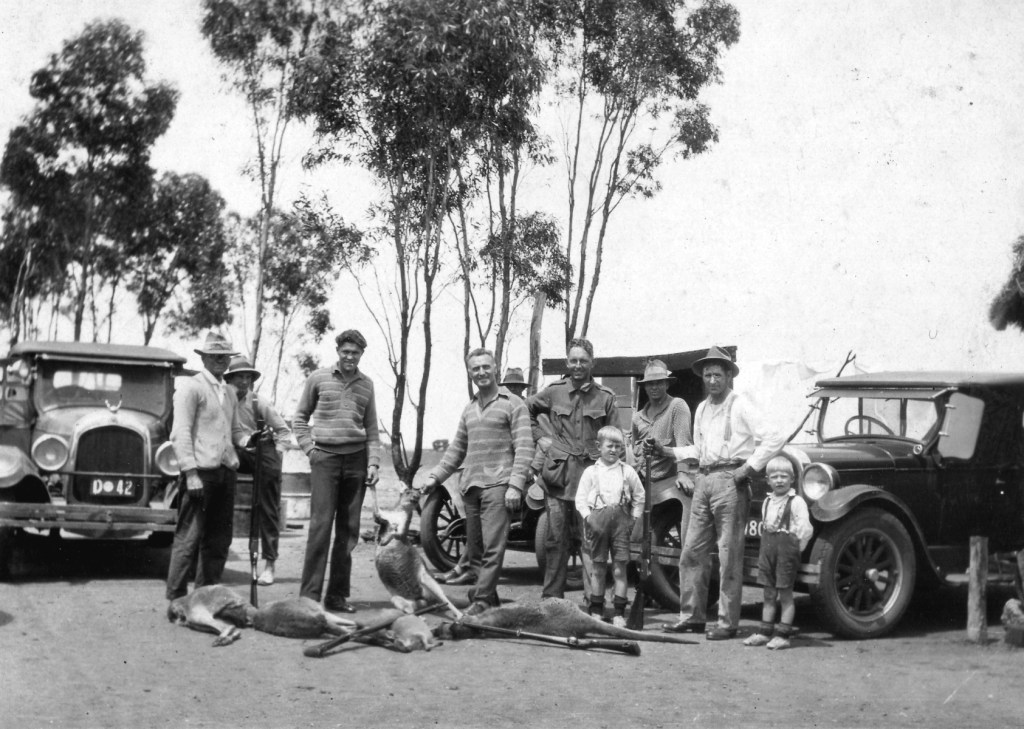
State Library of Western Australia 15
Minnivale peaked as a populated centre but, like many small rural towns, faced a significant decline. The school closed in 1974, and the wooden Hall, which stood from 1914 to 2004, was either demolished or relocated due to disrepair.
Physical evidence of the decline includes the former shop, now appearing to be a private residence, and several house sites reduced to ruins, such as one next to the former shop where only the chimney stack and fireplace remain. In the 1970s, the bakery building and an adjacent house were removed, leaving only the oven structure.
Minnivale Today
The population has drastically shrunk. In 2013, Minnivale was recorded as having a population of 110. By the time of the 2021 Census, the population was 40 people, residing in 24 private dwellings. The 2021 Census also noted that due to the small population, only limited information could be provided.16
However, a new history is emerging in Minnivale. The town has found resilience in embracing its past through heritage tourism:
- Wheatbelt Heritage Rail Interpretative Centre: This centre, based out of the former CBH Wheat Bin, houses a collection of restored carriages and rolling stock central to the district’s grain story. The facility, which opened as a bulk handling wheat bin in 1964, now aims to provide significant benefits to the Wheatbelt through increased tourism and economic growth.
- Community: The community spirit remains, with the historic church, a simple brick structure, still standing and well-maintained. Originally Methodist, it is now mainly used by the Church of Christ, but welcomes all denominations.
- Amenities: Minnivale also offers a free, well-equipped overnight stopping area for travellers near the old tennis courts, featuring cold showers, flush toilets, and town water.
The story of Minnivale is a quintessential example of how the railway shaped the Wheatbelt: a boom driven by steel tracks and grain, followed by a slowdown that left behind historic relics, now re-purposed as windows into a resilient pioneering past.
Timeline
- Pre-1865: Namelcatchem Well (17km away) was built, later becoming essential for horse teams carting wheat to Minnivale.
- 1907/1908: The Rabbit Proof Fence No. 2 was constructed, making the location known as 36 Mile Post.
- 1911: The railway siding was constructed, initially named Nenin.
- 1911: The townsite was gazetted, and the name was changed to Minnivale, honouring Miss Minnie Fraser.
- 1914: The Minnivale Hall was established on Dowall Street.
- 1921: The town’s brick store was built.
- 1923–1974: The Minnivale school operated.
- 1925: The Minnivale Church was established, originally serving as a Methodist Church.
- 1964: The Minnivale Wheat Bin opened as a bulk handling wheat facility.
- 1970s (approx.): The bakery building and an adjacent house were removed, leaving only the oven ruins.
- 2004: The Minnivale Hall was demolished or relocated.
- 2006: The success of the Dowerin 100 Years of Rail Celebration led to the proposal for the Wheatbelt Heritage Rail project.
- 2021: Census data recorded the population of Minnivale as 40 persons.
Stories
The Old Store and Minnivale Bakery
The brick store, built in 1921, stands today still displaying advertisements from times gone by. It is in excellent condition, although now appears to be a private residence. Just up the street, the ruins of the old baker’s oven remain. This ruin features a large Metters stove set in the brickwork. When the bakery building was removed in the 1970s, the oven doors were specifically taken and placed in safe storage with the hope that the site might one day be restored.
In 1927 the Minnivale Bakery was established in its current location by Stokes Ulysses Stubbs, the son of an American-born greengrocer and eating house proprietor from central Perth. Stubbs previously owned a successful bakery business in Wongan Hills and lived in Dalwallinu when he established his premises in Minnivale.
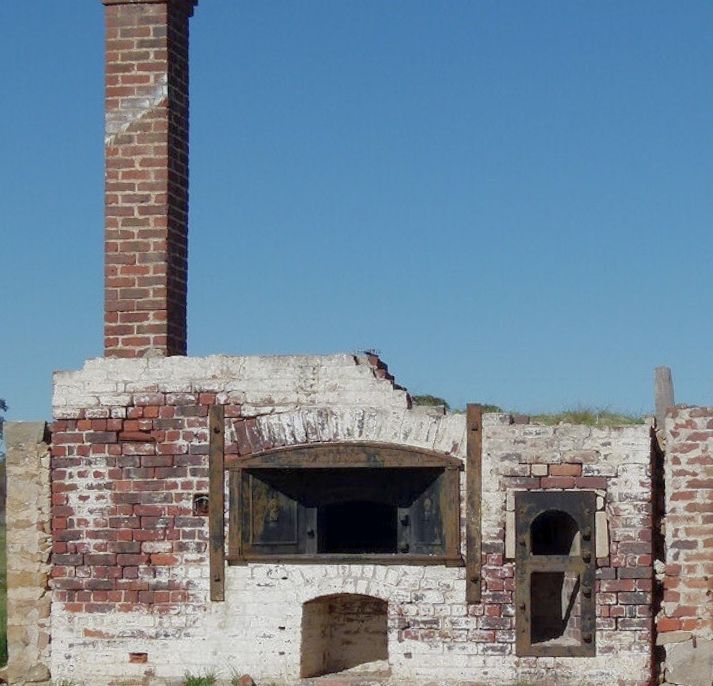
However, he transferred the business and property to ‘Minnivale Baker’, Thomas Tait in 1928 , which suggests that he may not have actually operated the bakery himself, but simply bought the property to be managed by Tait prior to selling it to him.
In 1934, the Minnivale Bakery was bought by Sophia Lynne of Goomalling. The Lynn family, headed by Samuel and Sophie, were owners of a successful bakery at Goomalling.
All four sons also learnt the baking and pastrycook trade, and Samuel Lynn was renowned as owning ‘one of the finest baking plants outside the metropolitan area, specialising in cakes and small goods’.
The business was so successful that the sons opened branches in Lake Brown and Dowerin, and on selling the Goomalling bakery, Samuel Lynn moved to Minnivale to manage that bakery with his son Alan. It appears that both the bakery and a residence were located in the lot (Minnivale Lot 29), so presumably Sophie, Samuel and Alan all resided there. The property was transferred to Alan’s ownership in 1964, by which time he was designated Baker and Confectioner. The bakery was reportedly abandoned around this time and the oven fell into disrepair.
The property, and presumably the residence, was sold to Maisie Heelander, Married Woman of Minnivale in 1967. The residence and shop that adjoined the oven were reportedly removed in the 1970s. The property changed ownership five times, between 1975 and 1989, before it was acquired by the current owner. The doors of the oven were removed in the 1990s for safe-keeping, and are stored ready to be replaced when the structure is secure. No other changes have been made.17
The Rabbit Carcass Carriage
The Wheatbelt Heritage Rail Discovery Centre displays various rolling stock, including an original diesel locomotive. Among the carriages is one that offers a unique glimpse into a past agricultural industry: a rail carriage used specifically for carrying rabbit carcasses to Perth. In the early 1900s, rabbit populations had reached plague levels, and by the 1920s, a large industry had developed around trapping these rabbits.18
Map
Sources
- State Library of Western Australia, 2025. Townsite of Minnivale. Cartographic material retrieved 23 Nov 2025 from https://encore.slwa.wa.gov.au/iii/encore/record/C__Rb1940107?lang=eng ↩︎
- Dowerin Short Stay Accommodation, n.d. Local History Trail. Retrieved 26 Nov 2025 from https://www.dowerinaccommodation.com.au/things-to-do/local-history-trail.aspx ↩︎
- Shire of Dowerin, n.d. Tourism in Dowerin. Retrieved 26 Nov 2025 from https://www.dowerin.wa.gov.au/tourism.aspx ↩︎
- Mingor.Net, 2025. Photographs of Perth and the South West of Western Australia : Minnivale. Retrieved on 23 Nov 2025 from http://mingor.net/localities/minnivale.html ↩︎
- WA Now and Then, n.d. Minnivale. Retrieved on 26 Nov 2025 from https://www.wanowandthen.com/minnivale.html ↩︎
- Heritage Council, 1 Jan 2017. Minnivale Hall & Honour Rolls. Retrieved on 23 Nov 2025 from https://inherit.dplh.wa.gov.au/Public/Inventory/Details/706d3029-ff4e-4ea4-a2ba-3fbdf65495a8 ↩︎
- Wikicamps Australia, n.d. Minnivale Townsite Rest Area. Retrieved on 26 Nov 2025 from https://wikicamps.com.au/site/Western%2BAustralia/Campground/Minnivale+Townsite+Rest+Area+And++Dump+Pt+%28donatn%29/3658 ↩︎
- Shire of Dowerin, Tourism. (Refers to Rabbit Proof Fence No.2) ↩︎
- Shire of Dowerin, n.d. Wheatbelt Heritage Rail. Retrieved 26 Nov 2025 from https://www.dowerin.wa.gov.au/history-of-the-project.aspx ↩︎
- WA Now and Then, Minnivale. Refers to Nenin. ↩︎
- Heritage Council, 2024. Minnivale. Retrieved 26 Nov 2025 from https://inherit.dplh.wa.gov.au/Public/Search/Results?newSearch=True&placeNameContains=Minnivale&streetNameContains=&suburbOrTownContains=&lgaContains=&isCurrentlyStateRegistered=false ↩︎
- Mingor, Photographs. (Refers to School) ↩︎
- Heritage Council, 2017. Minnivale Church. Retrieved 26 Nov 2025 from https://inherit.dplh.wa.gov.au/public/inventory/details/fd350032-a324-4529-ad5f-4ce91b64e722 ↩︎
- Dowerin Shire, Tourism. (Refers to Namelcatchem Well) ↩︎
- State Library of Western Australia, n.d. Results of a kangaroo hunting expedition at Minnivale, 1930. Black and white photograph retrieved on 23 Nov 2025 from https://purl.slwa.wa.gov.au/download/slwa_b2065363_1.jpg?agree ↩︎
- Australian Bureau of Statistics, 2022. 2021 Census All Persons QuickStats : Minnivale. Retrieved 26 Nov 2025 from https://www.abs.gov.au/census/find-census-data/quickstats/2021/SAL50967 ↩︎
- Heritage Council, 13 Nov 2024. Minnivale Bakery Oven. Retrieved on 23 Nov 2025 from https://inherit.dplh.wa.gov.au/Public/Inventory/Details/bac7d465-5fa2-455e-90b3-510776307026 ↩︎
- Wanderland, n.d. Minnivale Rail and Heritage Centre. Retrieved on 26 Nov 2025 from https://visitwanderland.com.au/explore/golden-outback/minnivale-rail-and-heritage-centre ↩︎
 People of Western Australia's Ghost Towns
