Christine Harris (2026)
Demographics
Region: Wheatbelt
LGA: Yilgarn
Industry: Pastoral Lease & Mining
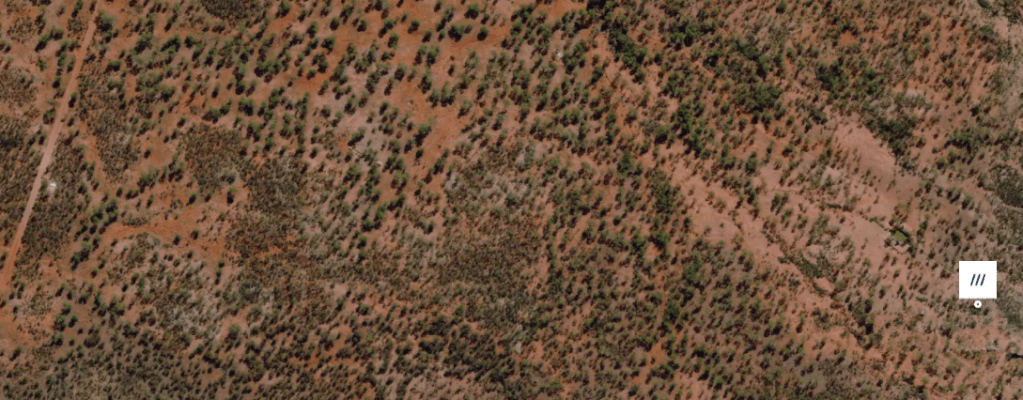
Open Street Map: -30.012203667055125, 119.30632851431889
What3Words: ///procedural.bluffing.owning
Settled: 1846
Population Today: 124 (2021 Census)
Abstract
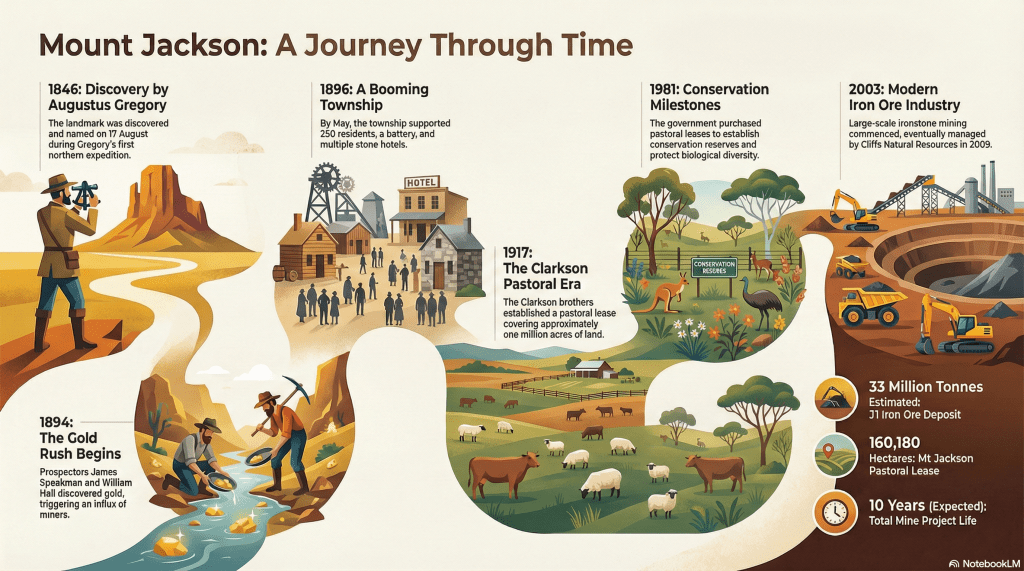
Mount Jackson, located in the Shire of Yilgarn, represents a microcosm of the Western Australian outback’s developmental cycles. Discovered by Augustus Gregory in 1846, the area remained a remote wilderness until the 1894 gold find by Speakman and Hall. This discovery triggered a brief but intense period of social and economic growth, characterised by the establishment of a townsite with two hotels and the installation of a significant battery in 1896. However, the community’s early growth was hampered by environmental harshness—specifically acute water shortages—and the small, shallow nature of the gold reefs.
As the gold speculation subsided, the region transitioned into a significant pastoral hub. Between 1917 and the 1940s, the Clarkson brothers managed the Mount Jackson Station, which spanned approximately one million acres. Political and economic shifts in the mid-20th century led to the station’s relinquishment and the eventual decline of the permanent settlement. In the 21st century, Mount Jackson has re-emerged as a site of economic importance through iron ore mining, while simultaneously becoming a focal point for political and environmental debate regarding the conservation of the Banded Ironstone Formation (BIF) ranges and the creation of the Helena and Aurora National Park.
History
Mount Jackson stands as a prominent 617-metre high landmark in the semi-arid Yilgarn region of Western Australia, approximately 110 kilometres north-north-east of Southern Cross. Its history is a narrative of extremes: from the optimistic “hilarity” of gold rush banquets to the “privations and loneliness” of pioneer life. The community’s trajectory has been shaped by the rigid geology of its Banded Ironstone Formations (BIF), the scarcity of its water, and the shifting economic priorities of the state, moving from gold and wool to iron ore and biodiversity conservation.1 2 3 4 5
Discovery and Early Exploration (1829–1893)
While the Swan River Colony was established in 1829, it was not until the mid-19th century that European explorers penetrated the interior toward what would become Mount Jackson. Augustus Gregory discovered and named the hill on 17 August 1846 during his first expedition north and east of the Swan River. For the next several decades, the area was primarily the domain of explorers seeking pastoral land.
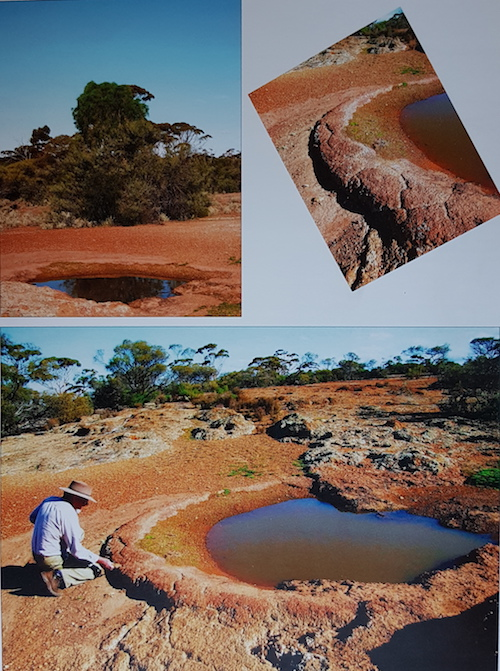
In 1861, C.E. Dempster, Andrew Dempster, Charles Harper, and B.D. Clarkson explored the region, followed by Charles Cooke Hunt in 1864. These early parties relied heavily on Aboriginal water sources, such as the Jimbine Rockhole, which remained a vital supply point in a landscape where permanent water was almost non-existent. These expeditions laid the groundwork for future pastoral leases, though the region remained largely unsettled due to its extreme isolation.6 7 8
The Gold Rush and Community Growth (1894–1910)
The social and economic landscape of Mount Jackson changed irrevocably in January 1894 when prospectors James Speakman and William Hall discovered gold. This discovery occurred during a period of intense mineral speculation across Western Australia. By May 1896, the Mount Jackson Goldfield was the site of significant industrial investment. The managing director of Mount Jackson Gold Mines, Limited, H.J. Saunders, and mine manager Captain Black invited a party from Perth to witness the starting of the first ten-head battery.
The social impact of the gold rush was immediate. At the battery’s opening, at least 250 people gathered for a banquet at J. Bryce’s hotel. Despite the community’s “isolated position,” guests enjoyed a “really good repast,” and the atmosphere was one of “boisterous enthusiasm”. The township rapidly increased in size, with permanent stone buildings erected, including a second hotel built by Tom Davis that was said to “eclipse any other building… on the Yilgarn goldfield”.
However, environmental and political factors soon moderated this growth. The road from Southern Cross was described as being in a “discreditable state,” with stumps only partly cleared, making transport expensive and dangerous. Water was the most critical political issue; pioneers like J.W. Byrne petitioned Sir John Forrest for a government tank and improved water supplies along the track. Economically, the goldfield faced inherent limitations. The gold reefs were often small and became narrower at depth in “hard country”. A lack of permanent water and adequate crushing facilities meant that much of the raised ore could not be treated profitably.10 11 12 13
Pastoral Dominance and Social Decline (1911–1975)
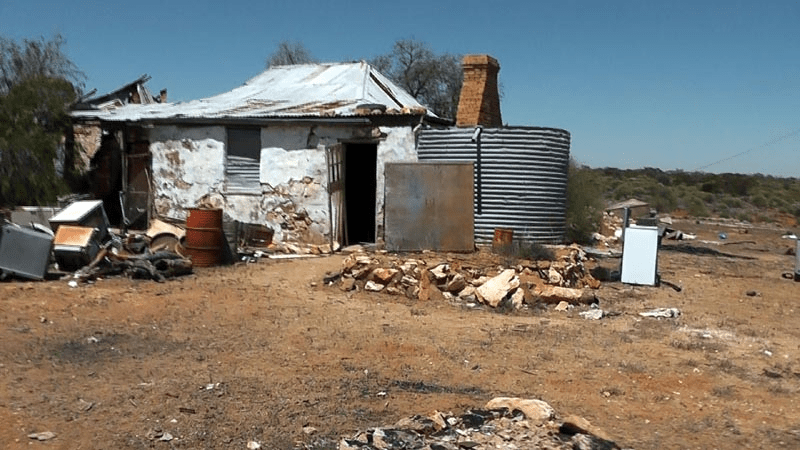
By 1911, the gold rush had mostly subsided, revived only briefly by the “Bullfinch speculation bubble”. The community transitioned into a pastoral economy. Mount Jackson Station was developed during this era, initially owned by the Snooks and Atkinson families. The Atkinsons were pioneers of technology in the region, owning one of the first motor vehicles in the district to run the mail, despite the “rough condition” of the roads.
After 1917, the station was taken over by Edward and Samuel Clarkson, trading as the Lake Barlee Pastoral Co Ltd. The Clarkson era represented the peak of pastoral influence; they ran cattle and horses across approximately one million acres of unimproved land. Motor vehicle records from 1924-1926 show the Clarkson brothers operating Ford wagons, essential for managing such a vast expanse.
Despite the success of the station, the townsite community withered. The Mount Jackson Cemetery, which saw its first burial (an infant, John Robert Dudgeon) in 1896, recorded its last burial in 1914. By 1912, the cemetery had fallen into such disrepair that locals petitioned the government for a fence to keep out station horses and donkeys. The Clarksons eventually relinquished the station in the 1940s, and by the mid-20th century, the homestead was described as “derelict,” marking the end of Mount Jackson as a permanent community centre.14 15 16 17 18
Modern Use: Mining and Conservation (1975–Present)
In the late 20th and early 21st centuries, the economic focus shifted from gold and pastoralism to iron ore. From approximately 2003, Portman Limited (later acquired by Cliffs Natural Resources) established large-scale iron ore mining at Mount Jackson. This revitalised the region’s economic value, with the J1 deposit alone estimated to contain 33 million tonnes of ore. In 2007, iron ore from these operations contributed significantly to the Western Australian economy, supporting hundreds of jobs in the Shire of Yilgarn and the Port of Esperance.20 21
However, this modern economic growth has faced significant political and environmental challenges. The Mount Jackson Range is part of the Great Western Woodlands, the largest intact temperate woodland on Earth. Since the 1960s, conservationists have advocated for the protection of the BIF ranges due to their “unique flora and vegetation”. In 2005, the Helena and Aurora Range Conservation Park was created, located about 25 kilometres east of the Mount Jackson mine.22
Recent political developments, such as the “Plan for Our Parks” initiative launched in 2018, have sought to balance these interests. In 2021, Stage 1 of the Helena Aurora National Park was completed, and in 2023, the Reserves Bill was introduced to add another 145,000 hectares to the park, effectively protecting the BIF ranges from future mining while acknowledging existing industrial land use.23
Mount Jackson today is a place of ruins and high-tech industry. The homestead remains a derelict relic of the pastoral era, yet the nearby open-pit mines represent the pinnacle of modern resource extraction. The history of the community remains preserved in the “I was here” graffiti on rockholes and the lonely graves of pioneers like John Bell, who died of exposure in 1923, a final reminder of the harsh environmental factors that have always defined this region.24 25
Timeline
- 1846 (August): Augustus Gregory discovers and names Mount Jackson during his first expedition.
- 1861–1864: Early exploration of the region by the Dempsters, Harper, Clarkson, and Hunt; location of Aboriginal water sources like Jimbine.
- 1894 (January): James Speakman and William Hall discover gold at Mount Jackson.
- 1895: Construction of the stone Mount Jackson Homestead and the arrival of the first publicans.
- 1896 (April–May): First burial at Mount Jackson Cemetery; starting of the first ten-head battery at the Nil Desperandum mine.
- 1906 (June): Death of prominent publican John Hatton at the Mount Jackson Hotel.
- 1910–1911: Brief gold revival during the Bullfinch speculation bubble.
- 1914 (February): Last recorded burial at the Mount Jackson Cemetery.
- 1917: The Clarkson brothers take over Mount Jackson Station, managing one million acres.
- 1940s: The Clarksons relinquish the pastoral lease; decline of the permanent station community.
- 1962: First formal recommendation by the Australian Academy of Science to reserve the nearby Mount Manning Range for conservation.
- 1979: Declaration of the Mount Manning Range Nature Reserve.
- 2003: Establishment of the Koolyanobbing Iron Ore Project at Mount Jackson by Portman Limited.
- 2005: Creation of the Helena and Aurora Range Conservation Park.
- 2017 (December): State Government finalises the decision to disallow further mining on the main Helena-Aurora Range to protect biodiversity.
- 2021 (February): Completion of Stage 1 of the Helena Aurora National Park.
- 2023 (November): Passage of the Reserves Bill 2023, expanding the Helena and Aurora Range National Park.
Map
Sources
- Wikipedia (2011). Mount Jackson (Western Australia). Retrieved 22 Feb 2026 from https://en.wikipedia.org/wiki/Mount_Jackson_(Western_Australia) ↩︎
- mindat.org (n.d.) Mount Jackson Goldfield, Yilgarn Shire, Western Australia, Australia. Retrieved 22 Feb 2026 from https://www.mindat.org/loc-243060.html ↩︎
- THE MOUNT JACKSON GOLDFIELDS. (1896, May 21). The West Australian (Perth, WA : 1879 – 1954), p. 2. Retrieved February 22, 2026, from http://nla.gov.au/nla.news-article3090311 ↩︎
- helenaandaurora.com.au (2026). Conservation History Timeline. Retrieved 23 Feb 2026 from https://www.helenaaurorarange.com.au/conservation-history ↩︎
- adventures.net.au (2026). Adventures: Great Western Woodlands (North). Retrieved 23 Feb 2026 from https://www.adventures.net.au/road-trips/great-western-woodlands-north ↩︎
- ibid ↩︎
- Wikipedia, 2011: refers to discovery ↩︎
- mindat.org: refers to discovery ↩︎
- Brooker, Lesley (2012). Explorers routes revisited: Clarkson Expedition 1864. p.60. Available from State Library of Western Australia, 3rd Floor Stack (Call number: Q 919.41 BRO). ↩︎
- ibid: refers to discovery of gold ↩︎
- Wikipedia, 2011: refers to the discovery of gold ↩︎
- West Australian, 1896: refers to discovery of locality and to development of gold mining ↩︎
- MOUNT JACKSON. (1896, October 9). Western Mail (Perth, WA : 1885 – 1954), p. 3. Retrieved February 22, 2026, from http://nla.gov.au/nla.news-article33128769 ↩︎
- Heritage Council of WA (2017). Mt Jackson Homestead. Retrieved 22 Feb 2026 from https://inherit.dplh.wa.gov.au/public/inventory/details/0ca68a7b-cf63-424e-972f-8fb54f395719 ↩︎
- Carnamah Historical Society & Museum (n.d.) WA Motor Vehicl Registrations 1915-1928. Retrieved 22 Feb 2026 from https://www.carnamah.com.au/car-registrations?keyword=mount+jackson ↩︎
- Sharp, Moya (n.d.) Outback Family History: Mount Jackson Cemetery. Retrieved 22 Feb 2026 from https://www.outbackfamilyhistory.com.au/records/record.php?record_id=453&town=Mount%20Jackson ↩︎
- Heritage Council, 2017: refers current status of homestead ↩︎
- Environmental Protection Authority (2011). Koolyanobbing Iron Ore Expansion Windarling Range and Mount Jackson (s46). p.121. Retrieved 23 Feb 2026 from https://www.epa.wa.gov.au/sites/default/files/PER_documentation2/Mt%20Jackson%20J1%20Deposit%20EIA-PER%20%28RevH%29%20July%202009%20-Part2.pdf ↩︎
- george4wd (2012). 2 week trip to the Lake Barlee area. Retrieved 23 Feb 2026 from https://george4wd.taskled.com/oz2012.html ↩︎
- EPA, 2011 ↩︎
- Wikipedia, 2011: refers to J1 deposit ↩︎
- helenaandaurora.com.au: refers to conservation in the area ↩︎
- EPA, 2011: refers to conservation efforts ↩︎
- adventures.net.au, 2026: refers to current status of area ↩︎
- Sharp: refers to burials ↩︎
 People of Western Australia's Ghost Towns