Christine Harris (2026)
Demographics
Region: South West
LGA: Donnybrook – Ballingup
Industry: Railway Siding, Forestry
Other Names: Newlands Railway Siding, Newlands Mill
Open Street Map: -33.668, 115.877
What3Words: https://what3words.com/warmed.imitations.scraps
Settled: 1898
Gazetted: 1907
Abandoned: Mill closed 1904; Siding closed 1984
Abstract
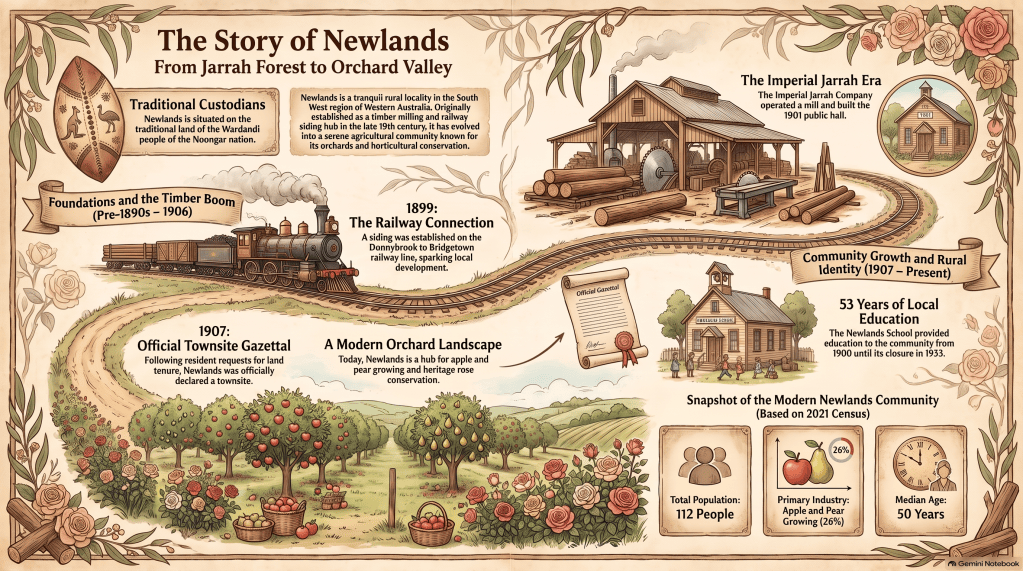
The history of Newlands is deeply rooted in the traditional lands of the Noongar nation’s Wardandi people. Following European settlement in the wider Donnybrook area from 1842, Newlands emerged as a vital siding on the Donnybrook to Bridgetown railway line in 1898.
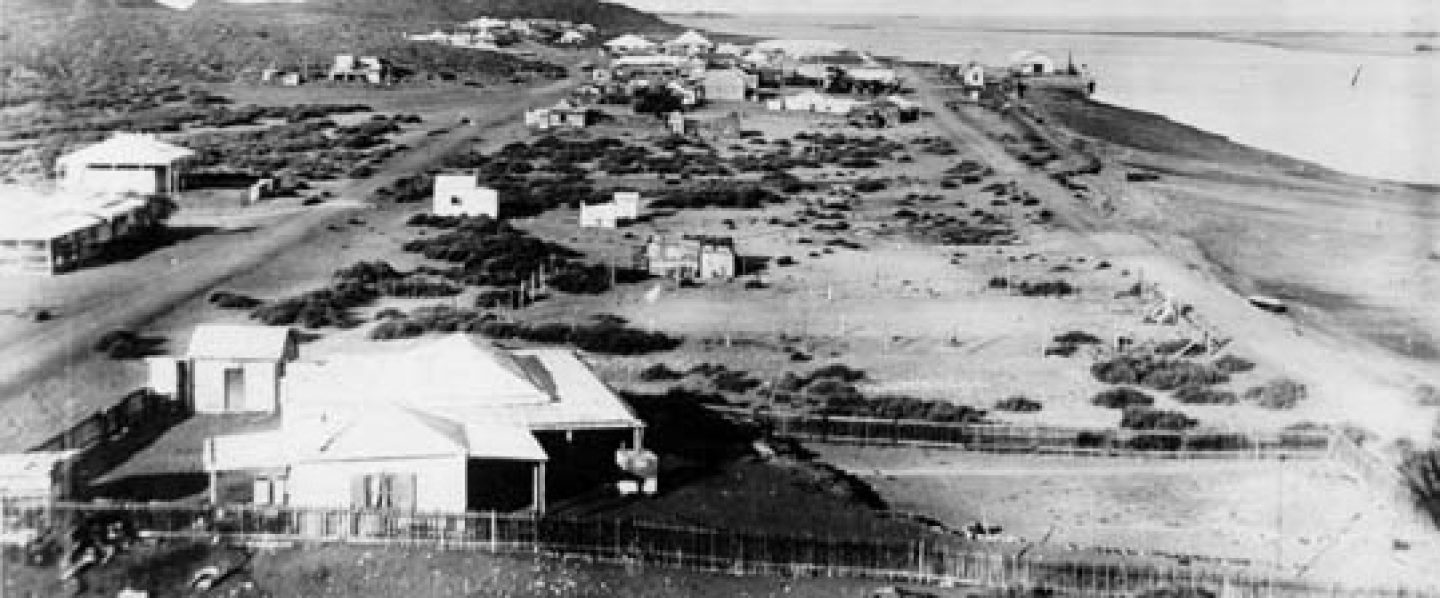
The community’s early economic development was driven by the forestry sector, specifically through H.J. Yelverton’s Imperial Jarrah Wood Corporation, which established a private siding and timber mill in 1899. The timber town also experienced a brief gold prospecting rush around 1900, during which miner Edward M. Spencer was tragically killed in a deep shaft. Following the corporate amalgamation of 1902 into the Millars Combine, the Newlands timber mill closed down and the siding was dismantled in 1906. Undeterred, local residents petitioned the government for land tenure, leading to the official gazettal of the Newlands townsite in 1907.
A central pillar of the community was the Newlands School, which commenced classes in 1900 in a public hall built by the Imperial Jarrah Company under inaugural head teacher Martin Fox and operated until closing in 1953. Over the twentieth century, Newlands successfully transitioned to agriculture. Today, Newlands is a tranquil rural locality of 114 residents where apple and pear growing continues as the primary source of employment.
History
The physical landscape of Newlands and the broader Shire of Donnybrook, Balingup is situated on the traditional lands of the Wardandi people, who belong to the Noongar nation. For thousands of years prior to European colonisation, these traditional custodians maintained a deeply integrated social, religious, and secular relationship with the land. Entirely dependent on nature, Noongar groups were constantly in search of food and water, which naturally limited the size of their traveling parties and made them acutely aware of territorial boundaries and sacred places. Their complex social framework and traditions were preserved and passed down to younger generations through painting, dance, story, and song.1 2
Noongar seasonal movements followed definite routes determined by the availability of resources; many of these ancient tracks eventually became the road routes used by early European settlers. Traditionally, Noongar men hunted kangaroos, wallabies, possums, and bandicoots using clubs, stone axes called koitj, and long spears called kitj, while boomerangs, or karli, were utilised primarily in open country rather than thick bush. Noongar women assumed the critical responsibility of gathering seeds, roots, berries, nuts, fungi, and bardi grubs, carrying their digging sticks, known as wana, alongside bark or wooden scoops and kangaroo skin carry-bags. Garments were fashioned from animal skins, such as the booka, a kangaroo skin cloak worn draped over one shoulder with the fur facing inward for warmth. During temporary stays, shelters were constructed by bending young gum trees, lashing them together, and thatching them with zamia palms.3
The arrival of British colonisers in 1829 forever disrupted this established order of Noongar life. The settlers fenced off traditional hunting grounds, camped near fresh water springs, and cultivated the fertile soils for agriculture, forcing the Aboriginal populations to search for food further afield. This displacement caused friction as Noongar groups were forced to trespass on neighboring tribal preserves, leading to internal conflict and disorientation. Furthermore, the introduction of European diseases such as measles and influenza caused high mortality rates among the native population, drastically altering Noongar society and forcing survivors to adapt to the margins of the emerging agricultural economy.
Early European Exploration and the Pioneer Footprint
The earliest European mapping of the region occurred between 1829 and 1835, when explorers and surveyors, including the first Surveyor General, John Septimus Roe, made their way into the heavily forested South-West. Permanent European settlement began in 1842 when five Irish pioneers, including George Nash and James Bessonett, took up Leschenault Location 55 and named the area Donnybrook after the Dublin suburb from which they had emigrated. These early colonists faced incredibly harsh conditions, living in canvas tents and struggling to clear the dense native forest using primitive hand tools. The earliest transport routes were rough bush tracks, many of which followed the paths carved out by independent sandalwood cutters who traversed the Preston Valley.
The development of the district was significantly accelerated by the introduction of convict labour between 1851 and 1875. Ticket-of-leave men were stationed at a camp named Toerag, located near Donnybrook, under the supervision of Sergeant Henry Trigwell. Convict labour built the first local jail, constructed bridges, and cleared Padbury Road, establishing a reliable transport link to the port at Bunbury. A policeman, Trooper McAlinden, was appointed to maintain order in the emerging district, which was starting to attract more permanent farming families. By the late nineteenth century, simple wattle and daub huts were replaced by permanent homesteads, setting the stage for industrial timber exploitation and gold prospecting.4
The Timber Empire and the Rise of Newlands Siding
The magnificent native forests of the Darling Range and South-West, particularly the dense stands of jarrah and marri, became a valuable economic resource due to the strength, durability, and termite-resistant qualities of the timber. Large-scale commercial sawmilling in the colony commenced in the mid-nineteenth century, with Henry Yelverton establishing a standard mill at Quindalup near Busselton in 1853. Yelverton had purchased a portable steam sawmill salvaged from the wreck of the ship Charles Fox Bennett, which had run aground near Cape Leeuwin in November 1853, paying 210 pounds at auction in Fremantle. This technological innovation allowed the timber industry to transition from slow pit-sawing and broad-axe hewing to rapid, large-scale industrial sawmilling.6
The opening of the Government railway line from Donnybrook to Bridgetown in 1898 provided the critical infrastructure required to transport heavy timber to Bunbury and Perth. Newlands was established as a railway siding on this section of the Northcliffe branch railway, first appearing in official railway siding lists in 1899. In the same year, H.J. Yelverton’s Imperial Jarrah Wood Corporation Ltd established a private siding at Newlands. The sawmilling operation at Newlands was highly labor-intensive; trees were selected by fallers, who chopped a sloven or vee into the trunk to prevent splitting before sawing through the back using a double-handed crosscut saw.7
Once felled, the bark was stripped, and horse or bullock teams dragged the heavy logs. The logs were supported by a whim, a massive logging arch with two large wheels and a cranked axle, which allowed the front of the log to be lifted clear of the ground for easier snigging. Handymen, known as swampers, assisted the whim drivers by clearing tracks through the forest to the bush landings. At the Newlands mill, logs were hauled through the bush by horse teams until Yelverton constructed a three-kilometre wood-railed tramway running south-west from the mill to carry logs directly to the main railway line.8
Anecdotes of Danger and Tragedy
The daily lives of the working-class pioneers in Newlands were fraught with physical danger, both in the sawmills and down the mining shafts. Two detailed historical anecdotes from local records illustrate the perils of early industrial life in the South-West.
The first anecdote concerns a serious sawmill accident that occurred at Newlands in July 1899. The sawmilling machinery was powered by steam, utilising a large Hoffman saw-bench to break down the massive jarrah logs. During a afternoon shift, a heavy flitch of timber slipped, causing the carriage to run back rapidly. The Hoffman saw struck another piece of timber, throwing it onto the benchman, Thomas Lochart, who suffered severe injuries. A formal inquiry was held, during which the superintending engineer of the Imperial Jarrah Timber Company, Thomas Crabtree, presented detailed plans of the machinery. Thomas Lochart testified that his duty was to control the steam carriage with a lever, noting that while the carriage stopped instantly on the forward pass, there was no resistance on the return, meaning the carriage travelled three or four feet before it could be pulled up. This mechanical volatility made early sawmilling a hazardous occupation.9
The second anecdote details a gold prospecting tragedy near Newlands in August 1900. The lure of gold had brought many prospectors to the region in 1899, leading to the establishment of the Donnybrook Goldfields Ltd and the opening of the Goldfields Hotel. A small party of prospectors had been sinking shafts about two miles from Newlands. On a Thursday afternoon, a miner named Edward M. Spencer, who was working at the bottom of a deep shaft, signalled to his mates that he wished to come up. As his mates began hauling him up the shaft, a tragic accident occurred, resulting in Spencer being killed. News of the fatality reached the Southern Times in Bunbury the following day, underscoring the high personal cost of the short-lived gold boom. Within a few years, the gold was deemed too costly to extract, and the mining leases closed; many of the prospectors stayed in Newlands, turning their hands to timber or agriculture.10
Local Pioneers, Livestock Brands, and Early Motor Vehicles
For genealogists and family historians, Newlands has a rich record of landownership and early animal brand registrations, documenting the families who built the community. Under the Livestock Brands Act, numerous pioneers registered their properties and brands in the early twentieth century. Jane Busch registered her brand, BC8, at her property named Drift Field in Newlands in 1912. Walter Brown registered brand W2B, listing his address at the Newlands Post Office, while G.G. Creyk operated Kincraig with brand CK7. James Guthrie established the Glenyre Estate, registering brand O1U. William Hageman ran his farms, Road View and Line View, under brand H2X. Other notable registrations included J.H. Hannay at The Wells (brand NY2), Margaret Murphy at Hazeldale (brand 5MU), and Edmund C. Proctor at The Advance (brand P9T). Mitchell Bros. operated Rockfield and Camfield, while J.C. Sutton ran Kelvin Grove, via Bunbury, under brand SN2. Giuseppe Torrisi registered brand 1OT for Block 1782.11
The transition from horse-drawn transport to motor vehicles is documented in the early Western Australian motor vehicle registrations between 1915 and 1928, administered by the Preston Road Board. V.C. Mitchell of Newlands was one of the earliest motor car owners, registering a 20 H.P. Ford (plate PE 8) in 1916, which he maintained through 1919. Mitchell later upgraded to an Overland car (plate PE 8) in 1922. R. Hancock registered a Ford (plate PE 52) in 1923, which he drove for several years. Edmund C. Proctor registered a Ford Van (plate PE 177) for his business in 1927, while A. Torrisi registered a Ford car (plate PE 175) in the same year. The adoption of these motor vehicles reduced the reliance on draft horses, leading to a decline in local oats and chaff farming.12
The Educational Legacy of the Newlands School
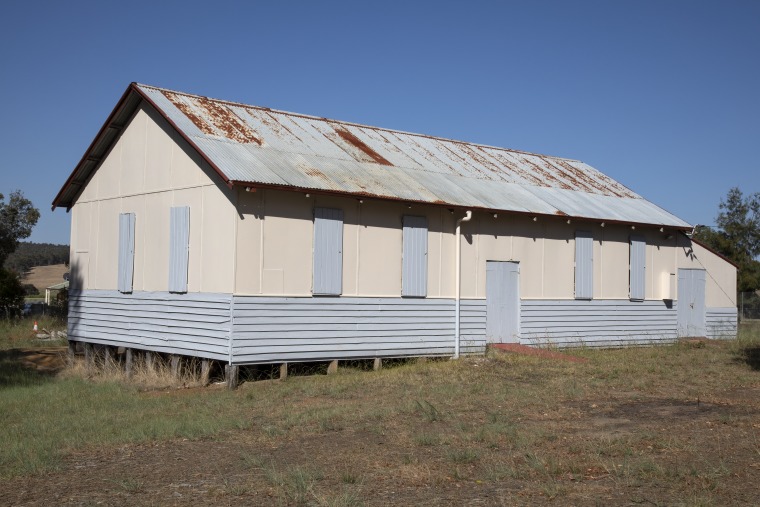
A central pillar of the Newlands community was its local school, which educated generations of children over its fifty-three-year existence. The Imperial Jarrah Company built a public hall at Newlands in 1901, which served as the school building. The school actually commenced classes in 1900, providing an essential social anchor for the families of the timber workers and local farmers. As the class sizes grew, the school infrastructure was expanded; a timber school building from the Group 11 settlement near Yanmah was eventually dismantled and transported to Newlands to serve as an additional classroom. The school ultimately closed in 1953 as educational facilities in the region were consolidated.13 14
The school records preserve a complete list of the head teachers and sewing mistresses who taught at Newlands:15
- Martin Fox was the inaugural head teacher, serving from 1901 to 1903, with Margaret Fox appointed as the sewing mistress in 1903.
- Thomas Maddison served as head teacher on supply from 1904 to 1906, assisted by sewing mistress Adelaide Kilian.
- Alexander R. Mills took over the head teacher position in 1907.
- Florence M. Barran served as head teacher in 1908 and 1909.
- Ida E. Adderley was appointed head teacher in 1910.
- Lille Beaumont led the school as head teacher in 1911.
- Ellen Brady provided long-term stability during the difficult years of World War I, serving as head teacher from 1916 to 1920.
- Myrtle Martin served as head teacher on supply from 1923 to 1926.
- Agnes Lawrie filled the role of head teacher on supply in 1927 and 1928.
- Constance Lund taught on probation and then as head teacher from 1929 to 1931.
- Melva Day served as head teacher from 1931 to 1933.
- Marjorie Atherton taught as head teacher in 1934 and 1935.
- Reginald Durbin was appointed head teacher from 1937 to 1940, with Beryl Fuller serving as the sewing mistress during this period.
- Joy Lindsay taught on probation in 1941.
- Beatrice Mitchell served as head teacher on supply from 1942 to 1949, guiding the school through the Second World War. In 1950, she was listed as the head teacher for Newlands High School, before the school’s eventual closure.
Amalgamation, Gazettal, and Transition to Agriculture
In 1902, a major corporate amalgamation took place within the Western Australian timber industry, resulting in the formation of Millars’ Karri and Jarrah Company (1902) Limited. This massive conglomerate absorbed eight leading timber companies, including the Imperial Jarrah Wood Corporation’s operations at Newlands and Quindalup. Following the amalgamation, Millars decided to centralise its sawmilling operations, leading to the closure of the Newlands timber mill in 1902. The remaining timber stocks were despatched during 1903, and the railway siding was officially dismantled and removed in 1906.16 17 18
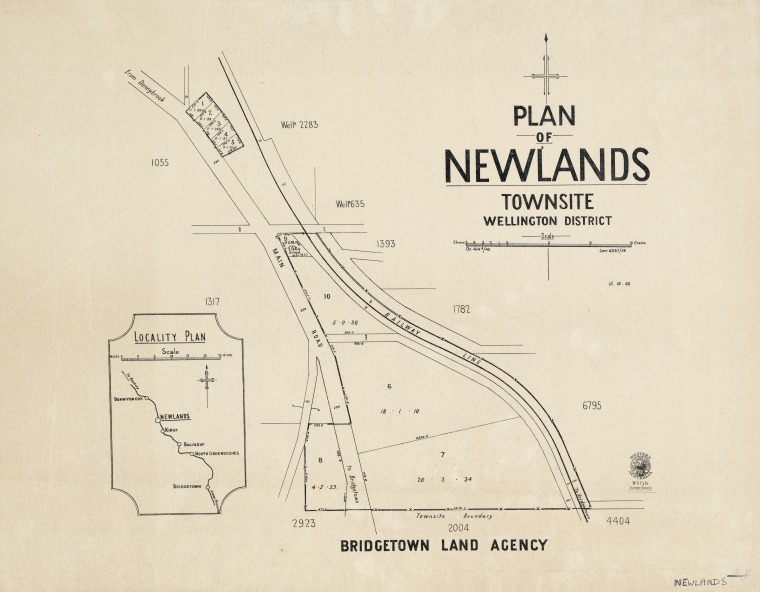
The sudden closure of the mill threatened to turn Newlands into an abandoned ghost town. However, the local residents chose to remain, and in 1906 they petitioned the Western Australian Government for secure tenure over the land on which their houses had been built. In response to this collective action, the government surveyed the area and gazetted the townsite of Newlands in 1907.19
With the timber industry gone, the community successfully transitioned to agriculture, utilising the fertile soils of the valley. Farmers cultivated potatoes, cabbages, and grains, and run livestock including cattle, sheep, and pigs. The early twentieth century saw the introduction of fruit growing, with apple and pear orchards becoming highly successful. The Preston Valley became famous for its apple production, exporting the newly discovered Granny Smith apple variety to global markets. However, the agricultural economy faced challenges; in the 1930s, the destructive jarrah forest disease known as dieback was detected, prompting the government to develop pine plantations to supplement the hardwood industry.21
Modern Newlands and a Legacy Preserved
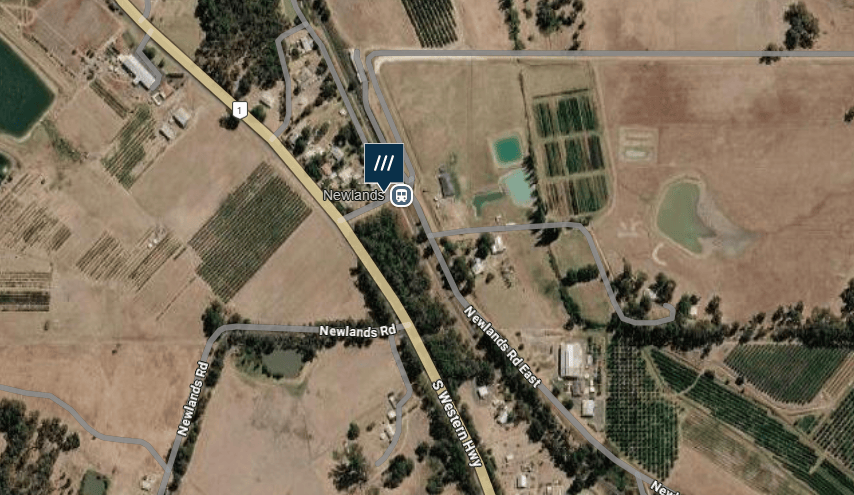
Today, Newlands remains a tranquil rural locality nestled within the Shire of Donnybrook, Balingup, located approximately 190 kilometres south of Perth. The South Western Highway runs directly through the eastern part of the locality, connecting it to the major hubs of Donnybrook and Kirup. While Newlands maintains a quiet, self-sufficient charm, it is renowned for its horticultural conservation, particularly the Mostly Roses heritage rose garden, which preserves rare and historic rose varieties.
The 2021 Census QuickStats reflect the quiet, stable nature of the modern locality, documenting a population of 114 residents with an equal split of 57 males and 57 females. The median age of Newlands residents is 50 years, significantly higher than the state and national median of 38. The cultural heritage remains strongly tied to British and European roots, with 40.2% of residents reporting English ancestry and 40.2% reporting Australian ancestry, alongside significant Italian, Scottish, and Irish heritages. The census data reveals that the local economy continues to be anchored by its historic agricultural roots; apple and pear growing remains the single largest employer in Newlands, representing 26.0% of all local employment, followed by hospital service, beef cattle farming, and wine manufacturing. This economic continuity ensures that Newlands preserves its historical legacy while offering a peaceful rural lifestyle in the South-West.22
Timeline
- Pre-1829: The Wardandi Noongar people live as traditional custodians of the land, utilizing seasonal hunting and gathering routes.
- 1829: European exploration begins in the South-West; British colonisation disrupts traditional Noongar land management.
- 1842: Donnybrook is settled by five Irish pioneers, including George Nash and James Bessonett, at Leschenault Location 55.
- 1851;1875: Convict and ticket-of-leave labour clears Padbury Road and constructs bridges under the supervision of Sergeant Henry Trigwell at Toerag camp.
- 1853: Henry Yelverton purchases a portable steam sawmill salvaged from the wreck of the Charles Fox Bennett to establish his logging operations.
- 1898: The Donnybrook to Bridgetown government railway line opens, providing the transport link for the Newlands timber siding.
- 1899: H.J. Yelverton’s Imperial Jarrah Wood Corporation establishes a private siding at Newlands; timber hauling is transitioned to a wood-railed tramway.
- 1899: Thomas Lochart, a benchman at the Newlands mill, is severely injured in a steam carriage saw accident.
- 1900: Edward M. Spencer, a gold prospector, is killed in a mining shaft accident near Newlands.
- 1900: The Newlands school commences classes, utilizing a newly built public hall.
- 1901: Martin Fox is appointed as the first official head teacher of Newlands school.
- 1901: The Imperial Jarrah Company constructs a public hall at Newlands.
- 1902: Corporate amalgamation absorbs the Imperial Jarrah Wood Corporation into the Millars Combine; the Newlands mill is closed.
- 1906: The Newlands railway siding is removed; local residents petition the government for secure tenure over their properties.
- 1907: The Western Australian Government officially gazettes the Newlands townsite.
- 1910: Ida E. Adderley is appointed head teacher of the Newlands school.
- 1916: V.C. Mitchell registers a 20 H.P. Ford car with the Preston Road Board, pioneering motor transport in Newlands.
- 1916;1920: Ellen Brady serves as head teacher of Newlands school during the World War I period.
- 1930s: Dieback forest disease is detected in the jarrah forests; the government begins planting pine plantations to supplement the timber industry.
- 1942;1949: Beatrice Mitchell serves as head teacher on supply, guiding the school through the Second World War.
- 1953: The Newlands school is officially closed, with students transferred to larger regional schools.
- 2021: The Australian Census records a population of 114 people in Newlands, with apple and pear growing continuing as the primary source of employment.
Map
Sources
- Wikipedia (2024). Newlands, Western Australia. Retrieved 3 Sep 2026 from https://en.wikipedia.org/wiki/Newlands,_Western_Australia ↩︎
- Wiki Australia (n.d.) Guide to Newlands. Retrieved 3 Sep 2026 from https://wikiaustralia.com/destination/newlands/ ↩︎
- Farrow, Lynne and Chinnery, Robin (2013). Shire of Donnybrook-Balingup : Municipal Heritage Inventory. Retrieved 3 Sep 2026 from https://www.donnybrook-balingup.wa.gov.au/Profiles/donnybrook/Assets/ClientData/Documents/Content/Town_Planning/Municipal-Heritage-Inventory-Part-1.pdf ↩︎
- ibid ↩︎
- State Library of Western Australia (n.d.) Newlands Hall. Retrieved 4 Sep 2026 from https://purl.slwa.wa.gov.au/slwa_b5927927_1 ↩︎
- Pickering Brook Heritage Group Inc. (2017). Sawmills. Retrieved 3 Sep 2026 from https://old.pickeringbrookheritagegroup.com.au/timberind.html ↩︎
- Wikipedia (2021). Timber railway lines of Western Australia. Retireved 3 Sep 2026 from https://en.wikipedia.org/wiki/Timber_railway_lines_of_Western_Australia ↩︎
- Dept of Conservation and Land Management (1997). Timber Harvesting of Crown land in south west of Western Australia: an historical review with maps. Vol.2 No.3 P.202 Western Australian Journal of Conservation and Land Management. Retrieved 3 Sep 2026 from https://library.dbca.wa.gov.au/Journals/080273/080273-02.03.pdf ↩︎
- Sclater, J. B. (2005). History in Forest Names in Proceedings 6th National Conference of the Australian Forest History Society Inc, Michael Calver et al. (eds). Retrieved 3 Sep 2026 from https://www.foresthistory.org.au/Proceedings2004/141.pdf ↩︎
- FATALITY NEAR NEWLANDS. (1900, August 4). Southern Times (Bunbury, WA : 1888 – 1916), p. 5. Retrieved September 3, 2026, from http://nla.gov.au/nla.news-article157559354 ↩︎
- Carnamah Historical Society (n.d.) WA Livestock Brands 1912-1962. Retrieved 3 Sep 2026 from https://www.carnamah.com.au/livestock-brands?keyword=newlands ↩︎
- Carnamah Historical Society (n.d.) WA Motor Vehicle Registrations 1915-1928. Retrieved 3 Sep 2026 from https://www.carnamah.com.au/car-registrations?keyword=newlands ↩︎
- Wikipedia (2023). List of schools in rural Western Australia. Retrieved 3 Sep 2026 from https://en.wikipedia.org/wiki/List_of_schools_in_rural_Western_Australia#Primary_schools ↩︎
- Higham, Geoffrey (2018). WA Schools Gazetteer. Retrieved 3 Sep 2026 from https://www.geoproject.com.au/News/Schools_gaz_5_excl_preschools_10Dec2018.pdf ↩︎
- Carnamah Historical Society (n.d.) WA State School Teachers 1900-1980. Retrieved 3 Sep 2026 from https://www.carnamah.com.au/teachers?keyword=newlands ↩︎
- Freegard, Gordon (n.d.). The Timber Industry. Retrieved 4 Sep 2026 from the Pickering Brook Heritage Group website https://old.pickeringbrookheritagegroup.com.au/timberind.html ↩︎
- Morawa Historical Society (n.d.) WA Ghost Towns. Retrieved 4 Sep 2026 from https://morawamuseum.org.au/ghosttowns/N.pdf ↩︎
- Wikipedia (2021). Millars (company). Retrieved 4 Sep 2026 from https://en.wikipedia.org/wiki/Millars_(company) ↩︎
- Landgate (2022). Historical Town Names. Retrieved 4 Sep 2026 from the Wayback Machine internet archive http://www0.landgate.wa.gov.au/maps-and-imagery/wa-geographic-names/name-history/historical-town-names ↩︎
- State Library of Western Australia (n.d.) Townsite Plan. Retrieved 4 Sep 2026 from https://purl.slwa.wa.gov.au/slwa_b1955826_1 ↩︎
- Farrow and Chinnery (2013) : refers to later diversification ↩︎
- Australian Bureau of Statistics (2021). 2021 Census All persons QuickStats : Newlands (WA). Retreived 4 Sep 2026 from https://abs.gov.au/census/find-census-data/quickstats/2021/SAL51110 ↩︎
- What3Words.com (2026). Newlands. Retrieved 4 Sep 2026 from https://what3words.com/warmed.imitations.scraps ↩︎
Versions
| Date | Changes |
|---|---|
| 4 Sep 2026 | Version 0.1 – First draft |
| 6 Sep 2026 | Version 1.0 – First published |

