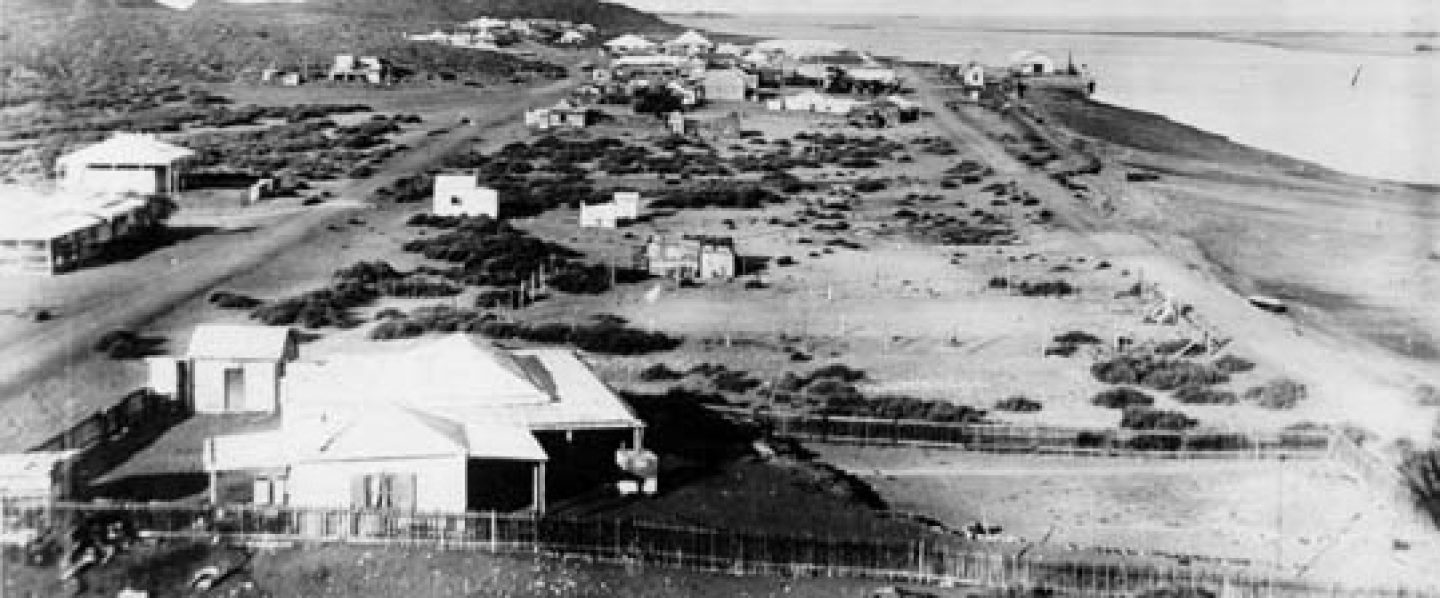
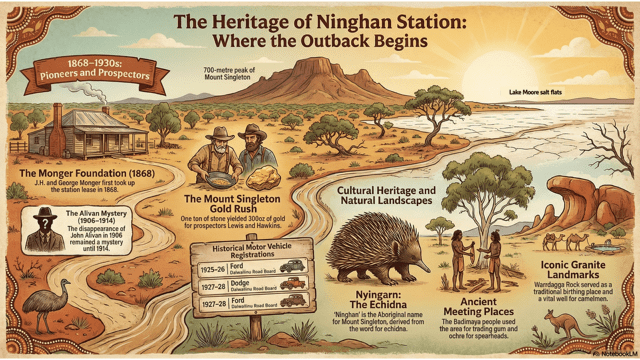
Christine Harris (2026)
Demographics
Region: Mid West
LGA: Yalgoo
Industry: Pastoral station & mining
Other Names: Ninghan Station, Pinyalling, Mount Pinyalling, Mt Pinyalling, Pingaling, Pingalling, Grey County, Mount Singleton, Lake Moore, Wardagga Hill, Warrdagga Hilll, Wardaagga Hill
Open Street Map: -29.4241, 117.2906
What3Words: ///implicate.copy.changing
Settled: 1868
Abstract
This article explores the multifaceted history of Ninghan, a region approximately 380 kilometres north-east of Perth that serves as the symbolic gateway to the Western Australian outback. Deriving its name from the Aboriginal word for echidna and the towering presence of Mt Singleton, the area holds deep cultural significance for the Badimaya people, particularly around the expansive salt lake, Lake Moore. The narrative follows Ninghan’s pastoral genesis from the Monger family in 1868 through its high-value transfer to the Barr-Smiths in 1923, highlighting the economic impacts of wool and livestock.
Social history is brought to life through anecdotes of station life, including the tragic 1906 mystery of John Alivan and the 1912 labour disputes regarding shed hand wages. The article details the administrative complexities of the Ninghan (occasionally written as ‘Ningham’) Road Board, an essential resource for genealogists researching early vehicle registrations and livestock brands. Environmental factors, such as periodic cattle blindness outbreaks in the 1890s and the distinctive ‘red country’ aesthetics, are examined alongside the region’s mineral wealth, ranging from the 1915 gold rush at Mt Singleton to modern black jade mining at Yeoh Hills. Finally, the piece covers Ninghan’s contemporary role as a managed station stay under the Bell family, where history is preserved through ruins and the enduring beauty of its wildflower displays.
History
Nestled 381 kilometres north-east of Perth along the Great Northern Highway lies a landscape that many travellers recognise by a single, evocative slogan: “Where the outback begins.” This is Ninghan, a region that serves as a bridge between the remnant eucalyptus woodlands of the south-west and the vast mulga plains of the Murchison. Its history is a rich tapestry of Indigenous heritage, pastoral endurance, and mineral fortune, all played out on a stage of vibrant red granite and seasonal carpets of everlastings.1 2 3
The Nyingarn Roots
The name ‘Ninghan’ is deeply rooted in the local environment and its traditional custodians. It is the Aboriginal name for Mt Singleton, the highest geographical feature in the area, standing roughly five kilometres south of the current station homestead. The word is thought to be derived from nyingarn, meaning echidna, a testament to the local fauna that has inhabited the ridge for millennia.
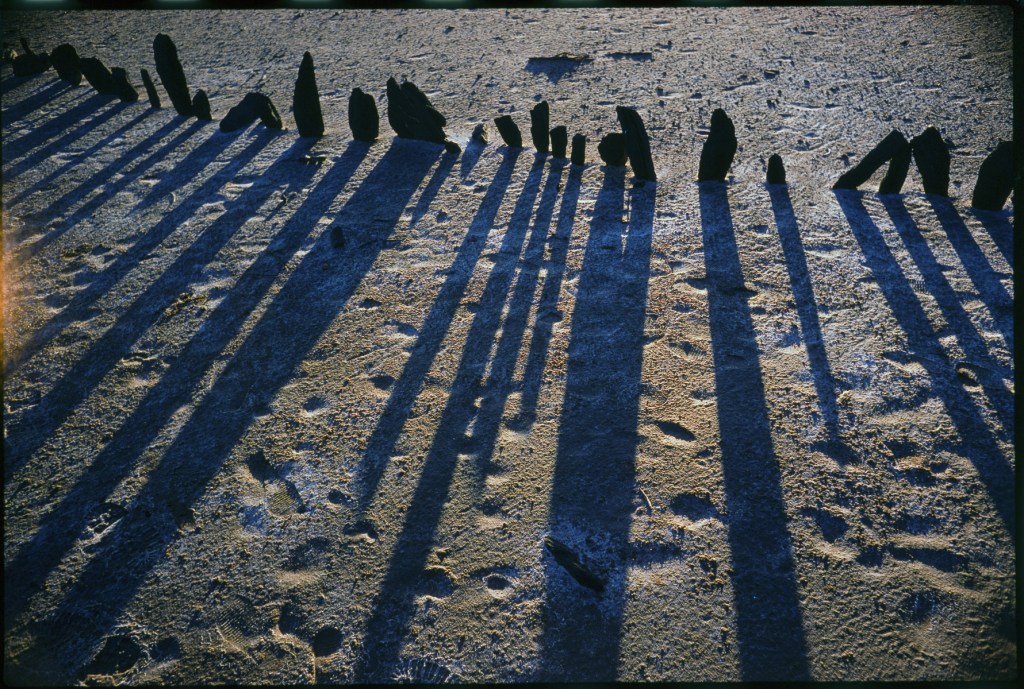
For the Badimaya (or Badimia) people, the land around Ninghan and the massive 120-kilometre-long salt expanse of Lake Moore is sacred. Long before the arrival of European surveyors, the Ninghan area functioned as a traditional meeting place for the surrounding Nyoongar, Yamatji, and Wongi peoples. It was a hub of trade, where groups exchanged gum from the Xanthorrhoea (grasstree) for attaching spearheads and ochre sourced from outlying country. Today, this heritage is preserved through the 48,000-hectare Ninghan Indigenous Protected Area (IPA), where the Badimaya continue to hunt, collect bush medicines, and teach younger generations about their country.4
Pastoral Genesis and the Monger Era
European interest in the region intensified in the mid-19th century. Surveyor A.C. Gregory, famous for his work at Mt Augustus, encountered Lake Moore in 1846. He named it after George Fletcher Moore, the Advocate General of Western Australia, but found the massive lake a formidable barrier, baffling his attempts to proceed north for five days.6
The pastoral history of Ninghan officially began in 1868 when the land was taken up by J.H. Monger and George Monger. It was a period of “dogged determination,” where pioneers faced the constant threats of drought, wild dogs, and the immense difficulty of finding reliable water sources. By the late 1890s, the station had become a significant cattle concern, though it was not without its environmental challenges. In 1897, Inspector McPherson reported a rapidly spreading disease of the eye among the cattle stock. The affliction, later identified by veterinary surgeons as “periodic opthalmia,” caused total blindness for a time, requiring managers to move herds into shady timber country to alleviate their suffering.7 8 9
Social Anecdotes and Mysteries
For those researching genealogy and local lore, the station records offer glimpses into the rugged lives of the people who worked the land. One of the region’s most enduring mysteries began on 5 February 1906. John Alivan, a station hand, went missing from a fencing camp 12 miles from the homestead. The station manager at the time, George Devine, and a native tracker followed Alivan’s tracks for 20 miles, but were forced to abandon the search when their horses succumbed to the heat.10
The mystery remained unsolved for eight years until 21 November 1914. Joe Lawson, an Aboriginal man employed on the station, discovered human remains in a boundary paddock to the south. The then-manager, Mr Clohesy, reported the find to the Yalgoo police, finally bringing closure to Alivan’s story. Similar records mention John Brown, another station hand who died on the property and was buried in a paddock by his colleague, J. Percy Fitzgerald.11
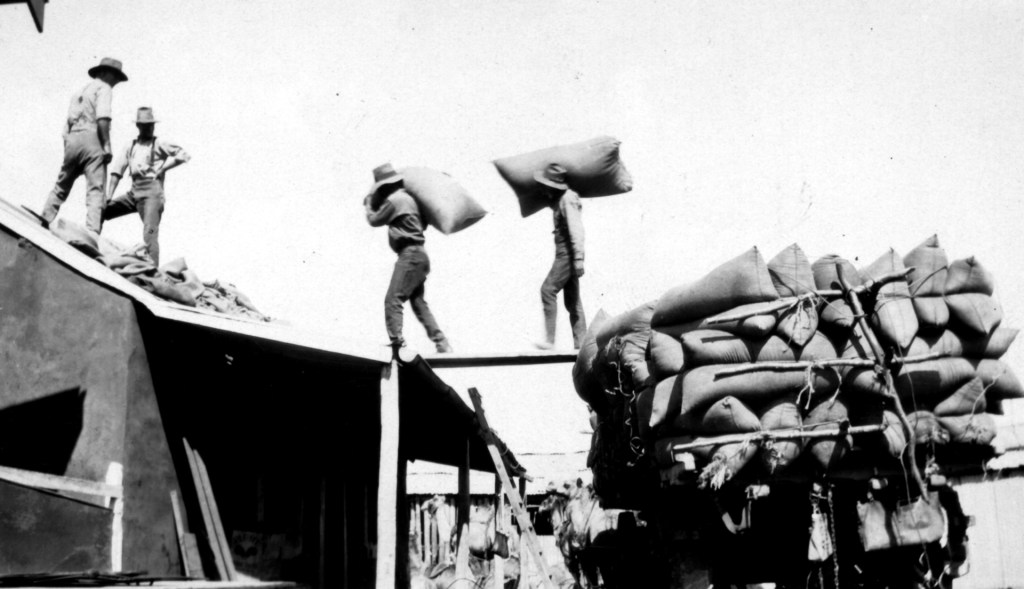
Station life was also shaped by the economic politics of the era. By 1912, a conference between owners and employees established that shed hands would receive a wage of £2 per week during the shearing season, while regular station hands earned £1 15s. These men lived in a world where “the whole country is red” – a place where the red dust was so pervasive that it tinted the bark of the trees and the fur of the kangaroos.12
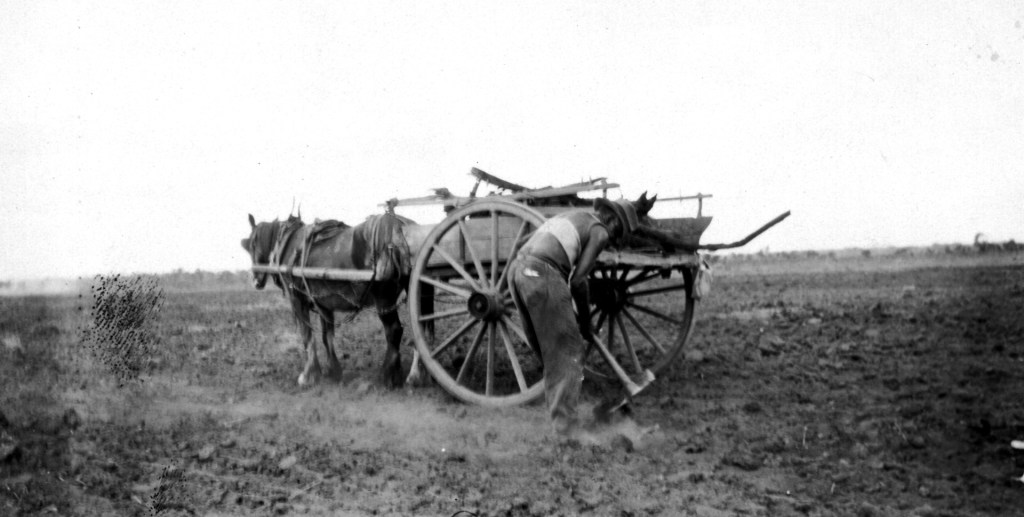
Administrative Shifts
The name Ninghan has appeared in various administrative guises over the last century, which can be a source of confusion for historians. Beyond “Ninghan Station,” the area was part of the “Ninghan Land District,” used extensively in livestock brand registries through the 1920s and 1960s. Property owners like Henry Wm. Brown (Bencubbin) and Charles J.J. Butcher (Mukinbudin) all registered their brands under the Ninghan district name.14
Furthermore, the “Ninghan Road Board” was a vital local government entity in the early 20th century, overseeing vehicle registrations for surrounding areas like Trayning, Kunnunoppin, and Yelbeni. Notably, official records show that the “Ningham Road Board” (a common spelling variation in the period) was officially renamed the Kununoppin-Trayning Road Board on 12 October 1923. These variations highlight how the geographic concept of ‘Ninghan’ once stretched across a much larger portion of the wheatbelt and pastoral districts than the current station boundaries suggest.15 16
From Wool to Gold and Jade
The economic value of Ninghan fluctuated with the markets and mineral finds. In 1902, the station was owned by the Bank of New South Wales and was noted for its “fattening qualities of the pasturage.” By 1923, the property was sold by Mr P.A. Connolly to Mr T. Barr-Smith of Adelaide for the substantial sum of £47,500.17 18
While wool was the primary driver, the lure of gold was never far away. In 1915, prospectors Lewis and Hawkins reported a phenomenal yield of 300oz of gold from just one ton of stone near Mt Singleton. This discovery led to a localized rush, with a large number of leases pegged on the station. In more recent times, the mineral focus has shifted to the Yeoh Hills on the station, where Glen Archer of Outback Mining extracts highly sought-after Black Jade.19 20
Ninghan Today
In the modern era, Ninghan has adapted to the changing economic landscape of the Murchison. While it remains a working station, transitioning from cattle and sheep to predominantly goats and a small herd of 400 sheep, it has become a premier destination for those seeking an “outback experience” less than 400 kilometres from Perth.21 22
The station is now managed by the Bell family (Don and Ashley Bell), who provide a “mudmap” to visitors wishing to explore the half-million-acre property. The landscape remains as dramatic as ever, featuring huge rock formations that resemble frozen waves and the challenging medium-to-hard climb to the peak of Mt Singleton. For the casual visitor, the greatest draw is often the wildflowers; the station is renowned for its awesome displays of purple everlastings that carpet the margins of Billgaburna.
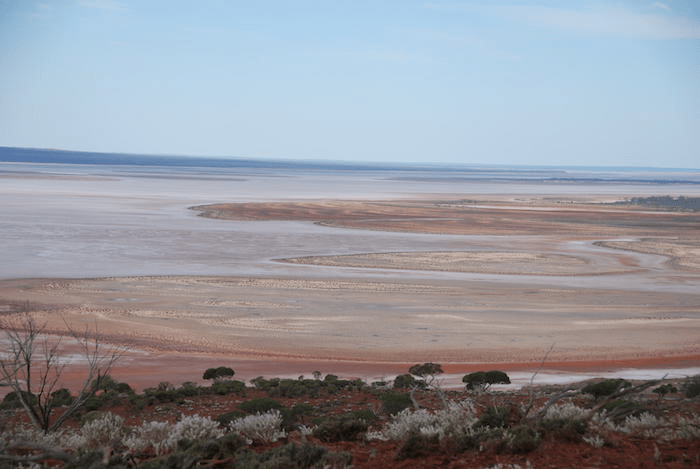
As visitors wander past old machinery, working windmills, and the ruins of pioneering structures, they are walking through a living museum. From the ancient trade routes of the Badimaya to the 1923 motor treks in kerosene-fueled Buicks, Ninghan remains a vital symbol of the enduring spirit of the Western Australian outback. Whether called Nyingarn, Ningham, or Ninghan, the echidna’s mountain continues to stand watch over a land of red dust and golden history.
Timeline
- Pre-1860s: Traditional Badimaya/Badimia meeting place for trade and culture.
- 1834: George Fletcher Moore appointed Advocate General, for whom Lake Moore is later named.
- 1846: Surveyor A.C. Gregory names Lake Moore.
- 1868: Ninghan Station is first taken up by J.H. Monger and George Monger.
- 1897: Outbreak of periodic opthalmia (eye disease) affects station cattle stock.
- 1902: The station is owned by the Bank of New South Wales and inspected for sale.
- 1906: Station hand John Alivan disappears near a fencing camp, sparking an eight-year mystery.
- 1912: Labour conference sets wages for station and shed hands at £1 15s to £2 per week.
- 1914: Aboriginal tracker Joe Lawson discovers the remains of John Alivan.
- 1915: Lewis and Hawkins discover phenomenal gold yields (300oz per ton) near Mt Singleton.
- 1923: P.A. Connolly sells the station to Mr T. Barr-Smith of Adelaide for approximately £47,500.
- 1923 (Oct): Ningham Road Board name officially changed to Kununoppin-Trayning Road Board.
- 1924–1928: Major peak in vehicle registrations and livestock brands under the Ninghan name.
- Modern Day: Managed as a goat and sheep station and outback tourist destination by the Bell family.
- Current: Glen Archer mines black jade from the station’s Yeoh Hills.
Map
Sources
- Epton, Kim (2024). Adventures.net.au: Road Trips – Ninghan Station. Retrieved 5 Apr 2026 from https://www.adventures.net.au/road-trips/ninghan-station ↩︎
- Shire of Yalgoo (2026). Ninghan Station. Retrieved 5 Apr 2026 from https://www.yalgoo.wa.gov.au/tourism/local-accommodation/station-stays/ninghan-station.aspx ↩︎
- THROUGH BUSH AND SCRUB. (1923, April 26). The West Australian (Perth, WA : 1879 – 1954), p. 9. Retrieved April 5, 2026, from http://nla.gov.au/nla.news-article22623819 ↩︎
- Epton (2024): refers to the Aboriginal heritage of the area ↩︎
- State Library of Western Australia (n.d.) Richard Woldendorp collection of photographs; BA1611/1624. Retrieved 6 Apr 2026 from https://encore.slwa.wa.gov.au/iii/encore/record/C__Rb2544971
NOTE: Part of a serpentine rock alignment more than 250 feet long situated on the salt crust of the lake bed. This alignment contains 437 upright rock slabs as well as 91 which have fallen over in place. The rocks are slabs of horneblende schist, show no signs of trimming and are of local origin. Lake Moore is an immense salt marsh or dry lake. [Source: ‘Kunturu, an Aboriginal Sacred Site on Lake Moore, Western Australia’ by Richard A Gould and Elizabeth B Gould in American Museum Novitates, number 2327 June 21, 1968]. ↩︎ - ibid ↩︎
- West Australian (1923): refers to early settlement ↩︎
- NEWS AND NOTES. (1897, November 3). The West Australian (Perth, WA : 1879 – 1954), p. 5. Retrieved April 5, 2026, from http://nla.gov.au/nla.news-article3187085 ↩︎
- FARM AND STATION. (1897, November 12). Western Mail (Perth, WA : 1885 – 1954), p. 4. Retrieved April 5, 2026, from http://nla.gov.au/nla.news-article33146271 ↩︎
- Outback Graves Markers (n.d.) John Alivan. Retrieved 5 Apr 2026 from https://www.outbackgraves.org/burial-records/burial-search/?Name=&Keywords=Ninghan&action_OGMSearch=Search ↩︎
- ibid: Retrieved 5 Apr 2026 from https://www.outbackgraves.org/burial-records/person/6387 ↩︎
- Miscellaneous (1912, December 22). Sunday Times (Perth, WA : 1902 – 1955), p. 15 (Christmas Number : First Section). Retrieved April 5, 2026, from http://nla.gov.au/nla.news-article57743946 ↩︎
- State Library of Western Australia (n.d.) Banks collection of photographs. Photo 1 retrieved 6 Apr 2026 from https://encore.slwa.wa.gov.au/iii/encore/record/C__Rb2012024; photo 2 retrieved 6 Apr 2026 from https://encore.slwa.wa.gov.au/iii/encore/record/C__Rb2011999 ↩︎
- Carnamah Historical Society & Museum (n.d.) WA Livestock Brands 1912-1962. Retrieved 5 Apr 2026 from https://www.carnamah.com.au/livestock-brands?keyword=ninghan ↩︎
- ibid (n.d.): WA Motor Vehicle Registrations 1915-1928. Retrieved 5 Apr 2026 from https://www.carnamah.com.au/car-registrations?keyword=Ninghan ↩︎
- Electoral Commissioner WA (2011). Municipality Boundary Amendments Register. Retrieved 5 Apr 2026 from https://www.boundaries.wa.gov.au/sites/default/files/content/documents/2011_municipal_boundary_amendment_register_web.pdf ↩︎
- Yalgoo. (1902, September 24). Geraldton Advertiser (WA : 1893 – 1905), p. 3. Retrieved April 5, 2026, from http://nla.gov.au/nla.news-article252822378 ↩︎
- West Australian (2023): refers to Connolly to Barr-Smith sale ↩︎
- Abandoned Gold Mines (1915, May 23). Sunday Times (Perth, WA : 1902 – 1955), p. 12. Retrieved April 5, 2026, from http://nla.gov.au/nla.news-article57799662 ↩︎
- Hudson Institute of Mineralogy (2024). Ninghan Station, Yalgoo Shire, Western Australia, Australia. Retrieved 5 Apr 2026 from https://www.mindat.org/loc-245211.html ↩︎
- Dahl, Ronny (2012) 4 Wheeling Australia: Ninghan Station. Retrieved 5 Apr 2026 from https://www.4-wheeling-in-western-australia.com/ninghan-station.html ↩︎
- Shire of Yalgoo (2026): refers to onsite accommodation ↩︎
- Epton, Kim (2010-2024). Ninghan Station. Retrieved 6 Apr 2026 from https://www.adventures.net.au/road-trips/ninghan-station ↩︎
Further Reading
- Harris, Christine (2026). Edward Cayford. Published in People of Western Australia’s Ghost Towns https://ghostswa.au/2026/06/10/edward-cayford/

