Christine Harris (2026)
Demographics
Region: Mid West
LGA: Yalgoo
Industry: Mining
Other Names: Paynes, Payne’s Find, Goodingnow, Coudingnow, Coodingnow, Goodingnow Station,
Open Street Map: -29.127756569269128, 117.68333
What3Words: ///streaming.reseller.sunburns
Settled: 1911
Gazetted: 1911
Abandoned:
Abstract
This article explores the rich historical tapestry of Paynes Find, a remote settlement in the Shire of Yalgoo, roughly 430 kilometres northeast of Perth. Established following the 1911 discovery of gold by Thomas Payne, the town quickly became a vital hub for prospectors and pastoralists. The narrative highlights the town’s economic foundations, driven by gold extraction and the enduring presence of the State Battery—the only operational facility of its kind remaining in Western Australia.
The article delves into the social fabric of the community, detailing the challenges of extreme isolation and the innovative solutions employed to bridge the distance. Central to this was the 1938 introduction of a pedal wireless telephonic service, which linked the isolated residents to medical assistance and telegraphic facilities in Dalwallinu. Personal anecdotes bring the history to life, from the excitement of John Balgowan’s 150-ounce gold nugget to the poignant community farewell of Miss Dulcie Genge.
Environmental and economic factors are also analysed, including the perpetual struggle for a reliable water supply and the impacts of heavy rains on treacherous outback roads. By examining key figures such as the long-serving postmaster W. J. Green and the evolution of the local tavern, this article provides a comprehensive overview of the town’s journey from a bustling centre of 500 residents to its current status as a significant heritage destination.
History
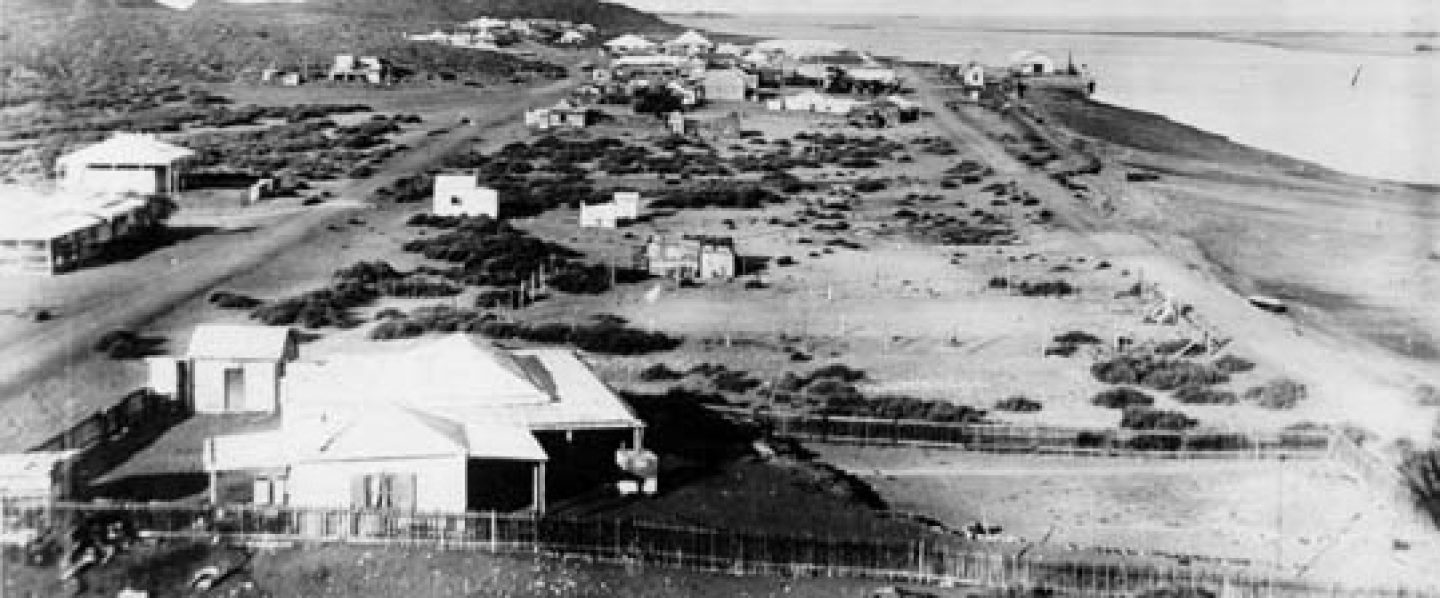
Deep in the Mid West region of Western Australia, where the red earth meets the endless scrub, lies the settlement of Paynes Find. Known today for its spectacular carpets of spring wildflowers and its unique working gold battery, the town remains a testament to the grit and determination of the pioneers who first sought their fortunes in this isolated corner of the Murchison.1 2
A Reward for Discovery
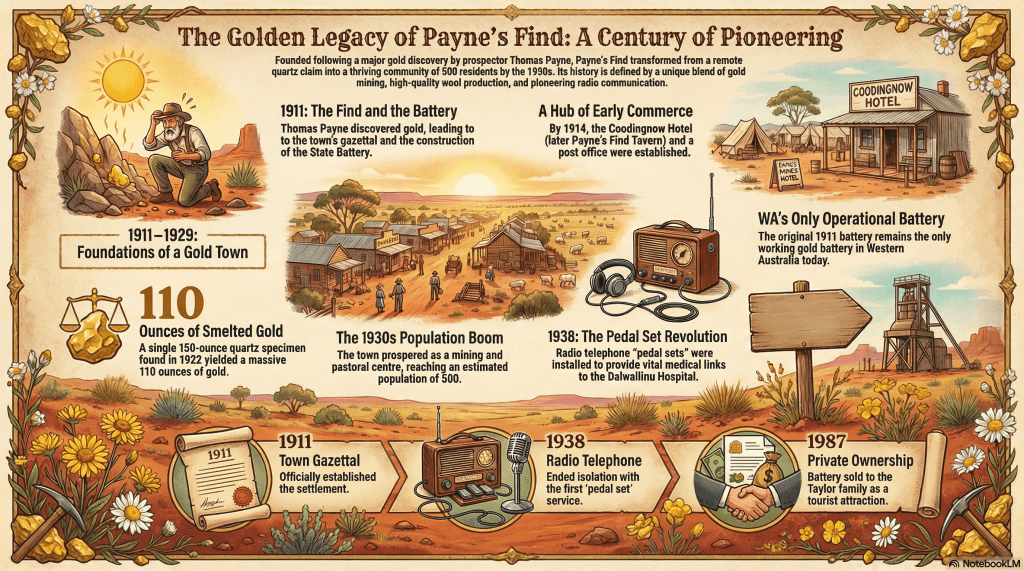
The town’s origins are inextricably linked to the prospector Thomas Payne, the first man to discover gold in the area and register a mining lease with the Mines Department. As a reward for his find, the government allowed him to crush his first parcel of ore through the newly constructed State Battery free of charge. By the time the townsite was gazetted in 1911, the “Find” was already buzzing with activity, attracting those eager to tap into the rich quartz veins breaking the surface.3
Gold, Wool, and the State Battery
Mining was the economic lifeblood of the community. In 1922, the town was set abuzz when John Balgowan, a former battery employee who had turned to prospecting in his retirement, unearthed a massive 150-ounce quartz specimen that yielded 110 ounces of gold. While Balgowan tried to keep his discovery a secret to work the ground, the news inevitably filtered out, though officials cautioned that a general “rush” was not warranted.5
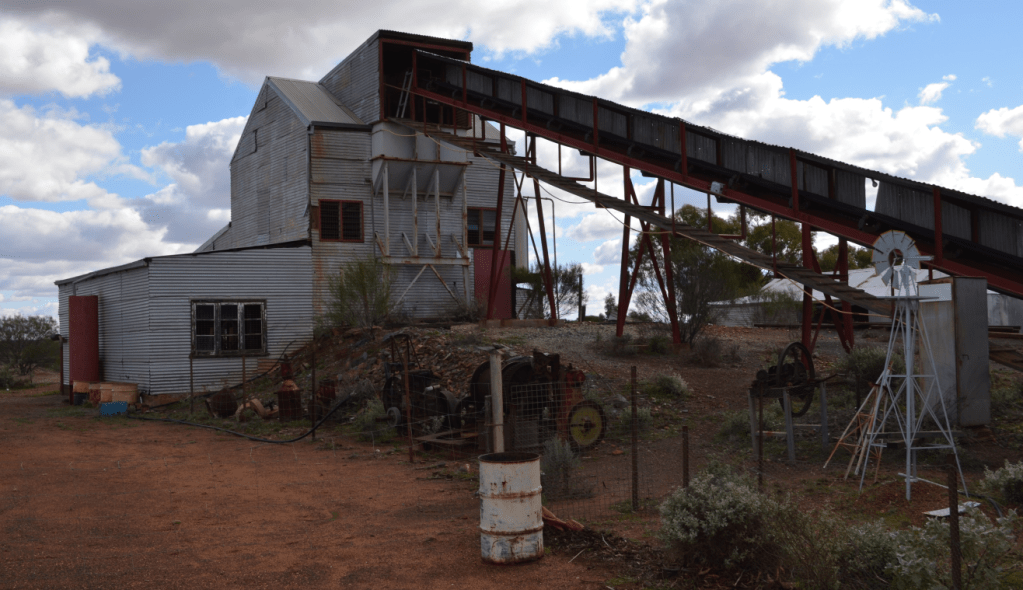
Beyond the mines, the pastoral industry provided a stable secondary economy. Huge stations like Pindabunna and Oudabunna produced high-quality wool, though pastoralists were often at the mercy of the environment. By the 1930s, Paynes Find had prospered to its peak, supporting a population of roughly 500 people. The State Battery became a permanent fixture of this prosperity; today, it is the only working gold battery left in Western Australia, serving as a living museum of the town’s industrial heritage.6 7
Social Ties and Community Spirit
Life in Paynes Find was defined by a strong sense of community. In September 1922, residents gathered at the home of Mr and Mrs Friend for a “social evening” to bid farewell to Miss Dulcie Genge, a popular resident who was leaving to be married. She was presented with a set of stainless cutlery as a gift from the townspeople, and the evening was filled with “euchre,” singing, and dancing to music provided by Mrs Harvey at the piano.8
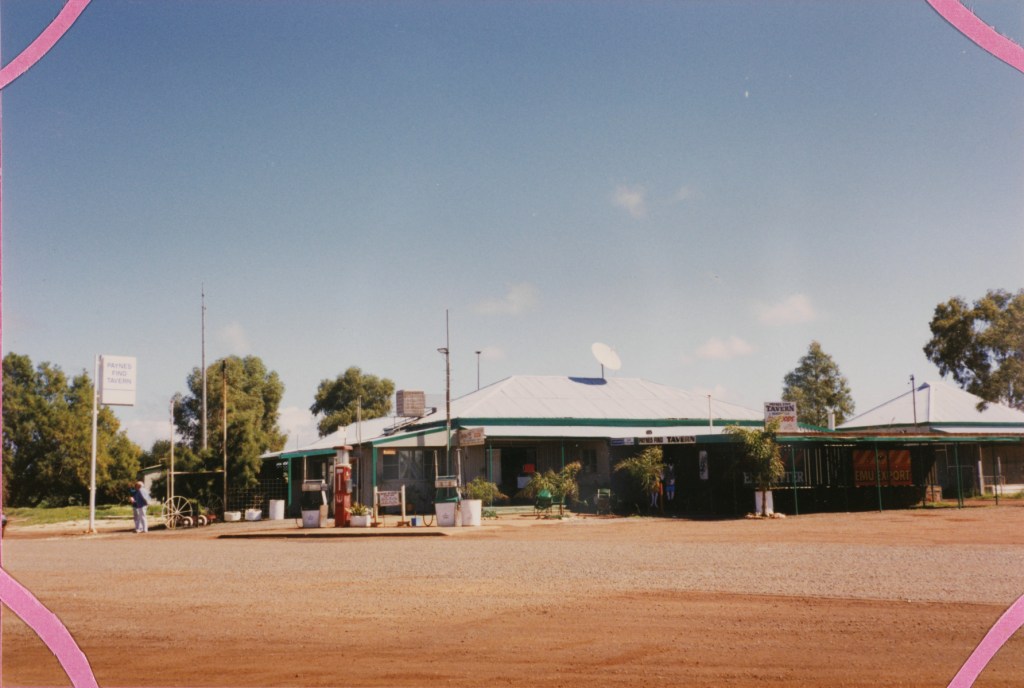
The local hotel also served as a vital social anchor. William John (W. J.) Green, a pivotal figure in the town’s history, opened the Coodingnow Hotel in 1914. Green was a man of many hats, serving as the town’s first postmaster from 1911 and acting as a primary advocate for improved services.9 10 11
Conquering Isolation
The greatest challenge for Paynes Find was its profound isolation. Located 150 kilometres north of Dalwallinu, the town had no telegraph or telephone links for decades. This isolation turned accidents into life-threatening emergencies. In one instance, a fatal accident required a messenger to travel 33 miles just to reach a telephone to notify the police at Mt Magnet.13 14
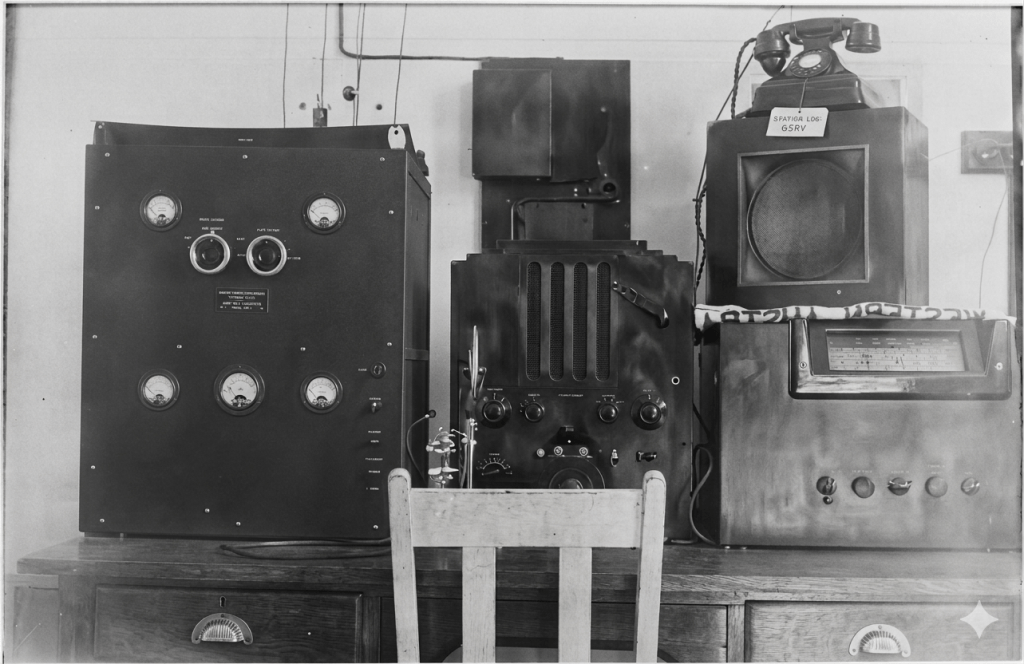
This changed in July 1938 with the introduction of the pedal wireless telephonic service. Developed with the support of Dr C. W. Anderson and W. J. Green, the system allowed residents to receive medical advice from Dalwallinu Hospital and transmit commercial messages. At the opening ceremony, Green spoke “over the air” from Paynes Find, expressing the joy of the residents at finally being in close contact with the outside world.15 16
Environmental Hardships and Tragedies
The environment was a harsh mistress. Water supply was an ongoing concern for both residents and the battery’s operation. Heavy rains often rendered the roads impassable; in 1939, the road to Wubin was so boggy that two feet of water covered parts of the track to Mt Magnet.18 19
The dangers of the road were further highlighted in 1938 when a Dr Pitcher ran out of petrol and water midway between Wubin and Paynes Find. He had begun a perilous 45-mile walk with a near-empty waterbag before being rescued by a passing motorist. Other stories ended more tragically, such as the accidental death of William Willock (known as “Munguddy”) in 1935, who fell under the wheels of a truck near the Government well.20 21
A Heritage Destination
Today, the bustling population of the 1930s has dwindled, but the spirit of Paynes Find lives on. Tourists now visit to see the historic tavern and the working battery, and to witness the annual “everlasting” bloom that blankets the landscape in shades of pink, yellow, and white from July to September. For descendants of the Genge, Green, and Friend families, and for anyone with an interest in the rugged history of the Murchison, Paynes Find remains a significant landmark of Western Australian endurance.22 23
Timeline
- 1911: Thomas Payne discovers gold; the townsite is gazetted and the gold battery is constructed.
- October 1911: The Post Office opens as a mail receiving office.
- June 1911: The Mt Magnet Roads Board moves to establish a direct road to “Paynes New Find”.
- August 1912: The Post Office is raised to allowance status under W. J. Green.
- December 1914: W. J. Green is granted a public licence for the Coodingnow Hotel (now the Payne’s Find Tavern).
- June 1922: John Balgowan discovers a quartz specimen yielding 110 ounces of smelted gold.
- September 1922: Residents hold a “valedictory” social evening for the popular Miss Dulcie Genge.
- 1930s: The town reaches its peak prosperity with an estimated population of 500.
- March 1935: Tragic accidental death of William Willock (“Munguddy”) near the Government well.
- June 1937: Sudden death of State Battery employee William Longbottom during a golf match at a nearby station.
- January 1938: Dr Pitcher of Youanmi is rescued after running out of petrol and water, highlighting the road’s dangers.
- July 1938: The wireless telephonic service between Dalwallinu Hospital and Paynes Find is officially opened.
- June 1941: Death of Horace Clement Green of Pindabunna Station.
- July 1953: Police organise a large-scale search for missing labourer Alfred Bolton.
- 1987: The State Battery is sold to the Taylor family for use as a working tourist attraction.
Map
Sources
- Shire of Yalgoo (2026). Paynes Find – Bungarra (Lizard). Retrieved 30 Mar 2026 from https://www.yalgoo.wa.gov.au/tourism/local-accommodation/paynes-find.aspx ↩︎
- Wikipedia (2024). Paynes Fine, Western Australia. Retrieved 30 Mar 2026 from https://en.wikipedia.org/wiki/Paynes_Find,_Western_Australia ↩︎
- ibid ↩︎
- Macdonald, K (2015). Paynes Find Gold Battery. Retrieved 4 Apr 2026 from https://www.mindat.org/sitegallery.php?loc=109666 ↩︎
- A BIG NUGGET (1922, June 21). The Kalgoorlie Miner (WA : 1895 – 1954), p. 1. Retrieved April 3, 2026, from http://nla.gov.au/nla.news-article93369004 ↩︎
- MR WILLIAM LONGBOTTOM (1937, June 25). The Mount Magnet Leader and Youanmi Miner (WA : 1935 – 1947), p. 5. Retrieved April 3, 2026, from http://nla.gov.au/nla.news-article260095551 ↩︎
- Radio Telephone (1938, August 5). North-Eastern Courier (Perth, WA : 1923 – 1955), p. 5. Retrieved April 3, 2026, from http://nla.gov.au/nla.news-article257371150 ↩︎
- PAYNE’S FIND. (1922, September 2). Mount Magnet Miner and Lennonville Leader (WA : 1896 – 1926), p. 2. Retrieved April 3, 2026, from http://nla.gov.au/nla.news-article155993378 ↩︎
- Shire of Yalgoo (1995). Municipal Inventory of Heritage Places. p.61. Retrieved 3 Apr 2026 from https://www.yalgoo.wa.gov.au/documents/138/yalgoo-municipal-inventory-of-heritage-places ↩︎
- Payne’s Find Post Office. (1915, July 10). Mount Magnet Miner and Lennonville Leader (WA : 1896 – 1926), p. 2. Retrieved April 3, 2026, from http://nla.gov.au/nla.news-article156311654 ↩︎
- HOSPITALS AND WIRELESS. (1938, August 4). The West Australian (Perth, WA : 1879 – 1954), p. 21. Retrieved April 3, 2026, from http://nla.gov.au/nla.news-article42102163 ↩︎
- Lee, Dorothy A (1993). Paynes Find Tavern, August 1993. Retrieved 4 Apr 2026 from https://encore.slwa.wa.gov.au/iii/encore/record/C__Rb6653506 ↩︎
- Wikipedia (2024): refers to isolation ↩︎
- AYNE’S FIND NEEDS (1938, April 9). The Irwin Index (Mingenew, WA : 1926 – 1956), p. 1. Retrieved April 4, 2026, from http://nla.gov.au/nla.news-article25187145 ↩︎
- HOSPITALS AND WIRELESS. (1938, August 4). The West Australian (Perth, WA : 1879 – 1954), p. 21. Retrieved April 4, 2026, from http://nla.gov.au/nla.news-article42102163 ↩︎
- Radio Telephone (1938, August 5). North-Eastern Courier (Perth, WA : 1923 – 1955), p. 5. Retrieved April 4, 2026, from http://nla.gov.au/nla.news-article257371150 ↩︎
- State Library of Western Australia (n.d.) Colin Warden Anderson collection of photographs; BA2076/46. Retrieved 3 Apr 2026 from https://encore.slwa.wa.gov.au/iii/encore/record/C__Rb4615670
Notes:
1. Wireless transmitter in ante room of Labour Ward, Dalwallinu Hospital. Built by W.E. Coxon. Call HUG reputed 50 watts output. Two receivers on R. Lower is 5 valve AWA receiver donated by Mr Green, Paynes Find.
2. Original image damaged and unclear has been restored by Nano Banana 2 AI. ↩︎ - Wikipedia (2024): refers to the water supply ↩︎
- Heavy Rains Flood Roads (1939, November 11). The Daily News (Perth, WA : 1882 – 1955), p. 24. Retrieved April 4, 2026, from http://nla.gov.au/nla.news-article79231036 ↩︎
- Motorist’s Misfortune (1938, January 14). The Mount Magnet Leader and Youanmi Miner (WA : 1935 – 1947), p. 2. Retrieved April 4, 2026, from http://nla.gov.au/nla.news-article260035159 ↩︎
- FELL FROM TRUCK (1935, March 9). The Irwin Index (Mingenew, WA : 1926 – 1956), p. 1. Retrieved April 4, 2026, from http://nla.gov.au/nla.news-article252014692 ↩︎
- Carnamah Historical Society & Museum (n.d.) WA Motor Vehicle Registrations 1915-1928. Retrieved 4 Apr 2026 from https://www.carnamah.com.au/car-registrations?keyword=Payne%27s+Find ↩︎
- PAYNE’S FIND. (1922, September 2). Mount Magnet Miner and Lennonville Leader (WA : 1896 – 1926), p. 2. Retrieved April 4, 2026, from http://nla.gov.au/nla.news-article155993378 ↩︎
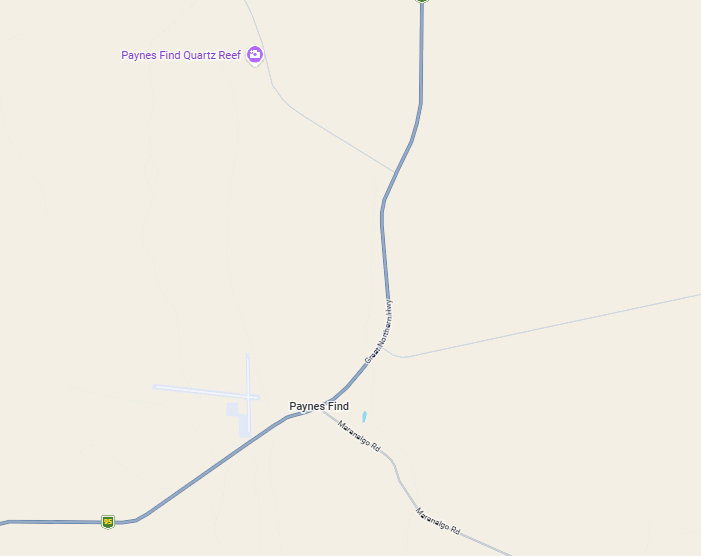
- Google Maps. Paynes Find. Retrieved 31 Mar 2026 from https://tinyurl.com/mwdexrk5 ↩︎
Further Reading
- Palmer, Alex (1988). Payne’s Find. Published by W.A. Lap Industries, North Lake. Available from FamilyHistoryWA library; Call No. 994.13 PAY
- Harris, Christine (Apr 2026). The Mystery of the Maroon Plant. https://ghostswa.au/2026/04/04/neebrongs-cure/
- Harris, Christine (Jun 2026). Voices across the Wire. https://ghostswa.au/2026/06/08/radio-telephone

