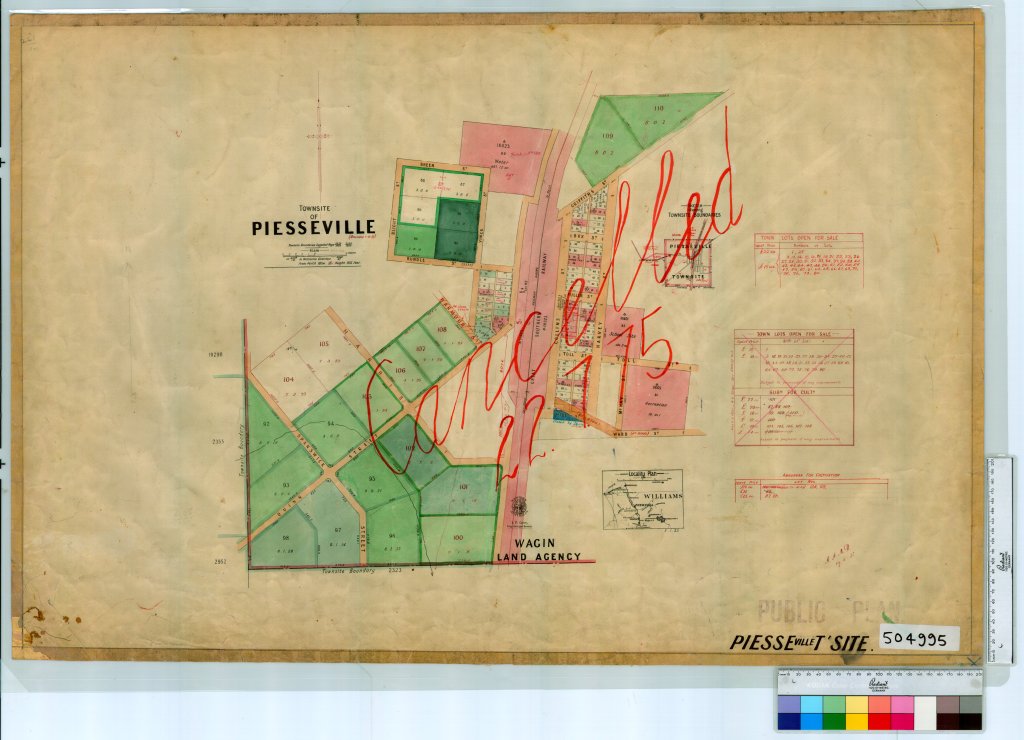
State Records Office of WA1
Demographics
Region: Wheatbelt
LGA: Wagin
Industry: Agriculture, Rail Siding
Other Names: Buchanan, Buchanan River, Barton, Piesse
Open Street Map: -33.09872007614952, 117.28821891900083
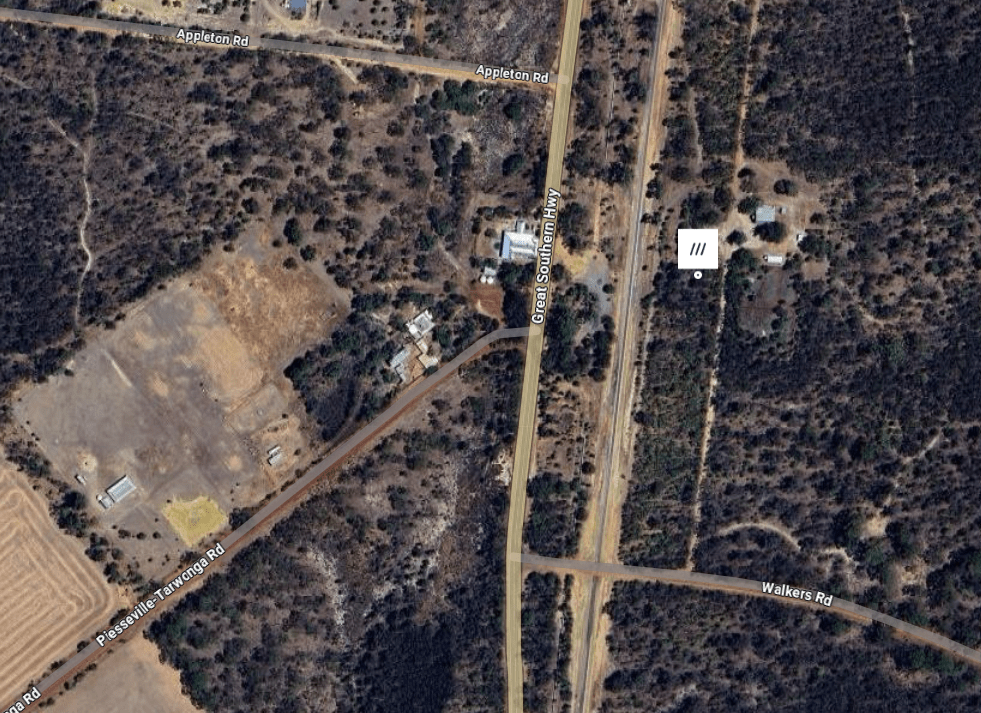
What3Words: ///liable.dressings.peacekeeping
Settled: 1860s
Gazetted: 1903 (as Buchanan)
Abandoned: current population (2021) 49
Abstract
Piesseville, a locality nestled in the Wheatbelt region of Western Australia, possesses a rich history characterized by economic reliance on agriculture and the Great Southern Railway. The community evolved through a series of official names, beginning as the Buchanan River siding in 1889, transitioning through Buchanan (1903) and Barton (1905), before being permanently renamed Piesseville in 1923, honouring the influential Piesse brothers. The formation and early growth were tied to the success of agricultural settlement and early institutions such as the Condinning Hall and the Barton Hotel.
History
Piesseville, situated 211 kilometers south-east of Perth within the Shire of Wagin, is an area long defined by the fertile earth of the Wheatbelt. The tale of this rural location is inextricably linked to the economic and infrastructural forces that shaped the Great Southern region of Western Australia.2 3
Formation and the Economic Catalyst
The earliest signs of European settlement date back to the 1860s when pioneers first arrived in the district to graze their flocks. However, the foundational establishment of the community arose not from formal land grants but from the establishment of a vital piece of infrastructure: the Great Southern Railway. This line, which ran between Beverley and Albany, was completed in 1889 by the Western Australian Land Company. Upon its opening, a railway halt was established in the vicinity of the present community, initially known as the Buchanan River siding.4 5
The land surrounding the railway was initially controlled by the Western Australian Land Co., but settlers quickly became dissatisfied with the company’s reluctance to release prime agricultural land on favorable terms. A crucial shift occurred when the government, bolstered by goldfields revenue, purchased the Great Southern railway around 1896, subsequently releasing the land for selection, thereby advancing settlement rapidly across the region.6 By 1897, the government, recognizing the potential of the locality, set aside land at the Buchanan Siding for future subdivision. The local land agent in Katanning reported considerable interest, reflecting the burgeoning agricultural economy. Formal town planning commenced, and in December 1903, the townsite was officially gazetted as Buchanan.7 8
The Turbulent Quest for Identity
The nascent community, however, struggled to retain its name. In the early 20th century, bureaucratic necessity dictated a series of renamings. In 1905, the town was christened Barton to avoid confusion with an existing town named Buchanan in New South Wales, the new name honouring Sir Edmund Barton, Australia’s inaugural prime minister.9
This period marked a phase of development and community building. From 1906, construction of the Condinning Hall commenced. 10 This agricultural hall was opened with a grand ceremony on October 10, 1906, and quickly became the social heart of the small community, functioning for church services, meetings, and amusements, and even serving as a school during the day. Directly opposite the hall on the Great Southern Highway, the Barton Hotel officially opened its doors on April 1, 1906, standing as a testament to the early confidence in the district’s future. It was a sizable establishment, boasting fourteen rooms and two bathrooms, its magnificence suggesting strong faith in the prospects of the Barton district.11
Yet, the name ‘Barton’ proved equally transient. After the Trans-Australian Railway was constructed in 1917, the presence of another railway station named Barton, this time in South Australia, necessitated a third change.12
In December 1918, the town was renamed Piesse, recognizing the significant contribution of two prominent local figures: Frederick Henry Piesse and Charles Austin Piesse. These brothers, renowned merchants, agriculturists, and politicians, had been deeply associated with the public life and progress of the Great Southern Districts for decades. Frederick Piesse, in particular, served in the Legislative Assembly for Williams and was influential in large-scale government works.13 14 15
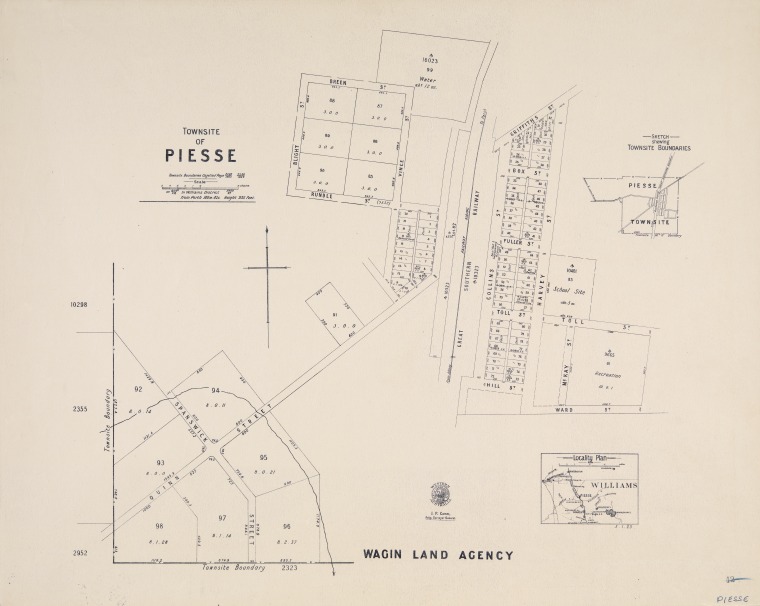
State Library of Western Australia16
The final adjustment to the community’s name came in 1923, when A. E. Piesse advised the authorities that the name “Piesse” was causing confusion with his personal farm name. Consequently, in December 1923, the locality was designated Piesseville, its enduring moniker.17
Economic and Social Development in the 20th Century
Piesseville solidified its role as an agricultural service locality in the early 20th century. The legacy of local dedication is evident in the area’s social fabric; for instance, the Piesseville Honour Roll, constructed from 1919 at the Piesseville Hall, commemorates local civic engagement and sacrifice.18 19
However, not all early institutions endured. The economic pressures of the interwar period saw the decline of the Barton Hotel, which was de-licensed in 1930 and converted into a residential premises.20
Despite such setbacks, the core agricultural character of the region remained steadfast. The sources reveal the century-long presence of key farming families, such as the Blights, who began farming in the Piesseville area around 1905. This generational commitment to the land is a crucial social anchor, with some families tracing six generations of involvement in the district, sustaining the agricultural economy even as the town center declined.21
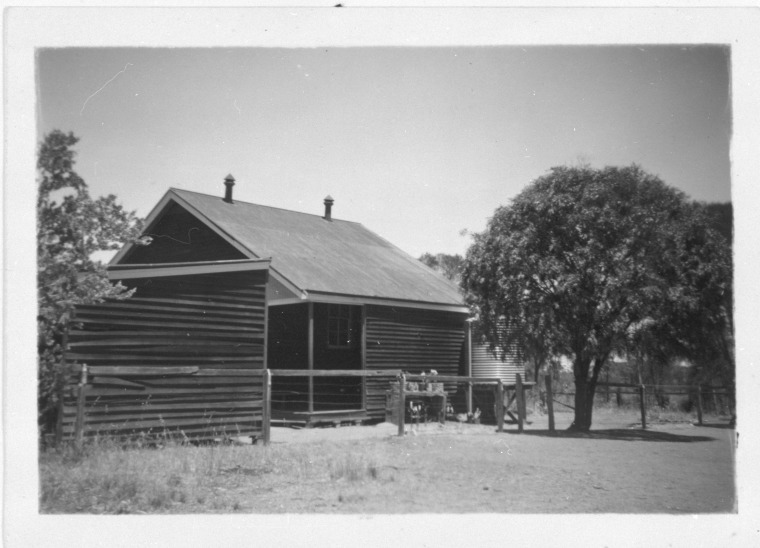
State Library of WA22
Decline and Modern Resilience
In contemporary times, Piesseville is explicitly classified as a small rural location and an agricultural locality, covering an area of 249.9 square kilometers. Census data provides a clear metric for this transformation, demonstrating that the community was substantially larger and relatively younger just before the major decline began.
The demographic changes in Piesseville between 2016 and 2021 were significant, despite a population decrease from 59 to 49. The number of all private dwellings halved (30 to 15), yet the average people per household grew from 2.6 to 3.1. The area shows mild ageing, with the median age rising from 38 to 40, and the gender balance reversed to a female majority (53.3%). Financially, the median weekly household income surged (from $1,562 to $2,625) and median weekly rent more than tripled (from $114 to $384). This indicates substantial housing market pressure and consolidation, potentially suggesting a future with fewer, but higher-income, households that are sharing dwellings.23 24
This statistical evidence marks Piesseville’s definitive shift from a minor Wheatbelt townsite, thriving in the mid-20th century, to a specialized agricultural locality maintained by fewer, larger family operations.
Enduring Social and Environmental Factors
Despite the economic contraction, Piesseville maintains its historical connection, exemplified by the legacy of local families, such as the Blights, tracing six generations in the district since 1905. The original founding structures persist: the Condinning Hall remains in high integrity and authenticity, actively used by the Piesseville Social Club and Tennis Club, while the former Barton Hotel, though in poor condition, still stands as a landmark on the Great Southern Highway. Social engagement also continues through modern initiatives, such as the Blue Tree Project tribute for mental health awareness observed near Piesseville in 2021. Environmental factors, such as floodwaters causing severe disruption and the temporary closure of thoroughfares around the Buchanan River in 2021, continue to shape the challenges faced by this agricultural community.25

realestate.com.au26
The history of Piesseville is a narrative of adaptation, enduring the volatility of economic change and the caprices of governmental naming conventions. It transitioned from a strategic railway siding to a thriving town, supported by key infrastructure and prominent families, before consolidating into the resilient agricultural locality we recognize today. Piesseville’s legacy is preserved not in bustling streets, but in the longevity of its working farms and the weathered permanence of its founding structures, standing as markers of a tenacious regional history.
Timeline
- 1860s: Early settlers arrive in the area to graze flocks.
- 1889: The Great Southern Railway opens; a siding named Buchanan River is established.
- 1897: Government sets aside land near Buchanan Siding for future subdivision, responding to settler dissatisfaction with land company practices.
- December 1903: The townsite of Buchanan is officially gazetted after lots are surveyed.
- 1904: A community hall, school, and other facilities are completed.
- 1905: The town is renamed Barton to avoid conflict with a town in New South Wales.
- April 1, 1906: The Barton Hotel officially opens.
- October 10, 1906: The Condinning Hall (Agricultural Hall) opens, serving as a social center and school.
- 1917: The Trans-Australian Railway leads to conflict with another ‘Barton’ railway station name in South Australia.
- December 1918: The town is renamed Piesse, honouring prominent figures Frederick Henry Piesse and Charles Austin Piesse.
- From 1919: The Piesseville Honour Roll is constructed, located at the Piesseville Hall.
- 1923: The name is officially changed to Piesseville to avoid confusion with A. E. Piesse’s farm name.
- 1930: The Barton Hotel is de-licensed and converted into a residential hotel.
- 2016: Piesseville Census population recorded at 59 individuals living in 30 private dwellings. Median weekly household income is $1,562.
- April 2021: A dead tree painted blue near Piesseville is noted as part of the Blue Tree Project for mental health awareness.
- 2021: Piesseville Census population recorded at 49 individuals living in 15 private dwellings. Median weekly household income is $2,625.
- Present Day: Piesseville operates as an agricultural locality, characterized by a declining population but sustained by high-value agricultural income.
Map
Sources
- State Records Office of WA, n.d. Townsite of Piesseville. Cartographic material retrieved 3 Dec 2025 from https://archive.sro.wa.gov.au/uploads/r/srowa/3/a/3a82708f477e0bd73317ec90a7261c0a6ed2589d21df70a4a558989f6eaa7e94/Cons_5698_Item_1398.jpg ↩︎
- Wikipedia, 2025. Piesseville, Western Australia. Retrieved 3 Dec 2025 from https://en.wikipedia.org/wiki/Piesseville,_Western_Australia ↩︎
- Australias.Guide, n.d. Piesseville. Retrieved 3 Dec 2025 from https://australiasguide.com/wa/location/piesseville/ ↩︎
- Bignell, Merle, 2006. Australian Dictionary of Biography: Frederick Henry Piesse. Vol 11, 1988. Retrieved 3 Dec 2025 from https://adb.anu.edu.au/biography/piesse-frederick-henry-8047 ↩︎
- Landgate, 2022. Town Names: Piesseville. Retrieved 3 Dec 2025 from https://web.archive.org/web/20220314101618/http://www0.landgate.wa.gov.au/maps-and-imagery/wa-geographic-names/name-history/historical-town-names ↩︎
- Bignell: Refers to settler dissatisfaction with government and credits Piesse with influencing change of policy ↩︎
- Wikipedia, Piesseville: Refers to gazetting as Buchanan ↩︎
- Landgate, Piesseville: Refers to gazetting as Buchanan ↩︎
- Wikipedia, Piesseville: Refers to name change to Barton ↩︎
- Heritage Council of WA, 2017. Condinning Hall. Retrieved 3 Dec 2025 from https://inherit.dplh.wa.gov.au/public/inventory/printsinglerecord/4fbc7ec5-786d-4f25-bb6f-9d24eb96e33e ↩︎
- Heritage Council of WA, 2017. Barton Hotel. Retrieved 3 Dec 2025 from https://inherit.dplh.wa.gov.au/public/inventory/details/be310954-b413-454a-93ab-c6cbabb976b5 ↩︎
- Wikipedia, Piesseville: Refers to name change to Piesse ↩︎
- ibid. ↩︎
- Bignell: Refers to Piesse family ↩︎
- Landgate, Piesseville: Refers to name changes ↩︎
- State Library of Western Australia, 1923. Townsite of Piesse. Cartographic material retrieved 3 Dec 2025 from https://purl.slwa.wa.gov.au/slwa_b1960813_1 ↩︎
- ibid. ↩︎
- Wikipedia, Piesseville: Refers to community development ↩︎
- Heritage Council of WA, 2017. Piesseville Honour Roll. Retrieved 3 Dec 2025 from https://inherit.dplh.wa.gov.au/public/inventory/details/6d0e1b54-0efe-4a7b-b657-b049a490148a ↩︎
- Heritage Council, Barton Hotel: Refers to closure ↩︎
- Hamersley, Jessica, 2019. WA Day at the Wagin Historical Village. Published in The Wagin Wool Press (ISSN: 2206-3633) Edition #76. p.1. Retrieved 3 Dec 2025 from https://www.wagincrc.com/uploads/2/4/5/1/24511671/edition_76_-_june_6_final_copy.pdf ↩︎
- State Library of Western Australia, n.d. Vera Whittington collection of photographs ; BA2620/8-9. Retrieved 3 Dec 2025 from https://encore.slwa.wa.gov.au/iii/encore/record/C__Rb5126361__Spiesseville__Orightresult__U__X6?lang=eng&suite=def ↩︎
- Australian Bureau of Statistics, 2016. 2016 Census All Persons QuickStats: Piesseville. Retrieved 3 Dec 2025 from https://www.abs.gov.au/census/find-census-data/quickstats/2016/SSC51229 ↩︎
- Australian Bureau of Statistics, 2021. 2021 Census All Persons QuickStats: Piesseville. Retrieved 3 Dec 2025 from https://www.abs.gov.au/census/find-census-data/quickstats/2021/SAL51241 ↩︎
- 9News, 2021. Driver feared missing in floodwaters south of Perth. Retrieved 3 Dec 2025 from https://www.9news.com.au/wild-weather/search-resumes-for-driver-reported-missing-in-floodwaters-in-piesseville-southeast-perth/0b433b6c-d7e7-4595-a763-1f149b39f00e ↩︎
- Kulker, Danielle, 2012. Barton Hotel. Photographic retrieved 3 Dec 2025 from https://www.realestate.com.au/sold/property-house-wa-piesseville-109064031 ↩︎
Reading, video and podcasts
- Piesseville: Shire of Wagin Podcast
- The Piesse brothers : F.H. & C. A Piesse by Leonie Sprigg
 People of Western Australia's Ghost Towns