Christine Harris (2026)
Demographics
Region: Goldfields-Esperance
LGA: Menzies
Industry: Mining
Other Names: Yerilla Station
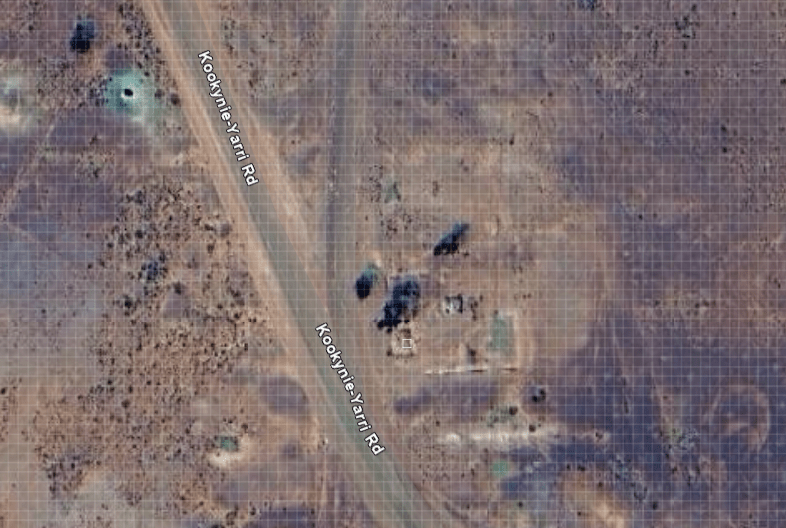
Open Street Map: -29.03581845629113, 121.83440438881583
What3Words: ///preparing.dazzles.hurled
Settled: 1895
Gazetted: 1896
Abandoned: 1900
Abstract
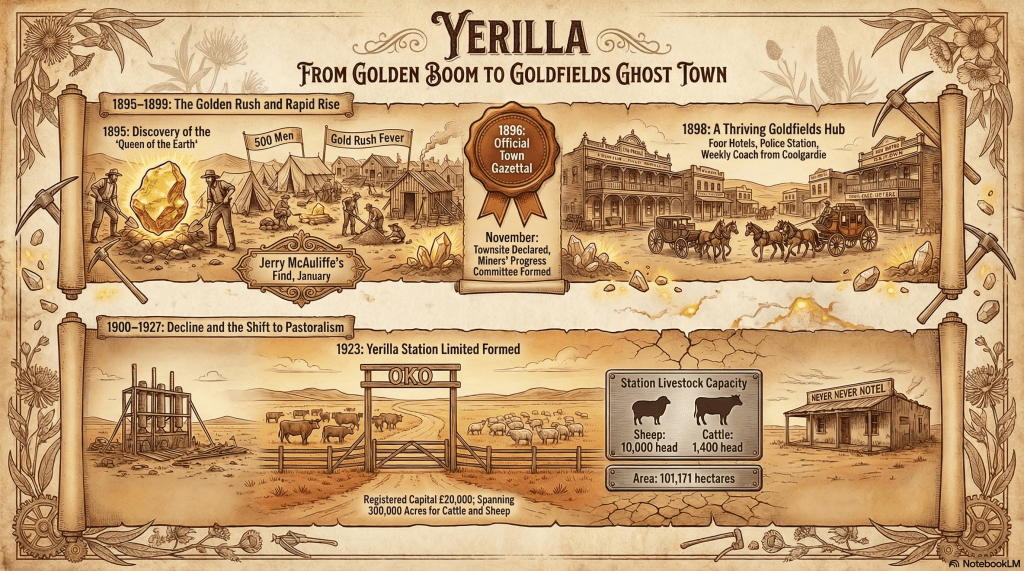
The history of Yerilla, Western Australia, serves as a poignant microcosm of the “boom and bust” cycle characteristic of the Eastern Goldfields. Located approximately 830 kilometres east-north-east of Perth within the Shire of Menzies, Yerilla’s colonial narrative began in January 1895 with a spectacular discovery by prospector Jerry McAuliffe. The discovery of the “Queen of the Earth” lease, which produced ore of incredible richness, triggered a rush of over 500 men and the official gazettal of the townsite in November 1896.
At its zenith, Yerilla boasted four hotels, a police station, a post office, and a weekly coach service. However, the town’s success was short-lived. By 1900, the easily won surface gold had been exhausted, and the population plummeted to just sixteen residents. The government battery, poorly patronised by struggling leaseholders, was dismantled and moved to Niagara. As the town was physically carted away, the surrounding land transitioned into a vast pastoral lease. Yerilla Station became a staple of the region’s economy, eventually shifting from cattle to wool production under the management of Yerilla Station Ltd in the 1920s. While the town remains a collection of ruins and foundations, the site found a second life through the mining of high-quality chrysoprase and the scientific study of australites found on the station. For family historians, the stories of those buried in the unforgiving, ironstone ground of the Yerilla Cemetery provide a window into the harsh realities of life on the edge of the desert.
History – A Chronicle of Gold, Dust, and “Green Gold”
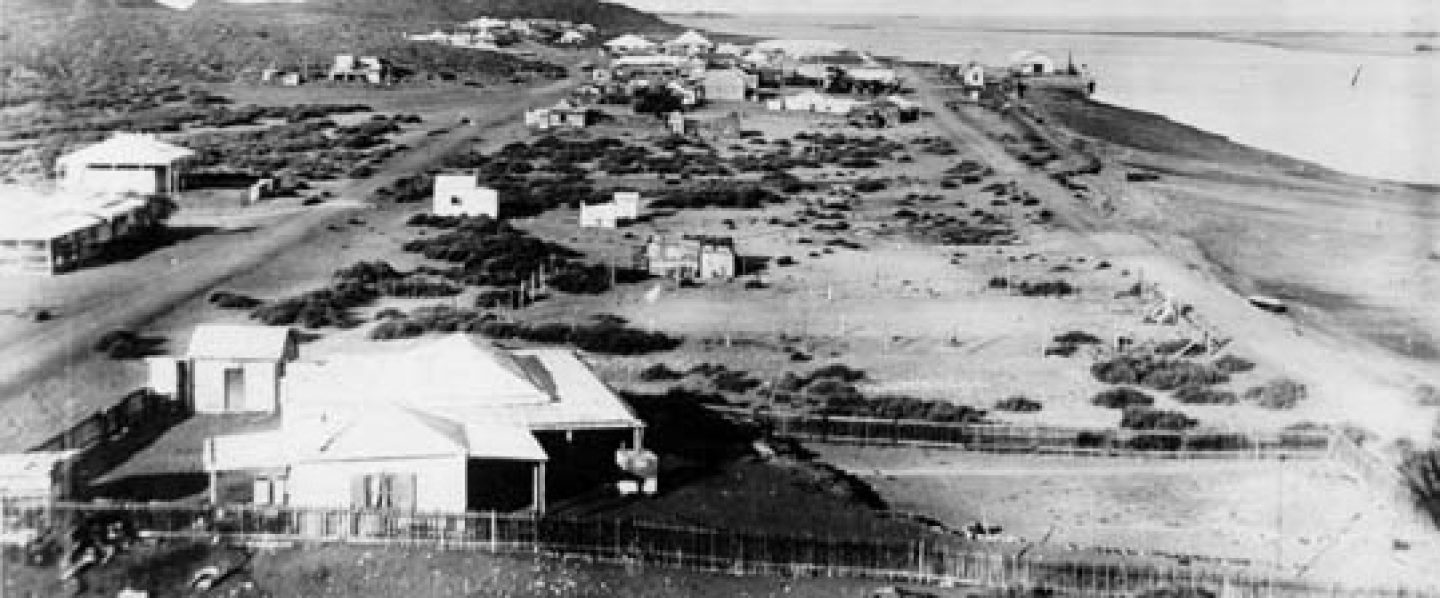
The history of Yerilla is a classic Australian story of high hopes and harsh realities. Located 160 kilometres north of Kalgoorlie in the semi-arid interior of the Goldfields-Esperance region, the area is today defined by the vast horizons of Yerilla Station. Yet, beneath the scrub and red dirt lie the foundations of a town that once promised to be the next great mining capital of the West.
The Discovery and the “Queen of the Earth”
The colonial history of Yerilla was forged in the heat of January 1895. The primary catalyst was Jerry McAuliffe, a prospector who uncovered a rich reef at Mount Catherine, roughly six kilometres south of the future townsite. McAuliffe’s find was significant, but it was the discovery of the “Queen of the Earth” outcrop that truly ignited the region.1 2 3
The richness of this particular lease was the stuff of legend; at one point, a single 4-hundredweight piece of ore produced gold valued at over £1000. This sensational discovery prompted a frantic rush of hundreds of diggers to the field. The naming of the site itself was a matter of some debate. McAuliffe reportedly wanted the area called “McAuliffe’s Find” or “Waboo” (the Aboriginal word for quartz), but a Scotsman on site suggested “Yerilla,” allegedly after a property in New South Wales where he had worked. Today, “Yerilla” is generally accepted as being derived from an Aboriginal term meaning “plenty of white stone”—a reference to the ubiquitous quartz reefs that held the gold.4 5
By 1896, the local mining community had formed a progress committee and successfully petitioned the government to declare a townsite. Yerilla was officially gazetted in November 1896. For a brief window, the town was a thriving social and economic hub. It featured four substantial hotels: the Commercial Hotel, the Royal Hotel, the Yerilla Hotel, and the Smith Hotel. The latter, later renamed the Never Never Land Hotel, was famously run by the burly Scotsman Bill Smith, a “picturesque, soil-stained figure” who was a fixture of local social life for over thirteen years. 6 7
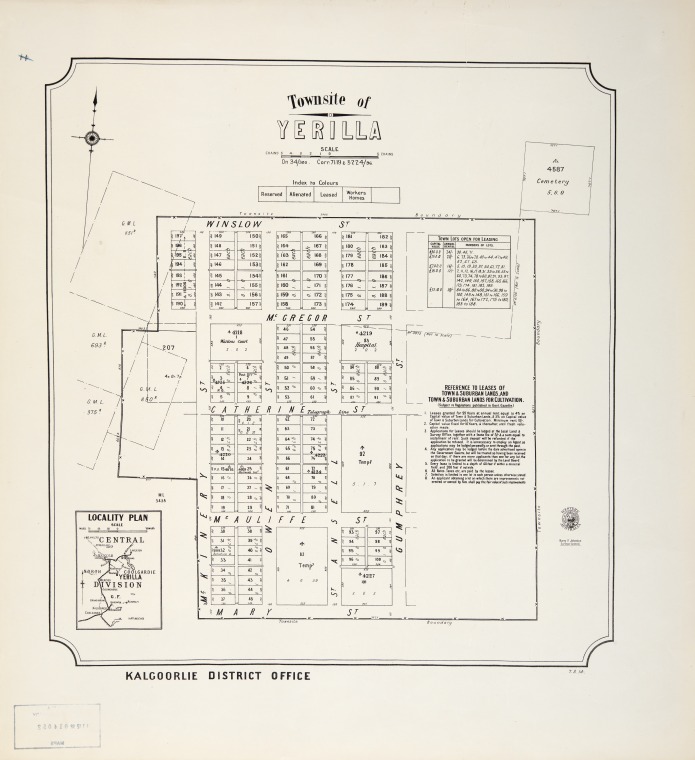
The town was serviced by a weekly coach from Coolgardie, which travelled via Menzies, and featured a post office and a police station established in July 1897. These institutions provided a semblance of political and social order in a remote desert environment.9
The Hardships of Frontier Life
Life in Yerilla was defined by a constant struggle against a demanding environment. The climate is characterized by hot desert conditions, with mean maximum temperatures reaching 37°C in January. Water was the most precious commodity; early prospectors were forced to abandon the field and retreat 22 miles to the Yilgangi soak when their supplies failed.10 11 12
The physical nature of the ground also presented unique challenges, most notably for family historians studying the Yerilla Cemetery. The first burial was that of Simon Elliott, a 63-year-old mine manager who died of a ruptured heart in March 1897. His funeral became a “distressing complication” when it was discovered the cemetery ground was comprised of ironstone conglomerate so hard that two shifts of men working for ten hours only managed to dig half a grave. Blasting was required for subsequent burials, and a new cemetery site eventually had to be selected because the original location was simply too impenetrable.14
Other early deaths underscore the fragility of life on the field. Thomas John Marshall died of thirst on the Linden track in 1899, aged only 26. A note found with his swag reading “10th February—no water 20 miles from here” serves as a stark reminder of the environmental risks faced by those seeking their fortune.15
Economic Decline and the Move to Niagara
The decline of Yerilla was as rapid as its rise. The initial gold boom was built on exceptionally rich surface pothole specimens. Once this near-surface gold was won, further developments were less satisfactory. In response to a petition from leaseholders, the government erected a state battery to process ore, but it was poorly patronised.16 17
By January 1900, the government concluded the operation was not viable. The battery plant was dismantled and carted to Niagara, which was then ascending as a more promising mining centre. The removal of the battery signaled the end for the town; buildings were dismantled and taken to other fields, leaving only sixteen inhabitants by 1900. The police station and other services were soon withdrawn as the population dwindled.18
Yerilla Station
As the town faded, the vast acres surrounding it were integrated into a pastoral economy. Yerilla Station emerged as a significant lease, eventually occupying over 100,000 hectares. In December 1923, a new company, Yerilla Station, Ltd, was registered with £20,000 in capital. Composed of investors including William Padbury and the Robinson brothers, the company purchased the station from C.W. Marsh in 1925.19 20
The new management transformed the economic focus of the station, installing hundreds of miles of fencing and swapping from cattle to sheep for wool production. Despite the isolation, the station became a permanent home for many, such as Tom Capon, a First World War veteran who worked as a cook’s assistant and handyman for seventeen years before his death in 1968. Another long-term resident was Dave Wilson, a prospector and well-sinker who lived at the station from the 1940s into the 1980s.21 22
Scientific and Mineralogical Significance
In the decades following the gold rush, Yerilla became known for more than just its early mining history. The station is globally renowned among gemstone enthusiasts for its chrysoprase, often referred to as “green gold”. High-quality chrysoprase of the quartz family has been mined there for over forty years, involving a history of “machinations and intrigue” among those seeking to extract it.23
Furthermore, the area has significant scientific value. In the 1960s and 70s, researchers from the Western Australian Museum collected nearly 1,000 australites (tektites) from Mount Remarkable and Yerilla Stations. These specimens of meteoric glass provided critical data for studying the morphology and specific gravity of tektites in the semi-arid interior.24
Yerilla today
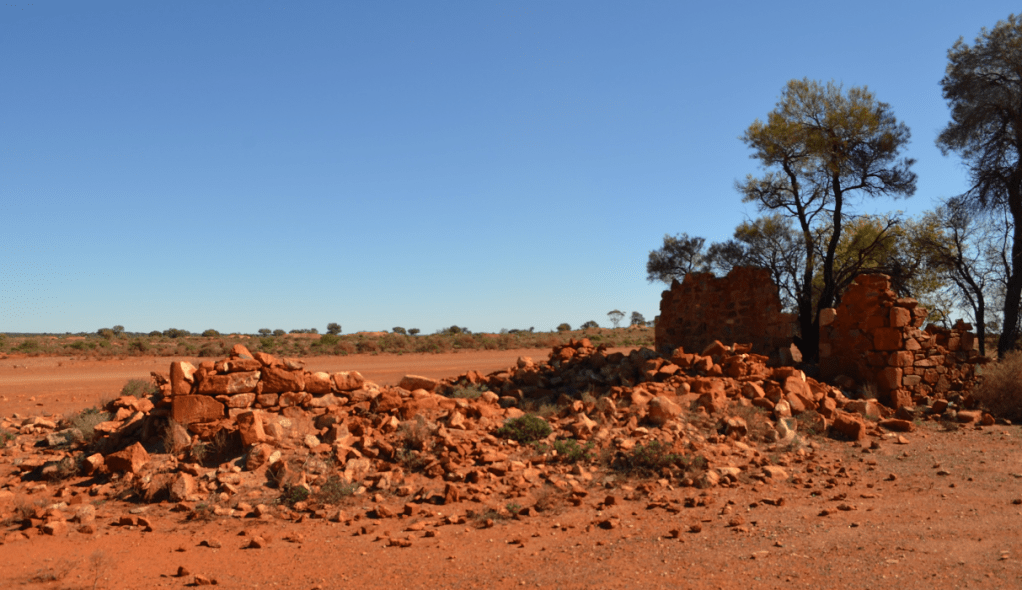
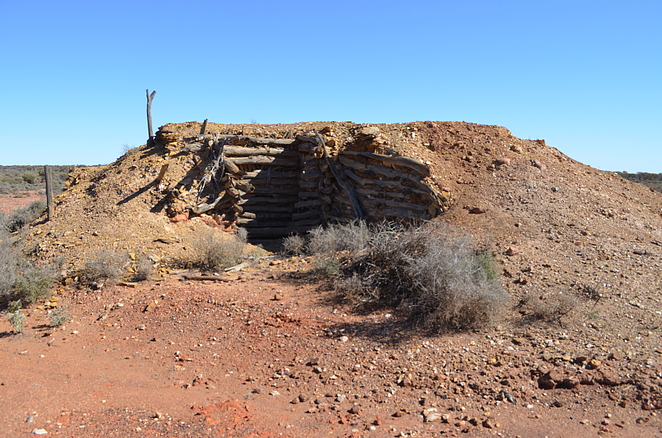
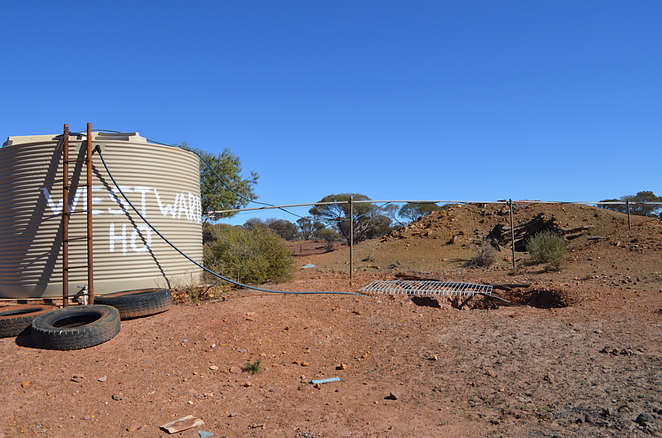
Today, Yerilla is an abandoned locality, a place where the ruins of mud-brick buildings and ironstone foundations are all that remain of the miners’ dreams. However, for local and family historians, it remains a site of immense richness. From the tragic notes of Thomas Marshall to the enduring legacy of the Yerilla Station, the history of this patch of the Goldfields reflects the incredible resilience and ambition of those who sought to make a life in the West Australian interior.
Timeline
- January 1895: Gold is discovered by Jerry McAuliffe at Mount Catherine and the Queen of the Earth reef.
- November 1896: The townsite of Yerilla is officially gazetted following a petition from the local miners’ progress committee.
- March 22, 1897: Sudden death of Simon Elliott, mine manager; his burial requires blasting into ironstone conglomerate, leading to a change in cemetery location.
- July 1897: A police station is established in McKinery Street.
- 1898: The town reaches its peak with four hotels, a post office, and a weekly coach service to Coolgardie.
- February 1899: Thomas John Marshall dies of thirst 12 miles from town on the Linden track.
- June 1899: A public battery is opened to service local leaseholders.
- January–March 1900: The public battery is dismantled and moved to Niagara due to poor patronage; the town population drops to just 16 people.
- 1906: Stillbirth of the unnamed male Boase baby, marking one of the final early burials in the second cemetery.
- 1912: The Shire of Menzies is established, absorbing administration of the Yerilla district.
- December 1923: Yerilla Station Ltd is registered with capital of £20,000.
- July 1925: Yerilla Station is sold to the new company and transitions from cattle to sheep for wool production.
- 1927: The Never Never Land Hotel closes, effectively marking the end of Yerilla as a recognized town.
- 1960s–1980s: Systematic collection of australites on the station by the WA Museum for scientific study.
- August 1, 1968: Death of long-time station hand and veteran Tom Capon.
- 1980s–Present: Ongoing mining of high-quality chrysoprase (“green gold”) in the Yerilla area.
Map
Sources
- Sharp, Moya (2019) Yerilla – a ghost town. Retrieved 22 Mar 2026 from https://www.outbackfamilyhistoryblog.com/yerilla-a-ghost-town/ ↩︎
- Wikipedia (2014). Yerilla Station. Retrieved 22 Mar 2026 from https://en.wikipedia.org/wiki/Yerilla_Station ↩︎
- mindat.org (n.d.) Yerilla Goldfield, Menzies Shire, Western Australia, Australia. Retrieved 22 Mar 2026 from https://www.mindat.org/loc-269446.html ↩︎
- Wikipedia (2022). Yerilla, Western Australia. Retrieved 22 Mar 2026 from https://en.wikipedia.org/wiki/Yerilla,_Western_Australia ↩︎
- YERILLA, (1900, December 25). Kalgoorlie Western Argus (WA : 1896 – 1916), p. 49. Retrieved March 22, 2026, from http://nla.gov.au/nla.news-article32597563 ↩︎
- Wikipedia (2022): refers to the gold discovery and gazettal. ↩︎
- Sharp (2019): refers to many of the steps in the early establishment of the town including the building of the hotels. ↩︎
- State Library of Western Australia (1914). Townsite of Yerilla. Retrieved 22 Mar 2026 from https://encore.slwa.wa.gov.au/iii/encore/record/C__Rb1990050 ↩︎
- Sharp (2019): refers to the weekly coach service. ↩︎
- mindat: refers to the local climate ↩︎
- Exploroz.com (n.d.d) Yerilla – WA. Retrieved 22 Mar 2026 from https://www.exploroz.com/places/61487/wa+yerilla ↩︎
- YERILLA, (1900, December 25). Kalgoorlie Western Argus (WA : 1896 – 1916), p. 49. Retrieved March 22, 2026, from http://nla.gov.au/nla.news-article32597563 ↩︎
- mindat.org (2021) Photographs of Yerilla. Retrieved 22 Mar 2026 from https://www.mindat.org/loc-269446.html ↩︎
- YERILLA CEMETERY. (1897, March 26). The Goldfields Morning Chronicle (Coolgardie, WA : 1896 – 1898), p. 2. Retrieved March 22, 2026, from http://nla.gov.au/nla.news-article232971055 ↩︎
- Sharp, Moya (n.d.) Yerilla Cemetery. Retrieved 22 Mar 2026 from https://www.outbackfamilyhistory.com.au/records/record.php?record_id=583 ↩︎
- mindat: refers to the rapid decline of Yerilla ↩︎
- YERILLA, (1900, December 25). Kalgoorlie Western Argus (WA : 1896 – 1916), p. 49. Retrieved March 22, 2026, from http://nla.gov.au/nla.news-article32597563 ↩︎
- Wikipedia (2022): refers to the dismantling of battery ↩︎
- REGISTERED COMPANIES. (1923, December 3). The West Australian (Perth, WA : 1879 – 1954), p. 11. Retrieved March 22, 2026, from http://nla.gov.au/nla.news-article31202773 ↩︎
- Wikipedia (2014): refers to the establishment and history of Yerilla Station ↩︎
- ibid ↩︎
- Sharp (2019): refers to some of the people of Yerilla Station ↩︎
- ibid: refers to the “green gold” chrysoprase ↩︎
- Cleverly, W.H. Australites from Mount Remarkable Station and adjoining parts of Yerilla Station. Retrieved 22 Mar 2026 from https://museum.wa.gov.au/research/records-supplements/records/australites-mount-remarkable-station-and-adjoining-parts-yerill ↩︎
- What3Words.com (2026). Yerilla. Retrieved 31 Mar 2026 from https://what3words.com/preparing.dazzles.hurled ↩︎
 People of Western Australia's Ghost Towns