Mr Stanley’s Opera Troupe

Cossack in 1886 was a frontier town in one of the most isolated colonies in the world.  It was a centre for pearling and pearl shell fishing and the entry point for pastoralists who established extensive stations.  By 1886 Cossack had a stone wharf and several other stone buildings such as the Post and Telegraph Office and a Mercantile Store, but not a lot of other substantial buildings. How did it attract an operatic performance by the most popular Opera Troupe of the decade?    

Perth loved Mr Stanley’s Opera Troupe. It played to huge audiences and received mostly glowing reviews.  The Railway employees took up a collection so they could present Mr and Mrs Stanley a gold ring and earrings as a token of their esteem and appreciation1. A Fremantle harbour official stole flowers, roses, and bouquets to bestow upon sundry members of Stanley’s Opera Troupe before they left Perth2. An ode of farewell to the players was written and published in the Perth news in October 18853.

Mr Stanley’s Opera Troupe and other itinerant theatre groups used the coastal steamers to travel around Australia4.  In early 1886, Mr Stanley was taking his Opera Troupe to Singapore and to get there travelled on a coastal steamer that called in at Champion Bay, Gascoyne, and Cossack before leaving Australia.  

Ever the entrepreneur, Mr Stanley used his time in port in Cossack to his advantage and had his Opera Troupe perform two shows at Roebourne before performing their last show in Cossack.   The Cossack show was a performance of Gilbert and Sullivan’s Pirates of Penzance and took place on Saturday 13 March 18865.

I have been unable to find a review of the Cossack performance of this opera, but when it was performed in Perth the previous October it received a review that said –

 The acting was very spirited, the costumes pretty, the children acquitted themselves admirably in their dancing, but the actors said their words very quickly, and some songs were ‘absolutely gabbled’.6
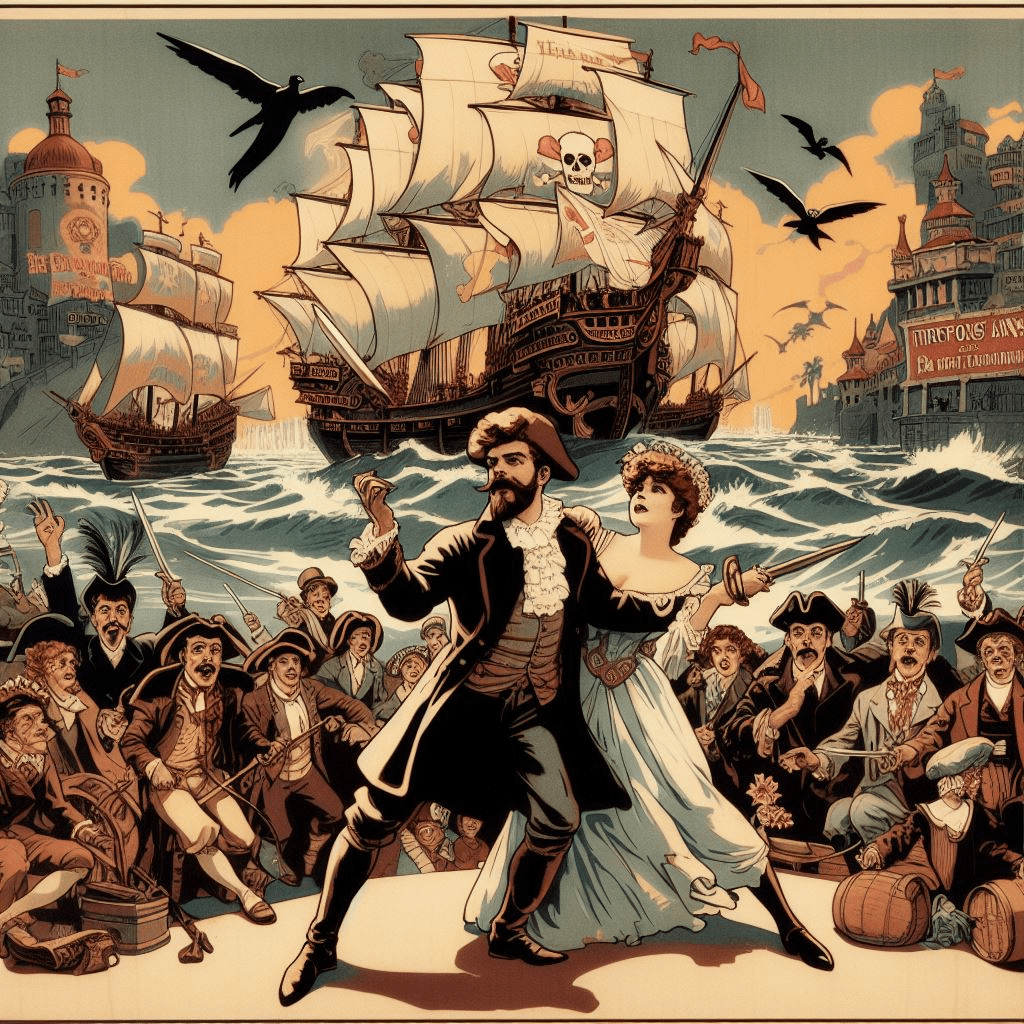
Image generated by DALL-E

Who was Mr Stanley and how did he get into show business? The only biography I can find of Harry Stanley was supplied by him to a Perth newspaper in 18857. His life had so many self-reported highlights and makes me wonder if he embellished his life story.  

Stanley was born in England but after a childhood supposedly touring Europe he joined the Royal Navy and served in the Crimean War. He came to Australia in the mid-1850s, worked on a steamship out of Melbourne before heading for the goldfields, where he was stuck up by the notorious bushranger Black Johnston. After failing to find his fortune, Stanley joined a Theatrical Troupe where he found success playing the character of Rob Roy. He moved from Troupe to Troupe, in various roles before forming his company and managing the Lyceum Theatre and Hotel in Sandhurst.

Stanley travelled to South Africa in 1870 with the American War Panorama Troupe but was unfortunately shipwrecked on the way. Luckily he saved the Panorama and just so happened to be on the diamond fields of Kimberley when they raised the British flag. Stanley was received by African presidents and kings during that trip. He spent time as a guest of the Nizam at Hyderabad and was asked to lecture on war to the Sikh regiments. Stanley then went to Burma, where he was presented with a medal from the King and subsequently travelled to Siam, where he stayed at the palaces of the kings.

Perhaps colourful renditions of life stories come with show business. After leaving Cossack it was reported that Mr Stanley was struck insensible by lightning for three hours while on deck of the SS Natal8. Fortunately, Stanley had recovered by the time he reached Singapore.

Stanley and his Opera Troupe seem to have spent the next few years performing in the East, visiting “the colonial port cities with large European populations where there was a high demand for the sort of shows he staged9.

Stanley returned to Australia to settle some business in 1896, but while in Newcastle his heart condition suddenly worsened, and he died (without a will). Stanley was nearly 60 years old10.   The Freemasons in Calcutta raised money for his wife and daughters to return to Australia.  Entertainments such as Mr Stanley’s Opera Troupe were facing competition from newer forms of entertainment such as roller skating.  The story of Harry Stanley and his Opera Troupe is a colourful one.  What other larger than life people’s stories are awaiting discovery in Western Australia’s Ghost Towns?


Sources
  1. Presentation to Mr and Mrs Stanley. The Inquirer and Commercial News, February 1886, p. 5. ↩︎
  2. Perth Local Court. Western Mail, 2 January 1886, p. 10. ↩︎
  3. Farewell to Stanley’s Opera Troupe. The Daily News, 6 November 1885, p. 3. ↩︎
  4. YU Elysia, 2020. Australian Itinerant Theatres as Colonial Cultural Assimilation https://www.tca.hku.hk/post/australian-itinerant-theatres-as-colonial-cultural-assimilation
    Accessed 20 March 2024. ↩︎
  5. Roebourne Letter. Western Mail, 13 March 1886, p. 16. ↩︎
  6. The Pirates of Penzance. The West Australian, 12 October 1885, p. 3. ↩︎
  7. Biography of Mr. Harry Stanley (1885, September 26). The Herald (Fremantle, WA : 1867 – 1886), p. 3. Retrieved April 13, 2024, from http://nla.gov.au/nla.news-article110070728 ↩︎
  8. Local. The West Australian 13 April 1886, p. 3 ↩︎
  9. YU Elysia, 2020. Australian Itinerant Theatres as Colonial Cultural Assimilation https://www.tca.hku.hk/post/australian-itinerant-theatres-as-colonial-cultural-assimilation. ↩︎
  10. Newcastle News. The Maitland Weekly Mercury, 2 May 1896, p. 5. ↩︎
Ghost town schools

What was school like for the children and teachers of Western Australia’s Ghost Towns?

 In the years of rapid growth of mining communities, timber camps and the railways, (which encouraged the opening up of much agricultural land), schools opened and closed rapidly, sometimes even in the same community as the population grew and shrunk and grew again.  Schools were indeed perfect barometers of the rise and fall of centres of population.1

During the years of the early 1900s, Western Australia was fortunate to have a head of the Education Department who believed that every child in Western Australia, no matter how remote their home was, should have access to education.2 This thinking caused many tiny schools to open. Sometimes as few as 10 children were needed before a school could be established. Schools were in tents, slab huts, transportable buildings with canvas walls and a tin roof, in the back rooms of halls or churches and in school buildings, which were often erected by the community.

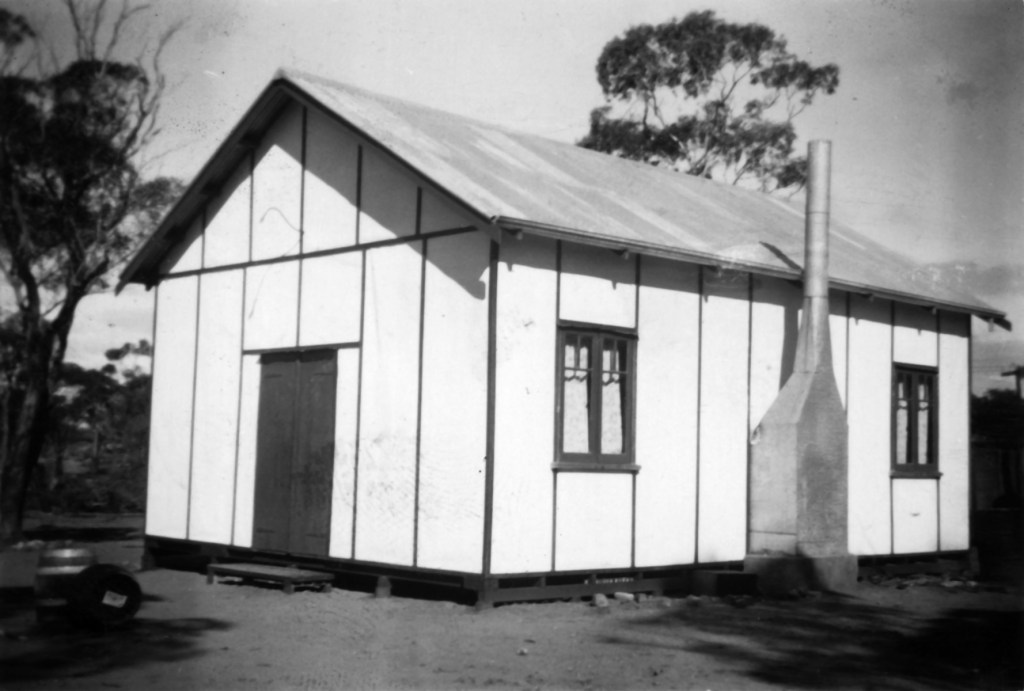
Spargoville School House, c19403

Both the pupils and their teachers did it tough in these bush schools. Pupils often walked long distances to school  or if they were lucky rode horses. Pupils were expected to attend school if they lived 2 or 3 miles away, (the younger children under 9 were only expected to walk 2 miles, while those over 9 could walk longer distances).  School ‘buildings’ got very hot in summer and were freezing in the winter months. School rooms were also home to local wildlife such as mosquitos, flies, frogs, lizards, mice, and snakes.

Teachers were under pressure to not only teach but keep the school grounds looking good, either making a garden or, at the minimum, planting trees. Sometimes this resulted in children spending a lot of their school time in the bush gathering materials for fencing the school, missing out on their education, and ruining their clothes.4

A teacher’s first difficulty when appointed to a bush school was finding out where the school was and then how to get there. Once they arrived at a remote railway siding most of the community were there to meet them, especially if the teacher was a young female.

Housing for the teachers was also a problem. A community that wanted a school had to supply accommodation for the teacher. Often the teacher boarded with a local family, and most families lived in very basic houses.  The teacher sometimes shared a room with older children and female teachers were usually expected to assist with household chores as well as paying board.  Teachers got to school the same way as their pupils, by walking up to three miles or in some places riding a horse.   

Once the teachers got to school they had the daily challenge of teaching a class of pupils whose ages ranged from 5 to 14. After the school day was finished the bush school teachers needed to clean the school, (for which they were paid a little extra, and complete hours of paperwork – such as ensuring attendance records were up to date, writing letters to the Education Department or answering such letters, and having written plans in place for all grade levels they taught.

Up until the 1930s the majority of schools outside West Australian towns had less than 20 pupils. The government of that day put education as their second highest priority, after ensuring a satisfactory food supply for the state.5   Eventually as people began moving to larger towns, there was a move to centralise schooling and pupils began to be bussed to larger schools.

The era of small schools in the bush was drawing to a close.  Thousands of children attended small bush schools in Western Australia. Did they receive an education that was comparable to the children in the larger towns? In many cases yes, due to the efforts of their intrepid teachers and their parents who ensured that their children were up and off to school. 

As children across Western Australia return to school this week in their air-conditioned classrooms, let’s take a moment to remember what it was like for many of the children in years gone by in lonely schools down the dusty tracks or forest paths.

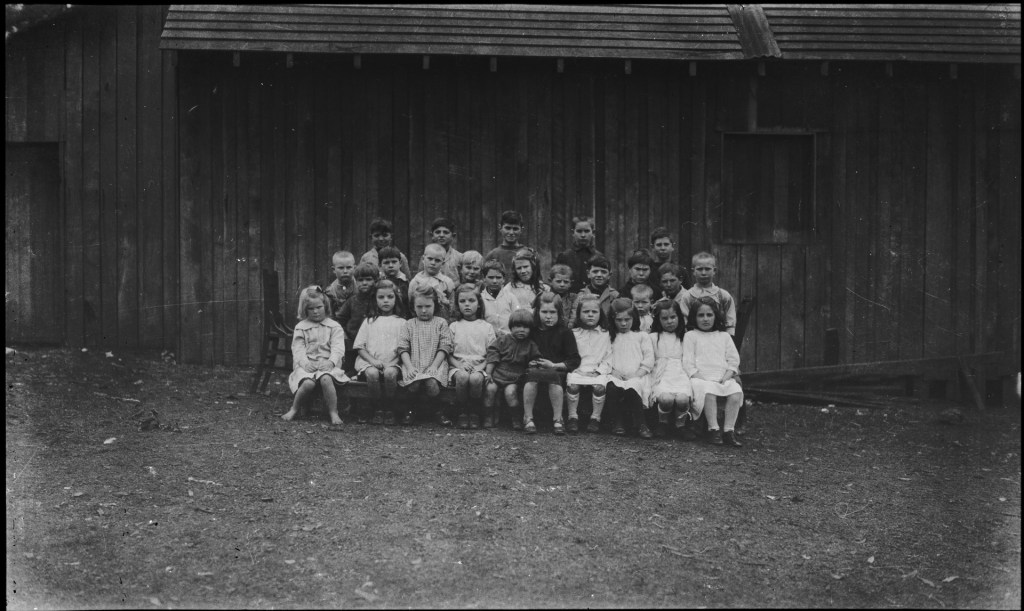
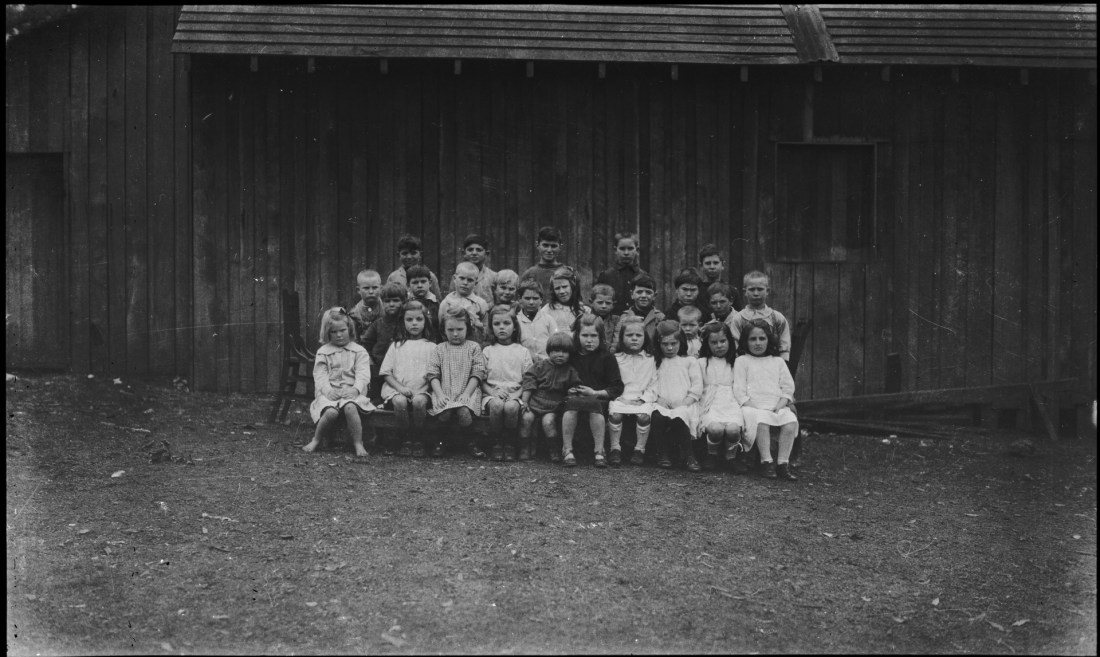
School children at the Lewis and Reid No.2 Mill, near Allanson, c19206

SOURCES

  1. Quote attributed to an Inspector Miles in 1912 in McKenzie, J.A. (1987). Old bush schools: life and education in the small schools of Western Australia 1893 to 1961. Doubleview, Australia: Western Australian College of Advanced Education. P. 7. https://ro.ecu.edu.au/ecuworks/7075 ↩︎
  2. Cecil Andrews, an Oxford graduate, was head of the Western Australian Education Department from 1913 to 1927. ↩︎
  3. State Library of Western Australia. Spargoville School. Retrieved from https://purl.slwa.wa.gov.au/slwa_b1974926_3 on 29 Jan 2024. ↩︎
  4. Bush Schools: A Plea for the Children. Letter to the editor of the Bunbury Herald and Blackwood Express, 26 November 1920. p.6 ↩︎
  5. McKenzie, J.A. (1987). Old bush schools: life and education in the small schools of Western Australia 1893 to 1961. Doubleview, Australia: Western Australian College of Advanced Education. P. 14. https://ro.ecu.edu.au/ecuworks/7075 ↩︎
  6. State Library of Western Australia. School children, Lewis and Reid No. 2 Mill, near Allanson, Western Australia, ca. 1920. Photograph retrieved from https://purl.slwa.wa.gov.au/slwa_b6797766_2 on 29 Jan 2024. ↩︎

Tuckanarra Reef

The original story of how Tuckanarra, the celebrated 24 ounce to the ton mine, was found in 1898, as told by Jim Boyd (one of the owners) was published in the Murchison Advocate, 27 May 1899, p3.  The town site was gazetted in 1899 after a state battery was installed in 1898.

In the March of 1896, the weather in the Murchison was really wet and a mining warden was travelling.  The bad weather stopped him from reaching his destination and on the way back to Cue he camped overnight in what was later known as Cork Tree Flat and then Tuckanarra. Either he or his companion, (a native tracker),  picked up a small piece of gold near their buggy.   Once they arrived in Cue the news of their find leaked out and several prospectors left Cue in the middle of the night to try to be the first on the scene. However, they were looking for alluvial gold and came back into Cue after a few days saying the find was no good.

Two days later Jim Boyd’s mate, George Moore, went out to Cork Tree Flat to see what the fuss was about. Instead of looking for alluvial gold, he looked for reefs. He came across a reef, broke a few pieces off it and brought it into Cue for Jim Boyd to look at. The quartz pieces had enough colour in them for Boyd and Moore to go back out to Cork Tree Flat for several weeks of prospecting, but not enough colour to suggest high hopes of finding a great find.

They arrived in Cork Tree Flat on Good Friday 1896 and Moore went in one direction and Boyd went in the other direction. Boyd hadn’t walked more than three or four hundred yards when he saw something that looked like yellow moss on a quartz outcrop. Of course, it was gold and that was the story of Boyd and Moore’s Tuckanarra mine began.

The Miracle of Bonnie Vale

Bonnie Vale or Bonnievale near Coolgardie was the site of the Westralia gold mine. Bonnie Vale was gazetted in 1897 but became famous in March 1907 when unusually heavy rainfall flooded the mine with 160 miners inside. All the miners managed to get out before the main shaft was flooded with water, except for one.  Only Modesto (Charlie) Varischetti remained inside.

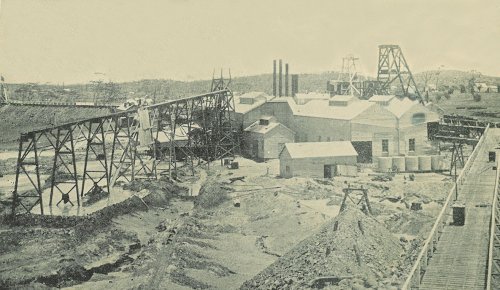
The Westralia Gold Mine.
Photo retrieved from Outback Family History

What followed was a thrilling mine rescue that may be unfamiliar to readers because it happened so long ago.   

At first Varischetti was presumed dead with no chance of survival unless he was in an area of the mine where there was an air pocket. Two days after the freak storm and flooding the rescuers heard Varischetti tapping. Varischetti became known to newspaper readers across the world as the Entombed Man.

A steam pump was rushed to the mine but only reduced the water level very slowly. The mine manager estimated that it would take a week to clear the shaft and there was no hope of rescue.  Allegedly the mine manager’s seven-year-old son asked his father about using a diver to rescue the trapped man and this idea was taken up by the Mining Inspector who was on site.

Divers were sourced in Fremantle and two miners from Kalgoorlie who were experienced in both mining and diving offered their assistance as well. A special train was put on to get the Fremantle divers and the equipment needed for the rescue to Bonnie Vale as fast as possible. The ‘Rescue Special’ steamed to Coolgardie arriving two hours faster than the regular trains. Fast horses were waiting to meet the train and raced to the mine in Bonnie Vale. It was only four days after the flooding of the mine shaft that the first diver made his initial exploratory dive. By day six, the divers had reached Varischetti and gave him food, candles, a powerful lamp, and other necessities.  Special Italian dishes were cooked for him by the wife of another Italian miner.


The Rescue Team at Bonnie Vale
https://purl.slwa.wa.gov.au/slwa_b6355955_2

It was considered too dangerous to put Varischetti into a diving suit and take him through the flooded mine.  Instead, the divers visited him each day while the mine was being pumped out. On the ninth day it was considered safe enough to tie a rope around Varischetti and help him walk out through the remaining water and sludge. In reality he was so weak one of the divers carried him for most of the distance.

hen the doctors in attendance examined Varischetti they pronounced his chief trouble was ‘a nervous prostration of a purely temporary character’ and gave him a sleeping draught.  The newspapers reported that he did look much better the next morning.

The divers who rescued Varischetti were feted and showered with laurel wreathes and expensive gifts, such as gold watches and purses of gold sovereigns. Gifts came from grateful miners across the country.

Varischetti on the other hand back to work down the mines and died from fibrosis in 1920. There is a memorial to him in the Coolgardie cemetery. 

Just as many of us watched the progress of the Thai cave rescue of the soccer team by Australian divers, in 1907 readers across the world eagerly awaited news of the ‘entombed man’ of Bonnie Vale.  In the years since there has been a film made about the story, a graphic novel written about the rescue and even a song celebrating the miracle of Bonnie Vale.


Further Reading

Bell, Lex, n.d. Miracle at Bonnievale. Retrieved from https://purl.slwa.wa.gov.au/slwa_b3096636_1 on 23 Dec 2023

Western Australian Museum, 2016. A Miraculous Rescue. Retrieved from https://museum.wa.gov.au/explore/wa-goldfields/dangerous-life/miraculous-rescue 23 Dec 2023.

Pela Behrendt – a life in Ewlyamartup

Polish lady, Pela Behrendt came to Ewlyamartup with her husband and young daughter in 1950 from the Northam Migrant camp when her husband got a two-year contract to work on the railway. Luckily for us Pela was interviewed about her experiences in the 1990s and that interview has been digitalized by SLWA1 .

Lake Ewlyamartup 2023 by Josie Millwood

Pela found Australia in the 1950s to be a primitive place to live. Moving to Ewlyamartup, a siding on the Nyabing Katanning train line, probably reinforced that impression. The local farmers used to load their produce on the train at Ewlyamartup for transportation to Katanning and beyond.

Accommodation for Pela’s family and the other eastern European families living there consisted of tents with their own kitchen block. There was no electricity or refrigerators and drinking water was delivered once a week from Katanning. Kerosine lamps were used for lighting with heating provided by kerosine heaters.
Katanning was 11 miles away. If Pela needed to go into town, she caught a ride on the school bus that passed by. Her husband used to ride a push bike into town. One of things he did in Katanning was deposit their savings into the bank. Pela was a good manager of money. She was also very resourceful. As she had brought her
sewing machine from Europe, she bartered her sewing skills for fresh produce for her family. As a result, Pela rarely needed to buy milk, eggs, vegetables, or fruit and could give her husband £5 each Friday to bank, as she only needed £2 pounds, (out of his weekly salary of £7) to live on.

In 1951 Pela’s family moved away from Ewlyamartup to another railway siding, Elleker, which was closer to Albany. A few years later they were able to buy a parcel of land in Albany and and eventually built a house there. Their time in Ewlyamartup was a stepping stone for them to achieve their Australian dream.

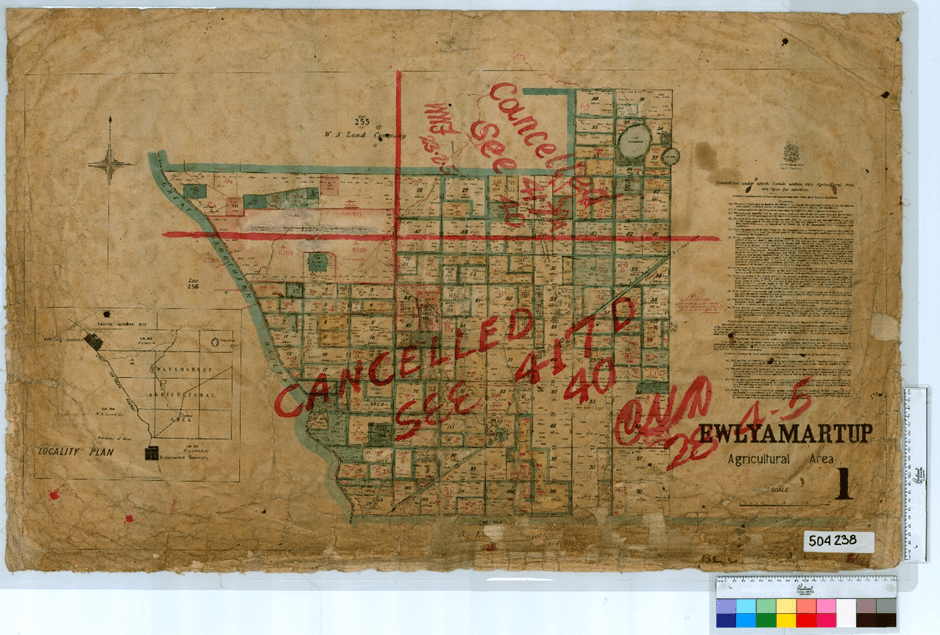
Map of Ewlyamartup town site produced in 1895- https://archive.sro.wa.gov.au/index.php/ewlyamartup-sheet-1-tally-no-504238-0621

A note from the author, Josie Milwood:

After a recent trip to Lake Ewlyamartup, where I discovered that a railway settlement with a school had previously existed by the lake, I went searching to see what I could find out about Ewlyamartup. Ewlyamartup was one of the first settled districts out of Katanning with an ambitious town plan drawn up in the 1890s. Prior to that Ewlyamartup was a significant place for the local Indigenous people, a fact that has only been acknowledged in recent years when interpretive signage has been placed near the restored lake. As the Ewlyamartup area was settled by farmers there was a need for a school. The first school opened in 1905 but closed in 1908. It reopened in 1912 and remained open until the end of 19432.


Sources
  1. State Library of Western Australia, 1996. Interview with Pelagia Behrendt. Sound Recording https://encore.slwa.wa.gov.au/iii/encore/record/C_Rb1756184_Sewlyamartup ↩︎
  2. Lost Katanning, 2021. Ewlyamartup School. https://www.lostkatanning.com/ewlyamartup-school/. Accessed 30 Oct 2023 ↩︎