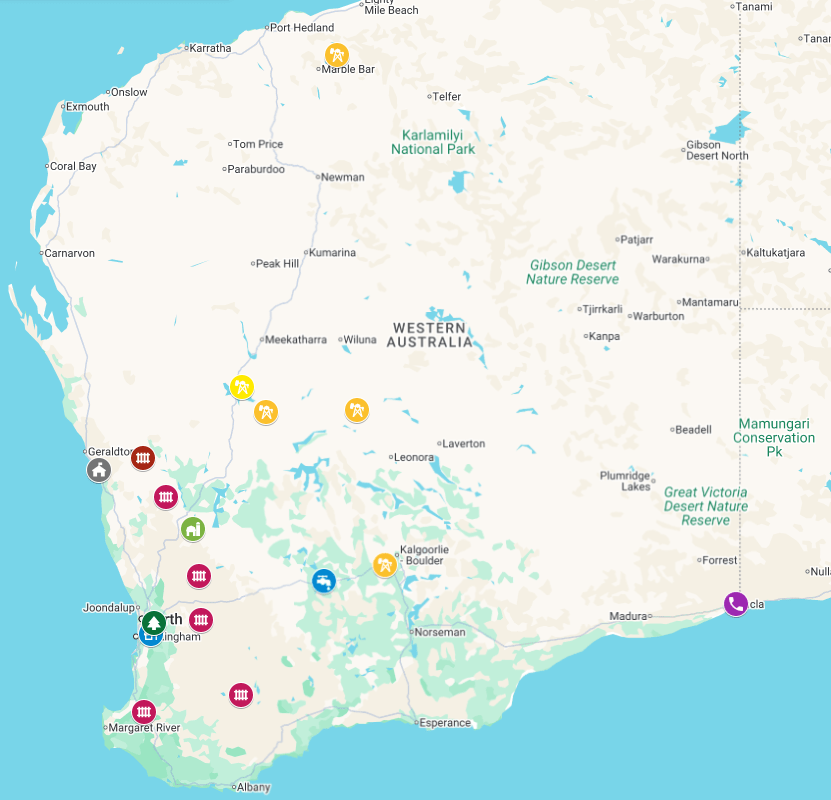
Phase 8 of our project launches today. There’s a wide range of communities included from the border town of Eucla, west to the Timber Mill and Railway Siding at Newlands and north to the remote mining town of Bamboo Creek (north of Marble Bar).
On 19 March 1906, the gold-mining township of Bulong celebrated St Patrick’s Day with an “exempted mixed sports meeting” that drew crowds to the local recreation reserve. What should have been a day of festive competition ended in a tragedy that exposed the “loose and incompetent” standards of early goldfields racing and led to a high-profile manslaughter trial in the Kalgoorlie Circuit Court.123
The day’s final event was the Forced Handicap. Albert James Windsor, a well-regarded 18-year-old jockey, was given the mount on a horse named Umber. Tensions were high before the start; Windsor reportedly told his stepfather and Umber’s owner, John Coen, that other jockeys had threatened him, saying, “They would settle me this time”. Windsor was so apprehensive that he unsuccessfully attempted to swap his starting position to the outside rail to avoid being “blocked”.456
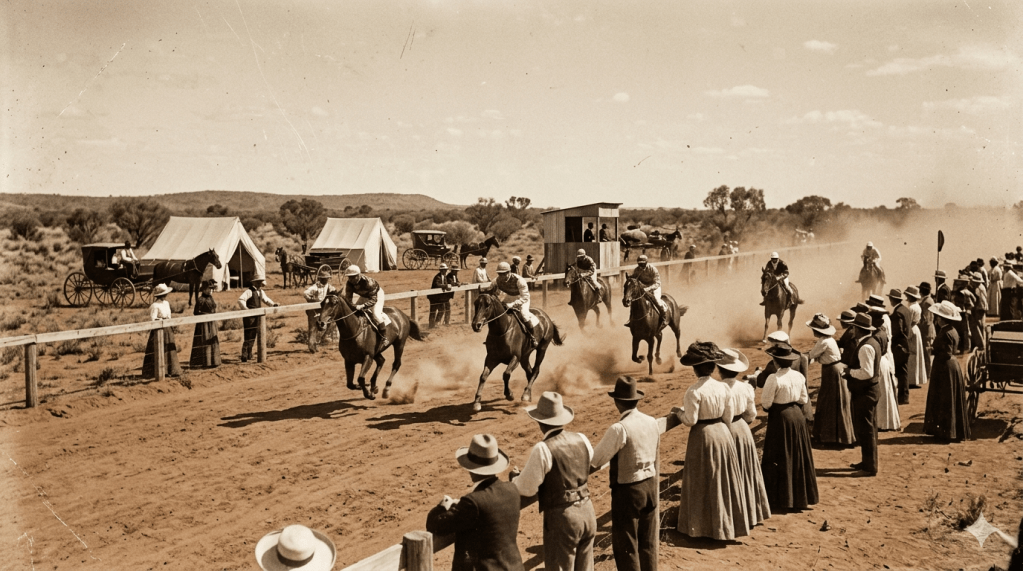
Image generated using Nano Banana 2 Christine Harris (2026)
As the field turned into the straight, Philosopher and Little Katie led, with Umber trailing by two lengths. Umber made a spirited run on the inside, drawing level with the leaders near the post. Witnesses testified that the rider of Philosopher, Victor Perry, deliberately pulled his horse across the track to block Umber’s path. The interference was so severe that Umber was “wilfully bored” off the course and into the surrounding crowd. In the ensuing chaos, Umber fell, striking several spectators before rolling over Windsor.78
Windsor was rushed to Bulong Hospital and later transferred to Kalgoorlie. He had sustained a fractured spine, leaving his body paralysed below the waist. Despite his clear intellect until the end, his condition was hopeless; he succumbed to respiratory failure on 2 April 1906.910
Victor Perry, who had fled Bulong an hour after the race, was eventually arrested and charged with manslaughter. His trial opened in June 1906 before Mr Justice Burnside. The prosecution presented a damning case, including testimony from John Coen that Perry had offered to “pull” (deliberately lose) his horse earlier that day for a fee, which Coen had refused.1112
Perry’s defence argued that the incident was a mere racing accident, claiming Philosopher had a “bad mouth” and had swerved naturally toward the rails. However, the jury was not convinced by the claim that a horse would naturally swerve nearly nine yards across a 35-foot track.13
On 22 June 1906, the jury returned a verdict of guilty. They added a “strong recommendation to mercy,” citing the “remarkably dangerous” nature of the Bulong course and the “general loose methods” of the meeting’s stewards. Justice Burnside, while acknowledging the jury’s recommendation, sentenced Perry to 12 months’ imprisonment with hard labour in Fremantle Gaol. He remarked that Perry had “deliberately infringed” the rules of sport to prevent a competitor from winning, resulting in a disastrous loss of life.1415
Editor’s Note: The source of the following article is an article in the North-Eastern Courier in 1938.1
For the residents of the Murchison and the North-Eastern wheatbelt in the 1930s, “distance” was more than just a measurement; it was a constant, looming threat. To be a prospector at the Payne’s Find goldfields or a pastoralist on a remote station meant living days away from medical help. However, on a Saturday afternoon in late July 1938, that gap was narrowed significantly with the official opening of the radio telephone service between Dalwallinu Hospital and Payne’s Find.
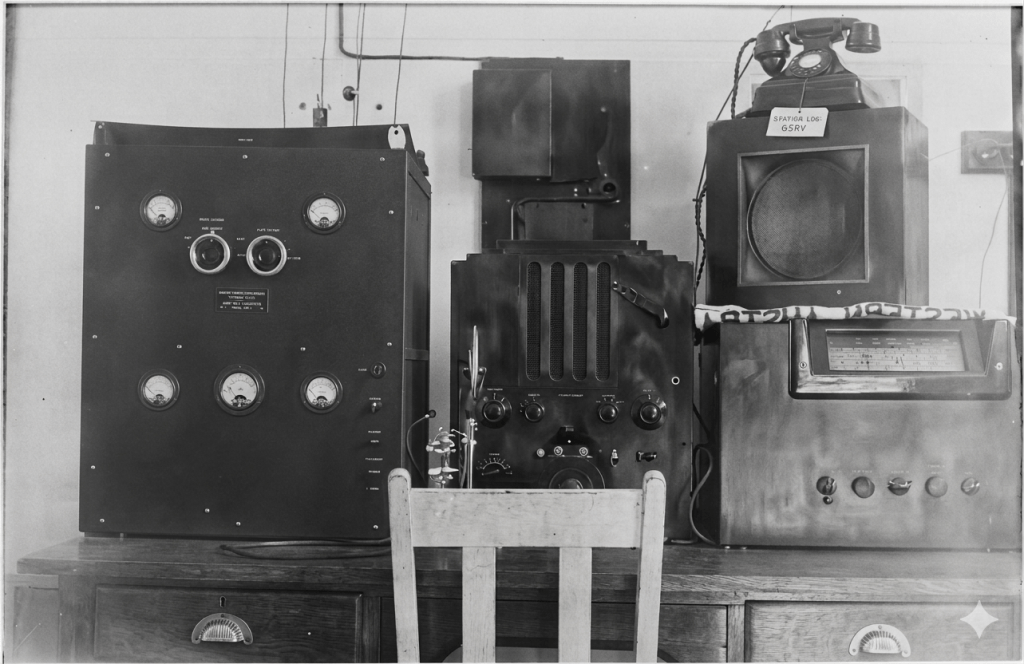
Wireless transmitter in the ante room of the Labour Ward, Dalwallinu Hospital, 19382
The event was treated with the gravity such a technological milestone deserved. The Minister for Health, Mr A. H. Panton, travelled from Perth to perform the opening honours. Accompanying him was a party of dignitaries, including Mr P. D. Ferguson, M.L.A., and officials from the Medical and Health Departments. The afternoon began with a sense of local hospitality, as the Chairman of the Dalwallinu Hospital Board, Mr W. H. Flynn, entertained the Ministerial party at lunch at the Dalwallinu Hotel before the proceedings moved to the hospital.
What makes this piece of local history so compelling is the evidence of grassroots determination. The service was not merely handed down by the government; it was a hard-won victory for the locals. The total cost of the sets exceeded £200, a significant sum during the tail end of the Depression, with £75 of that raised specifically at the Payne’s Find end.
Special credit was given to Mr A. F. Pipe, who spent a “vast amount of time” securing financial aid, and Dr C. W. Anderson, who had spent two years advocating for the wireless link. Minister Panton noted that the hospital tax money was being put to “good and legitimate use” to benefit such country areas, but it was clear that the heavy lifting had been done by the people themselves.
Before this link, a medical emergency at Payne’s Find required a physical messenger to travel long distances just to reach a telephone. Dr Anderson highlighted that the new service would be a “vast benefit” to those “outback who lack hospital and medical facilities”. Over the airwaves, the Minister explained that the radio would allow for immediate first-aid advice to be given by the doctor while a patient was being prepared for the arduous journey to Dalwallinu.
The day also saw the formal handing over of a new operating table to the hospital by the Wubin and Districts sub-branch of the R.S.L. Mr Jas. Day, representing the sub-branch, appealed to citizens to support Dr Anderson, whom he described as “second to none” in his care for the “sick and afflicted”.
The most poignant moment of the day occurred when the link was tested. Mr W. J. Green, the long-standing postmaster and pioneer of Payne’s Find, replied to the Minister “over the air” from the mining centre. Green, who had been instrumental in the project, spoke with pride about the district’s twenty-seven-year history, noting that it had produced thousands of pounds worth of gold and a “huge quantity of the highest quality wool”.
He also shared a rare moment of environmental optimism, reporting that beneficial rains had recently fallen, brightening the prospects for local pastoralists. The ceremony concluded on a personal note, with Mr J. C. Clark sending a “cheerio” over the air to Mr Eric Bouquet, the operator of the set at Payne’s Find.
State Library of Western Australia (n.d.) Colin Warden Anderson collection of photographs; BA2076/46. Retrieved 3 Apr 2026 from https://encore.slwa.wa.gov.au/iii/encore/record/C__Rb4615670 Notes: 1. Wireless transmitter in ante room of Labour Ward, Dalwallinu Hospital. Built by W.E. Coxon. Call HUG reputed 50 watts output. Two receivers on R. Lower is 5 valve AWA receiver donated by Mr Green, Paynes Find. 2. Original image damaged and unclear has been restored by Nano Banana 2 AI. ↩︎
Phase 7 of our project starts tomorrow with the release of twenty-one new communities, bringing the total of communities being actively indexed to 109.
Mundaring Weir
Ninghan
Yerilla
Kunanalling
Golden Valley
Payne’s Find
Myalup Sustenance Worker’s Camp
Kurrajong
Wyening
Kudardup
Warriedar
Zanthus
Mangowine
Mulga Queen
Burnakura
Gum Creek
Mason & Bird Timbers Mills
Yetna
Jonesville
Nairibin
PWD Timber Mill
The profile pages for these communities will be released progressively across the next six to eight weeks, starting tomorrow. So make sure you are subscribed to our website to be notified when this happens.
In the mid-19th century, the region we now know as Mundaring was a rugged expanse of “mundak,” or wild country, dominated by towering jarrah and wandoo forests,. It was a landscape defined by the rhythmic thud of sleeper cutters’ axes and the isolated camps of convict road parties who laboured to maintain the vital thoroughfares of the colony,. For the early settlers, these hills were a formidable barrier between the burgeoning capital of Perth and the agricultural promise of the Avon Valley. Along the main artery of travel, the York Road, law and order often felt as thin as the coastal mist, creating a perfect environment for those living outside the law.1
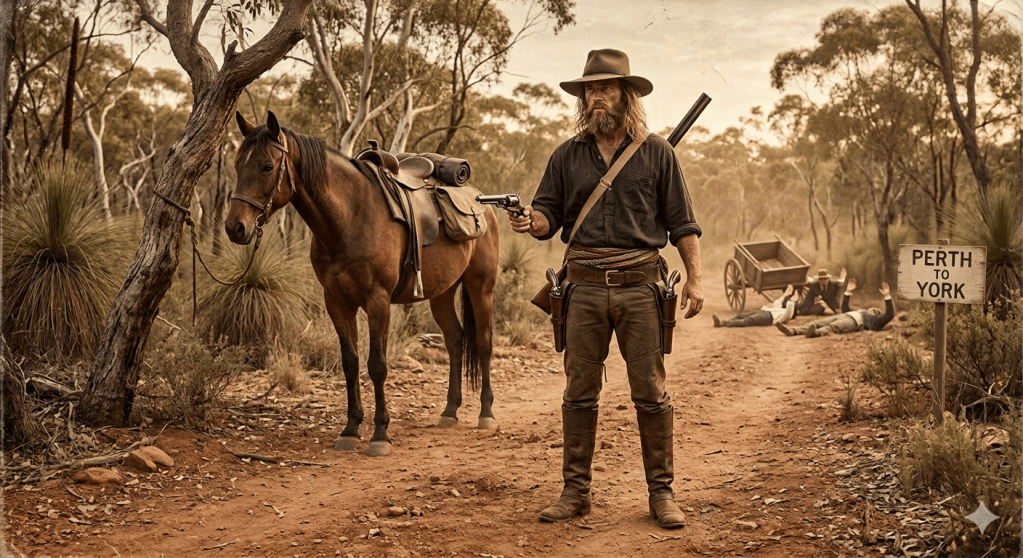
An imagining of James Lilly, bushranger, created by Nano Banana 2 Christine Harris (2026)
The focal point of this narrative is a small stone structure situated near Manaring Lake at the junction of the Great Eastern and Great Southern Highways. Originally known as the Travellers Rest Inn, it was built around 1855 by Robert Doncon on “King Dick’s Road”, a route specifically financed by York settlers to bypass a more difficult government-surveyed track. By 1858, the inn had been purchased by Henry Horton and renamed Horton’s Half-Way House. Described by visitors as a “primitive sort of house,” its sitting room was famously furnished with great sofas that frequently served as makeshift beds for weary travellers.2
In November 1860, this humble outpost became the stage for a dramatic moment in Western Australian colonial history. James Lilly, an escaped bushranger, was at large in the district. In a time when the bush offered near-limitless sanctuary to fugitives, Lilly was a significant concern for the small, scattered populations of sawyers and pioneers. Bushrangers like Lilly represented a direct challenge to the safety of the mail routes and the security of isolated homesteads in the “high places” of the range.3
The capture of Lilly at Horton’s inn was a rare and decisive victory for colonial authorities. Drawn by the necessity of the crossroads or perhaps the rare prospect of shelter, the fugitive’s run ended at this remote stop. While the specific tactical details of the struggle are not extensively detailed in the historical record, it is confirmed that it was here that Lilly’s flight from justice was finally halted.4
Today, little remains of the site where this frontier drama unfolded. The advent of the Eastern Railway in 1884 bypassed the old York Road inns, stripping them of their economic purpose and social importance. Partially destroyed by bushfires in the 1920s and 1930s, the inn fell into a dilapidated state. What once stood as a vital haven for travellers and a site of high-stakes capture is now a collection of low stone walls, slowly deteriorating among the trees at the locality known as The Lakes. These ruins serve as a silent reminder of the days when James Lilly haunted the wild country of the Mundaring hills.5
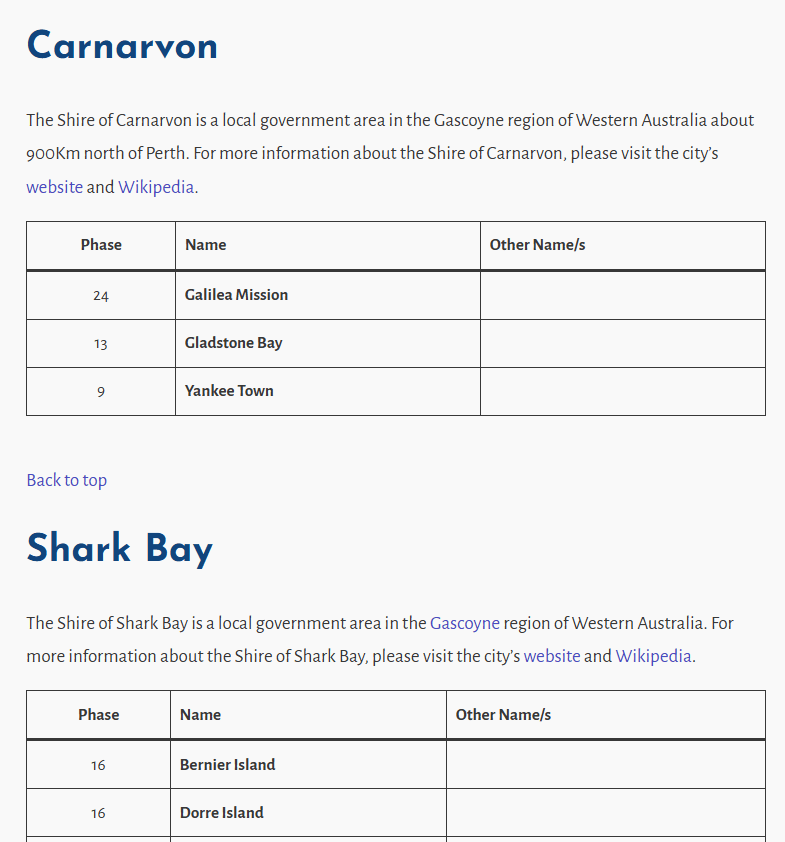
Here on our website we have a great resource called WA’s Ghost Towns by Location. This document lists all communities included in our project (to date) by Administrative Region and Local Government Authority. At the bottom of the list, you can find a list of communities that are still being researched.
If you are planning a road trip and want to visit some Ghost Towns on the way, you can search by region or by shire name and find what is around you.
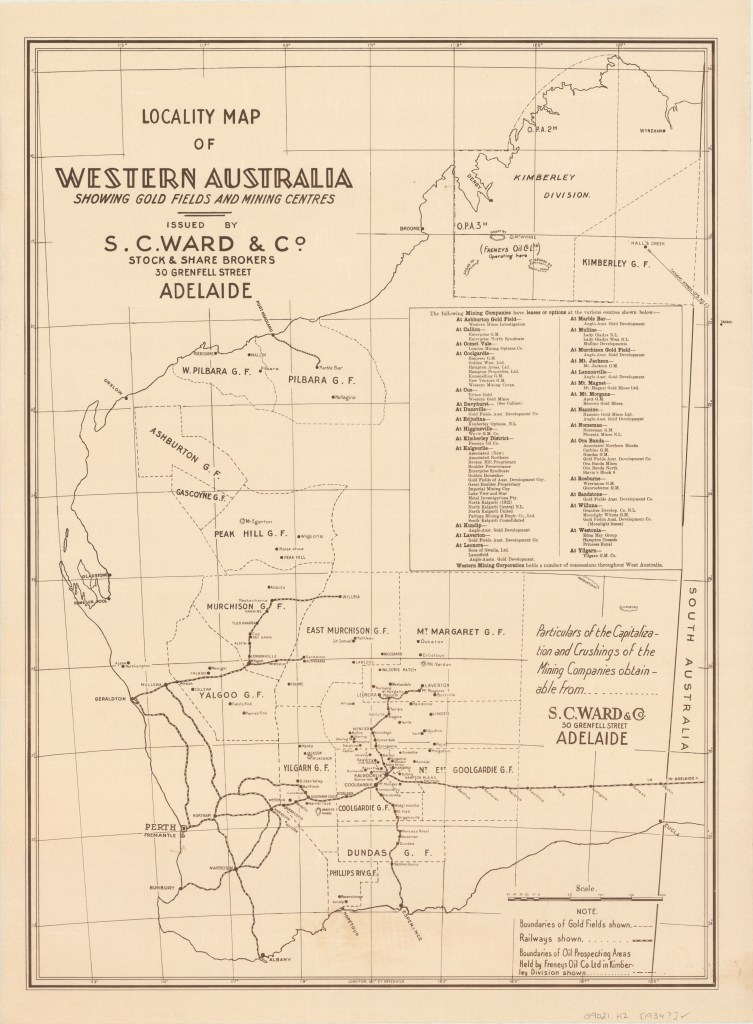
If you want a view of how things looked a century ago, here’s a map of Western Australia by Locality produced in 1934.
S.C. Ward & Co., issuing body. (1934). Locality map of Western Australia showing gold fields and mining centres Retrieved March 22, 2026, from http://nla.gov.au/nla.obj-1485547591
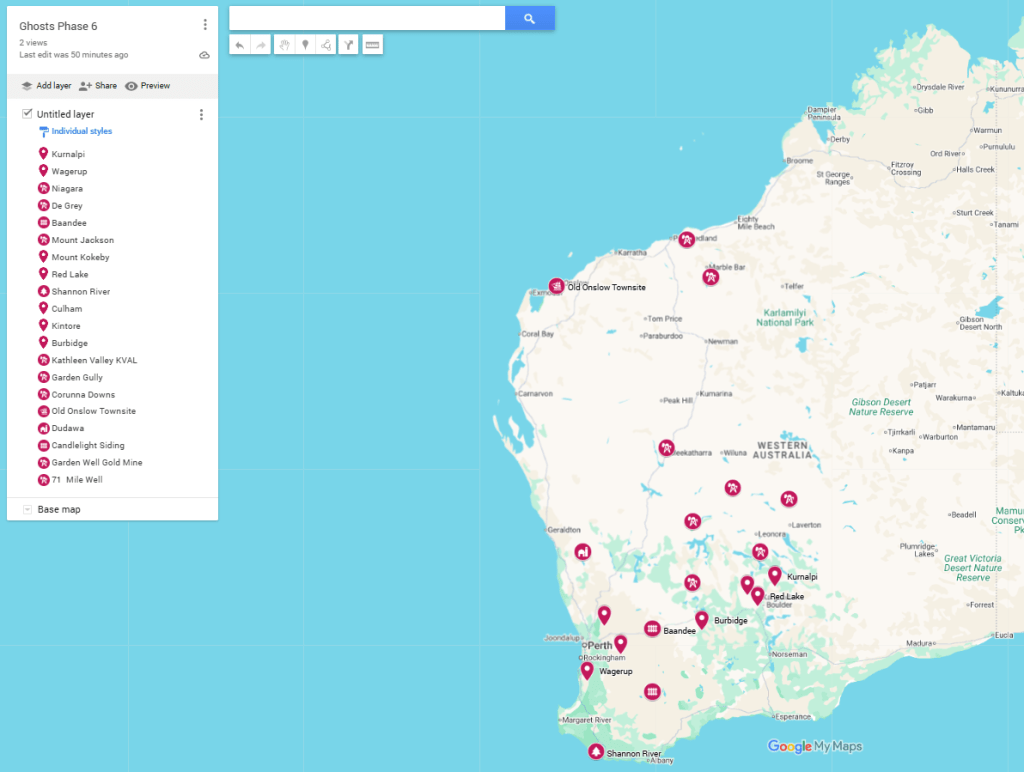
1 March 2026 is the launch of Phase 6 of the project and 20 new ghost communities have been added to the list of towns that are being actively researched.
If you know anything more about any of these places, or any others on our please, please contact us via our contact page. And if you find anything that you think is incorrect on any of our pages, we need to know!!
And don’t forget to subscribe to this page to receive updates on the project.
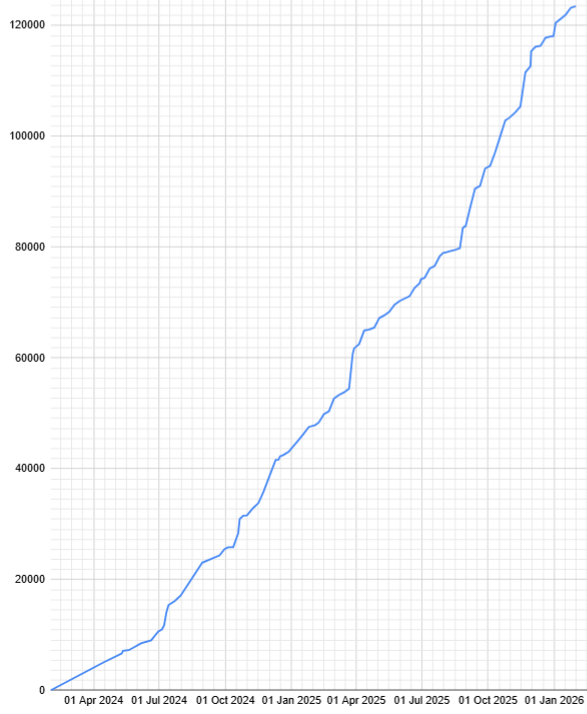
The total number of records captured as at 31 January 2026 was 123,471. Now that the very typical slow down over the festive season is past we will be seeing the also very typical ramp up in number of records collected. Congratulations to the project team who are working so hard to make this project great!!
Since the end of November, we have added about 40 new communities to the list of captured records – ranging (alphabetically) from Barrow Island to Yule River, and spread geographically all over our state.
As you can see from the list below, some of the record numbers are very low. This happens when we are researching one community and come across records for another community that is on our list. We capture the strays as we go along because we don’t want to miss anything!!
Once our website and search engine is fully operational you will be able to access some of these records. Here are the latest figures followed by a simple line graph showing the growth in total numbers:
The Nallan Wood Strike of 1908 was a significant three-month industrial dispute in the Murchison goldfields of Western Australia that brought the massive Great Fingall mine to a complete standstill. Triggered by demands for increased wood-cutting rates, the strike highlighted deep-seated grievances among a culturally diverse workforce and underscored the critical dependence of the mining industry on wood fuel for its operations.1
The Tinderbox
The conflict was rooted in deteriorating working conditions and economic frustrations that had been building for years. By 1908, woodcutters—who were predominantly of Italian and South European descent—faced increasingly difficult labor for stagnant or diminishing returns.
Key factors included:
“Cleaning Out” Policies: Employers shifted from allowing “picking” (selective cutting) to requiring “cleaning out,” where workers had to clear entire areas. This forced cutters to spend hours on difficult, low-yield “snags” for very little pay.
Weighing and Payment Disputes: Cutters were paid by weight, but wood was often left on the line for months to dry. As the wood lost moisture, its weight decreased, directly reducing the workers’ earnings.
Failure of Arbitration: A 1904 Arbitration Court award had notoriously sided with employers, suggesting that wages were already too high and even recommending reductions. This left workers with a deep distrust of the legal arbitration system.
Resource Monopolies: Mining companies and firewood suppliers jointly controlled access to wood and water on Crown land, leaving cutters with little leverage outside of direct action.
The Standstill
The strike at Nallan began in late 1908, with cutters demanding higher rates for their labor. The impact on the local economy was immediate and severe, particularly for the townsite of Day Dawn, which was almost entirely dependent on the Great Fingall Mine.23
When the firewood supply was cut off, the Great Fingall management announced the mine would close down at 8:00 AM on Tuesday, November 17, 1908. This decision rendered approximately 500 men idle, throwing the community into a state of “disquietude”. While the mine staff and a few maintenance workers were retained, the bulk of the workforce was forced to leave town or wait for a resolution.4
Business circles in Day Dawn expressed considerable disappointment as the strike dragged on, with rumors of settlements repeatedly proving false. The mine management refused to restart operations until enough wood was stacked on the lease to guarantee several weeks of continuous work.
The Intervention
As the strike became an “industrial disaster,” various levels of government were forced to intervene.
Law Enforcement: Police presence was heavy. Inspector Sellinger was stationed in readiness with 25 police officers, many of them mounted, to handle impending trouble. In a move described as a “harsh suppression,” six Italian strikers were arrested at Nallan. They were initially refused bail by the Warden and were only released by an order from the Supreme Court.56
Government Arbitration: Warden Troy was appointed as an arbitrator and spent days taking “voluminous evidence” from both sides. Additionally, Premier Newton Moore became personally involved, suggesting a settlement based on a daily wage of 12s and a 25% limit on contract labor.78
Local Representation: Mr. Lewis, the Mayor of Day Dawn, and Mr. E. E. Heitmann, MLA, petitioned the Premier to enforce agreements with the Firewood Company to prevent a total collapse of the district’s economy. Heitmann notably argued that the company was not acting in good faith, withdrawing offers just as settlements appeared likely.9
The Resolution
The strike was characterized by a tug-of-war between the Firewood Company, which wanted to adhere to the Warden’s original award, and the workers, who sought a slight increase of approximately 1d per ton or a shift to a daily wage.1011
The dispute eventually reached a settlement prospect in November 1908, with a proposed rate of 12s 1d per day for cutters. This was part of a broader shift where woodcutters began to reject the “red tape” of the Arbitration Court in favor of direct bargaining and strike action.1213
The Aftermath
The aftermath of the Nallan Wood Strike had lasting implications:
Militancy and Recognition: The success of the “foreign element” in standing up to the powerful Chamber of Mines earned them new respect within the wider Labor movement.14
Judicial Precedent: The harsh sentences handed down to strikers—including hard labor for leaders—were intended by magistrates like John Michael Finnerty to “impress upon the foreigners” the necessity of following British law.15
Unionization: Within a few years, woodcutters were integrated into the formal trade union movement, ending their previous isolation from the mine workforce.16
The Nallan Wood Strike serves as a stark reminder of the fragile balance of the early 20th-century goldfields, where a handful of woodcutters could bring a global mining giant to its knees in their quest for industrial justice.
Nallan Wood Strike. (1908, November 24). The Murchison Times and Day Dawn Gazette (Cue, WA : 1894 – 1925), p. 2. Retrieved January 25, 2026, from http://nla.gov.au/nla.news-article233449382↩︎
Nallan Wood Strike. (1908, November 24). The Murchison Times and Day Dawn Gazette (Cue, WA : 1894 – 1925), p. 2. Retrieved January 25, 2026, from http://nla.gov.au/nla.news-article233449382↩︎