For a small place, a lot went on in Bowgada (aka Chubble or Koolanooka), from the day-to-day activities of the CWA, football or cricket games and fancy dress parties to a very publicised murder in April of 1927.
The details given by witnesses, including the deceased’s son, add complex issues to the case. For those interested in criminal matters and family relationships, this sad occurrence out at Bowgada may prove an interesting study. The prison record of the accused (and the psychology of his behaviour) is also remarkable.
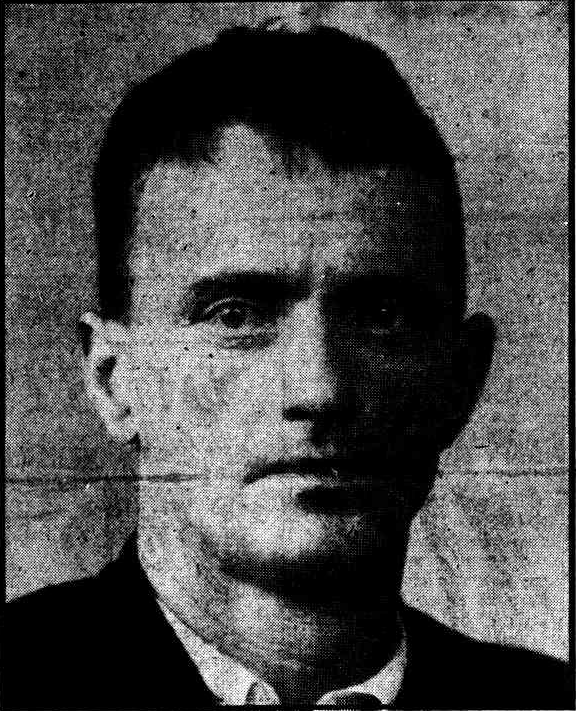
Arthur Albert Martin stood trial for the wilful murder of Bowgada farmer, Terbert (or Turbest and other variations) Horace Currell. 2 After two trials, Mr Martin was acquitted of murder. 3 However, he was back in Court the next year for horse stealing, and sentenced to three years hard labour, then to be detained at the Governors’ pleasure. It appears he was already in prison on other matters, when the horse stealing was revealed. Interestingly, Mr Martin asked for the trial to be adjourned, in order to obtain council, but this was refused, and so was his subsequent appeal to the High Court.
The Parole Board let him out – but took him back over a stolen car. In 1938 he made headlines again when he broke out of Fremantle Gaol’s reformatory section by scaling a wall and using smuggled hacksaw blade to cut through a bar in his cell. Not only that, but he was at large for at least two weeks, and fronted up to the ‘Daily News’ office with his story 4 – and at his request, the paper appears to have given him an hours’ start before informing the Police – this caused considerable comment. 5
Given parole again, he was returned for theft in Brookton 1941 (he asked to be able to join the Army). Then in 1942, Mr Martin was on the run again along with 16 others: this time escaping from Prison Camp Bartons Mill, apparently while drunk. He was found at Government Gardens sleeping and sentenced to six months extra on top of his indefinite sentence. In 1949 he escaped again and was returned.
And it was not the only death by shooting in the Bowgada either. Also in 1928, John Hyland was shot by Edward Patrick Minorgan over a dispute about a dog – and Mr Hyland died from gangrene as a result. 6 Mr Minorgan was convicted of manslaughter and sentenced to three years imprisonment with hard labour.
Sources
HUNTED MAN BREAKS HIS SILENCE (1938, February 4). The Daily News (Perth, WA : 1882 – 1955), p. 1 (CITY FINAL). Retrieved January 27, 2025, from http://nla.gov.au/nla.news-article83425027↩︎
The following information was posted on the People of Western Australia’s Ghost Towns Project facebook group1 on 7 Jan 2024 by group member, Neal Winship. Thank you Neal for permission to reproduce the material here.
Located north of Perenjori and immediately to the east of the Wubin-Mullewa Highway and the railway line, the site of the Bowgada Townsite is marked by a small timber sign. All that remains of the town are the ruins of a house, a shed, some foundations, tanks and several established trees.
Settlement at Bowgada commenced from c1910. Jim Campbell 2 and his eldest son Harry were the first to settle in the area and others soon followed, especially after roads were cleared. The townsite was gazetted as Chubble in 1913 but changed to Bowgada in 1914. Bowgada is an Indigenous Australian word used to describe a bush that is found in the local area from the Acacia ramulo. The town was originally a railway siding for cropping and stock, two industries that still thrive in the area.3
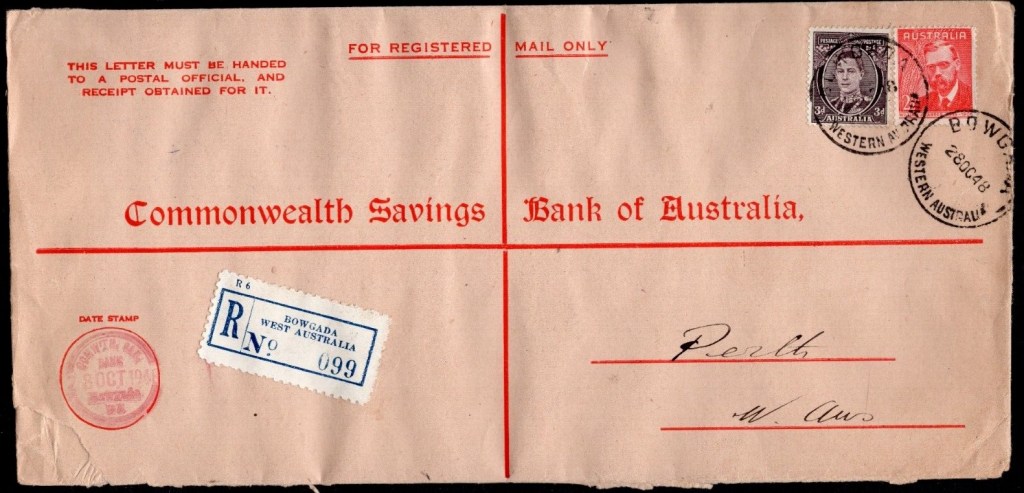
After “a drawn out struggle with the Education Department a small school was established at Bowgada and in 1924 Jim Chomley’s Store and Post Office opened. The store, later known as Maurice’s Store, a timber and iron building with a residence to the rear, burnt down c1932. An Agricultural Society was formed in 1926 which assisted in securing a free grant for land for a sports oval and tennis court. A Hall was built using voluntary labour where many social activities were held. The Perenjori Co-operative Co. opened a branch in 1928, however business slumped when the Depression hit and the store was sold for £700 in 1936 to Mr Stephen Maurice and his wife Lily. The weatherboard building, which also accommodated the Dalgetty Agency, the post office, and the telephone exchange, was later purchased by Gilbert Allen and his sister Mrs Matthews. It was subsequently sold to Mrs Dorothy Flavel who lived in a house north of the store which” was later relocated to another location. The school closed on 31 October 1941 for amalgamation with the Morawa School. The post office at Bowgada closed in 1974 and the stock yards were dismantled the following year.
From BowgadaFrom Bowgada
The Bowgada Townsite has considerable historic significance as a former settlement in the Perenjori District. It’s demise is evidence of the centralisation of services and the effect of improved transport and communications of small rural settlements. The place is held in high esteem by local residence , for its former glory .Ruins , The house is of impressed concrete block construction and has no roof. To the rear is a timber framed corrugated iron clad garage/shed while immediately to the north are the foundations of Maurice’s Store including a ramp. Horses were gradually replaced on the farms and in 1924, although there was only one tractor in the district, five farmers now owned cars. Areas under crop increased, cricket and tennis clubs established and a school built. Bowgada was described as a ‘flourishing centre’ in 1927 as it awaited a record crop of 45,000 to 50,000 bags. It had a strong community spirit with a recreation ground and a good cement pitch for the Cricket Club. The annual ball organised by the Primary Producers’ Association was popular and the 1929 a children’s fancy dress and masquerade ball in aid of the Christmas tree was described as ‘the most successful function ever held in the Bowgada district.’ In 1935 it was declared that ‘golf was by far the most popular sport’ with the Perenjori Road Board completing nine holes on new links between Bowgada and Perenjori, with a further nine to come.
The 1920s were a time of strong community building. In 1924 Bowgada was described as ‘a growing district’ and after three years of struggle and with the help of local Members of Parliament, the school opened. Speeches at the opening described progress of the farming community from 1910 when Bowgada did not exist and 14 settlers struggled with no transport and lack of water to 1924 when 80 people resided in the district which had seen 14,000 acres ‘fall before the axe and the fire’, with 8000 acres under crop.
The school, with fireplace and tanks and with a ‘picturesque’ school hall was built ‘with the voluntary labour of settlers. It provided enough space for socials and dances, from the first social held in February 1924 welcoming the school teacher Miss Kelly.4 A Parents and Citizens’ Association was formed and dances in the school hall became monthly events. The school closed in 1941 with the few remaining students bused to Morawa.
In 1924 the Chomley family moved to the district buying land and opening a store and post office. There are some fascinating reflections on the building process and the decision to start a store in an oral history by James Chomley. 5 He remembered arriving in the district and getting bogged in the ‘siding’ and meeting the district’s population ‘the whole six or seven of them’ who arrived to meet the weekly train. Seeing a wagon load of stores, the settlers asked if they could get a bit of flour or sugar.
“Of course, everybody was wanting something and the old man thought, well this is no good, I’m going to finish up with nothing. So he thought, well, maybe it would be a good idea. There’s nothing here so I’ll start a store. So he went down to the wagon and served out to everybody that wanted things, and then he and Uncle Reg built a shed made out of salmon gum poles, or gimlet poles, and ti-tree, which was in those days called a bough shed. That was the first store. He put all his store stuff into there and sorted it out and made it into a little bit of a store.
“Then they decided that as we were in the township that was – or wasn’t [laughs] – that it would be an idea if Mother took over the position of postmistress and collected the mail and people didn’t have to go out to Gilmores to get it. Mrs Gilmore was delighted to hand it over. So the first store and post office was started off in that bough shed and just beside it there was two tents which was the living and eating quarters.
“It later grew into a ‘great big galvanised shed which was divided up with hessian, about seven foot high hessian walls inside.”
Chomley’s Store and Post Office operated to 1929 when the Depression hit and the family moved to their farm east of the Bowgada siding and sold the store to Stephen John Maurice. 6 Maurice had recently arrived from Wales with his wife and son where he had worked as a shop manager. He moved to Carnamah for a few months until he shifted to Bowgada in July 1929 and set about reconstructing what now became known as Maurice’s store. Maurice put up a new building for postal facilities and remained in the district until around 1942. The timber and iron building was destroyed by fire in about 1932 – its foundations remain today.
The siding itself was often bypassed in the 1920s as settlers carted to Koolanooka, partly because of the direction of roads, partly because there was a weighbridge there. In 1929 it was decided to install a weighbridge at Bowgada. In the early 1930s farmers in the Bowgada district agitated for bulk handling facilities for the siding. Deputations to the Premier and other government ministers eventually paid off and in 1936 Bowgada siding was one of those 46 sidings to be equipped with bulk facilities by Co-operative Bulk Handling Ltd.
An Agricultural Society was formed in 1926 and the Perenjori Co-operative Co. opened a branch next to Chomley’s store in 1928. As James Chomley recalls: “They built a store right beside ours, and that was one big room with a wooden floor. Out the back there was a little compartment, two rooms, one for sleeping and big enough for one person to sleep in and then the other side it was just some place where they could cook and eat their meals and that sort of thing. They used to get what they could for breakfast and lunch but they always came to our place for dinner of a night time and had a hot meal of a night time, because there was always a roast or a stew or something hot.”
The Bowgada Farmers’ Cooperative Society was formed in 1936. But times were touch in the 1930s and the Choleys walked off their farm in 1939. In 1949 the population numbered 177. The post office closed in 1974 and the yards were dismantled in 1975. The population in 2021 was 33. 7
Bowgada. (1924, February 21). The Yalgoo Observer and Murchison Chronicle (Meekatharra, WA : 1923 – 1941), p. 3. Retrieved January 26, 2025, from http://nla.gov.au/nla.news-article233302091↩︎


 People of Western Australia's Ghost Towns