The Great Escape

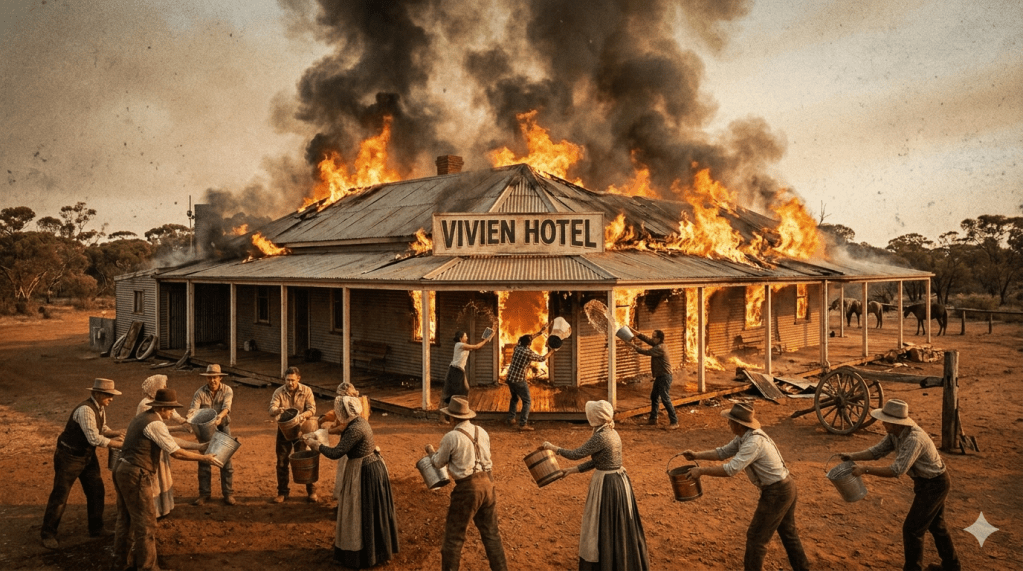
G’day, history buffs! Grab a cuppa and settle in for a yarn about one of the most audacious adventures to ever hit the Western Australian Wheatbelt. We’re talking about the “Adventurous Quartette”, four cheeky lads who decided that the Red Hill Orphanage in Midland Junction just wasn’t big enough for their grand ambitions.

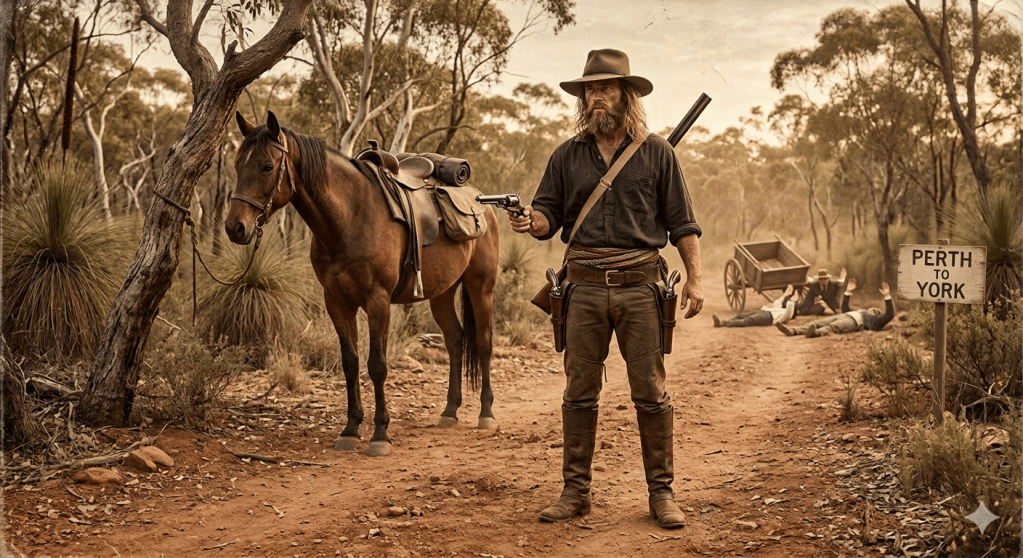
On a Tuesday in March 1909, these boys pulled a legendary vanishing act, setting their sights on the glitz and glamour of the Eastern Goldfields. Now, they didn’t have a luxury coach or a private car; they did it the hard way, tramping through the rugged WA bush on foot. Along the way, they became pint-sized bushrangers, raiding the camps of unsuspecting settlers to keep their bellies full as they followed the track towards the “rivers in the desert” promised by the Great Goldfields Water Supply Scheme.

Their epic trek took them all the way to Yerbillon, roughly 35 miles down the line from Southern Cross. Today, we know Yerbillon as the site of the mighty No. 6 Pump Station, a vital heartbeat in CY O’Connor’s Golden Pipeline, but back then, it was simply the perfect spot for our weary travellers to “jump” a goods train under the cover of night.

The boys managed to hitch a ride into Southern Cross, but their luck hit a snag when the train guard gave them the boot upon arrival. The guard didn’t actually realise he’d just intercepted Western Australia’s most wanted, and the “quartette” immediately began tramping back towards the goldfields.

Enter the heroes of our story: Sergeant Bishop and his two-wheeled task force. When word reached the station, the Sergeant despatched Constables Jones and Cleary on – wait for it – bicycles! Can you imagine the grit required to pedal through that red dirt in pursuit of justice?

The high-speed (well, 1909-speed) chase reached its climax near the Ghooli siding. While Ghooli would later be known for the impressive No. 7 Pump Station, on that particular Friday, it was the scene of a desperate dash for freedom. The lads tried to bolt when they saw the law approaching on their “iron steeds,” but the cyclists were far too smart for them.

Constable Jones managed to round up three of the boys and escorted them back to Southern Cross via another goods train that afternoon. But one little rebel remained at large! Constable Cleary had to put on his tracking hat and scout the scrub, eventually finding the fourth boy hiding out in the bush about a mile from Ghooli.

The adventure ended with a trip to the police court, where the boys faced charges for their orphanage escape and their “shopping sprees” at the settlers’ camps en route to Yerbillon. It wasn’t exactly the golden ending they’d hoped for, but you’ve got to admire the spirit of these four young explorers who turned the pipeline trail into their own personal adventure playground.


Sources

Escape from an Orphanage. (1909, March 13). The Murchison Times and Day Dawn Gazette (Cue, WA : 1894 – 1925), p. 3. Retrieved April 28, 2026, from http://nla.gov.au/nla.news-article233454026

National Trust Western Australia (n.d.) The Golden Pipeline. Retrieved 28 April 2026 from https://www.goldenpipeline.com.au/

The Mysteries of the Internet and the story of Shay Gap in Western Australia

The following article was published by Bruce Elder, of Aussie Towns, on 21 March 20181 and is published here with the permission of the author.

I love the way the algorithms of the internet find the most obscure information. In May, 2017, I wrote a Facebook entry on the non-town of Shay Gap.

The town has always fascinated me because when I first circumnavigated the continent in 1988 I found it and was amazed by its futuristic modernity. When I returned it was gone. Totally. Absolutely. I couldn’t find even a hint of the town. It was a reminder of just how unsentimental mining companies are. When a town is not needed … get rid of it.

Mercifully I still have photos I took in 1988. Look at the houses. They all look as though they were designed by an architect straight out of The Jetsons. Pure 1950s sci-fi with lots of ovoid windows and what looks like plastic. It was a town created by Mount Goldsworthy Mining Associates for workers in their iron ore mines. It was designed in 1970 by an architect named Lawrence Howroyd.

In 1973 it was written about in, of all places, the Canberra Times.2 The following eulogy explains its origins: “Shay Gap is perhaps the most imaginative attempt yet to beat the hostility, if not ferocity, of one of the most inhospitable parts of Australia; but a part that is also one of the richest iron-ore belts in the world.

Shay Gap is in the hot country. Its near-neighbours are Marble Bar and Goldsworthy. which in summer compete day after day to post the highest maximum temperatures on the continent. It lies 120 miles east of the Pilbara’s major iron-ore port, Port Hedland. “The Gap”, as its residents already call it, is built on powdery brown earth lying between low cliffs of red rock that seem to cradle the heat of the day long after the sun has gone down. The temperature can reach 50°C in summer.

Shay Gap is another company town; one of three built by Goldsworthy Mining, the Pilbara iron ore pioneer. Goldsworthy already had a reputation for making the Pilbara bearable for its employees. Among other things it was the first to introduce closed-circuit television. This device gave it a much lower staff turnover than any other Pilbara company and attracted married couples — more stable work units than itinerant young men looking for quick fortunes.

For the new town, the command — to Perth architect, Mr Lawrence Howroyd – was, in effect: “Put down a place in the desert which people will not only find bearable, but attractive”. The result at Shay Gap is what Mr Howroyd calls a “machine for living”, an expression which has overtones of 1984 but which, in fact, is meant to convey that men who are prepared to work the mines should not have to sweat out domestic discomfort when they are off-shift. The town has been designed on the basis that it is a community rather than a collection of individuals — recognition that people are driven by isolation into “togetherness”.

Because the design was not governed by suburban block by-laws, it could be adventurous by suburban standards. One of its revolutionary features is an underground trench that contains all the town’s basic services: irrigation, sewerage, power and telephone and television cables. There is nothing unsightly sticking out of the ground. Mr Howroyd describes the trench as an umbilical cord. There are other features that any progressive town planner would give his eye teeth to be able to implement.

The 101 houses (with as many as four bedrooms) are built in groups of 11 in such a way that people can walk in shade from any part of the town to any other. No resident has to walk more than 200 yards to any facility, including the shopping centre, the school and the club. The average distance anyone has to walk anywhere is 40 yards. Residents are also kept cool with an air-conditioning system based on a communal chilled-water plant. Each house taps the main that ring the town. In addition, each house is pressurised by a fan coil unit; because pressure inside is higher than it is outside, dust and most insects cannot enter.

Shay Gap homes c1988
photographed by the author, Bruce Elder

Another refinement is the irrigation system, which provides up to 60 inches of “rain” a year. The watering is done at night from high-level misting devices. The town is expected to develop a green, park-like appearance — an oasis of comfort in a desert.

The building of Shay Gap from the ground up presented a unique opportunity for eliminating the motor car from living areas. The town is completely free of vehicles, yet each house has a lock-up garage. Small electric vehicles are used to provide such services as rubbish disposal.”

The end result was that Lawrence Howroyd won an Award of Merit in 1974 from the Prince Philip Prize for Australian Design.

But, and this is always the moral of the story of mining towns, by 1994 it had been totally demolished and removed. When I returned there was nothing. Absolutely nothing to remind people that once there was an award winning, experimental town in the desert. The transience and unsentimental capitalism of mining. Who cares about the inhabitants. The mine is closed and so is the town.

Now, here’s the mystery. Yesterday some people who lived in Shay Gap actually found my FB entry. They had such fond memories:

Jackie Dimovska wrote: “This was a really interesting read. Best little town to grow up in. Still have dreams about it.”

Then Desmond Leong added “Had the best childhood ever growing up there.”

And Linda Skinner wrote: Still miss the town memories I will have forever and sadness that it’s gone yes a very unique beautiful community town and was great raising my children and will never be forgotten”. With lots of heart emojis.

That makes these Facebook entries worthwhile. I am so glad it has touched people deeply. Maybe I should include it in Aussie Towns so people can remember.


  1. Elder, Bruce (2018). https://www.facebook.com/share/p/17LEGRnRye/ ↩︎
  2. Oasis of comfort (1973, June 9). The Canberra Times (ACT : 1926 – 1995), p. 19. Retrieved April 16, 2026, from http://nla.gov.au/nla.news-article110713812 ↩︎

King George’s Dictionary

Editor’s Note: the following was extracted from an article published in The Wagin Argus and Arthur, Dumbleyung, Lake Grace Express in 1925.1 Some of the names in the article may be completely unknown to us now, but they have been confirmed from the original text. If you have any information about any of these or other names, please let us know – https://ghostswa.au/contact/.

For many years, the origins of the names in our district were shrouded in mystery or based on folklore. For example, Wagin was once thought by some to mean “place of emus,” while an old resident even suggested a humorous anecdote about a man chasing his wife and shouting “Way, Gin”. However, thanks to the courtesy of King George, we now have access to a dictionary of authentic meanings for these locations.

These names provide a fascinating window into the history and geography of the region, often describing the physical landscape, native wildlife, or traditional tools and activities. For instance, while many thought Dumbleyung meant “place of kangaroos,” King George clarifies that it actually means “large basin,” a very appropriate description for the lake itself.

Below is a compiled list of these place names and their traditional meanings as recorded from King George’s dictionary:

Place NameMeaningAdditional Information / Location
BallayingComing.
BanderiugSmell something.The residence of Mr. Ualir.
BockarringMaking kangaroo clothes.Located to the south west of the Lake.
BoolunallongCome out.
BunkinSwelled up.The residence of Mr. J. Cronin Senr, where opossums were once plentiful.
CoblinineStomach.Refers to the Coblinine River which runs into Dumbleyung Lake.
CollanillingNavel of the stomach.
ComelberrupCut out opossums from the trees.The old place of the Hamilton Bros.
CooarringNoise in the stomach.
DongolockingDropping something.
DoradinHard clay for holding water.
DumbleyungLarge basin.Considered an appropriate name for the lake; it was previously thought to mean “place of kangaroos”.
DwelyerdineFog.
JinarninLooking.
JulakinDust.
KipperingThe dancing place for natives.
Lake GundaringA broken native shield.
MeinmugginWild chillies.
MerilupThe place where natives obtained Wonuera wood.This wood was used for making sticks to throw spears.
NnuaginYou sit down.Located on the eastern side of Dumbleyung Lake.
PingarningScratching the ground and standing still.The residence of Mr. Taylor in East Dumbleyung.
TarinA hollow.Associated with Tarin Rock, though the author notes no hollow is known there.
TraysurinA kind of school bag made of skins.
WaginNamed after the Wagip trees that grow in swamps.King George states these trees were used for making shields, refuting other meanings like “place of emus”.
WalyurinTo clap hands.
WoaginEagle hawk.Located on the Albany road at Beaufort River.
WoolkabinCalf of the leg.A gully situated on the south of the Lake.
YualdingSnap in two.Located near Mr. Kersley’s on Dumbleyung Lake.

  1. THE MEANING OF NATIVE NAMES. (1925, September 18). The Wagin Argus and Arthur, Dumbleyung, Lake Grace Express (WA : 1924 – 1954), p. 3. Retrieved April 4, 2026, from http://nla.gov.au/nla.news-article257758335 ↩︎

The Mystery of the Maroon Plant

Editor’s Note: This article is taken from an account in The Daily News, 11 Jan 1947.1

In the mid-1930s, the Murchison district was home to a story that would later captivate government scientists and locals alike. It concerns an aged Aboriginal man named Neebrong and his extraordinary recovery from a debilitating illness.

In 1936, Neebrong was admitted to a hospital in Dalwallinu, where doctors delivered a devastating diagnosis: he was suffering from what was believed to be cancer of the tongue. The clinical description was harrowing; his tongue was described as a “red, raw, discharging mass,” and the disease had progressed to the point where he could no longer speak. The surgeons’ verdict was clear—his tongue would have to be surgically removed.

Faced with the prospect of losing his voice, Neebrong took a bold path. He escaped from his hospital bed and returned to the familiar country of Payne’s Find. Back in the scrub, he began a course of self-treatment using the stems of a native plant known to the local people as the “maroon” plant.

The results were startling. Just three months after his flight from the hospital, Neebrong reappeared with his speech fully restored. To the amazement of those who saw him, his tongue had returned to a nearly normal state, bearing only a few scars as evidence of his previous condition. While Neebrong passed away three years later, Constable A. T. Monck, who later reported the case, noted that his death was due to entirely different causes.

The story didn’t end in the Murchison. By 1947, the Western Australian Drug Panel, chaired by Government Botanist C. A. Gardiner, began a formal investigation into the “maroon” plant. Identified as Scaevola spinescens, the plant was prolific around Payne’s Find. Local white residents were so convinced by what they had witnessed that they provided signed statements to the authorities to assist the investigation.

Scaevola spinescens2

While the Drug Panel urged “extreme caution”, noting that it had not been scientifically proven that the disease was true cancer or that the plant was the definitive cure, the story of Neebrong remains a powerful testament to the traditional knowledge of the land. For family and local historians, it serves as a reminder of the cultural mysteries that linger in the red dust of our outback history.


  1. Native’s Story Of Cure By Plant (1947, January 11). The Daily News (Perth, WA : 1882 – 1955), p. 10 (FIRST EDITION). Retrieved April 4, 2026, from http://nla.gov.au/nla.news-article78216938 ↩︎
  2. Tucker Bush (2020). Maroon Bush – Scaevola Spinescens. Retrieved 4 Apr 2026 from https://tuckerbush.com.au/maroon-bush-scaevola-spinescens/ ↩︎

Wondering about where to find a ghost town?

Here on our website we have a great resource called WA’s Ghost Towns by Location. This document lists all communities included in our project (to date) by Administrative Region and Local Government Authority. At the bottom of the list, you can find a list of communities that are still being researched.

If you are planning a road trip and want to visit some Ghost Towns on the way, you can search by region or by shire name and find what is around you.

Snip of two shires in our Ghost Towns by Location List

If you want a view of how things looked a century ago, here’s a map of Western Australia by Locality produced in 1934.

S.C. Ward & Co., issuing body. (1934). Locality map of Western Australia showing gold fields and mining centres Retrieved March 22, 2026, from http://nla.gov.au/nla.obj-1485547591

On This Day – 16 Mar 1896

Lennonville c18961

In the mid-1890s, the Murchison goldfields of Western Australia were a landscape of frantic industry and hope. However, in March 1896, the mining community of Lennonville, near Mount Magnet, was struck by tragedy at the New Chum Mine. What began as a typical shift ended in a “phenomenally heavy” storm that claimed the lives of three men and left a community in mourning.2 3

The disaster unfolded on a Tuesday afternoon when a violent storm broke over the district. The mine, which lacked adequate surface drainage and sat in the direct course of a natural water flow, was defenceless. Within just fifteen minutes of the rain starting, a torrent poured down the main shaft. The water rose an incredible 60 to 80 feet in less than an hour, extinguishing the boiler fires and stopping the engines.4

At the time, six men were working underground. On the No. 3 level, the lowest part of the mine, George Henderson and his mate William Campbell were suddenly engulfed. In a desperate bid for life, Henderson managed to climb the sets through “torrents of water” to reach the No. 2 level. Exhausted and battered, he survived, but Campbell was not so fortunate; he failed in his attempt and fell back into the rapidly rising floodwaters. Meanwhile, at the No. 2 level, Arthur Daniels and Roger Cook rushed for the cage, but it was not there. Whether the cage had been raised prematurely or had fallen, the two men stepped into the void and fell to the No. 3 level, where they drowned.5 6 7 8

The three victims were all men from the eastern colonies who had come to the Murchison seeking their fortunes. Roger Cook (also referred to as Arthur or Bolger Cook) was the only married man of the three, leaving behind a wife and children in Newcastle, New South Wales. William Campbell hailed from Mittagong, New South Wales. Arthur Daniels was from Linton, near Ballarat in Victoria. He had only recently arrived on the goldfields with his brother who was in Cue at the time and tragically learned of his sibling’s death only after reading the local newspaper.9 10

The aftermath was a grim, 48-hour operation of constant pumping and baling to recover the bodies. When the water was finally lowered, the miners were found “earthed up” by the debris. A coroner’s inquest, held by Mr Raymond Gee, J.P., eventually returned a verdict of accidental drowning, or “misadventure,” clearing the management of legal fault. However, the disaster sparked significant local comment regarding mine safety, particularly as the Inspector of Mines, Frank Reed, noted he had previously warned that the requirements of the Mines Regulation Act “must be carried out”.11

The victims were interred at the Mount Magnet cemetery. Their funeral was a somber affair, attended by over 300 residents and fellow miners, reflecting the deep “gloom” that the disaster had cast over the entire Murchison district.12


Sources

Editor’s note: There are more than 650 newspapers reports in Trove of the New Chum Mining Disaster.

  1. State Library of Western Australia (n.d.) Mines and Miners on the Cue and Mt Magnet Goldfields: An unidentified mine, probably at Lennonville. Retrieved 17 Mar 2026 from https://encore.slwa.wa.gov.au/iii/encore/record/C__Rb4539485 ↩︎
  2. FATAL ACCIDENT AT THE NEW CHUM MINE. (1896, March 21). The Murchison Times and Day Dawn Gazette (Cue, WA : 1894 – 1925), p. 3. Retrieved March 17, 2026, from http://nla.gov.au/nla.news-article233239175 ↩︎
  3. COUNTRY. (1896, March 19). The West Australian (Perth, WA : 1879 – 1954), p. 5. Retrieved March 17, 2026, from http://nla.gov.au/nla.news-article3083722 ↩︎
  4. TELEGRAMS. (1896, March 20). The Inquirer and Commercial News (Perth, WA : 1855 – 1901), p. 9. Retrieved March 17, 2026, from http://nla.gov.au/nla.news-article72369774 ↩︎
  5. COUNTRY. (1896, March 19). The West Australian (Perth, WA : 1879 – 1954), p. 5. Retrieved March 17, 2026, from http://nla.gov.au/nla.news-article3083722 ↩︎
  6. MURCHISON (1896, March 21). The Australian Advertiser (Albany, WA : 1888 – 1897), p. 3. Retrieved March 17, 2026, from http://nla.gov.au/nla.news-article260681927 ↩︎
  7. ACCIDENT AT THE NEW CHUM MINE, MURCHISON. (1896, March 28). Northern Public Opinion and Mining and Pastoral News (Roebourne, WA : 1894 – 1902), p. 3. Retrieved March 17, 2026, from http://nla.gov.au/nla.news-article255734266 ↩︎
  8. mindat.org (n.d.) New Chum Gold Mine, Boogardie Goldfield, Mount Magnet, Mount Magnet Shire, Western Australia, Australia. Retrieved 17 Mar 2026 from https://www.mindat.org/loc-264772.html ↩︎
  9. MURCHISON (1896, March 21). The Australian Advertiser (Albany, WA : 1888 – 1897), p. 3. Retrieved March 17, 2026, from http://nla.gov.au/nla.news-article260681927 ↩︎
  10. FATAL ACCIDENT AT THE NEW CHUM MINE. (1896, March 21). The Murchison Times and Day Dawn Gazette (Cue, WA : 1894 – 1925), p. 3. Retrieved March 17, 2026, from http://nla.gov.au/nla.news-article233239175 ↩︎
  11. ACCIDENT AT THE NEW CHUM MINE. (1896, April 15). Geraldton Advertiser (WA : 1893 – 1905), p. 3. Retrieved March 17, 2026, from http://nla.gov.au/nla.news-article252764995 ↩︎
  12. MOUNT MAGNET MINING ACCIDENT. (1896, March 27). The Inquirer and Commercial News (Perth, WA : 1855 – 1901), p. 4. Retrieved March 17, 2026, from http://nla.gov.au/nla.news-article72378881 ↩︎

An extraordinary life

Infographic generated using NotebookLM
Christine Harris 2026

Madame Eugenie Vauthier, a remarkable woman whose life spanned more than a century and two continents, passed away in Kalgoorlie just before Christmas in 1935.1 Born in Paris, likely in the early 1830s, she was educated at the Sisters of Mercy in her home city.2 Her family history was marked by a sudden tragedy in 1870 when both her father, Joseph Vauthier, and her mother died within the same week. Despite this personal loss, she remained in Paris during the Franco-Prussian War, where she witnessed the harrowing Siege of Paris. During this conflict, she served as an army nurse, tending to casualties including a then-humble soldier who would later become the eminent General Pau. She is noted to have nursed him when he famously lost his arm.3 4

Following the conclusion of the war, she sought a new life and sailed for Australia in 1871. The journey aboard the sailing vessel Sepia was an arduous one, taking five months to reach its destination. Upon her arrival, she migrated to Queensland, where she found employment as a governess at a station homestead in Port Mackay for five years. This role preceded a long and adventurous career at sea. For twenty-eight years, she worked as a stewardess for the A.U.S.N. company, serving on coastal steamers that plied the waters between Sydney, Brisbane, and Melbourne. Her life as a mariner was not without peril, as she survived three separate shipwrecks. She took great pride in this vocation; even in her final days in the hospital, she kept near her a perfectly preserved jacket she had worn as a chief stewardess, adorned with dozens of bright buttons and gaudy braid. Furthermore, her travels took her far beyond Australian shores, including a voyage from Sydney to the Klondyke during the height of the gold rush.5 6

The discovery of gold at Coolgardie in the early 1890s eventually drew her footsteps toward Western Australia. Her arrival in the West was brief; she reportedly spent only a single hour in Perth and never returned to the capital city again. She moved almost immediately to Bulong, which at that time was a prosperous alluvial field. The trip to the goldfields was not without incident, as the horses drawing her coach bolted during the journey. Once settled in Bulong, she initially worked as a cook at a local restaurant. She eventually acquired and maintained the Globe Hotel until the district’s mining industry began to decline.7 8

Madame Vauthier spent the remainder of her long life in Bulong, eventually moving into the town’s old schoolhouse, which she purchased from the Education Department. Despite her advancing years, she remained exceptionally active well into her nineties. She spent her time tending to a garden and a flock of fowls, even carrying the water needed for her vegetables and fruit trees from a nearby dam in tins. Her longevity was attributed to a simple life and a diet that prominently featured fruit, particularly bananas. Even at the age of one hundred, she continued to use a treadle sewing machine and retained her sight, hearing, and memory. Throughout her decades on the goldfields, she remained a staunch supporter of Great Britain and was a keen worker for the Red Cross during the Great War.9 10 11


Sources

  1. PERTH (1936, January 11). The Australasian (Melbourne, Vic. : 1864 – 1946), p. 9 (METROPOLITAN EDITION). Retrieved March 14, 2026, from http://nla.gov.au/nla.news-article141768020 ↩︎
  2. ITEMS OF NEWS (1933, April 18). Western Argus (Kalgoorlie, WA : 1916 – 1938), p. 18. Retrieved March 14, 2026, from http://nla.gov.au/nla.news-article34615273 ↩︎
  3. CENTENARIAN DIES. (1935, December 23). The West Australian (Perth, WA : 1879 – 1954), p. 21. Retrieved March 14, 2026, from http://nla.gov.au/nla.news-article32961766 ↩︎
  4. PEEPS at PEOPLE (1927, March 13). Sunday Times (Perth, WA : 1902 – 1955), p. 14. Retrieved March 14, 2026, from http://nla.gov.au/nla.news-article58325242 ↩︎
  5. PERTH (1936, January 11). The Australasian (Melbourne, Vic. : 1864 – 1946), p. 9 (METROPOLITAN EDITION). Retrieved March 14, 2026, from http://nla.gov.au/nla.news-article141768020 ↩︎
  6. Woman of 104 Who Nursed General Pau in Franco-Prussian War Lies Dying in Hospital (1935, December 26). The Telegraph (Brisbane, Qld. : 1872 – 1947), p. 13 (LATEST FINAL CABLES). Retrieved March 14, 2026, from http://nla.gov.au/nla.news-article179943054 ↩︎
  7. CENTENARIAN DIES. (1935, December 23). The West Australian (Perth, WA : 1879 – 1954), p. 21. Retrieved March 14, 2026, from http://nla.gov.au/nla.news-article32961766 ↩︎
  8. CENTENARIAN PASSES (1935, December 23). The Kalgoorlie Miner (WA : 1895 – 1954), p. 2. Retrieved March 14, 2026, from http://nla.gov.au/nla.news-article95010218 ↩︎
  9. PEEPS at PEOPLE (1927, March 13). Sunday Times (Perth, WA : 1902 – 1955), p. 14. Retrieved March 14, 2026, from http://nla.gov.au/nla.news-article58325242 ↩︎
  10. CENTENARIAN DIES. (1935, December 23). The West Australian (Perth, WA : 1879 – 1954), p. 21. Retrieved March 14, 2026, from http://nla.gov.au/nla.news-article32961766  ↩︎
  11. CENTENARIAN PASSES (1935, December 23). The Kalgoorlie Miner (WA : 1895 – 1954), p. 2. Retrieved March 14, 2026, from http://nla.gov.au/nla.news-article95010218 ↩︎

Hawk’s Nest – 14 Mar 1896

On this day in 1896, John Aspinall was struck by lightning at his camp at Hawk’s Nest.1 2 3

For those with an interest in Australian genealogy and colonial history, the late 19th century represents a period of feverish movement and profound personal sacrifice. While the history books often focus on the vast wealth extracted from the earth, the true story of the gold rushes is found in the “lonely graves” scattered across the arid interior. One such story is that of John “Johnny” Aspinall, a young New Zealander whose life and meticulously kept diary provide a poignant window into the hardships of 1896.4 5 6

Born in 1873 at Skippers Point, Otago, Johnny was no stranger to the mining life. His father, also named John, was an English prospector who had sought fortune in Bendigo before settling in New Zealand’s rugged mountains. Johnny was one of nine children, growing up in a household where gold and grit were daily realities. Following his father’s death in 1890, Johnny and his brothers worked the family claim before the allure of the Western Australian “Great Boom” beckoned.

Leaving New Zealand in February 1895, Johnny’s journey to the West was a series of arduous legs. After arriving in Fremantle via Melbourne and Adelaide, he boarded a crowded train to Southern Cross—a seventeen-hour trip where refreshments consisted of “tough” chops served “bush style”. By late March, he had reached Coolgardie, then the bustling heart of the goldfields.

Infographic created using NotebookLM
Christine Harris (2026)

To traverse the unforgiving landscape, Johnny demonstrated the practical resourcefulness common to successful prospectors of the era. He concluded a deal with Gunny Khan for two Australian-bred camels at the significant price of £134, noting they were hardier than other breeds. Accompanied by an Afghan driver named Amzula, he set out for the northern fields, documenting his observations of the “foreign” character of Perth and the daily battles with heat, flies, and water scarcity. His diary captures the desperation of the time, including instances of using a mere teaspoon of water to wash a plate and the omnipresent threat of typhoid.

While Johnny was pursuing his “golden quest” in the West, the broader Australian colonies were in a state of constant flux. In Queensland, the Warwick Argus reported on everything from earthquake shocks in Cairns to the introduction of typewriters in Sydney police courts to facilitate the taking of depositions. This was a world transitioning into modernity, yet Johnny remained at the mercy of the elements.7

Tragedy struck in March 1896 at Hawks Nest, near Laverton. On the 14th of March, Johnny’s body was discovered just 100 yards from his camp. The scene was harrowing: he was lying on his face with his clothes partially ripped away and one boot missing. An investigation by Constable Bradley of Menzies confirmed the cause of death was a lightning strike. In a cruel twist of historical irony, Johnny’s final diary entry, dated the 13th of March, mentioned that thunderstorms were in the area.8 9

For nearly a century, Johnny’s story remained buried with him in the red dust. It was not until February 1980 that prospector Alf Thompson rediscovered the grave and its fading inscription: “Sacred to the memory of JOHN ASPINALL… Gone but not forgotten”. Through Thompson’s “detective work,” contact was made with the Aspinall family in New Zealand, leading to the publication of Johnny’s diary under the title And Some Found Graves. Today, Johnny’s legacy endures as a vital primary source for historians, reminding us of the thousands who sought a future in the goldfields but found only a quiet, nameless rest.


Sources
  1. Outback Graves Markers, 2025. John ASPINALL. Retrieved from https://outbackgraves.org/burial-records/person/1623 on 20 Jun 2025. ↩︎
  2. COUNTRY. (1896, April 6). The West Australian (Perth, WA : 1879 – 1954), p. 5. Retrieved March 7, 2026, from http://nla.gov.au/nla.news-article3085609 ↩︎
  3. NEWS of the WEEK. (1896, April 11). The Western Australian Goldfields Courier (Coolgardie, WA : 1894 – 1898), p. 8. Retrieved March 7, 2026, from http://nla.gov.au/nla.news-article253054912 ↩︎
  4. National Trust of Western Australia, n.d. The Golden Pipeline: John Aspinall. Retrieved 15 Mar 2026 from https://www.goldenpipeline.com.au/the-people/john-aspinall/ ↩︎
  5. Thompson, A.J. (2019). The Goldfields Diary of John Aspinall – And found some graves. Retrieved 15 Mar 2026 from https://www.caseytours.com.au/news/the-goldfields-diary-of-john-aspinall-and-some-found-graves/ ↩︎
  6. ibid : retrieved 15 Mar 2026 from https://www.hesperianpress.com/index.php/booklist/titles-a-d/a-titles/31-and-some-found-graves ↩︎
  7. WA Now and Then (n.d.) The Folklore of Western Australia: John Aspinall. Retrieved 15 Mar 2026 from https://www.wanowandthen.com/Folklore/0081.html ↩︎
  8. NEWS of the WEEK. (1896, April 11). The Western Australian Goldfields Courier (Coolgardie, WA : 1894 – 1898), p. 8. Retrieved March 15, 2026, from http://nla.gov.au/nla.news-article253054912 ↩︎
  9. ibid Thompson: refers to thunderstorms. ↩︎

Frontier Justice

Image created by Nano Banana (2026)

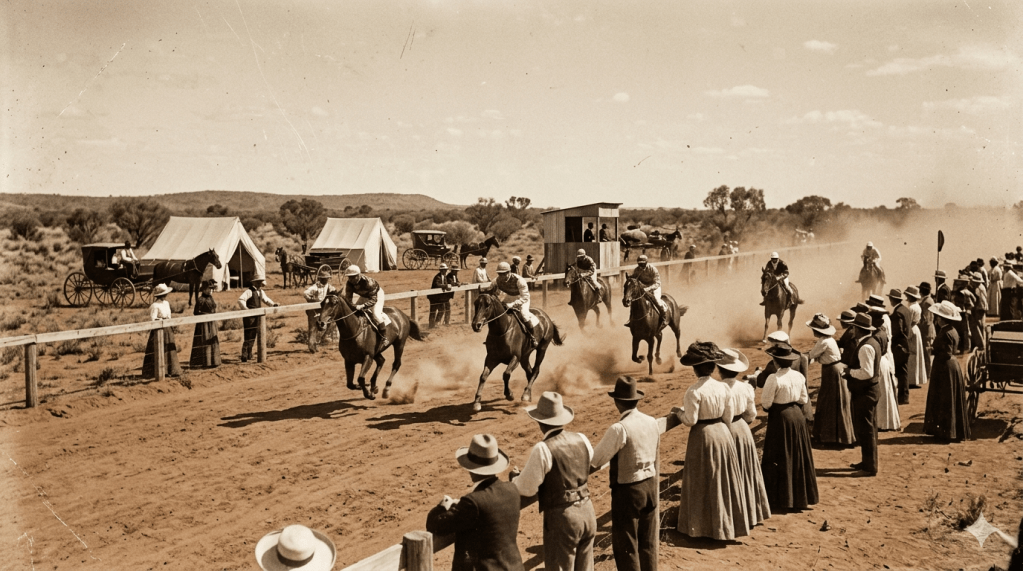
In the dusty heart of the North Eastern Goldfields, 1896 was a year defined by gold fever and a volatile “wild west” atmosphere. While Niagara is often remembered for its unique four-corner hotels and the ambitious Niagara Dam, new archival reports from the Kalgoorlie Miner1 reveal a darker side to the settlement: a chilling account of frontier justice and a near-lynching.

In May 1896, the town was “periodically given over to the mob” due to a complete lack of police protection. The tension boiled over when a “scoundrel” attempted to break into a local barmaid’s bedroom. When a bystander intervened, the intruder began hurlng bottles with “terrific force”. One bottle shattered against a door, sending a fragment into the barmaid’s eye; a doctor later confirmed the eye would be lost.

The community’s reaction was swift and brutal. A mob seized the man, placing a rope around his neck in a determined attempt to strangle him. The only thing that saved the perpetrator from a full lynching was a lack of a suitable place to suspend the rope. Instead, the crowd turned to physical violence, kicking the man nearly to death. In a final act of cruelty, one onlooker forced water down the victim’s throat to prove he was feigning death rather than actually deceased.

This incident highlights the raw, ungoverned nature of Niagara before formal law was established. With the Menzies police taking no action and no local arrests made, the town was left to its own devices. Such stories of “bush justice” provide a haunting layer to the history of this now-abandoned ghost town, proving that life in the goldfields was as dangerous as it was potentially lucrative.


Source

  1. Outrage and Attempted Lynching. (1896, May 8). The Kalgoorlie Miner (WA : 1895 – 1954), p. 3. Retrieved March 10, 2026, from http://nla.gov.au/nla.news-article87864482 ↩︎

20 New Ghost Towns

1 March 2026 is the launch of Phase 6 of the project and 20 new ghost communities have been added to the list of towns that are being actively researched.

If you know anything more about any of these places, or any others on our please, please contact us via our contact page. And if you find anything that you think is incorrect on any of our pages, we need to know!!

And don’t forget to subscribe to this page to receive updates on the project.