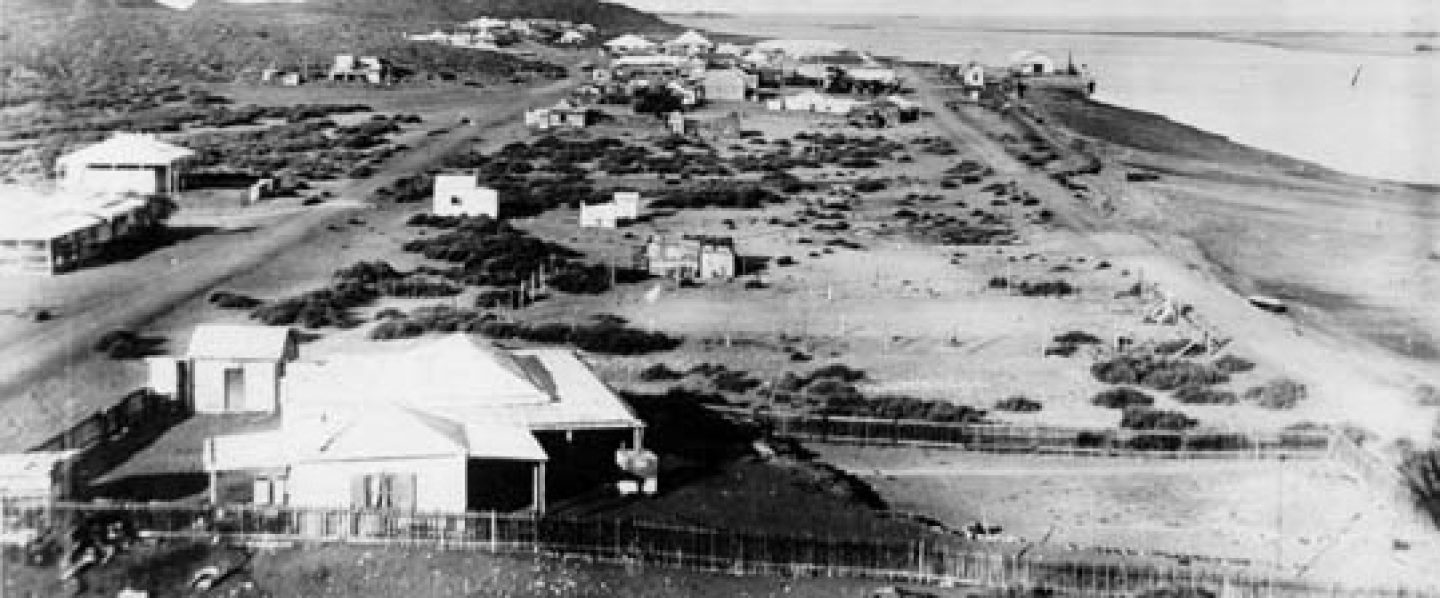
For many years, the origins of the names in our district were shrouded in mystery or based on folklore. For example, Wagin was once thought by some to mean “place of emus,” while an old resident even suggested a humorous anecdote about a man chasing his wife and shouting “Way, Gin”. However, thanks to the courtesy of King George, we now have access to a dictionary of authentic meanings for these locations.
George Dinah, widely known as King George, was a prominent and respected figure in the Great Southern Districts who served as the King of the Aboriginals. He was officially crowned in Wagin approximately ten or more years before his passing in 1926. At the time of his death, his age was estimated to be around 80.
King George was a man of the Roman Catholic faith, having been baptized in the church and married at Williams by a traveling Bishop. He was a devoted family man, survived by his wife, three sons, and four daughters. Even in his later years, he remained active in manual labor, working on a clearing contract at Boyalling Estate in West Wagin, which is where he passed away on July 2, 1926. His funeral was held the following Sunday, July 4, and was officiated by Rev. Fr. O’Reilly.1
Beyond his local standing, his cultural legacy is preserved through the dictionary of Aboriginal place names he provided for the district. He offered authentic corrections to common misconceptions, such as clarifying that Wagin was named after the Wagip trees found in swamps—used for making shields—rather than the emu. He also noted that Dumbleyung properly means “large basin,” describing the physical geography of the lake.
These names provide a fascinating window into the history and geography of the region, often describing the physical landscape, native wildlife, or traditional tools and activities. For instance, while many thought Dumbleyung meant “place of kangaroos,” King George clarifies that it actually means “large basin,” a very appropriate description for the lake itself.2
Below is a compiled list of these place names and their traditional meanings as recorded from King George’s dictionary:
| Place Name | Meaning | Additional Information / Location |
|---|---|---|
| Ballaying | Coming. | |
| Banderiug | Smell something. | The residence of Mr. Ualir. |
| Bockarring | Making kangaroo clothes. | Located to the south west of the Lake. |
| Boolunallong | Come out. | |
| Bunkin | Swelled up. | The residence of Mr. J. Cronin Senr, where opossums were once plentiful. |
| Coblinine | Stomach. | Refers to the Coblinine River which runs into Dumbleyung Lake. |
| Collanilling | Navel of the stomach. | |
| Comelberrup | Cut out opossums from the trees. | The old place of the Hamilton Bros. |
| Cooarring | Noise in the stomach. | |
| Dongolocking | Dropping something. | |
| Doradin | Hard clay for holding water. | |
| Dumbleyung | Large basin. | Considered an appropriate name for the lake; it was previously thought to mean “place of kangaroos”. |
| Dwelyerdine | Fog. | |
| Jinarnin | Looking. | |
| Julakin | Dust. | |
| Kippering | The dancing place for natives. | |
| Lake Gundaring | A broken native shield. | |
| Meinmuggin | Wild chillies. | |
| Merilup | The place where natives obtained Wonuera wood. | This wood was used for making sticks to throw spears. |
| Nnuagin | You sit down. | Located on the eastern side of Dumbleyung Lake. |
| Pingarning | Scratching the ground and standing still. | The residence of Mr. Taylor in East Dumbleyung. |
| Tarin | A hollow. | Associated with Tarin Rock, though the author notes no hollow is known there. |
| Traysurin | A kind of school bag made of skins. | |
| Wagin | Named after the Wagip trees that grow in swamps. | King George states these trees were used for making shields, refuting other meanings like “place of emus”. |
| Walyurin | To clap hands. | |
| Woagin | Eagle hawk. | Located on the Albany road at Beaufort River. |
| Woolkabin | Calf of the leg. | A gully situated on the south of the Lake. |
| Yualding | Snap in two. | Located near Mr. Kersley’s on Dumbleyung Lake. |
- Death of King George (1926, July 9). The Wagin Argus and Arthur, Dumbleyung, Lake Grace Express (WA : 1924 – 1954), p. 5. Retrieved May 19, 2026, from http://nla.gov.au/nla.news-article257766073 ↩︎
- THE MEANING OF NATIVE NAMES. (1925, September 18). The Wagin Argus and Arthur, Dumbleyung, Lake Grace Express (WA : 1924 – 1954), p. 3. Retrieved April 4, 2026, from http://nla.gov.au/nla.news-article257758335 ↩︎

