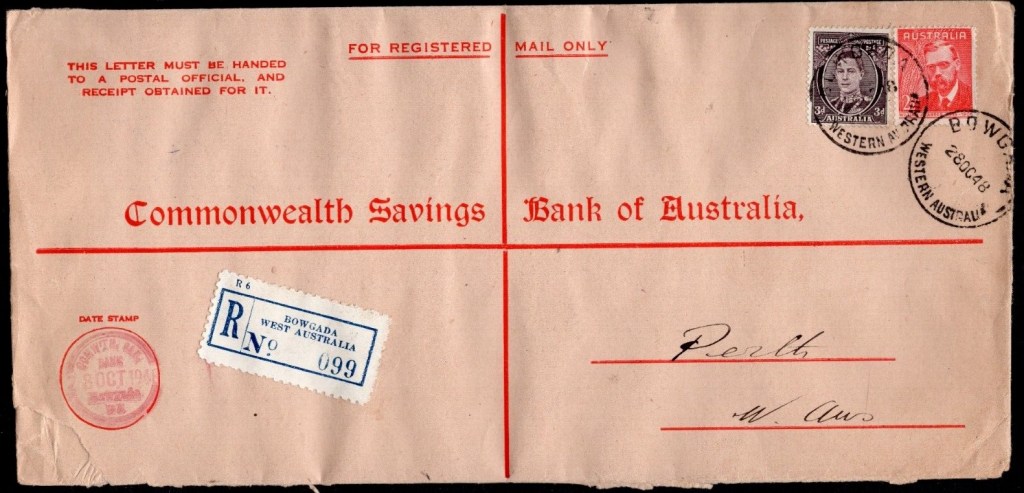
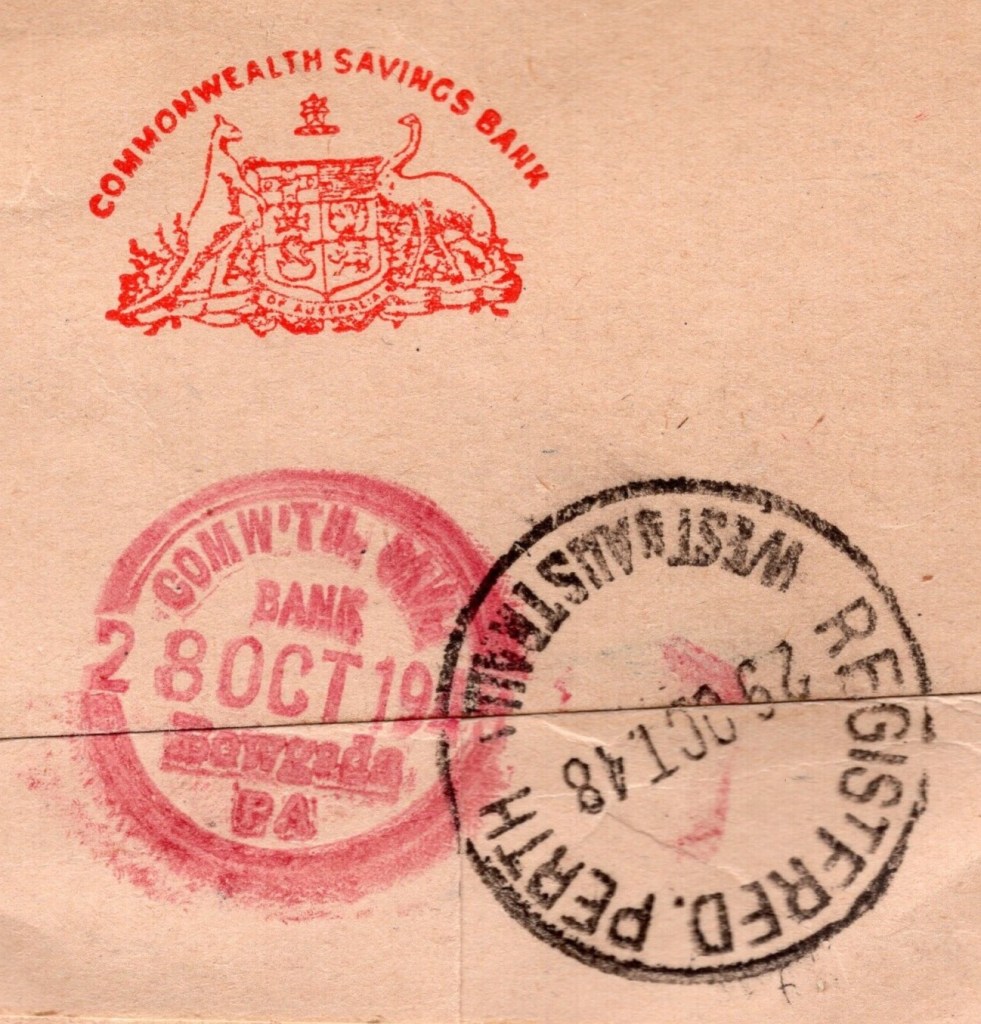
Crime in Bowgada

For a small place, a lot went on in Bowgada (aka Chubble or Koolanooka), from the day-to-day activities of the CWA, football or cricket games and fancy dress parties to a very publicised murder in April of 1927.

The details given by witnesses, including the deceased’s son, add complex issues to the case. For those interested in criminal matters and family relationships, this sad occurrence out at Bowgada may prove an interesting study. The prison record of the accused (and the psychology of his behaviour) is also remarkable.

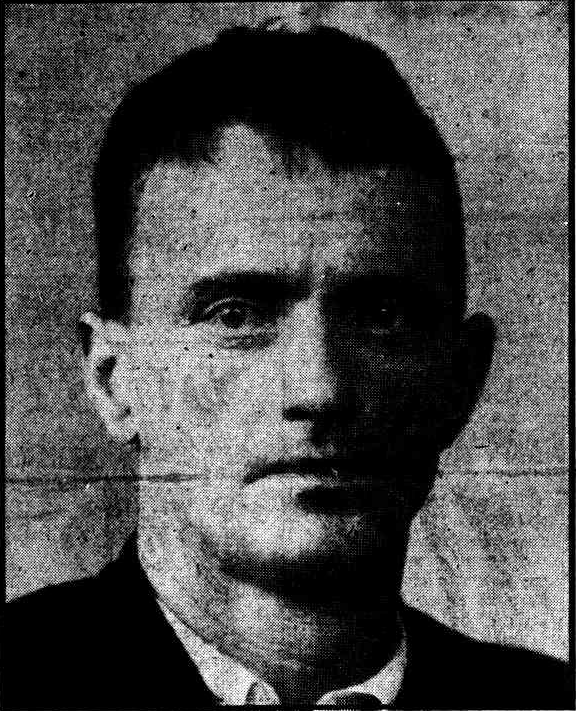
Convict No.12837 – Arthur Alfred Martin1

Arthur Albert Martin stood trial for the wilful murder of Bowgada farmer, Terbert (or Turbest and other variations) Horace Currell. 2 After two trials, Mr Martin was acquitted of murder. 3 However, he was back in Court the next year for horse stealing, and sentenced to three years hard labour, then to be detained at the Governors’ pleasure. It appears he was already in prison on other matters, when the horse stealing was revealed. Interestingly, Mr Martin asked for the trial to be adjourned, in order to obtain council, but this was refused, and so was his subsequent appeal to the High Court.

The Parole Board let him out – but took him back over a stolen car. In 1938 he made headlines again when he broke out of Fremantle Gaol’s reformatory section by scaling a wall and using smuggled hacksaw blade to cut through a bar in his cell. Not only that, but he was at large for at least two weeks, and fronted up to the ‘Daily News’ office with his story 4 – and at his request, the paper appears to have given him an hours’ start before informing the Police – this caused considerable comment. 5

Given parole again, he was returned for theft in Brookton 1941 (he asked to be able to join the Army). Then in 1942, Mr Martin was on the run again along with 16 others: this time escaping from Prison Camp Bartons Mill, apparently while drunk. He was found at Government Gardens sleeping and sentenced to six months extra on top of his indefinite sentence. In 1949 he escaped again and was returned.

And it was not the only death by shooting in the Bowgada either. Also in 1928, John Hyland was shot by Edward Patrick Minorgan over a dispute about a dog – and Mr Hyland died from gangrene as a result. 6 Mr Minorgan was convicted of manslaughter and sentenced to three years imprisonment with hard labour.


Sources

  1. HUNTED MAN BREAKS HIS SILENCE (1938, February 4). The Daily News (Perth, WA : 1882 – 1955), p. 1 (CITY FINAL). Retrieved January 27, 2025, from http://nla.gov.au/nla.news-article83425027 ↩︎
  2. BOWGADA TRAGEDY (1927, August 20). Truth (Perth, WA : 1903 – 1931), p. 2. Retrieved January 27, 2025, from http://nla.gov.au/nla.news-article208710437 ↩︎
  3. The Bowgada Tragedy (1927, August 20). The Albany Advertiser (WA : 1897 – 1954), p. 3. Retrieved January 27, 2025, from http://nla.gov.au/nla.news-article70166798 ↩︎
  4. ibid. ↩︎
  5. Hypocrisy (1938, February 6). Sunday Times (Perth, WA : 1902 – 1954), p. 2. Retrieved January 27, 2025, from http://nla.gov.au/nla.news-article58802258 ↩︎
  6. FATAL SHOOTING OF JOHN HYLAND (1928, February 11). Truth (Perth, WA : 1903 – 1931), p. 7. Retrieved January 27, 2025, from http://nla.gov.au/nla.news-article208138001 ↩︎

Bowgada

The following information was posted on the People of Western Australia’s Ghost Towns Project facebook group1 on 7 Jan 2024 by group member, Neal Winship. Thank you Neal for permission to reproduce the material here.

Located north of Perenjori and immediately to the east of the Wubin-Mullewa Highway and the railway line, the site of the Bowgada Townsite is marked by a small timber sign. All that remains of the town are the ruins of a house, a shed, some foundations, tanks and several established trees.

Settlement at Bowgada commenced from c1910. Jim Campbell 2 and his eldest son Harry were the first to settle in the area and others soon followed, especially after roads were cleared. The townsite was gazetted as Chubble in 1913 but changed to Bowgada in 1914. Bowgada is an Indigenous Australian word used to describe a bush that is found in the local area from the Acacia ramulo. The town was originally a railway siding for cropping and stock, two industries that still thrive in the area.3

After “a drawn out struggle with the Education Department a small school was established at Bowgada and in 1924 Jim Chomley’s Store and Post Office opened. The store, later known as Maurice’s Store, a timber and iron building with a residence to the rear, burnt down c1932. An Agricultural Society was formed in 1926 which assisted in securing a free grant for land for a sports oval and tennis court. A Hall was built using voluntary labour where many social activities were held. The Perenjori Co-operative Co. opened a branch in 1928, however business slumped when the Depression hit and the store was sold for £700 in 1936 to Mr Stephen Maurice and his wife Lily. The weatherboard building, which also accommodated the Dalgetty Agency, the post office, and the telephone exchange, was later purchased by Gilbert Allen and his sister Mrs Matthews. It was subsequently sold to Mrs Dorothy Flavel who lived in a house north of the store which” was later relocated to another location. The school closed on 31 October 1941 for amalgamation with the Morawa School. The post office at Bowgada closed in 1974 and the stock yards were dismantled the following year.

The Bowgada Townsite has considerable historic significance as a former settlement in the Perenjori District. It’s demise is evidence of the centralisation of services and the effect of improved transport and communications of small rural settlements. The place is held in high esteem by local residence , for its former glory .Ruins , The house is of impressed concrete block construction and has no roof. To the rear is a timber framed corrugated iron clad garage/shed while immediately to the north are the foundations of Maurice’s Store including a ramp. Horses were gradually replaced on the farms and in 1924, although there was only one tractor in the district, five farmers now owned cars. Areas under crop increased, cricket and tennis clubs established and a school built. Bowgada was described as a ‘flourishing centre’ in 1927 as it awaited a record crop of 45,000 to 50,000 bags. It had a strong community spirit with a recreation ground and a good cement pitch for the Cricket Club. The annual ball organised by the Primary Producers’ Association was popular and the 1929 a children’s fancy dress and masquerade ball in aid of the Christmas tree was described as ‘the most successful function ever held in the Bowgada district.’ In 1935 it was declared that ‘golf was by far the most popular sport’ with the Perenjori Road Board completing nine holes on new links between Bowgada and Perenjori, with a further nine to come.

The 1920s were a time of strong community building. In 1924 Bowgada was described as ‘a growing district’ and after three years of struggle and with the help of local Members of Parliament, the school opened. Speeches at the opening described progress of the farming community from 1910 when Bowgada did not exist and 14 settlers struggled with no transport and lack of water to 1924 when 80 people resided in the district which had seen 14,000 acres ‘fall before the axe and the fire’, with 8000 acres under crop.

The school, with fireplace and tanks and with a ‘picturesque’ school hall was built ‘with the voluntary labour of settlers. It provided enough space for socials and dances, from the first social held in February 1924 welcoming the school teacher Miss Kelly.4 A Parents and Citizens’ Association was formed and dances in the school hall became monthly events. The school closed in 1941 with the few remaining students bused to Morawa.

In 1924 the Chomley family moved to the district buying land and opening a store and post office. There are some fascinating reflections on the building process and the decision to start a store in an oral history by James Chomley. 5 He remembered arriving in the district and getting bogged in the ‘siding’ and meeting the district’s population ‘the whole six or seven of them’ who arrived to meet the weekly train. Seeing a wagon load of stores, the settlers asked if they could get a bit of flour or sugar.

Of course, everybody was wanting something and the old man thought, well this is no good, I’m going to finish up with nothing. So he thought, well, maybe it would be a good idea. There’s nothing here so I’ll start a store. So he went down to the wagon and served out to everybody that wanted things, and then he and Uncle Reg built a shed made out of salmon gum poles, or gimlet poles, and ti-tree, which was in those days called a bough shed. That was the first store. He put all his store stuff into there and sorted it out and made it into a little bit of a store.

Then they decided that as we were in the township that was – or wasn’t [laughs] – that it would be an idea if Mother took over the position of postmistress and collected the mail and people didn’t have to go out to Gilmores to get it. Mrs Gilmore was delighted to hand it over. So the first store and post office was started off in that bough shed and just beside it there was two tents which was the living and eating quarters.

It later grew into a ‘great big galvanised shed which was divided up with hessian, about seven foot high hessian walls inside.”

Chomley’s Store and Post Office operated to 1929 when the Depression hit and the family moved to their farm east of the Bowgada siding and sold the store to Stephen John Maurice. 6 Maurice had recently arrived from Wales with his wife and son where he had worked as a shop manager. He moved to Carnamah for a few months until he shifted to Bowgada in July 1929 and set about reconstructing what now became known as Maurice’s store. Maurice put up a new building for postal facilities and remained in the district until around 1942. The timber and iron building was destroyed by fire in about 1932 – its foundations remain today.

The siding itself was often bypassed in the 1920s as settlers carted to Koolanooka, partly because of the direction of roads, partly because there was a weighbridge there. In 1929 it was decided to install a weighbridge at Bowgada. In the early 1930s farmers in the Bowgada district agitated for bulk handling facilities for the siding. Deputations to the Premier and other government ministers eventually paid off and in 1936 Bowgada siding was one of those 46 sidings to be equipped with bulk facilities by Co-operative Bulk Handling Ltd.

An Agricultural Society was formed in 1926 and the Perenjori Co-operative Co. opened a branch next to Chomley’s store in 1928. As James Chomley recalls: “They built a store right beside ours, and that was one big room with a wooden floor. Out the back there was a little compartment, two rooms, one for sleeping and big enough for one person to sleep in and then the other side it was just some place where they could cook and eat their meals and that sort of thing. They used to get what they could for breakfast and lunch but they always came to our place for dinner of a night time and had a hot meal of a night time, because there was always a roast or a stew or something hot.”

The Bowgada Farmers’ Cooperative Society was formed in 1936. But times were touch in the 1930s and the Choleys walked off their farm in 1939. In 1949 the population numbered 177. The post office closed in 1974 and the yards were dismantled in 1975. The population in 2021 was 33. 7


Sources

  1. Neal Winship, 2024. People of Western Australia’s Ghost Towns Project: Bowgada. Facebook post accessed 26 Jan 2025 from https://www.facebook.com/groups/ghostswa/ ↩︎
  2. The Campbell family are still farming in the area according to Jim Campbell’s great grandson’s wife. ↩︎
  3. Wikipedia. Bowgada, Western Australia. Accessed 26 Jan 2025 from https://en.wikipedia.org/wiki/Bowgada,_Western_Australia ↩︎
  4. Bowgada. (1924, February 21). The Yalgoo Observer and Murchison Chronicle (Meekatharra, WA : 1923 – 1941), p. 3. Retrieved January 26, 2025, from http://nla.gov.au/nla.news-article233302091 ↩︎
  5. SLWA. Oral History – James Chomley. Ref.OH2847 ↩︎
  6. Shire of Perenjori. Bowgada History. Accessed 26 Jan 2025 from https://www.visitperenjori.com.au/bowgada-history.aspx ↩︎
  7. Australian Bureau of Statistics, 2021. Bowgada. Accessed 26 Jan 2025 from https://www.abs.gov.au/census/find-census-data/quickstats/2021/SAL50166 ↩︎

The Pearl Fisheries at Tien-Tsin, North-West Australia

It is always fascinating to read about one of our Ghost Communities in a publication that was originally written as it was all happening. The article that follows was written in 1870 and published on 26 May in The Sydney Morning Herald1. You can find it on Trove and I encourage you to seek out the original (using the link below) and view it online in its original format. However I do understand that it is difficult to read and so I have recreated it here verbatim without any claim to the content which is entirely the intellectual property of the publishers.

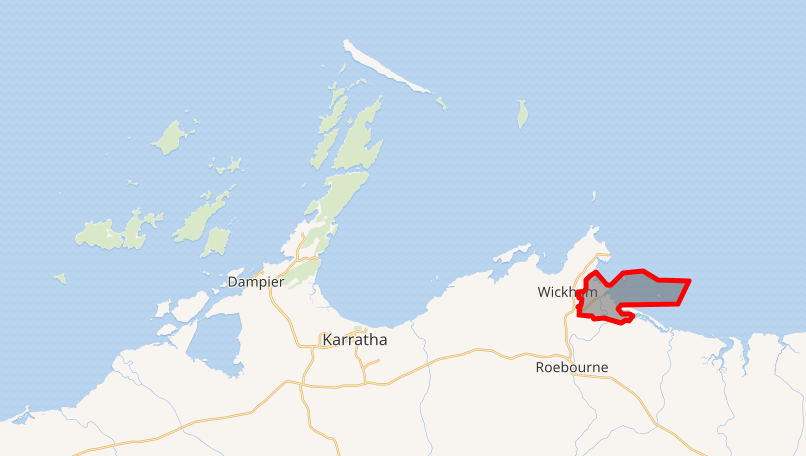
Tien-Tsin was the original name of Cossack after the barque that carried Walter Padbury and his party. In May 1863, Padbury landed his stock at the mouth of the Harding River near the present site of Cossack. The ship that brought the state’s governor, Frederick Weld, in December 1871 was named HMS Cossack, and the town adopted this name in 1872 (officially 1873). Cossack was the first port in the North West, and was critical to the development of the pastoral industry in the region2.

The location of Cossack3

CONTENT WARNING: Before proceeding, please be aware that this is a transcript of the original text and contains concepts that may be offensive to some readers. It is not our intention to offend, but we believe it is important to understand that this was the language and content of the time and needs to be read in that context. It does not in any way reflect the opinions of the project team.


“An account of a new settlement is always interesting, but when Australian colonists venture into an entirely new country, and in addition to settling and stocking the land, discover a new industry that employs hundreds of men—both black and white—it becomes even more fascinating. Just two years ago, many parts of the district to be described here were only accessible by armed bands. Enterprising settlers are now sending down pearl shells and wool from the very spot where Panter, Harding, and Goldwire, the surveyors, were murdered by the aboriginals without provocation.

“The settlement of the Nicol Bay district, as it is known, has been quicker than any other part of Australia. It is heartening to note that the relationship between the aboriginals and the white settlers is now more friendly and satisfactory than can be seen elsewhere on the island. The prosperity of the largest part of the community relies entirely on the preservation and assistance of the natives; without their help, the settlers might explore the reefs but would not collect enough shells to repay their investment. The natives’ sharp eyesight and the large numbers in which they can be employed make their cooperation invaluable. Their usefulness serves as the best guarantee for their proper treatment. In fact, any injustice is often more likely to be borne by the whites than the blacks. Many natives gather food for themselves and their families during neap tides and walk away just when their services are needed.

“Port Walcott, the headquarters of the small boats engaged in pearl fishing and the port of entry for vessels from Fremantle that supply the settlement with stores, is located about a mile inside Butcher’s Inlet, or Tien-Tsin Creek, named after the first significant vessel that ever anchored in the bay outside. It is situated at latitude 20°40’ south and longitude 115° east, about 180 miles east of the North-West Cape. Despite bearing the high-sounding name of Port Walcott, the settlement has no better claim to the title than a single house and the hull of the New Perseverance, with several smaller dwellings that resemble mia-mias. However, as a government township has been surveyed and partly sold, it is likely that the town will soon have at least an orthodox hotel, a store, and a doctor’s shop. For now, Messrs. Knight and Shenton’s place of business onshore, and the cabin of the hulk, serve all purposes. Butcher’s Inlet has enough water on the bar to admit vessels of a hundred tons at high tide. During low water spring tides, the inlet can almost be crossed on foot. The tide along the northwest coast ranges from 17 to over 30 feet, a stark contrast to the west coast, where there is barely any rise or fall.

“During the fishing season, which begins around the first week in September and ends in April, the port is rather dull and unremarkable. However, at the close of the season, or during the neap tides, if any festivities are expected in Roebourne, the area comes alive with bustle and activity. The scene is a perfect representation of tropical Australian life. A wide mangrove creek is lined with a dozen boats, ranging from 3 to 10 tons, moored along the bank, or lying helplessly in the muddy sand at low tide. Perhaps a larger Swan River trader will be docked with clean-scraped spars and an awning spread. White settlers, dressed as minimally as decency permits, walk about, wearing fly-veils to protect their faces from the swarming flies. Aborigines from all parts of the coast are present, some cleaning and sorting pearl shells, chipping off sharp, colorless edges and tossing them as though they were worth little—when in fact, they are worth at least £150 per ton. Others are practicing spear throwing with small reeds or giges. The failure of any party to deflect a spear with their shield leads to uproarious yells of derision from one side and joy from the other. But the majority are lying on the hot sand, singing monotonous chants, accompanied by the scraping of a shell against a piece of stick held against their shoulder like a fiddle.

“Roebourne, the capital of the new country as Western Australians term the district, is located 11 miles southward, inland of Port Walcott. For some distance, the road crosses a marsh covered by the tide at high springs, making for difficult travel. All goods for the stations are brought up the creek to a jetty. From there, it is just five miles to Roebourne, and with the exception of one small marsh, the road is not too bad. The township of Roebourne consists of about twenty houses built at the base of Mount Welcome. The resident magistrate’s house and the government offices are the most prominent buildings, sitting higher up the mount and away from the threat of malaria or floods from the Harding River, whose waters sometimes get too close for comfort during heavy tropical rains. There are two rough but comfortable hotels, three stores, a butcher’s shop, a blacksmith’s forge, a large stockyard, and, of all things in such a place, a hairdressing salon. This is the current capital of North-West Australia.

“Roebourne is not without its charm, especially when the desert pea—native to the area—blooms in full flower. It has two key scenic features: mountains and a river. The Harding River is a permanent freshwater source. Races are held on the plain near the township every June, during which time nearly all the settlers and pearl fishers, numbering about a hundred, gather. The races may not be of great significance in such a small district, but for joviality and good cheer, a Roebourne race meeting could serve as an example for larger communities. Indeed, there is a noticeable absence of the ruffianism often found in new Australian settlements.

“The nearest station to Roebourne is Mr. Leake Burges’s, located 24 miles away, and carrying some 7,000 sheep. The main station is the “Mill Stream” on the Upper Fortescue, owned by Messrs. McRae, Howlitt, and Mackenzie, formerly from Victoria. Mr. Hooly had squatted on the Ashburton River, 200 miles westward and 80 miles from any neighbor, but constant attacks by the blacks, who are perhaps the most savage and untamable in Australia, forced him to move his flock to the Fortescue. The murder of the third shepherd last year led Mr. Sholl, the magistrate, to swear in a party of special constables to apprehend the murderers or, failing that, teach them a lesson. A party of six men set out to the scene of the murder and “dispersed” some of the hostile natives, who were caught spearing horses and cattle, though not without determined resistance.

“It is still uncertain whether station properties in this part of Australia will repay the investment. It has yet to do so, despite the encouragement of leases at nominal rents and other privileges given by the West Australian Government. This is partly due to the difficulty in preparing wool, the high cost of shipment to Fremantle, and the need for transshipment to England. The region also lacks mechanical means of wool preparation. Communication with Swan River is possible by land. During one food shortage in the settlement, a party rode to Perth to dispatch a vessel, and Mr. Hooly, alone and unaccompanied, completed a remarkable feat considering that the country for over 500 miles is uninhabited except by wild and potentially hostile blacks.

“There is a great scarcity of fresh water on the west coast, though the Nicol Bay country does not suffer as much in this regard. The primary drawback is that the best grazing areas are also the driest. Approximately twenty boats, mostly under eight tons, are engaged in pearl fishing. With the wind from the southward and south-east for most of the year, any vessel with a deck, no matter how small, can easily run before it until the North-West Cape is rounded, where the water remains calm due to the continuous reefs and islands. These boats generally carry two white men, who, before setting out to gather the shells, pick up as many aboriginals as possible along the coast. However, the number of boats involved in the trade, combined with losses from smallpox and other factors, has made it difficult to find enough aboriginals to properly search for the pearl oysters. As a result, the trade is no longer as profitable as it once was. Even for the most experienced fishermen, under the most favorable conditions, it is only a fair return on their investment.

“This season, two vessels from Sydney went to the fisheries but have since returned and are now in quarantine due to smallpox. Even if they had returned in good health, the expense of a trip to the South Sea Islands, where natives must be returned, as well as the cost of provisions, boats, wear and tear, and wages, makes the return on the investment not comparable. The “Kate Kearney” returned with eight tons, worth £150 per ton, and the Melanie, a large vessel, only brought back ten tons. New ground may still be found, as the fisheries currently range from Exmouth Gulf to the Annapanam Shoals, and it is known that Malay proas have visited the north coast of Australia for many years. A schooner named the Argo was outfitted from Swan River last season and ventured as far east as Camden Harbour. However, the aboriginals they had brought along ran away just as they had found valuable shell. These unfortunate men would likely never return home, as they would be speared by the first strong camp they encountered.

“Aboriginals, though well-treated, often long to return to their native lands. When taken to Fremantle, they are shown the pleasures of civilization, and, after a week, they are eager to return north. Their language is easy to learn, though dialects differ from river to river. The Eastern dialect is considered the standard, and both whites and blacks accommodate themselves to it. This means that a good understanding of the language used between Butcher’s Inlet and the De Grey River allows communication with natives from any part of the fishing coast.

“The natives primarily eat nalgo, a bulb from a species of grass. It is very palatable and resembles chestnuts when roasted. Women gather it from sandy spots along river beds or marshes. The men use two types of spear: a lighter hunting spear, thrown from a rest, and a fighting spear, thrown by hand. They also use boomerangs, clubs, and a short stick, which they throw with great dexterity. Their marriage customs are quite curious, and any breach of the intermarriage rules is punishable by death. They are divided into four great tribes or families, and in the event of a death in a camp, they may kill a fighting man from a neighboring tribe to balance their strength. They also kill those afflicted with contagious diseases, such as smallpox, which recently struck the South Sea Islanders aboard a Sydney vessel. Their dietary laws are strictly observed, and nothing will induce a native to eat tabooed food. Superstition plays a large role in their lives; they are in constant fear of a demon named Juna, responsible for all death and disease. It is believed that Juna chokes his victims.

“In their own way, the natives are great astronomers, with names for all the major constellations, such as the Large and Lesser Kangaroo and the Emu. They can distinguish fixed stars from planets. When answering questions, they tend to exaggerate, and they have legends of extraordinary men from far inland. This brief description of this fascinating race only scratches the surface, but more detailed accounts will intrigue those interested in ethnology.

“The pearl shell is not an oyster but an “avicula,” composed of nacreous laminae. It can be cut and polished in any part and is in high demand in England and on the Continent for inlaying and ornamental purposes. The shell is typically half embedded in the sandy mud and can only be harvested at low water during spring tides. Several large pearls have been found, one of which was sold in England for £260 last year.”
Source

  1. THE PEARL FISHERIES AT TIEN-TSIN, NORTH-WEST AUSTRALIA. (1870, May 26). The Sydney Morning Herald (NSW : 1842 – 1954), p. 5. Retrieved December 29, 2024, from http://nla.gov.au/nla.news-article13205905 ↩︎
  2. Wikipedia. Cossack, Western Australia. Retrieved December 29, 2024, from https://en.wikipedia.org/wiki/Cossack%2C_Western_Australia ↩︎
  3. Wikimedia. Retrieved December 29, 2024 from https://foundation.wikimedia.org/wiki/Maps_Terms_of_Use ↩︎

Tough Conditions and Complicated Lives

Around 1900, regular information came filtering through on the Ularring District and its goldfields, claiming that they were likely to be ‘second to none’ in mining outcomes. Ularring was one of four districts of the North Coolgardie Goldfield, the others being Menzies, Niagara, and Yerilla. The area is now Ularring.

By 1902 a committee had formed to erect and maintain, by subscription for the Ularring District Hospital, including a Female Ward, four-roomed residence for the Doctor, kitchen and Nurses; residence, outbuildings, and medical supplies1.

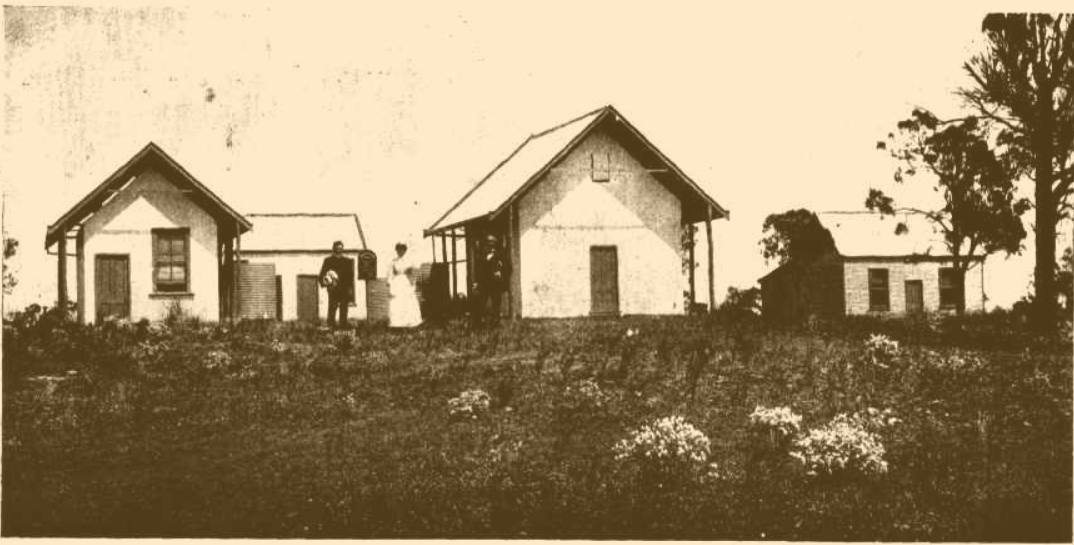
A Doctor had been appointed, The Rev Dr Hunter Finlay, who would receive £400 per annum, and he was described as having ‘…high qualifications and extensive and varied experience’. Nurse Brown (no identifying information available) had the care of patients, and her salary increased to £100 per annum, and she was promoted to Matron. Praise was fulsome for the two holders of these positions, and everything appeared to be going swimmingly. The photo below, (1903) of the hospital, does not mention names, but it’s possible the two figures are that of Dr Finlay and Nurse Brown.

Ularring District Hospital, Mulwarrie (Ideal Studio, Boulder)2

By September of 1903 Dr Finlay had left, and it appears he had been removed from the governing Board of the Hospital but not before an inquiry into the management of the hospital was held. It was concluded that ‘friction between the Resident Medical Officer (Dr Hunter Finlay) and the nurse in charge’ had precipitated his departure. However there was some disquiet about him before this date, judging from various letters to newspapers.3 4

This was not the first time Dr Finlay had been removed from a position – or at least, asked to resign. He was originally both a qualified medical doctor and an ordained Church of England Clergyman who immigrated to Australia in about 1880 with his daughter, Sarah Craig Hunter Finlay. His wife, Sarah Paterson Craig was confined to an asylum in Glasgow, Scotland, and remained there until her death in 1925. For some 20 years prior to his arrival in Western Australia, Dr Finlay was in the news in Queensland – as a bankrupt, charged with fraud, and charged with performing an abortion (he was acquitted of this one) and also malpractice.5 6

Eventually Dr Finlay was disallowed to perform marriages, and dropped the ‘Rev.’ appellation before his name. His relationship with a woman 32 years younger may have raised eyebrows, and the fact that they had three children in Queensland. Careful examination of dates makes the possibility of a third lady being the ‘Mrs Hunter Finlay’ present at Dr Finlays’ funeral in Coolgardie. He had taken up further positions, and pursued his private medical practice specialising in treating women and children around the district before his sudden death in 1906 of a heart attack in his Coolgardie consulting rooms.7 


Sources
  1. MULWARRIE. (1902, September 25). The North Coolgardie Herald and Miners Daily News (Menzies, WA : 1899 – 1904), p. 2. Retrieved May 8, 2024, from http://nla.gov.au/nla.news-article259859802 ↩︎
  2. No Title (1903, November 24). Kalgoorlie Western Argus (WA : 1896 – 1916), p. 22. Retrieved May 8, 2024, from http://nla.gov.au/nla.news-article32736460 ↩︎
  3. CORRESPONDENCE. (1903, April 18). The North Coolgardie Herald and Miners Daily News (Menzies, WA : 1899 – 1904), p. 3. Retrieved May 8, 2024, from http://nla.gov.au/nla.news-article259806982 ↩︎
  4. COUNTRY. (1903, June 17). The West Australian (Perth, WA : 1879 – 1954), p. 5. Retrieved May 8, 2024, from http://nla.gov.au/nla.news-article24826299 ↩︎
  5. PETTY DEBTS COURT. (1899, April 26). Morning Post (Cairns, Qld. : 1897 – 1907), p. 3. Retrieved May 8, 2024, from http://nla.gov.au/nla.news-article42938092 ↩︎
  6. TOWNSVILLE. (1892, March 8). Warwick Argus (Qld. : 1879 – 1901), p. 2. Retrieved May 8, 2024, from http://nla.gov.au/nla.news-article76639366 ↩︎
  7. SUDDEN DEATH (1906, September 6). Coolgardie Miner (WA : 1894 – 1911), p. 3. Retrieved May 8, 2024, from http://nla.gov.au/nla.news-article218125091 ↩︎

Symonds or Simounds?

A group of people posing for a photo

Description automatically generated

This is a delightful wedding group, with the bride, Miss Maggie Symonds, wearing “…a pretty dress of white silk with point lace, a tulle veil, and a coronet of orange blossoms…the presents were both numerous and costly”. Some 80 guests partook of breakfast, then attended a ball in the evening at the Anaconda Hotel1, 2,3.

Less than a year before, Alfred Frederick Thompson, her new husband, the landlord at the Anaconda Hotel, was in custody, charged with unlawfully shooting and wounding John Clinton. He was acquitted – it was decided that he needed to protect himself with a revolver against some of his customers who were “attempting to take possession of the hotel”. This was definitely the Wild West, and one wonders if his bride was prepared for this behaviour, not uncommon, and including “outrages with dynamite” on the billiard hall and also the hotel4, 5, 6, 7, 8, 9.

Over time, Anaconda has been known by various names, including Eulaminna, Murrin and Murrin Murrin. Lots were originally surveyed in 1900 to serve the nearby Murrin Murrin Copper Mine that was known as the Anaconda Copper Mine at the time. By 1903 there were 64 residential lots and a population of about 350. A Police Station was also established in 1903 and the town boasted two hotels, two stores a chemist and a newsagent. A mail receiver was in place but no telegraph station.

Researchers – if this is your family, the bride’s name is misspelled – she is really Margaret Robina (or Rosina) Simounds. If you know more about this family, please let us know at ghostswa@fhwa.org.au.


Sources

  1. Kalgoorlie Western Argus, 1903. District News. Published 29 Sep 1903, p.12. Retrieved 23 Oct 2024 from https://trove.nla.gov.au/newspaper/article/32734679?searchTerm=Maggie%20Symonds ↩︎
  2. Kalgoorlie Miner, 1903. Wedding at Anaconda. Published 26 Sep 1903, p.4. Retrieved 23 Oct 2024 from https://trove.nla.gov.au/newspaper/article/88873557?searchTerm=Maggie%20Symonds ↩︎
  3.  Kalgoorlie Western Argus (WA : 1896 – 1916),(1903, October 20) Wedding Group, Anaconda, Murrin Murrin. Thompson-Symnonds. p. 23. Retrieved October 25, 2024, from http://nla.gov.au/nla.news-page4123379 ↩︎
  4. SHOOTING AFFRAY AT ANACONDA (1902, March 7). The Malcolm Chronicle and Leonora Advertiser (WA : 1897 – 1905), p. 3. Retrieved October 23, 2024, from http://nla.gov.au/nla.news-article228044349 ↩︎
  5. Shooting Affray. (1902, March 13). The Evening Star (Boulder, WA : 1898 – 1921), p. 3. Retrieved October 23, 2024, from http://nla.gov.au/nla.news-article203481548 ↩︎
  6. News of the Week. (1902, March 14). The Malcolm Chronicle and Leonora Advertiser (WA : 1897 – 1905), p. 2. Retrieved October 23, 2024, from http://nla.gov.au/nla.news-article228044368 ↩︎
  7. MALCOLM POLICE COURT. (1902, March 21). The Malcolm Chronicle and Leonora Advertiser (WA : 1897 – 1905), p. 3. Retrieved October 23, 2024, from http://nla.gov.au/nla.news-article228044382 ↩︎
  8. THE ANACONDA FRACAS. (1902, March 28). The Malcolm Chronicle and Leonora Advertiser (WA : 1897 – 1905), p. 2. Retrieved October 23, 2024, from http://nla.gov.au/nla.news-article228044400 ↩︎
  9. THE ANACONDA FRACAS. (1902, June 27). The Malcolm Chronicle and Leonora Advertiser (WA : 1897 – 1905), p. 3. Retrieved October 23, 2024, from http://nla.gov.au/nla.news-article228044723 ↩︎

Bernard Leslie – Mayor of Kalgoorlie

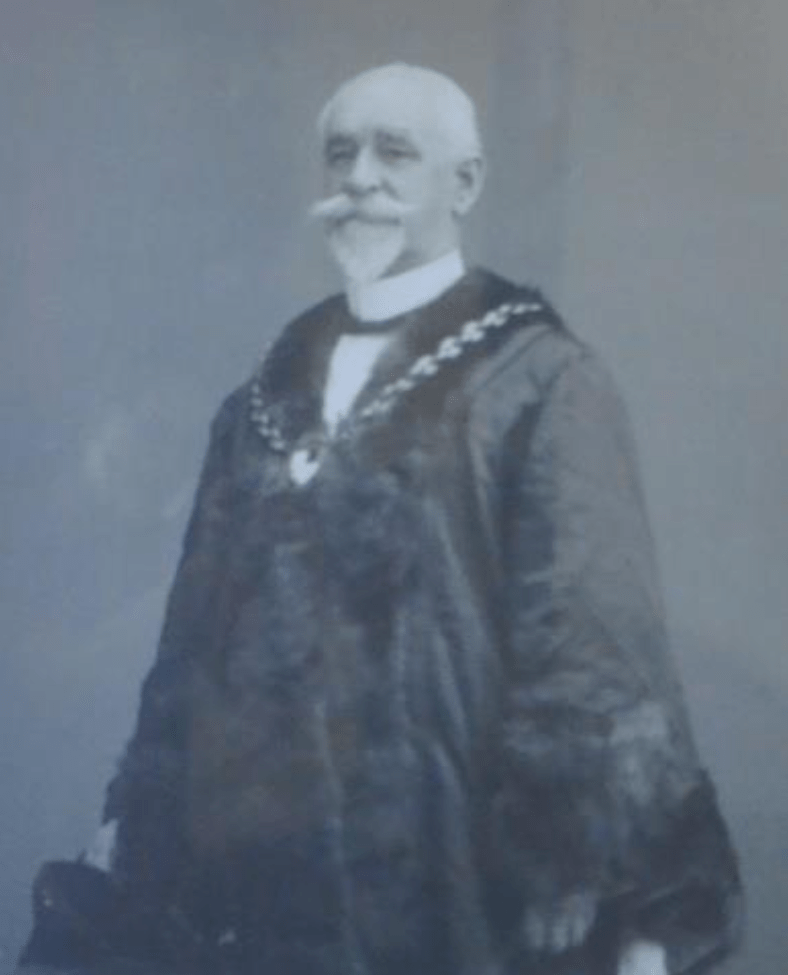
Bernard Patrick Leslie, Mayor of Kalgoorlie 1917 – 1920 & 1927 – 19331

When Mr Bernard Patrick Leslie, a former mayor of Kalgoorlie, died in 1933 at the age of 692, it came as a shock to the inhabitants of the goldfields. Reading his obituary, this tall, imposing man seemed indestructible.

One of his many adventures in the outback was recounted. In the late 1800s, after walking from Northam to Hannans Find (later Kalgoorlie), he proceeded to White Feather (Kanowna) and then headed to Broad Arrow seeking gold. On this trip, he and a mate ran out of water and were found, days later, nude and delirious and ‘very near dead’. Apparently, his jet black hair had turned white, and his body was severely burned by the sun. However, Mr Leslie recovered, and invested in mining in the Bardoc area, and on further to Mertondale, where he did not do so well, then Mount Higgins (Mulwarrie) where he was the founder, and first president of the Pioneer Progress Committee.

Mr Leslie married twice and had two sons. He is memorialised with his first wife, Jean, in Kalgoorlie Cemetery.


Sources
  1. City of Kalgoorlie-Boulder History and Heritage, 15 Nov 2017. Facebook post retrieved 20 Aug 2024 from https://www.facebook.com/CKBHistoryandHeritage/posts/a-story-from-the-mayors-parlourbernard-patrick-lesliemayor-of-kalgoorlie-1917-19/1942082316052998/ ↩︎
  2. DEATH OF MR. B. LESLIE (1933, February 11). Kalgoorlie Miner (WA : 1895 – 1954), p. 5. Retrieved August 21, 2024, from http://nla.gov.au/nla.news-article95021902 ↩︎

The Lake Austin Librarian


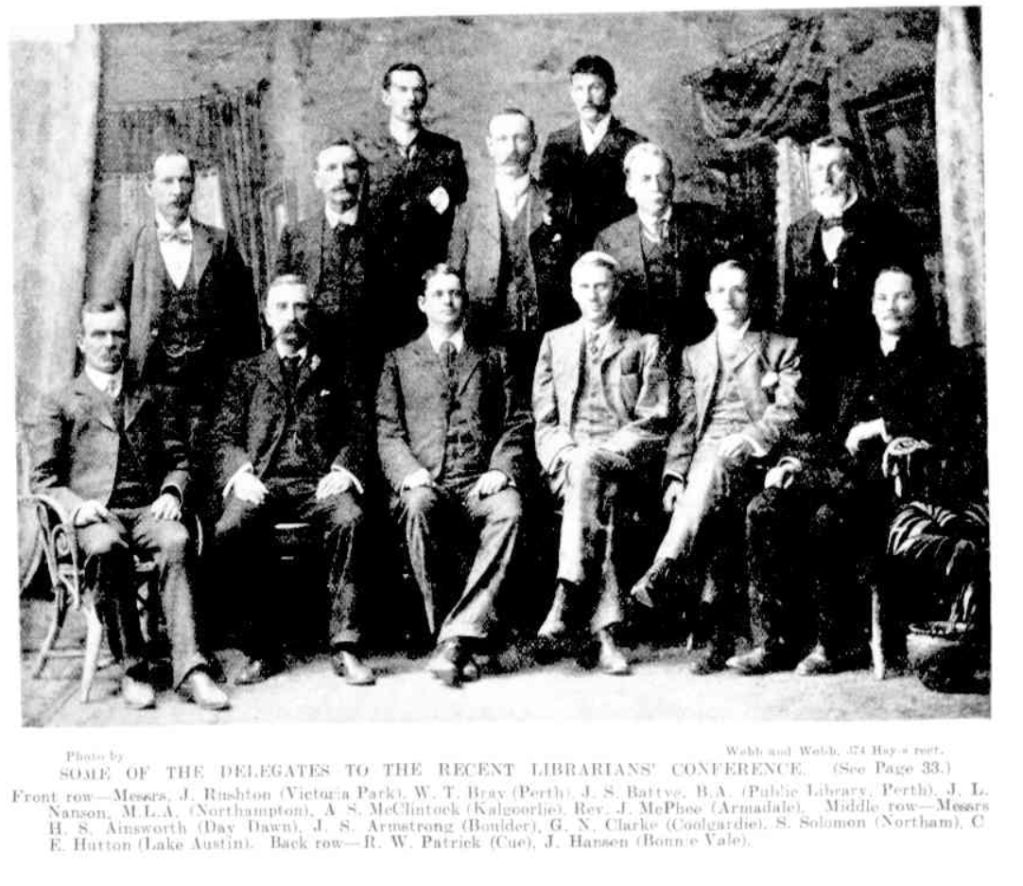
A conference of librarians of Mechanics’ Institutes in all parts of the State was opened on Thursday afternoon, 3rd November 1904 at the Swan River Mechanics’ Institute, Hay St. By most accounts, this was an earnest affair, designed to enhance and promote the acquisition of knowledge in all areas of Western Australia, and to endeavour to ‘educate the Public Taste’: also, to ask for State funding for libraries. Mr J S Battye, Chief Librarian, was in the Chair. Papers were read – including one on ‘the Library Movement’. The photo I found shows the dignified gentlemen attending, amongst them Mr C E Hutton, of Lake Austin, a gold-mining town (now ghost town) near Cue, WA. He is the one, pictured on the right, with the whiskers.

Conference Delegates 12

However, one newspaper report gave a rather different slant on the proceedings, treating the subject of Mechanics Institutes and Libraries in a factious tone. The delegate for Lake Austin, Mr. C E Hutton, seems to have been disconcertingly frank in his report as written up in the Evening Star, Boulder, Wednesday 9th November 1904. Under a sub heading ‘Melancholy Meditations of the Bookworms’ Lake Austin was described as a ‘… weird, desolate (or maybe dissolute, the spelling is uncertain) township… on the Murchison…consisting of two stores, a pub, and the Institute.’

Mr. Hutton apparently reported during the conference: “I don’t care wot rules you make.” said the Austin librarian resignedly. “It can’t hurt our institoot. They ain’t scarcely no one there to roll up to it; and if they was. they wouldn’t see much, (and the) literatoor- ain’t too frequent. All I seen on tha table when I left was the “Day Dawn Chronicle.” …As fer books, everythings oot except (Encyclopedia) Brittannier, and they won’t take that ‘caus I got it bolted to the wall.”3


Sources
  1. SOME OF THE DELEGATES TO THE RECENT LIBRARIANS’ CONFERENCE. (1904, December 3). Western Mail (Perth, WA : 1885 – 1954), p. 27. Retrieved August 21, 2024, from http://nla.gov.au/nla.news-article37804587 ↩︎
  2. The delegates in the photo are:
    Front Row: J Rushton (Victoria Park), W T Bray (Perth), J S Batty (Public Library, Perth), J L Nanson (Northampton), A S McClintock (Kalgoorlie), Rev J McPhee (Armadale),
    Middle Row: H S Ainsworth (Day Dawn), J S Armstrong Boulder, G N Clarke (Coolgardie), S Solomon (Northam), C E Hatton (Lake Austin)
    Back Row: R W Patrick (Cue), J Hansen (Bonnie Vale) ↩︎
  3. Librarians’ Conference (1904, November 9). The Evening Star (Boulder, WA : 1898 – 1921), p. 2. Retrieved August 21, 2024, from http://nla.gov.au/nla.news-article204536689 ↩︎

The Rutherford Family of Ninghan

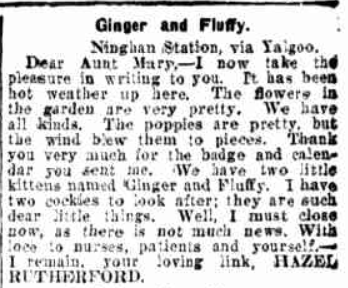
Searching for the ghost town/area Ninghan (occasionally spelled Ningan) I found a story which indicates the everyday dangers always present in outback Western Australia. When she was 11 years old, Hazel Rutherford, of Ninghan Station via Yalgoo wrote in to ‘Aunt Mary’ (children’s letters to the Silver Chain) about where she lived. She told of the spring near their homestead, the garden of poppy flowers, and her kitten. Hazel had five brothers and a sister. She also had a friend, Iris Vickery, and they went for long walks together. Ninghan Station still exists, and the descriptions of it are as picturesque now as they were in 1925.

Childrens Corner conducted by “Aunt Mary”1

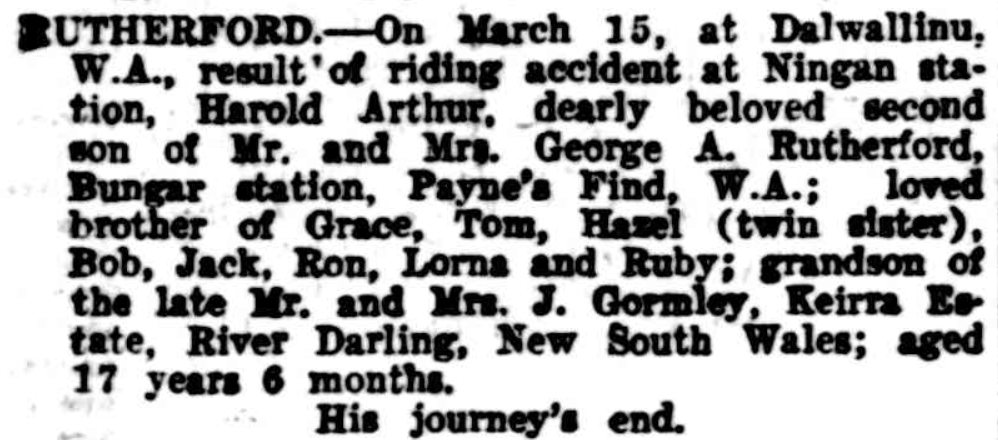
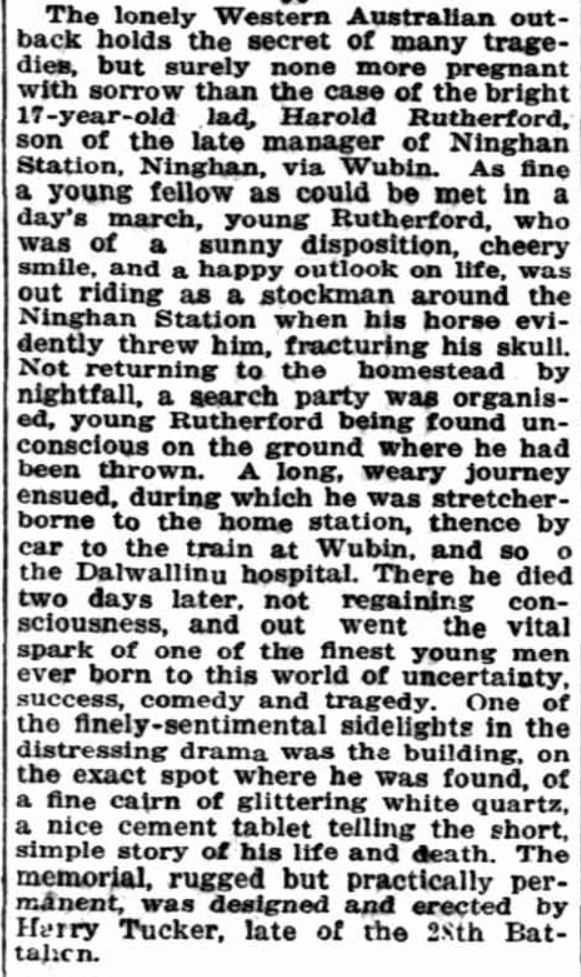
A few years later, Hazel’s name was again in the newspaper, but this time the information was not so benign. She was listed as family mourning the death of her twin brother, Harold Arthur Rutherford, who had died riding home from his day’s work as a stockman – he was 17 and six months. Harold was laid to rest where he was found, at Ninghan Station, which at the time was owned by Tom Elder Barr Smith. By that time, the Rutherford family seem to have moved to Bungar Station, Paynes Find which is still in the area. This I could not find. Perhaps the name has changed, or the land is divided now.

Family Notices 2

A postscript to this story was a request for compensation for Harold’s death, put forward by his father, George Arthur Rutherford, to Tom Elder Barr Smith, heir to a fortune in pastoral properties and owner of Ninghan Station. £75 was awarded under the Workers Compensation Act, on the grounds that Harold had partially supported his father and the family by some of his wages at the time he died. Iris Vickery, a bookkeeper to Mr Barr Smith, corroborated the information.

Peeps at People 3

The Dalwallinu Register of Burials notes the grave, and also that the ashes of a relative, George Edward Rutherford, who died in 1990, were also interred there4


Sources
  1. Ginger and Fluffy. (1926, January 21). Western Mail (Perth, WA : 1885 – 1954), p. 29. Retrieved August 20, 2024, from http://nla.gov.au/nla.news-article37644656 ↩︎
  2. Family Notices (1932, April 14). The West Australian (Perth, WA : 1879 – 1954), p. 1. Retrieved August 20, 2024, from http://nla.gov.au/nla.news-article32643172 ↩︎
  3. Peeps at People (1932, April 10). Sunday Times (Perth, WA : 1902 – 1954), p. 7 (First Section). Retrieved August 20, 2024, from http://nla.gov.au/nla.news-article58661172 ↩︎
  4. Shire of Dalwallinu Burial Register ↩︎

The first rush

In 1872, the government offered a reward of £5,000 for the discovery of the first payable goldfield in the colony of Western Australia1.

In 1879, Alexander Forrest explored the Fitzroy and Ord River areas, and reported excellent grazing land and that gold might be found in the East Kimberleys. John Adams and Phil Saunders managed for find a little gold, but insufficient to be payable. In 1883, a second Forrest expedition included a geologist, Edward Hardman, who showed likely gold deposits on his map of the area.2

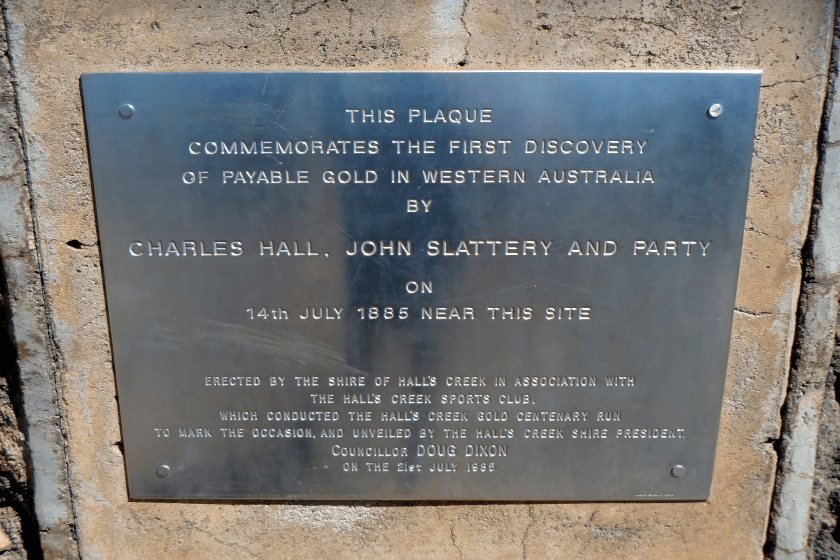
On 14 July 1885, Charles Hall and Jack Slattery, following the leads provided by Hardman, found payable gold at Halls Creek in the Kimberley region. After working for a few weeks, Hall returned to Derby to report his find, and took 200 ounces of gold with him as evidence. The ensuing “Kimberley Rush” encouraged as many as 10,000 men to head to Halls Creek. The field was officially declared on 19 May 18863.

Photograph reproduced from Halls Creek Tourism https://hallscreektourism.com.au

Thousands of men made their way to the Kimberley from other parts of WA, the eastern colonies, and New Zealand. Most arrived by ship in Derby or Wyndham, and then walked to Halls Creek. Others came overland from the Northern Territory. Most had no previous experience in gold prospecting or of life in the bush. Illness and disease were rife, and when the first warden, C. D. Price, arrived on 3 September 1886, he found that “great numbers were stricken down, in a dying condition, helpless, destitute of money, food, or covering, and without mates or friends simply lying down to die”. A few were lucky enough to locate rich alluvial or reef gold, but most had little or no success.

Dr Phillip Playford4

In the early days of the gold rush no records or statistics were recorded for either the arrivals or deaths. Also, no one knows how many died trying to get to Halls Creek across the waterless desert, or how many simply turned back. When men actually arrived at Halls Creek, dysentery, scurvy, sunstroke and thirst continued to take its toll. The Government applied a gold tax of two shillings and sixpence an ounce. It was a very unpopular levy as gold proved so hard to get. The diggers avoided registering and the Government had a great deal of trouble collecting the tax or statistics of any kind. Halls Creek was a shanty town of wood, stone, canvas, tin, bark and spinifex. But it boasted two hotels, a post office and a gold warden.

When Price arrived in September 1886, he reported that about 2,000 remained at the diggings. By the end of 1886, the rush had ceased. When in May 1888 the government considered claims for the reward for discovery of the first payable goldfield, it was decided that the Kimberley goldfield, which had proven disappointing, was insufficient to meet the stipulated conditions of a yield of at least 10,000 ounces (280 kg) of gold in a 2-year period passing through Customs or shipped to England, so no reward was paid out5. A gift of £500 was given to Charles Hall and his party, along with a bequest of the same amount to Hardman’s widow.

The rush lasted only a few years as it was not financially viable to transport the machinery to this remote region. With the discovery of gold in Coolgardie, most prospectors moved on. In 1955, the town site of Halls Creek was relocated 15Kms west.


SOURCES & NOTES
  1. Playford, Phillip & Ruddock, Ian (1985). Discovery of the Kimberley Goldfield. ↩︎
  2. Halls Creek Tourism, nd. Halls Creek History. Retrieved 28 Apr 2024 from https://www.hallscreektourism.com.au/information/halls-creek-history ↩︎
  3. The Western Argus, 1931. Our First Gold Rush : Kimberley, 1886. Published 19 May 1931. Retrieved 28 Apr 2024 from http://nla.gov.au/nla.news-article34582034 ↩︎
  4. Playford, Phillip. 2005. The Discovery of The East Kimberley Goldfield. Retrieved 25 Apr 2024 from https://kimberleysociety.org/oldfiles/2005/THE%20DISCOVERY%20OF%20THE%20EAST%20KIMBERLEY%20GOLDFIELD%201885%20Mar%2005.pdf ↩︎
  5. A lot of gold went out of the Kimberley via the Northern territory and it was rumoured that a gold buyer was to have taken 3,000 ounces of gold at a time out of Halls Creek. It is estimated that as much as 23,000 ounces (nearly 650 kg) of gold was taken from the fields around Halls Creek, some unofficial estimates were as 100,000 ounces. ↩︎

Mr Stanley’s Opera Troupe

Cossack in 1886 was a frontier town in one of the most isolated colonies in the world.  It was a centre for pearling and pearl shell fishing and the entry point for pastoralists who established extensive stations.  By 1886 Cossack had a stone wharf and several other stone buildings such as the Post and Telegraph Office and a Mercantile Store, but not a lot of other substantial buildings. How did it attract an operatic performance by the most popular Opera Troupe of the decade?    

Perth loved Mr Stanley’s Opera Troupe. It played to huge audiences and received mostly glowing reviews.  The Railway employees took up a collection so they could present Mr and Mrs Stanley a gold ring and earrings as a token of their esteem and appreciation1. A Fremantle harbour official stole flowers, roses, and bouquets to bestow upon sundry members of Stanley’s Opera Troupe before they left Perth2. An ode of farewell to the players was written and published in the Perth news in October 18853.

Mr Stanley’s Opera Troupe and other itinerant theatre groups used the coastal steamers to travel around Australia4.  In early 1886, Mr Stanley was taking his Opera Troupe to Singapore and to get there travelled on a coastal steamer that called in at Champion Bay, Gascoyne, and Cossack before leaving Australia.  

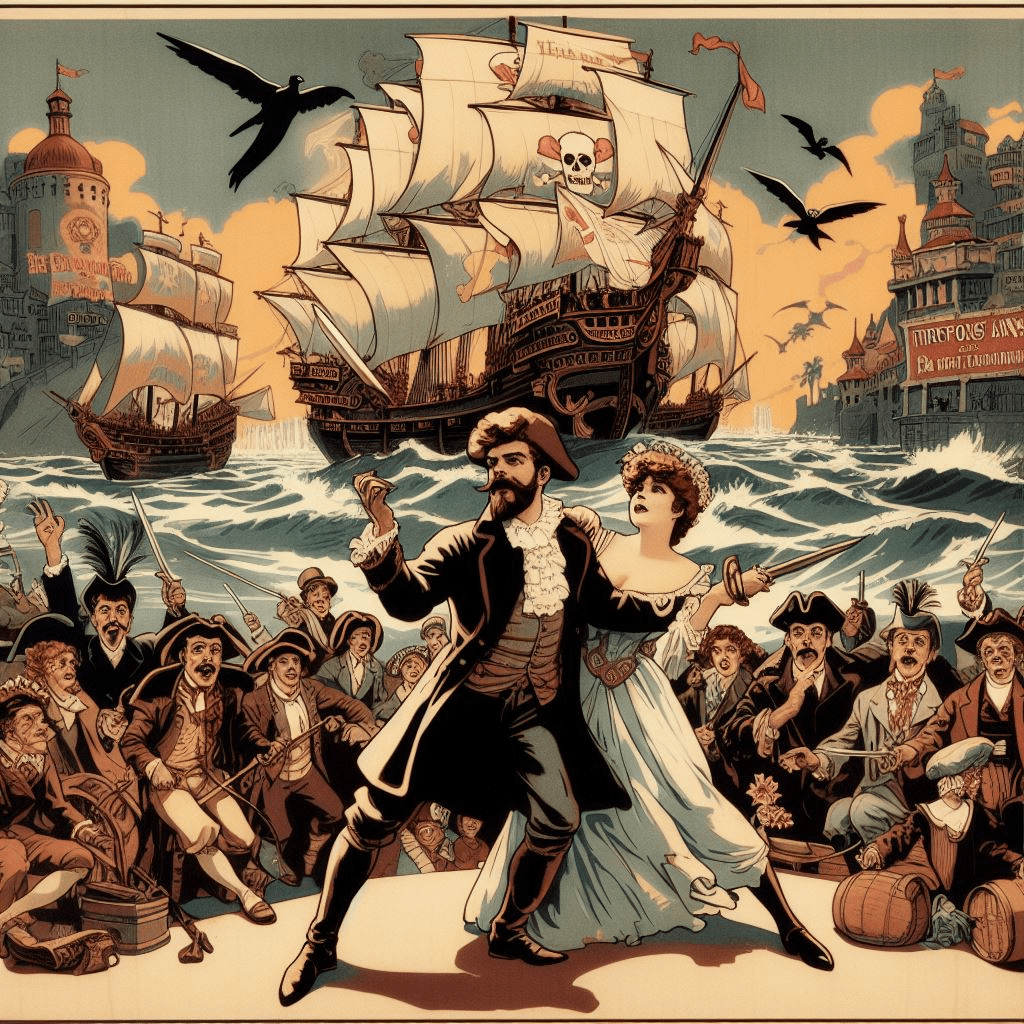
Ever the entrepreneur, Mr Stanley used his time in port in Cossack to his advantage and had his Opera Troupe perform two shows at Roebourne before performing their last show in Cossack.   The Cossack show was a performance of Gilbert and Sullivan’s Pirates of Penzance and took place on Saturday 13 March 18865.

I have been unable to find a review of the Cossack performance of this opera, but when it was performed in Perth the previous October it received a review that said –

 The acting was very spirited, the costumes pretty, the children acquitted themselves admirably in their dancing, but the actors said their words very quickly, and some songs were ‘absolutely gabbled’.6

Image generated by DALL-E

Who was Mr Stanley and how did he get into show business? The only biography I can find of Harry Stanley was supplied by him to a Perth newspaper in 18857. His life had so many self-reported highlights and makes me wonder if he embellished his life story.  

Stanley was born in England but after a childhood supposedly touring Europe he joined the Royal Navy and served in the Crimean War. He came to Australia in the mid-1850s, worked on a steamship out of Melbourne before heading for the goldfields, where he was stuck up by the notorious bushranger Black Johnston. After failing to find his fortune, Stanley joined a Theatrical Troupe where he found success playing the character of Rob Roy. He moved from Troupe to Troupe, in various roles before forming his company and managing the Lyceum Theatre and Hotel in Sandhurst.

Stanley travelled to South Africa in 1870 with the American War Panorama Troupe but was unfortunately shipwrecked on the way. Luckily he saved the Panorama and just so happened to be on the diamond fields of Kimberley when they raised the British flag. Stanley was received by African presidents and kings during that trip. He spent time as a guest of the Nizam at Hyderabad and was asked to lecture on war to the Sikh regiments. Stanley then went to Burma, where he was presented with a medal from the King and subsequently travelled to Siam, where he stayed at the palaces of the kings.

Perhaps colourful renditions of life stories come with show business. After leaving Cossack it was reported that Mr Stanley was struck insensible by lightning for three hours while on deck of the SS Natal8. Fortunately, Stanley had recovered by the time he reached Singapore.

Stanley and his Opera Troupe seem to have spent the next few years performing in the East, visiting “the colonial port cities with large European populations where there was a high demand for the sort of shows he staged9.

Stanley returned to Australia to settle some business in 1896, but while in Newcastle his heart condition suddenly worsened, and he died (without a will). Stanley was nearly 60 years old10.   The Freemasons in Calcutta raised money for his wife and daughters to return to Australia.  Entertainments such as Mr Stanley’s Opera Troupe were facing competition from newer forms of entertainment such as roller skating.  The story of Harry Stanley and his Opera Troupe is a colourful one.  What other larger than life people’s stories are awaiting discovery in Western Australia’s Ghost Towns?


Sources
  1. Presentation to Mr and Mrs Stanley. The Inquirer and Commercial News, February 1886, p. 5. ↩︎
  2. Perth Local Court. Western Mail, 2 January 1886, p. 10. ↩︎
  3. Farewell to Stanley’s Opera Troupe. The Daily News, 6 November 1885, p. 3. ↩︎
  4. YU Elysia, 2020. Australian Itinerant Theatres as Colonial Cultural Assimilation https://www.tca.hku.hk/post/australian-itinerant-theatres-as-colonial-cultural-assimilation
    Accessed 20 March 2024. ↩︎
  5. Roebourne Letter. Western Mail, 13 March 1886, p. 16. ↩︎
  6. The Pirates of Penzance. The West Australian, 12 October 1885, p. 3. ↩︎
  7. Biography of Mr. Harry Stanley (1885, September 26). The Herald (Fremantle, WA : 1867 – 1886), p. 3. Retrieved April 13, 2024, from http://nla.gov.au/nla.news-article110070728 ↩︎
  8. Local. The West Australian 13 April 1886, p. 3 ↩︎
  9. YU Elysia, 2020. Australian Itinerant Theatres as Colonial Cultural Assimilation https://www.tca.hku.hk/post/australian-itinerant-theatres-as-colonial-cultural-assimilation. ↩︎
  10. Newcastle News. The Maitland Weekly Mercury, 2 May 1896, p. 5. ↩︎