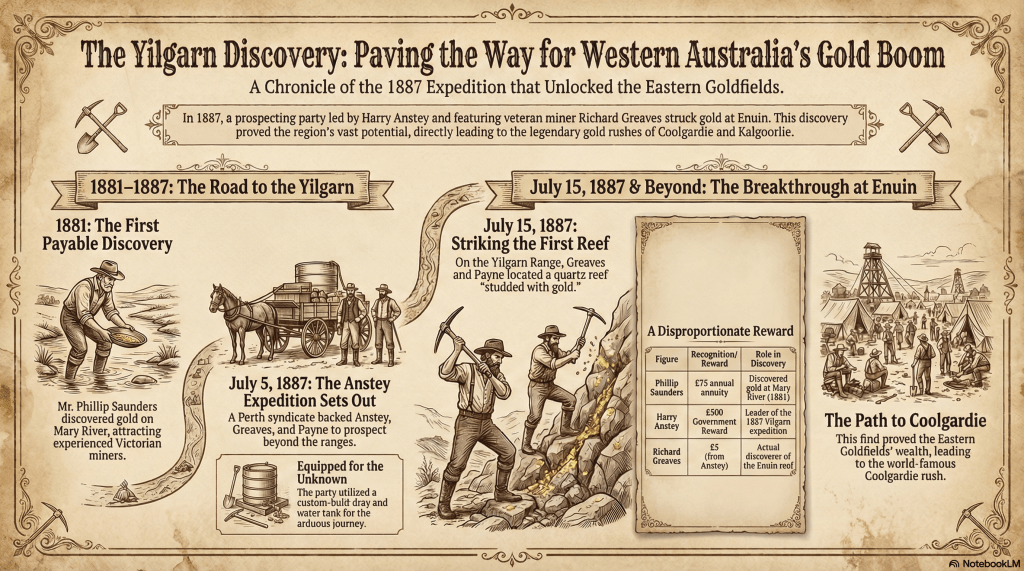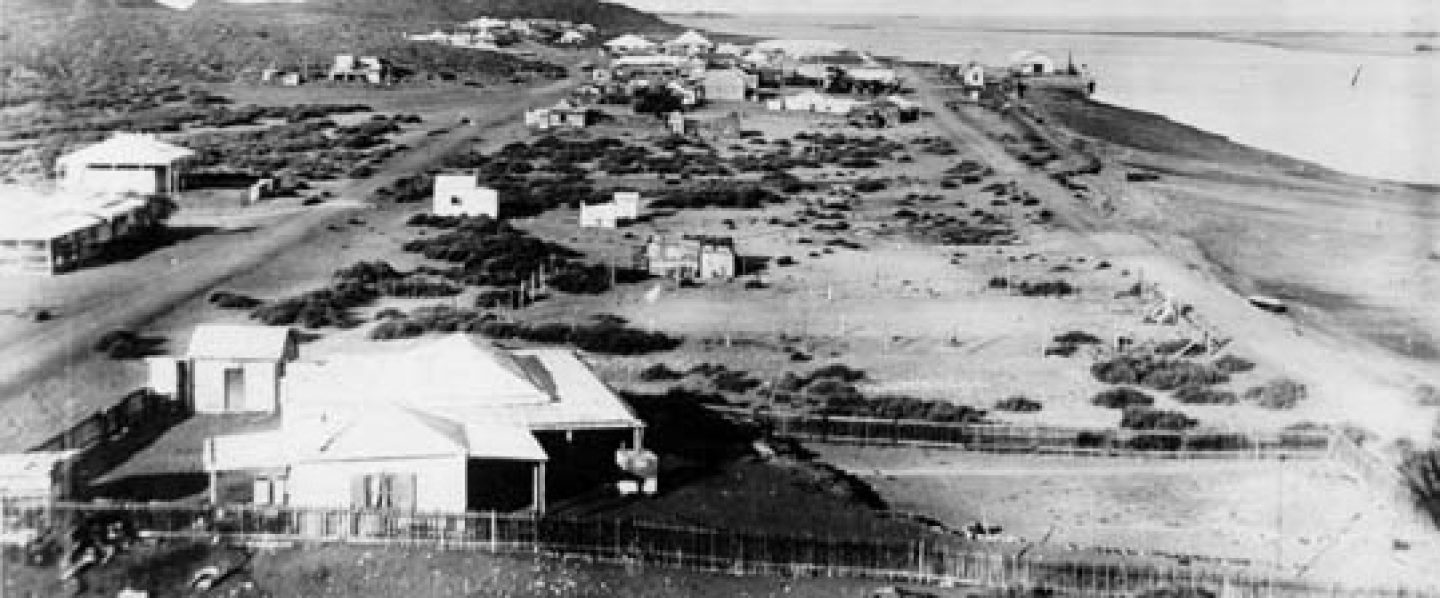
There are moments that change history, and for the colony of Western Australia, one such moment occurred not in a boardroom or a parliament house, but at the lip of a muddy well on a remote pastoral station. In early 1887, a housewife named Jane Mary Glass made an accidental discovery that would ignite the Yilgarn gold rush and ultimately lead her colony toward the Federation of Australia. While her name is often overshadowed by the male prospectors who followed her, the story of Jane Glass is the true starting point of the Eastern Goldfields.1
Jane Mary Glass lived with her husband, Charles Glass Snr, at Mujakine station, located approximately 11 kilometres north-east of present-day Trayning. The Glasses were part of a tight-knit network of pioneering families who were pushing the boundaries of European settlement into the dry interior. Jane was closely connected to the Adams family of the famous Mangowine station; her brother-in-law (or relative) Charles Adams and his wife Jane had established their run in 1876, creating a social hub for the far-eastern district.2 3 4 5
Jane was a woman of significant family standing, later remembered by her many relatives as a “great aunt” who took immense pride in her role as a pioneer. In early 1887, the Glass family was preoccupied with the same struggle as every other settler in the Yilgarn: the desperate search for reliable water.6 7
The discovery itself was entirely serendipitous. Jane had discovered a drowned possum in the family well at Mujakine. Her son, Alex Glass, climbed down into the shaft to clean out the animal and deepen the well in hopes of reaching a better supply. As Alex scraped the mud from the bottom and filled a bucket, Jane hauled it to the surface.8 9
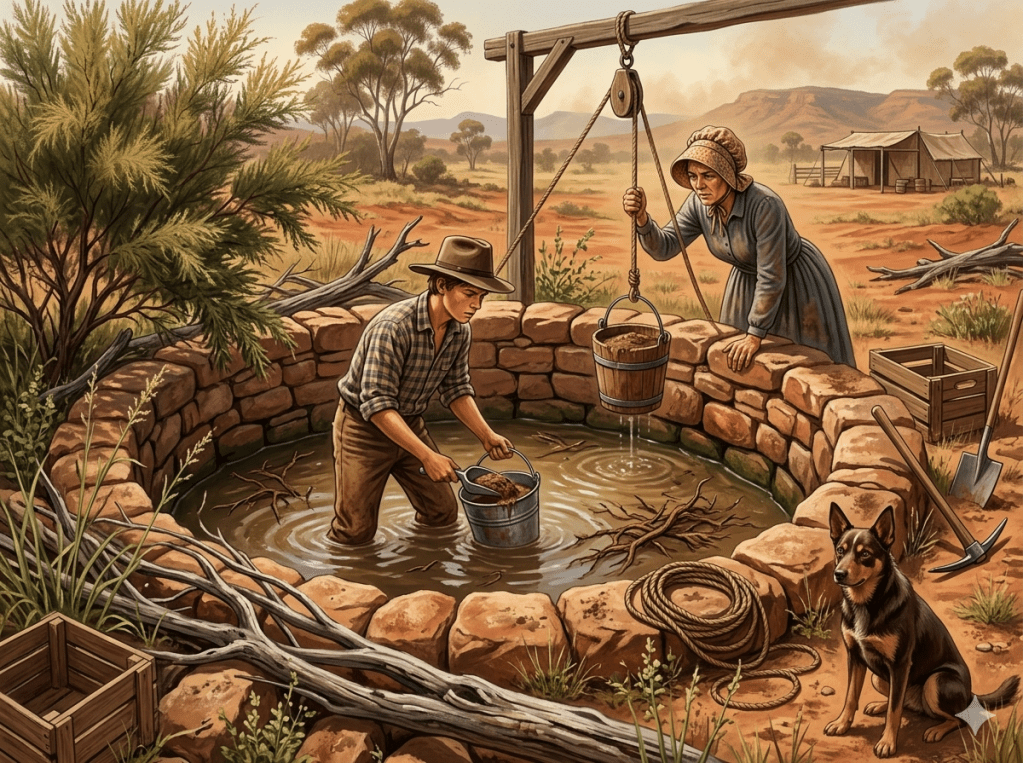
as imagined by Nano Banana 2
While emptying the sludge, a glint caught her eye. Reaching into the mud, she pulled out a gold nugget. While others had found traces of gold in the South West previously, the location of this find, so far east, was a revelation. At the time, the government had offered a reward for the discovery of a payable goldfield near Perth, and the Glasses knew their lives were about to change. Jane and Charles Snr wasted no time, quickly preparing their horse and dray for the long journey to Perth to have the find officially verified. This trip became a victory lap for Jane. As they passed through the settlements of the Wheatbelt, she stopped to visit her numerous relatives, eagerly showing off the nugget. One anecdote recounts her exhorting the children of the family to look closely and always remember that it was their “great aunt” who had found the gold that would make the colony’s fortune.10
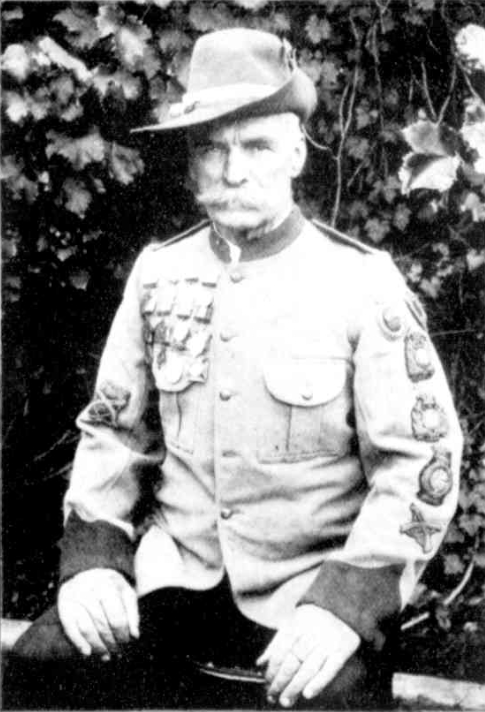
While Jane was the one with the keen eyes who spotted the treasure, the social and legal structures of 1887 meant the official recognition followed a different path. The government eventually awarded a £100 reward for the discovery of gold on the property, but it was paid to her husband, Charles Glass, rather than to Jane herself.
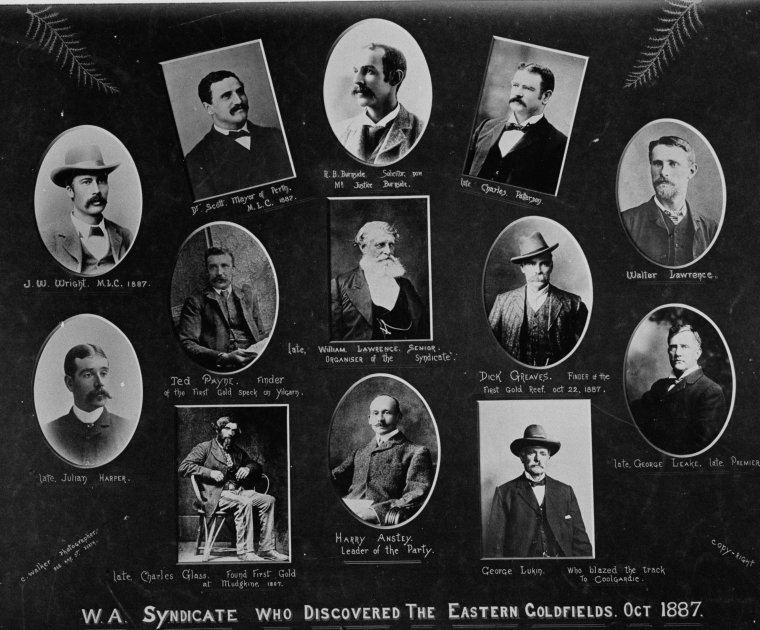
Charles Glass is shown bottom right. Jane is not mentioned.11
However, the impact of her find was immediate. The confirmation of her nugget prompted the Newcastle and Northam Settlers Association to commission prospectors to examine the area. This led directly to the formation of the first major prospecting syndicates, including the party of Harry Anstey, Dick Greaves, and Ted Payne, as well as their rival, Bernard Norbert Colreavy. By December 1887, Colreavy had discovered the Kathleen reef in Golden Valley, and the Yilgarn rush was officially underway.12 13
The historical significance of Jane Glass’s discovery cannot be overstated. The Yilgarn rush she sparked led directly to the discovery of Southern Cross, then Coolgardie, and finally the “Golden Mile” at Kalgoorlie. This massive influx of “t’Othersiders” (miners from the eastern colonies) shifted the political landscape of Western Australia. These new arrivals campaigned heavily for the colony to join the Australian Federation, a movement that might have failed without the economic boom triggered by Jane’s well.14
Today, the site of her discovery is marked by the White Man Rock Well. Although the well is now fenced and somewhat overgrown, it remains a monument to a housewife’s keen eyes and the moment a drowned possum helped build a state. Jane Mary Glass remains a foundational figure for local history and genealogy enthusiasts, representing the often-unseen women who were present at the very birth of the West Australian goldfields.
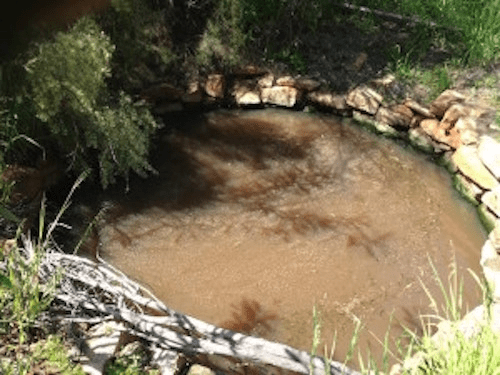
Source
- Sharp, Moya (2016) Golden Valley – The Early Days. Retrieved 27 Mar 2026 from https://www.outbackfamilyhistoryblog.com/golden-valley-by-kevin-moran/ ↩︎
- ibid ↩︎
- Explorers’ Wells and Tracks Project (n.d.) White Man Rock Well. Retrieved 27 Mar 2026 from https://wellsandtracks.com.au/wells/pioneer-wells/white-man-rock-well/ ↩︎
- Heritage Council of Western Australia (1996) Register of Heritage Places – Assessment : Southern Cross Post Office. p.3. Retrieved 27 Mar 2026 from https://inherit.dplh.wa.gov.au/admin/api/file/f890bda6-c195-71f8-72ad-b2e154bbb8cc ↩︎
- Wrigley, Matthew (2023). Water in the context of colonisation in the Goldfields. Retrieved 27 Mar 2026 from https://wangka.com.au/wp-content/uploads/2023/11/Water-in-the-Context-of-Colinisation-in-the-Goldfields-Matt-Wrigley.pdf ↩︎
- Sharp (2016): refers to lack of water supply ↩︎
- Heritage Council (1996): refers to lack of water supply ↩︎
- ibid: refers to Glass and Colreavy ↩︎
- Sharp (2016): refers to gold discovery ↩︎
- ibid ↩︎
- State Library of Western Australia (n.d.) Collection of photographs form the Royal Western Australian Historical Society; BA1886/543. Published in the West Australian 18 Mar 1933, p.5. Retrieved 27 Mar 2026 from https://encore.slwa.wa.gov.au/iii/encore/record/C__Rb1976225 ↩︎
- DEATH OF MR. COLREAVY. (1893, November 15). Bunbury Herald (WA : 1892 – 1919), p. 3. Retrieved March 27, 2026, from http://nla.gov.au/nla.news-article87084401 ↩︎
- Shire of Yilgarn (n.d.) Golden Valley: Township of Knutsford. Retrieved 27 Mar 2026 from https://visit.yilgarn.wa.gov.au/Profiles/visit/Assets/ClientData/Documents/New_Brochures/Golden_Valley.pdf ↩︎
- Moran, Kevin (2000). Sand and Stone: the social history of Western Australia as recorded by the pioneer police of the eastern frontiers (vol 1 of 2). Frickers International Publishing, Perth WA. (available in the FamilyHistoryWA library) ↩︎
- Explorers’ Wells and Tracks Project (n.d.) White Man Rock Well. Image retrieved 27 Mar 2026 from https://wellsandtracks.com.au/wells/pioneer-wells/white-man-rock-well/ ↩︎