Editor’s Note: This article is taken from an account in The Daily News, 11 Jan 1947.1
In the mid-1930s, the Murchison district was home to a story that would later captivate government scientists and locals alike. It concerns an aged Aboriginal man named Neebrong and his extraordinary recovery from a debilitating illness.
In 1936, Neebrong was admitted to a hospital in Dalwallinu, where doctors delivered a devastating diagnosis: he was suffering from what was believed to be cancer of the tongue. The clinical description was harrowing; his tongue was described as a “red, raw, discharging mass,” and the disease had progressed to the point where he could no longer speak. The surgeons’ verdict was clear—his tongue would have to be surgically removed.
Faced with the prospect of losing his voice, Neebrong took a bold path. He escaped from his hospital bed and returned to the familiar country of Payne’s Find. Back in the scrub, he began a course of self-treatment using the stems of a native plant known to the local people as the “maroon” plant.
The results were startling. Just three months after his flight from the hospital, Neebrong reappeared with his speech fully restored. To the amazement of those who saw him, his tongue had returned to a nearly normal state, bearing only a few scars as evidence of his previous condition. While Neebrong passed away three years later, Constable A. T. Monck, who later reported the case, noted that his death was due to entirely different causes.
The story didn’t end in the Murchison. By 1947, the Western Australian Drug Panel, chaired by Government Botanist C. A. Gardiner, began a formal investigation into the “maroon” plant. Identified as Scaevola spinescens, the plant was prolific around Payne’s Find. Local white residents were so convinced by what they had witnessed that they provided signed statements to the authorities to assist the investigation.
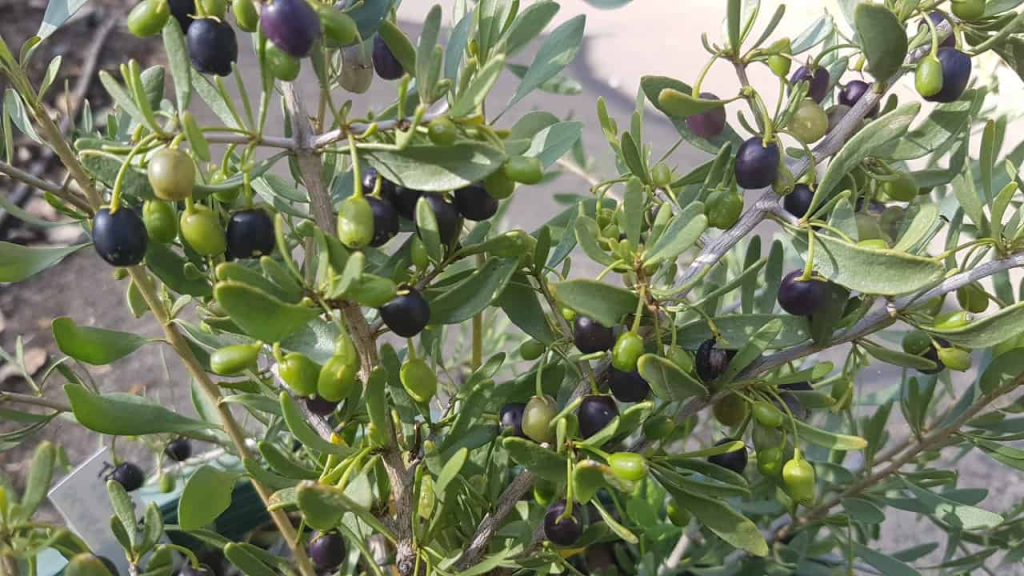
While the Drug Panel urged “extreme caution”, noting that it had not been scientifically proven that the disease was true cancer or that the plant was the definitive cure, the story of Neebrong remains a powerful testament to the traditional knowledge of the land. For family and local historians, it serves as a reminder of the cultural mysteries that linger in the red dust of our outback history.
- Native’s Story Of Cure By Plant (1947, January 11). The Daily News (Perth, WA : 1882 – 1955), p. 10 (FIRST EDITION). Retrieved April 4, 2026, from http://nla.gov.au/nla.news-article78216938 ↩︎
- Tucker Bush (2020). Maroon Bush – Scaevola Spinescens. Retrieved 4 Apr 2026 from https://tuckerbush.com.au/maroon-bush-scaevola-spinescens/ ↩︎