Population of the Northern Goldfields – 1905

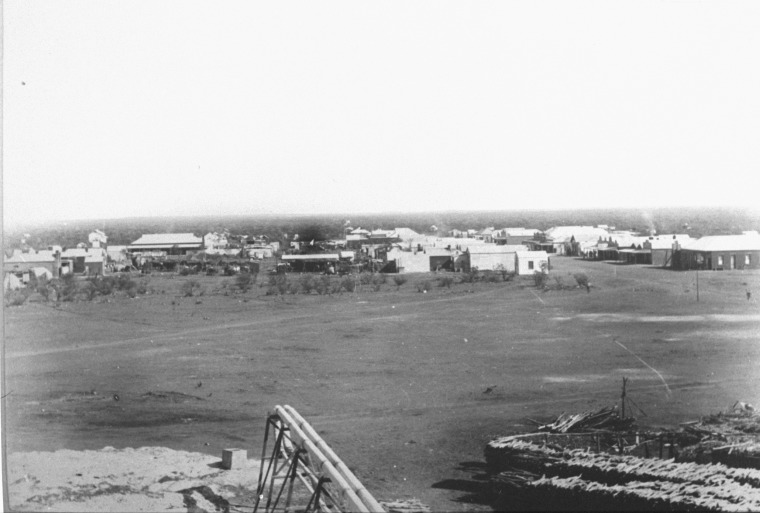
Kookynie c1900

Editors Note: This very informative article is reproduced from the Kookynie Press.1

We [the newspaper] recently obtained fascinating population statistics for the North Coolgardie district, courtesy of Inspector Woods, detailing the population as compiled by the police up to June 30. These figures offer a crucial look at the shifting fortunes of the Northern Goldfields communities.

The Overall Trend: A Net Loss for the Region

Compared to the statistics compiled the previous year, the North Coolgardie district as a whole has experienced a loss of 256 people.

While some centers managed to hold steady or even grow, others saw significant decreases in population. Menzies, for instance, managed to remain the same.

The most substantial population losses were recorded in:

  • Kookynie, showing a significant drop of 559 residents.
  • Morgans, which lost 132 residents.
  • Malcolm, which saw a decrease of 125 residents.

However, the outlook was much brighter for several key towns, demonstrating that growth continues in specific pockets of the goldfields. Towns reporting major increases include:

  • Leonora, which gained 240 people.
  • Laverton, which grew by 230 people.
  • Gwalia, which added 100 people.

Substantial increases were also recorded in the areas of Murrin and Yundamindera.


Detailed Population Statistics by District

The following tables provide the detailed breakdown of the population in the North Coolgardie district as of June 30, 1905.

MENZIES DISTRICT

LocationMalesFemalesChildrenTotal
Menzies9984673791,844
Woolgar1445255251
Comet Vale113721
Goongarrle6091079
Mt Ida941515124
TOTAL1,3075464662,314

KOOKYNIE DISTRICT

LocationMalesFemalesChildrenTotal
Kookynie1,0202201751,415
Champion50151883
Britannia1951034
Puzzle112215
Niagara1503122203
Tampa304640
Yerilla10054109
TOTAL1,3902822411,915

MALCOLM DISTRICT

LocationMalesFemalesChildrenTotal
Malcolm2509060400
Webster’s Find60201090
Mertondale2406020320
Dis. gen.811527123
TOTAL631185117933

GWALIA DISTRICT

LocationMalesFemalesChildrenTotal
Gwalia585185160930

LEONORA DISTRICT

LocationMalesFemalesChildrenTotal
Leonora395196140731
Tower Hill93113107
Dis. gen.3374531413
TOTAL8252521741,251

YUNDAMINDERA DISTRICT

LocationMalesFemalesChildrenTotal
Yund’m’n’dra1674548260
Edjudina1152324162
Pingin572059
Dis. gen.853492
TOTAL4247376573

MURRIN DISTRICT

LocationMalesFemalesChildrenTotal
Murrin3703329432

MORGANS DISTRICT

LocationMalesFemalesChildrenTotal
Morgans6652821381,085
Dis gen.103118122
TOTAL7682931461,207

LAVERTON DISTRICT

LocationMalesFemalesChildrenTotal
Laverton2056041306
Euro82313
Craiggiemore55172496
Lancefteld1602036216
Augusta203427
Ida H.802225127
Hawke’s Nest200020
Erlston dis.3382716371
TOTAL8861511491,196

BURTVILLE DISTRICT

LocationMalesFemalesChildrenTotal
Burtville2284230300

SIR SAMUEL DISTRICT

LocationMalesFemalesChildrenTotal
Sir Samuel41310069582

LAWLERS DISTRICT

LocationMalesFemalesChildrenTotal
Lawlers430130110670
Cue’s Patch1151613144
Darlot1402214176
Dis. gen.3084117366
TOTAL9932091541,356

BLACK RANGE DISTRICT

LocationMalesFemalesChildrenTotal
Black Range921911122
Dis. gen.4632423510
TOTAL5554334632

DAVYHURST DISTRICT

LocationMalesFemalesChildrenTotal
Davyhurst62598125848
Callion101213
Siberia Soak6129
Mulwarrie47121372
Ullaring192021
Mulline1302422176
Riverina4851063
TOTAL8851431801,208

Sources

  1. Population of the Northern Goldfields. (1905, July 15). Kookynie Press (WA : 1903 – 1911), p. 1. Retrieved December 15, 2025, from http://nla.gov.au/nla.news-article251123991 ↩︎
Tough Conditions and Complicated Lives

Around 1900, regular information came filtering through on the Ularring District and its goldfields, claiming that they were likely to be ‘second to none’ in mining outcomes. Ularring was one of four districts of the North Coolgardie Goldfield, the others being Menzies, Niagara, and Yerilla. The area is now Ularring.

By 1902 a committee had formed to erect and maintain, by subscription for the Ularring District Hospital, including a Female Ward, four-roomed residence for the Doctor, kitchen and Nurses; residence, outbuildings, and medical supplies1.

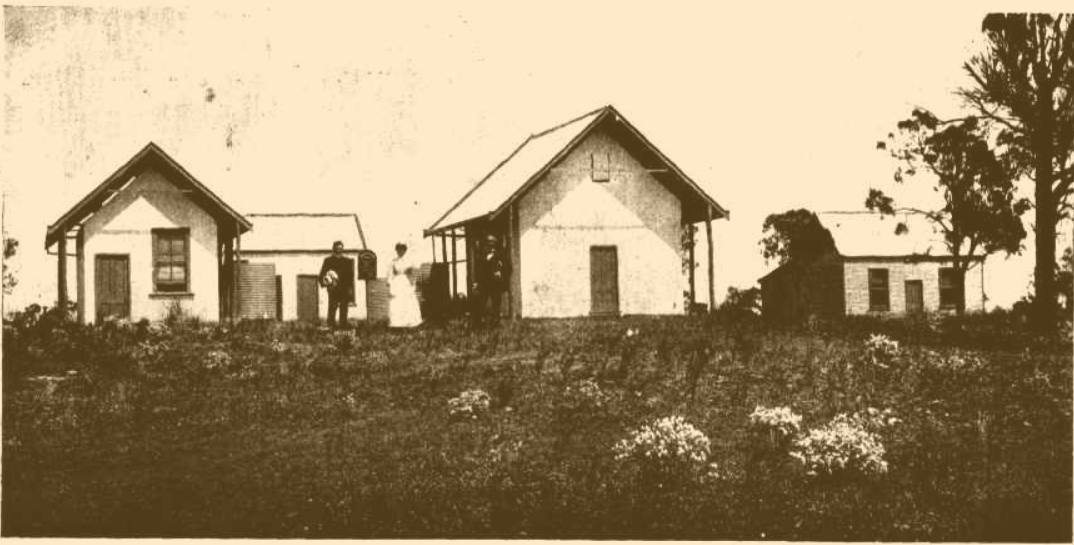
A Doctor had been appointed, The Rev Dr Hunter Finlay, who would receive £400 per annum, and he was described as having ‘…high qualifications and extensive and varied experience’. Nurse Brown (no identifying information available) had the care of patients, and her salary increased to £100 per annum, and she was promoted to Matron. Praise was fulsome for the two holders of these positions, and everything appeared to be going swimmingly. The photo below, (1903) of the hospital, does not mention names, but it’s possible the two figures are that of Dr Finlay and Nurse Brown.

Ularring District Hospital, Mulwarrie (Ideal Studio, Boulder)2

By September of 1903 Dr Finlay had left, and it appears he had been removed from the governing Board of the Hospital but not before an inquiry into the management of the hospital was held. It was concluded that ‘friction between the Resident Medical Officer (Dr Hunter Finlay) and the nurse in charge’ had precipitated his departure. However there was some disquiet about him before this date, judging from various letters to newspapers.3 4

This was not the first time Dr Finlay had been removed from a position – or at least, asked to resign. He was originally both a qualified medical doctor and an ordained Church of England Clergyman who immigrated to Australia in about 1880 with his daughter, Sarah Craig Hunter Finlay. His wife, Sarah Paterson Craig was confined to an asylum in Glasgow, Scotland, and remained there until her death in 1925. For some 20 years prior to his arrival in Western Australia, Dr Finlay was in the news in Queensland – as a bankrupt, charged with fraud, and charged with performing an abortion (he was acquitted of this one) and also malpractice.5 6

Eventually Dr Finlay was disallowed to perform marriages, and dropped the ‘Rev.’ appellation before his name. His relationship with a woman 32 years younger may have raised eyebrows, and the fact that they had three children in Queensland. Careful examination of dates makes the possibility of a third lady being the ‘Mrs Hunter Finlay’ present at Dr Finlays’ funeral in Coolgardie. He had taken up further positions, and pursued his private medical practice specialising in treating women and children around the district before his sudden death in 1906 of a heart attack in his Coolgardie consulting rooms.7 


Sources
  1. MULWARRIE. (1902, September 25). The North Coolgardie Herald and Miners Daily News (Menzies, WA : 1899 – 1904), p. 2. Retrieved May 8, 2024, from http://nla.gov.au/nla.news-article259859802 ↩︎
  2. No Title (1903, November 24). Kalgoorlie Western Argus (WA : 1896 – 1916), p. 22. Retrieved May 8, 2024, from http://nla.gov.au/nla.news-article32736460 ↩︎
  3. CORRESPONDENCE. (1903, April 18). The North Coolgardie Herald and Miners Daily News (Menzies, WA : 1899 – 1904), p. 3. Retrieved May 8, 2024, from http://nla.gov.au/nla.news-article259806982 ↩︎
  4. COUNTRY. (1903, June 17). The West Australian (Perth, WA : 1879 – 1954), p. 5. Retrieved May 8, 2024, from http://nla.gov.au/nla.news-article24826299 ↩︎
  5. PETTY DEBTS COURT. (1899, April 26). Morning Post (Cairns, Qld. : 1897 – 1907), p. 3. Retrieved May 8, 2024, from http://nla.gov.au/nla.news-article42938092 ↩︎
  6. TOWNSVILLE. (1892, March 8). Warwick Argus (Qld. : 1879 – 1901), p. 2. Retrieved May 8, 2024, from http://nla.gov.au/nla.news-article76639366 ↩︎
  7. SUDDEN DEATH (1906, September 6). Coolgardie Miner (WA : 1894 – 1911), p. 3. Retrieved May 8, 2024, from http://nla.gov.au/nla.news-article218125091 ↩︎

What’s a State Battery?

As I have been researching ghost towns, I have often come across the phrase “state battery”. Without actually taking the time out to discover what this was, ideas that flittered through my mind included some sort of power generation facility or a method of providing fresh eggs and chickens in the outback.

Today is the day. I have found out what a state battery is, and I’m going to share it here because there could be others like me who have no clue!! And please, if I have made any incorrect assumptions or conclusions, tell me!!

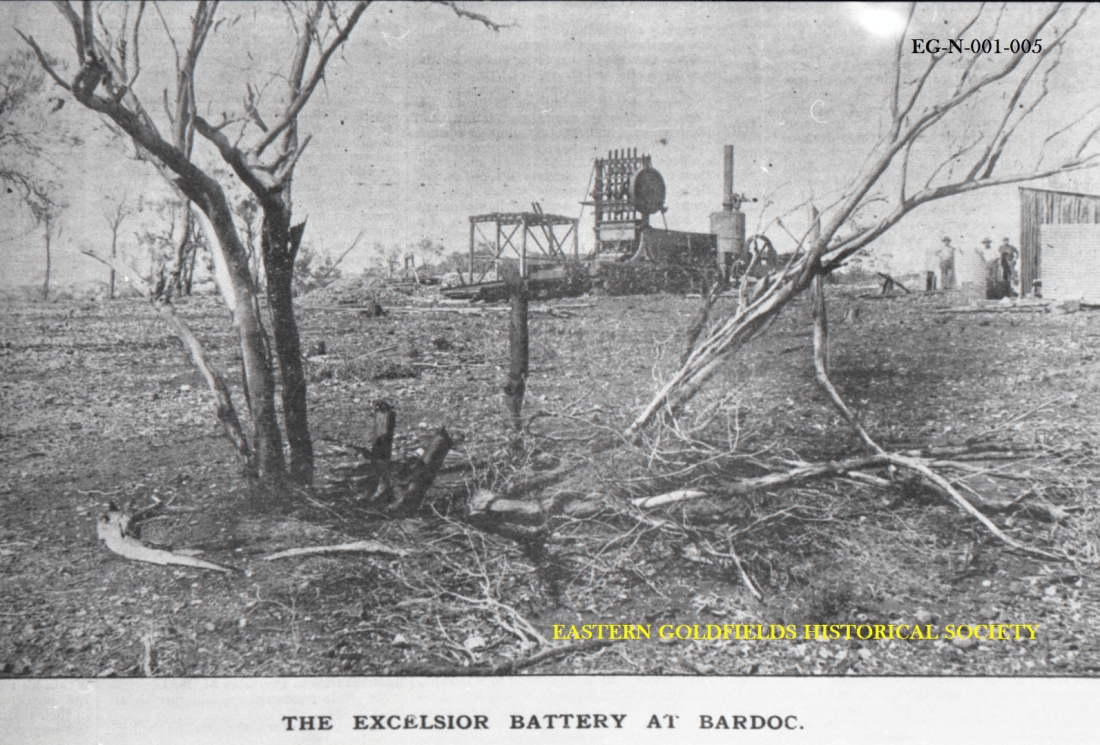
Photo is from the Eastern Goldfields Historical Society’s digitized collection of 60,000 negatives1.

In Western Australia a state battery was a government owned and operated crushing facility that crushed the ore found by prospectors and dug from small mines in the area. The Western Australian Department of Mines were the government agency responsible for their operation. Some of the batteries were only operating for one or two years, while others were in place for 5o or more years. Western Australia was the only state in Australia to provide this type of facility.

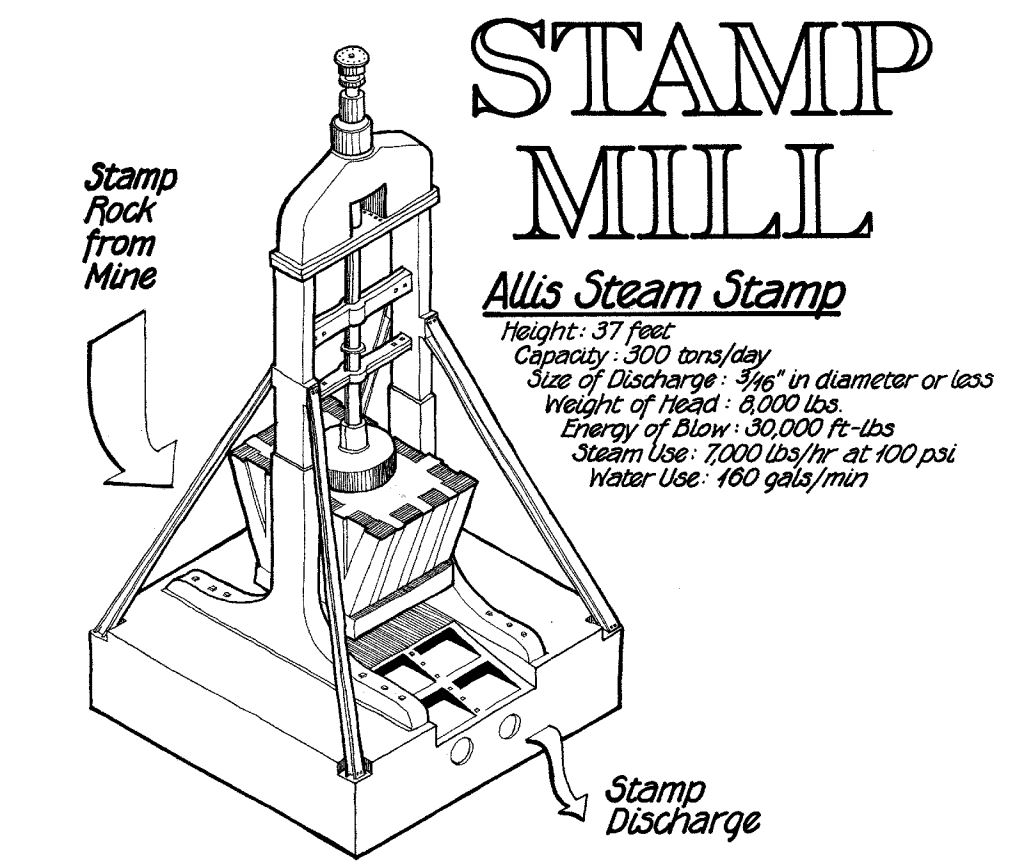
A battery (aka stamp battery, stamp mill or stamping mill) crushes ore by pounding rather than grinding. Each stamp head consists of a set of heavy steel stamps in a vertical frame. The stamp slides up and down crushing the rock.
Batteries were gauged by the number of heads, hence a 10-head battery has 10 stamp heads crushing ore.

The first public battery (as they were originally known) was opened at Norsemam in 18982. Prior to this privately owned and operated batteries were the norm. In considering the legislation to establish public batteries, some last minute adjustments to the wording gave the administrators discretion to “assist” private batteries in certain cases3.

I haven’t been able to find out how many state batteries were established, but by the 1930s the total number of batteies (public and private) was close to 100, dropping to less than 50 by 1958. By 1982 a government review of state battery operations resulted in closure of all by 19874. In 1996 the battery at Ora Banda was rebuilt and reopened. Unfortunately, it never crushed any ore and in 2000 it was badly damaged by bombing and has not been rebuilt5.

As at April 2012, Wikipedia published a list of known state batteries in Western Australia (see below) but this list is believed to be incomplete. Do you know of any more? If you do please let us know at ghostswa@fhwa.org.au. While our focus, as always, is on the ghost towns, for completeness this list includes those state batteries that were located at all known sites, ghostly or otherwise!

List of State Batteries known to have existed in Western Australia
BambooLavertonNannineSouth Greenbushes
Black RangeLeonoraNiagaraSouthern Cross
BulongLindenNorsemanTuckabianna
CarlamindaMarble BarOra BandaTuckanurra
CoolgardieMarvel LochPaddingtonWarriedar
CueMeekatharraPaynes FindWidgiemooltha
DarlotMessengers PatchPaynesvilleWiluna
DesdemonaMenziesPig wellYalgoo
DevonMt EgertonPinjinYarri
DonnybrookMt IdaQuinnsYerilla
DuketonMt KeithRandallsYouanmi
Dumpling GullyMt Sir SamuelRavelstone – Peak HillYundamindera
KalgoorlieMullineRavensthorpe* Mt Jackson
KalpiniMulwarrieSandstone* Siberia
From Wikipedia article – State Batteries in Western Australia, 2012
* Updated 26 Nov 2023 with additional locations from Gone West by Geoffrey Higham.
Closer view of the head frame at a State Battery6


Sources
  1. Eastern Goldfields Historical Society, 2023. The Excelsior Battery at Bardoc. Digitized photograph EG-N-001-005. Accessed online 26 Nov 2023 at https://www.facebook.com/photo/?fbid=662634742545097&set=a.456121176529789. ↩︎
  2. The Western Australian Goldfields Courier, Coolgardie, WA : 1894-1898. Norseman Public Battery. 10 Sep 1898, p.23. Retrieved from http://nla.gov.au/nla.news-article251211132 on 26 Nov 2023  ↩︎
  3. The Golden Age, Coolgardie, WA : 1894-2898. The Public Batteries. 11 Dec 1897, p.3. Retrieved from http://nla.gov.au/nla.news-article256754516 on 26 Nov 2023 ↩︎
  4. Wikipedia, 2023. State Batteries in Western Australia. Retrieved 26 Nov 2023 from https://en.wikipedia.org/wiki/State_Batteries_in_Western_Australia ↩︎
  5. Eastern Goldfields Historical Society, 2017. State Batteries in Western Australia. Video and notes accessed online 26 Nov 2023 https://www.facebook.com/kalgoorliehistory/videos/1489501291104966 ↩︎
  6. F.A.Sharr, 1983. Image Details – State Battery closer view of headframe. Digitized photograph from Heritage Council. Accessed online 26 Nov 2023 at https://inherit.dplh.wa.gov.au/Public/inventory/Image/5ad57a39-0d86-413f-be02-75b1657bc925 ↩︎