The Nallan Wood Strike of 1908 was a significant three-month industrial dispute in the Murchison goldfields of Western Australia that brought the massive Great Fingall mine to a complete standstill. Triggered by demands for increased wood-cutting rates, the strike highlighted deep-seated grievances among a culturally diverse workforce and underscored the critical dependence of the mining industry on wood fuel for its operations.1

The Tinderbox
The conflict was rooted in deteriorating working conditions and economic frustrations that had been building for years. By 1908, woodcutters—who were predominantly of Italian and South European descent—faced increasingly difficult labor for stagnant or diminishing returns.
Key factors included:
- “Cleaning Out” Policies: Employers shifted from allowing “picking” (selective cutting) to requiring “cleaning out,” where workers had to clear entire areas. This forced cutters to spend hours on difficult, low-yield “snags” for very little pay.
- Weighing and Payment Disputes: Cutters were paid by weight, but wood was often left on the line for months to dry. As the wood lost moisture, its weight decreased, directly reducing the workers’ earnings.
- Failure of Arbitration: A 1904 Arbitration Court award had notoriously sided with employers, suggesting that wages were already too high and even recommending reductions. This left workers with a deep distrust of the legal arbitration system.
- Resource Monopolies: Mining companies and firewood suppliers jointly controlled access to wood and water on Crown land, leaving cutters with little leverage outside of direct action.
The Standstill
The strike at Nallan began in late 1908, with cutters demanding higher rates for their labor. The impact on the local economy was immediate and severe, particularly for the townsite of Day Dawn, which was almost entirely dependent on the Great Fingall Mine.2 3
When the firewood supply was cut off, the Great Fingall management announced the mine would close down at 8:00 AM on Tuesday, November 17, 1908. This decision rendered approximately 500 men idle, throwing the community into a state of “disquietude”. While the mine staff and a few maintenance workers were retained, the bulk of the workforce was forced to leave town or wait for a resolution.4
Business circles in Day Dawn expressed considerable disappointment as the strike dragged on, with rumors of settlements repeatedly proving false. The mine management refused to restart operations until enough wood was stacked on the lease to guarantee several weeks of continuous work.
The Intervention
As the strike became an “industrial disaster,” various levels of government were forced to intervene.
- Law Enforcement: Police presence was heavy. Inspector Sellinger was stationed in readiness with 25 police officers, many of them mounted, to handle impending trouble. In a move described as a “harsh suppression,” six Italian strikers were arrested at Nallan. They were initially refused bail by the Warden and were only released by an order from the Supreme Court.5 6
- Government Arbitration: Warden Troy was appointed as an arbitrator and spent days taking “voluminous evidence” from both sides. Additionally, Premier Newton Moore became personally involved, suggesting a settlement based on a daily wage of 12s and a 25% limit on contract labor.7 8
- Local Representation: Mr. Lewis, the Mayor of Day Dawn, and Mr. E. E. Heitmann, MLA, petitioned the Premier to enforce agreements with the Firewood Company to prevent a total collapse of the district’s economy. Heitmann notably argued that the company was not acting in good faith, withdrawing offers just as settlements appeared likely.9
The Resolution
The strike was characterized by a tug-of-war between the Firewood Company, which wanted to adhere to the Warden’s original award, and the workers, who sought a slight increase of approximately 1d per ton or a shift to a daily wage.10 11
The dispute eventually reached a settlement prospect in November 1908, with a proposed rate of 12s 1d per day for cutters. This was part of a broader shift where woodcutters began to reject the “red tape” of the Arbitration Court in favor of direct bargaining and strike action.12 13
The Aftermath
The aftermath of the Nallan Wood Strike had lasting implications:
- Militancy and Recognition: The success of the “foreign element” in standing up to the powerful Chamber of Mines earned them new respect within the wider Labor movement.14
- Judicial Precedent: The harsh sentences handed down to strikers—including hard labor for leaders—were intended by magistrates like John Michael Finnerty to “impress upon the foreigners” the necessity of following British law.15
- Unionization: Within a few years, woodcutters were integrated into the formal trade union movement, ending their previous isolation from the mine workforce.16
The Nallan Wood Strike serves as a stark reminder of the fragile balance of the early 20th-century goldfields, where a handful of woodcutters could bring a global mining giant to its knees in their quest for industrial justice.
Sources
- Naomi Segal, 2011. The 1908 wood line strikes in Western Australia: causes and consequences. Published in Journal of Management and Organization, 2011. Retrieved 29 Jan 2026 from https://www.anzam.org/wp-content/uploads/pdf-manager/641_ANZAM2011-468.PDF ↩︎
- NALLAN WOOD STRIKE. (1908, November 16). The West Australian (Perth, WA : 1879 – 1954), p. 5. Retrieved January 25, 2026, from http://nla.gov.au/nla.news-article26213772 ↩︎
- Heritage Council, 2024. Brega Wells, Cue. Retrieved 25 Jan 2026 from https://inherit.dplh.wa.gov.au/Public/Inventory/Details/cb05067a-feaf-4877-b1b9-c9d12bfc3f12 ↩︎
- NALLAN WOOD STRIKE. (1908, November 18). The West Australian (Perth, WA : 1879 – 1954), p. 7. Retrieved January 25, 2026, from http://nla.gov.au/nla.news-article26213957 ↩︎
- NALLAN WOOD STRIKE. (1908, October 16). The West Australian (Perth, WA : 1879 – 1954), p. 5. Retrieved January 25, 2026, from http://nla.gov.au/nla.news-article26211514 ↩︎
- Segal, 2011, p.12 ↩︎
- THE NALLAN WOOD STRIKE. (1908, October 2). The West Australian (Perth, WA : 1879 – 1954), p. 5. Retrieved January 25, 2026, from http://nla.gov.au/nla.news-article26210373 ↩︎
- Nallan Wood Strike. (1908, November 24). The Murchison Times and Day Dawn Gazette (Cue, WA : 1894 – 1925), p. 2. Retrieved January 25, 2026, from http://nla.gov.au/nla.news-article233449382 ↩︎
- NALLAN WOOD STRIKE. (1908, November 16). The West Australian (Perth, WA : 1879 – 1954), p. 5. Retrieved January 25, 2026, from http://nla.gov.au/nla.news-article26213772 ↩︎
- NALLAN WOOD STRIKE. (1908, November 18). The West Australian (Perth, WA : 1879 – 1954), p. 7. Retrieved January 25, 2026, from http://nla.gov.au/nla.news-article26213957 ↩︎
- Nallan Wood Strike. (1908, November 24). The Murchison Times and Day Dawn Gazette (Cue, WA : 1894 – 1925), p. 2. Retrieved January 25, 2026, from http://nla.gov.au/nla.news-article233449382 ↩︎
- THE NALLAN WOOD STRIKE (1908, November 5). Kalgoorlie Miner (WA : 1895 – 1954), p. 1. Retrieved January 25, 2026, from http://nla.gov.au/nla.news-article90476498 ↩︎
- Segal, 2011, p.3 ↩︎
- ibid, p.12 ↩︎
- ibid, pp.11-12 ↩︎
- ibid, p.3 ↩︎
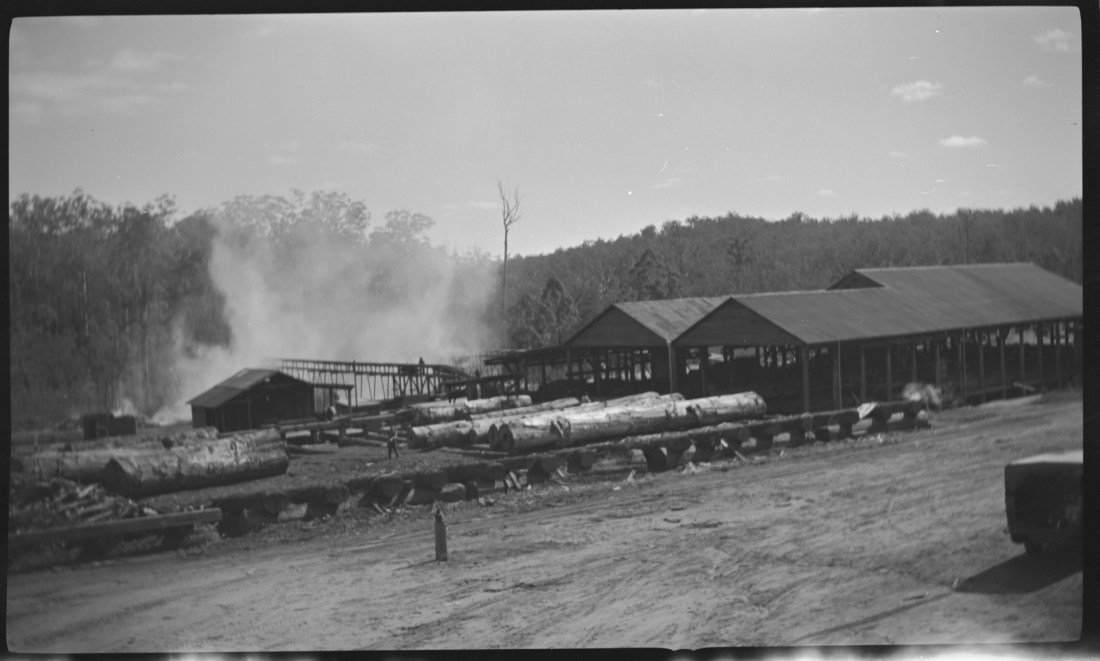
 People of Western Australia's Ghost Towns