Today, 19 Dec 2023, our Facebook Group has been changed from a public group to a private group. This has been done to protect your privacy. It will also provide controls that will make management of the group easier for our volunteer administrators.
Post relating to our project and the progress we are making

Today, 19 Dec 2023, our Facebook Group has been changed from a public group to a private group. This has been done to protect your privacy. It will also provide controls that will make management of the group easier for our volunteer administrators.

When we started this project we had a list of about 250 Ghost Towns. It didn’t take very long before the list began to grow. As at today’s update, we have 628 (with a couple that we are holding in reserve pending confirmation of their ghostly status).
All three lists have been updated (alphabetical listing, by Region, by LGA) and the changes have been marked in the Alpha and LGA lists. There have been lots added with this update, so check it out! If you want to see what is new in your area, I suggest checking the LGA list out first, as this will tell you how many communities have been identified around you, and particularly will highlight where new entries have been added. Just remember when looking at the number of communities this includes a line entry for any known alternative names of a particular community, so that could mean that the same community is listed twice, three times or even more depending upon how many times it has changed its name over time.
A lot of new towns came to light following the broadcasts on ABC Radio and we are really grateful to everyone for their interest, enthusiasm and participation. But every day we are getting new leads, so keep checking back to see the updates and subscribe to this blog to be notified when there’s a new post.
If you want to add a ghost town or abandoned community to the list, please contact us.

Thank you to everyone who has joined us on this great ride!!!
As I have been researching ghost towns, I have often come across the phrase “state battery”. Without actually taking the time out to discover what this was, ideas that flittered through my mind included some sort of power generation facility or a method of providing fresh eggs and chickens in the outback.
Today is the day. I have found out what a state battery is, and I’m going to share it here because there could be others like me who have no clue!! And please, if I have made any incorrect assumptions or conclusions, tell me!!

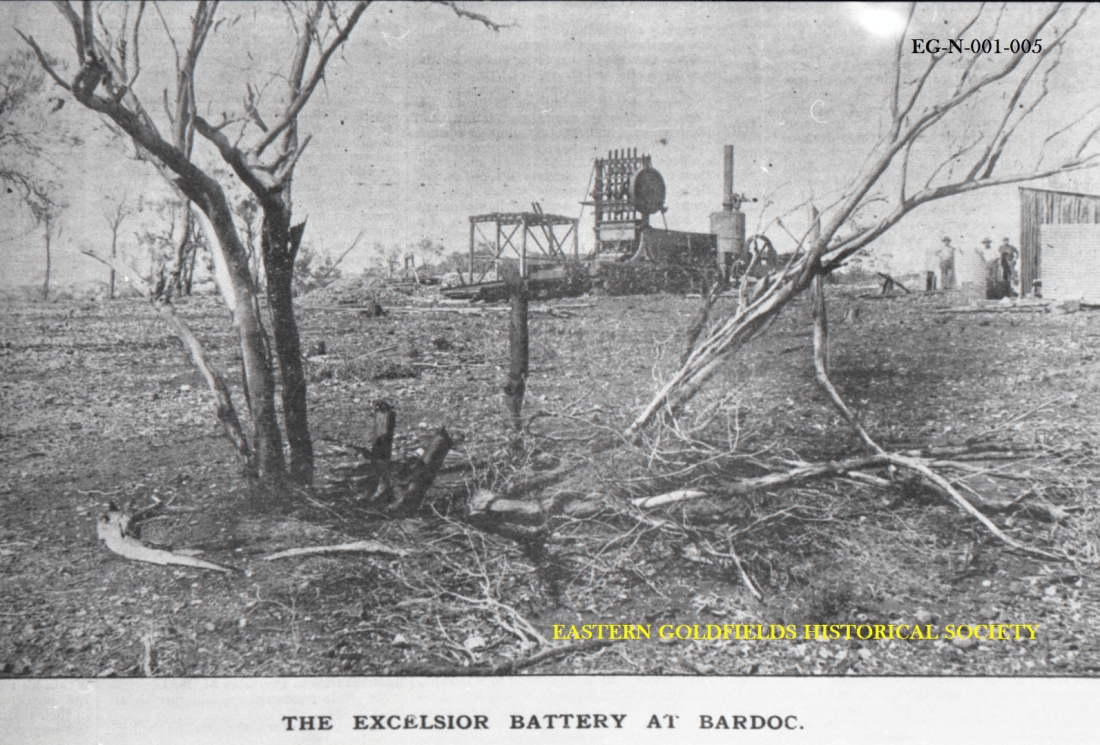
In Western Australia a state battery was a government owned and operated crushing facility that crushed the ore found by prospectors and dug from small mines in the area. The Western Australian Department of Mines were the government agency responsible for their operation. Some of the batteries were only operating for one or two years, while others were in place for 5o or more years. Western Australia was the only state in Australia to provide this type of facility.

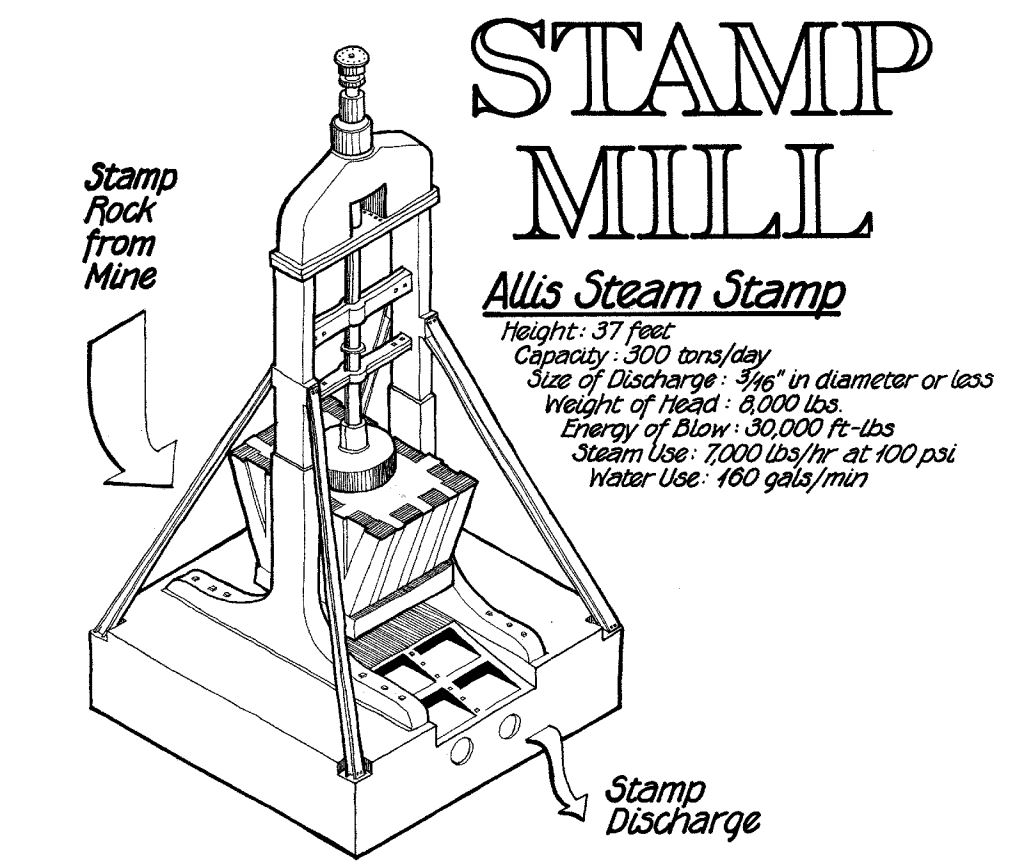
A battery (aka stamp battery, stamp mill or stamping mill) crushes ore by pounding rather than grinding. Each stamp head consists of a set of heavy steel stamps in a vertical frame. The stamp slides up and down crushing the rock.
Batteries were gauged by the number of heads, hence a 10-head battery has 10 stamp heads crushing ore.
The first public battery (as they were originally known) was opened at Norsemam in 18982. Prior to this privately owned and operated batteries were the norm. In considering the legislation to establish public batteries, some last minute adjustments to the wording gave the administrators discretion to “assist” private batteries in certain cases3.
I haven’t been able to find out how many state batteries were established, but by the 1930s the total number of batteies (public and private) was close to 100, dropping to less than 50 by 1958. By 1982 a government review of state battery operations resulted in closure of all by 19874. In 1996 the battery at Ora Banda was rebuilt and reopened. Unfortunately, it never crushed any ore and in 2000 it was badly damaged by bombing and has not been rebuilt5.
As at April 2012, Wikipedia published a list of known state batteries in Western Australia (see below) but this list is believed to be incomplete. Do you know of any more? If you do please let us know at ghostswa@fhwa.org.au. While our focus, as always, is on the ghost towns, for completeness this list includes those state batteries that were located at all known sites, ghostly or otherwise!
| Bamboo | Laverton | Nannine | South Greenbushes |
| Black Range | Leonora | Niagara | Southern Cross |
| Bulong | Linden | Norseman | Tuckabianna |
| Carlaminda | Marble Bar | Ora Banda | Tuckanurra |
| Coolgardie | Marvel Loch | Paddington | Warriedar |
| Cue | Meekatharra | Paynes Find | Widgiemooltha |
| Darlot | Messengers Patch | Paynesville | Wiluna |
| Desdemona | Menzies | Pig well | Yalgoo |
| Devon | Mt Egerton | Pinjin | Yarri |
| Donnybrook | Mt Ida | Quinns | Yerilla |
| Duketon | Mt Keith | Randalls | Youanmi |
| Dumpling Gully | Mt Sir Samuel | Ravelstone – Peak Hill | Yundamindera |
| Kalgoorlie | Mulline | Ravensthorpe | * Mt Jackson |
| Kalpini | Mulwarrie | Sandstone | * Siberia |

The following article was published on page 1 of The Sun newspaper on Sunday, 21 November 1909. I first stumbled across the name of Billy Frost while researching Siberia where he, along with Bob Bonner, discovered gold in 1893.
That well-known prospector, Billy Frost, the discoverer of Goongarrie, Siberia and Burtville, and the pegger out of the Premier at Kunanalling, the third lease applied for on the Coolgardie goldficlds, is again amongst us after prospecting in pretty nearly every goldfield in the world. After a long experience and many hairbreadth escapes, in which his death has been duly chronicled many times, Frost has returned, and is of opinion that Australia is “God’s own country”. Anyhow he is going to have one more try. A syndicate is being formed of 40 shares of £25 each to fix up matters. Frost gets nothing, either in cash or wages, but takes 10 fully paid up shares, which are a pure gamble. Ten further shares are held in reserve for contingencies, while 20 contributing shares, £12 10/ to be called up, are being issued. Of the latter half have been placed in Perth, and goldfielders have now an opportunity to apply for the balance, five of which have already been placed. The Government is backing the venture with camels, and all that Frost requires is tucker for a six to twelve mouths’ trip, which, in the early days he could have got in the twinkling of a star. Frost is staying with Jerry McAuliffe, prospector of the White Feather, Yerilla and other shows, but is rather diffident of being interviewed by members of the fourth, or any other, estate. He starts outback almost immediately.
BILLY FROST. (1909 November 21). The Sun (Kalgoorlie, WA : 1898 – 1929), p.1.1
It seems like Billy was a bit of a lad, and here I may be reading too much into it, but the tone of the article suggests that investing your hard earned in his new venture might be a little risky?
In 1926, in Mackinlay, Queensland, Billy was shot by Mick Ford during an argument. He is buried at Cloncurry2.

This morning I spoke to Nadia Mitsopoulos on ABC Perth about our project. About 2 hours and 8 minutes into the show. https://www.abc.net.au/listen/programs/perth-mornings/mornings/103084638
And this afternoon, I spoke to Andrew Collins on ABC Great Southern on the same topic. And this time it is only 7 mins and 9 secs into the program! https://www.abc.net.au/listen/programs/wa-drive/statewide-drive/103084654
The response has been amazing!! Thank you everyone!

If you have been looking at our alphabetical ghost town listing recently, you will have started to see hashtags appearing in the right hand column. This indicates a quick way of finding content in our Facebook group. More and more are being added each day, especially where new information has been posted on Facebook.

If it is the town name that is highlighted, this indicates that a profile of the town has been written and you can link straight through to that page on our website.
Our aim is to continually improve the functionality of our website and to help you find as much as you can about the towns that interest you. You can help us by contributing either by email to ghostswa@fhwa.org.au or by posting on our Facebook group.
See you all soon, and happy ghost hunting!
In a state that is larger than many countries around the world, you could expect to find some extraordinary stories. Stories of hardship and courage; stories of extreme wealth and extreme poverty; stories of cultural diversity and of bonds formed in adversity; stories of the building of a national identity but also stories of environmental vandalism. It is all there written in the earth. And sometimes the earth is all that is left to mark the passing of the communities that have made up the history of the state. There’s one thing that brings all these stories together – the people who lived them.
2029 will mark two significant Western Australian milestones. The first milestone is the Bicentenary of European settlement. The second is FamilyHistoryWA’s 50th Anniversary. To mark these events, the Society (FHWA) has launched a project to gather together everything we can find about the people who lived in the ghost towns of Western Australia. The project timeframe is six years. The project will be launched in 2029 to coincide with the joint celebrations.

At present the list of identified ghost towns sits at more than 500. Of these perhaps the mining towns are the best known. In the 1901 census the largest towns in Western Australia included the mining towns of Day Dawn, Kanowna, Mount Morgan, and Nannine, all of which are ghost towns today. But there were many other non-mining gazetted towns that reflect Western Australia’s history of building railway lines, a long pipeline from Perth to Kalgoorlie, timber towns (which supplied the railway sleepers), the government-initiated Soldier Settlement and Group Settlement schemes and towns that were created to service spread out farming communities.
Please join us on our journey of discovery.
Polish lady, Pela Behrendt came to Ewlyamartup with her husband and young daughter in 1950 from the Northam Migrant camp when her husband got a two-year contract to work on the railway. Luckily for us Pela was interviewed about her experiences in the 1990s and that interview has been digitalized by SLWA1 .

Pela found Australia in the 1950s to be a primitive place to live. Moving to Ewlyamartup, a siding on the Nyabing Katanning train line, probably reinforced that impression. The local farmers used to load their produce on the train at Ewlyamartup for transportation to Katanning and beyond.
Accommodation for Pela’s family and the other eastern European families living there consisted of tents with their own kitchen block. There was no electricity or refrigerators and drinking water was delivered once a week from Katanning. Kerosine lamps were used for lighting with heating provided by kerosine heaters.
Katanning was 11 miles away. If Pela needed to go into town, she caught a ride on the school bus that passed by. Her husband used to ride a push bike into town. One of things he did in Katanning was deposit their savings into the bank. Pela was a good manager of money. She was also very resourceful. As she had brought her
sewing machine from Europe, she bartered her sewing skills for fresh produce for her family. As a result, Pela rarely needed to buy milk, eggs, vegetables, or fruit and could give her husband £5 each Friday to bank, as she only needed £2 pounds, (out of his weekly salary of £7) to live on.
In 1951 Pela’s family moved away from Ewlyamartup to another railway siding, Elleker, which was closer to Albany. A few years later they were able to buy a parcel of land in Albany and and eventually built a house there. Their time in Ewlyamartup was a stepping stone for them to achieve their Australian dream.

A note from the author, Josie Milwood:
After a recent trip to Lake Ewlyamartup, where I discovered that a railway settlement with a school had previously existed by the lake, I went searching to see what I could find out about Ewlyamartup. Ewlyamartup was one of the first settled districts out of Katanning with an ambitious town plan drawn up in the 1890s. Prior to that Ewlyamartup was a significant place for the local Indigenous people, a fact that has only been acknowledged in recent years when interpretive signage has been placed near the restored lake. As the Ewlyamartup area was settled by farmers there was a need for a school. The first school opened in 1905 but closed in 1908. It reopened in 1912 and remained open until the end of 19432.
Today I have added 36 new Towns to the alphabetical listing on the website. Over the next few days, I will also add them to the “By Region” and “By LGA” listings so that there’s complete functionality.
The towns include:
Check the list to see if your town is included!! Contact us if it is missing or if we have something wrong.