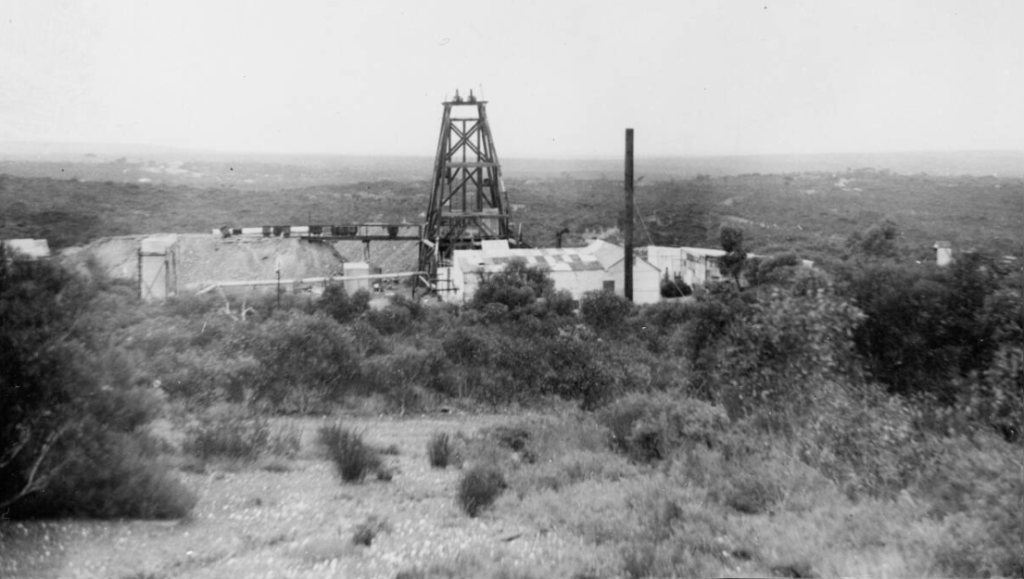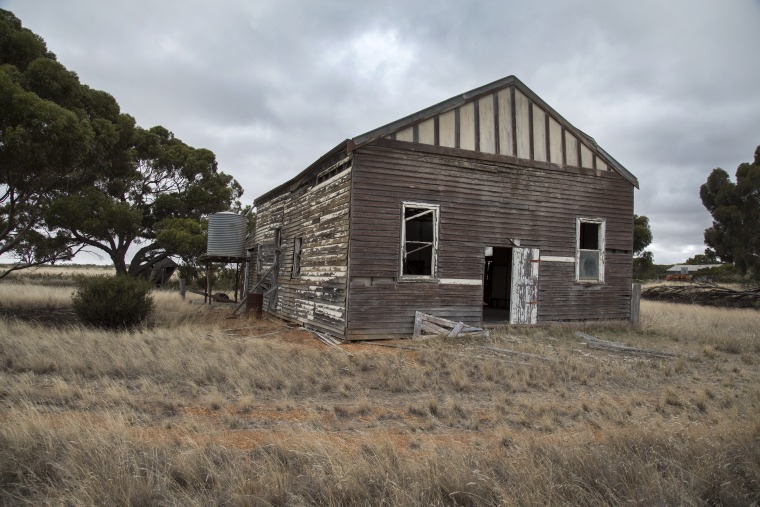
Wyn Green was born in Kundip in Feb 1911. In later years she wrote a poem called “The Ghost Town of My Dreams” which you can find, in full, in the book “Kundip 1901-2001” by R Goldfinch1. This is an excerpt…
The gorge still breathes its glory swathed in purpose and in gold Rocks I climbed so many times their majesty still hold There’s a lone crow a-cawing on a distant hill Where the sombre mines with their rotting lines loom, eerie, and so still.
I hear the joyous notes of childhood wafted on the air Occupants of homesteads which are dotted here and there But Alas! The vision passes, again the streets are bare – Homes have gone – have crumbled and none are there to care.
Wherever I may wander guided by my schemes Kundip, I will remember – the ghost town of my dreams
I have just run across a gently amusing newspaper cutting from 19331 that I want to share with you…
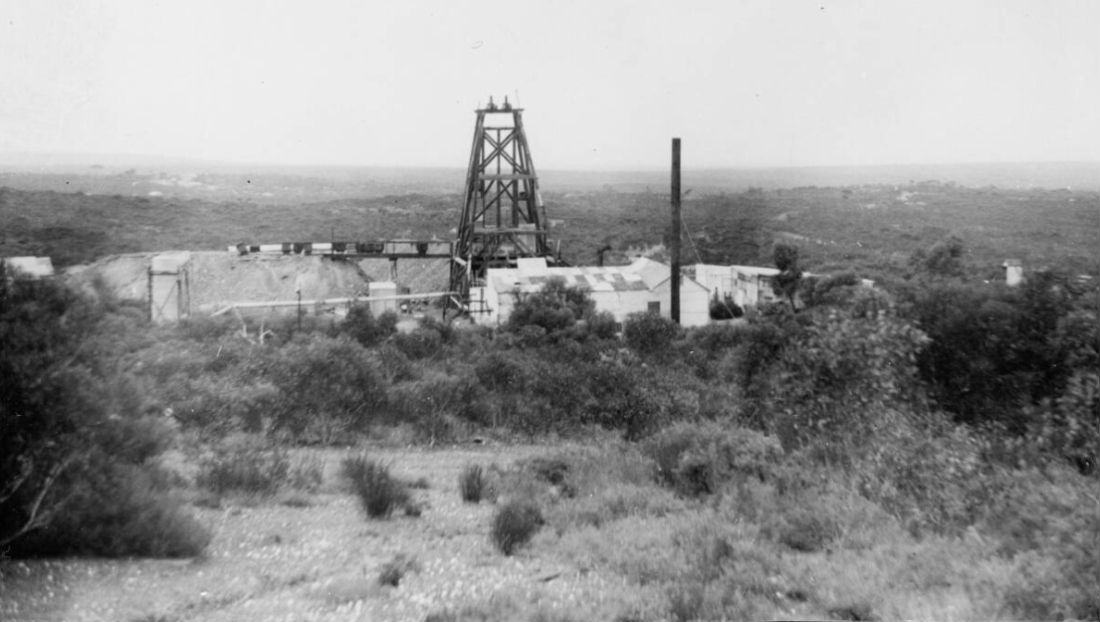
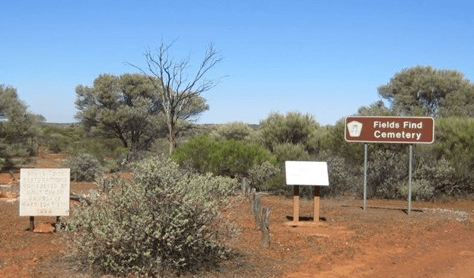
Coley Crane, a well-known Perth citizen, is interested in a very promising mining venture at Field’s Find. Recently he was showing a visitor round the ine and drew attention to the ore dump beneath the whim legs. “It is nice ore,” said Coley. “Ah well,” condoned the newcomer, “it all takes time, and while the improvised plant might be improved upon that will come in time; it will all come in time.”
“I don’t think,” said Coley, “you quite understood what I said – I remarked that this was a nice ore.” The visitor agreed, but continued: “But I wouldn’t worry about that. You’ll have everything spick and span later on.”
Coley was still puzzled. “I was referring,” he persisted, “to the quartz in the lump here.”
“Oh,” exclaimed the man from Perth, elucidation dawning upon him, “I thought you were referring to the superstructure and that you were saying it was an eye-sore!”
This is a delightful wedding group, with the bride, Miss Maggie Symonds, wearing “…a pretty dress of white silk with point lace, a tulle veil, and a coronet of orange blossoms…the presents were both numerous and costly”. Some 80 guests partook of breakfast, then attended a ball in the evening at the Anaconda Hotel1, 2,3.
Less than a year before, Alfred Frederick Thompson, her new husband, the landlord at the Anaconda Hotel, was in custody, charged with unlawfully shooting and wounding John Clinton. He was acquitted – it was decided that he needed to protect himself with a revolver against some of his customers who were “attempting to take possession of the hotel”. This was definitely the Wild West, and one wonders if his bride was prepared for this behaviour, not uncommon, and including “outrages with dynamite” on the billiard hall and also the hotel4, 5, 6, 7, 8, 9.
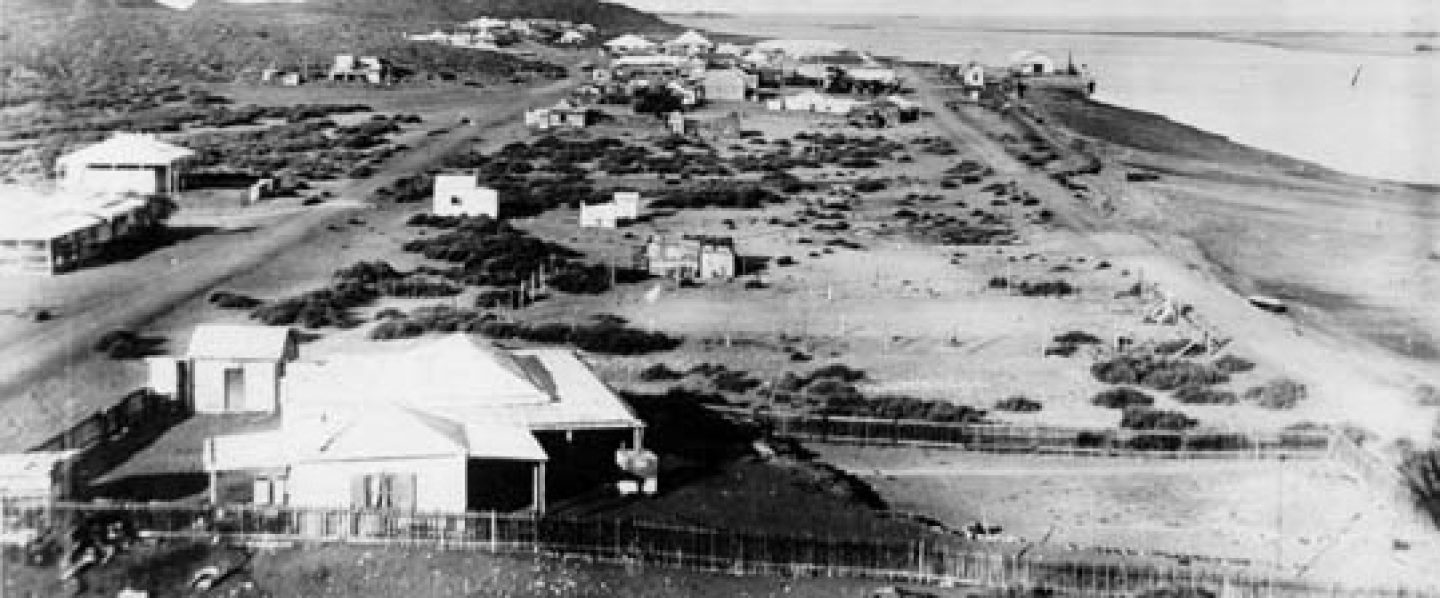
Over time, Anaconda has been known by various names, including Eulaminna, Murrin and Murrin Murrin. Lots were originally surveyed in 1900 to serve the nearby Murrin Murrin Copper Mine that was known as the Anaconda Copper Mine at the time. By 1903 there were 64 residential lots and a population of about 350. A Police Station was also established in 1903 and the town boasted two hotels, two stores a chemist and a newsagent. A mail receiver was in place but no telegraph station.
Researchers – if this is your family, the bride’s name is misspelled – she is really Margaret Robina (or Rosina) Simounds. If you know more about this family, please let us know at ghostswa@fhwa.org.au.
Kalgoorlie Western Argus (WA : 1896 – 1916),(1903, October 20) Wedding Group, Anaconda, Murrin Murrin. Thompson-Symnonds. p. 23. Retrieved October 25, 2024, from http://nla.gov.au/nla.news-page4123379↩︎
SHOOTING AFFRAY AT ANACONDA (1902, March 7). The Malcolm Chronicle and Leonora Advertiser (WA : 1897 – 1905), p. 3. Retrieved October 23, 2024, from http://nla.gov.au/nla.news-article228044349↩︎
News of the Week. (1902, March 14). The Malcolm Chronicle and Leonora Advertiser (WA : 1897 – 1905), p. 2. Retrieved October 23, 2024, from http://nla.gov.au/nla.news-article228044368↩︎
MALCOLM POLICE COURT. (1902, March 21). The Malcolm Chronicle and Leonora Advertiser (WA : 1897 – 1905), p. 3. Retrieved October 23, 2024, from http://nla.gov.au/nla.news-article228044382↩︎
THE ANACONDA FRACAS. (1902, March 28). The Malcolm Chronicle and Leonora Advertiser (WA : 1897 – 1905), p. 2. Retrieved October 23, 2024, from http://nla.gov.au/nla.news-article228044400↩︎
THE ANACONDA FRACAS. (1902, June 27). The Malcolm Chronicle and Leonora Advertiser (WA : 1897 – 1905), p. 3. Retrieved October 23, 2024, from http://nla.gov.au/nla.news-article228044723↩︎
On 23 October 2024, our team will start Phase 2 of the project. Following the completion of the Pilot Phase (Phase 1) on 30 September, the findings of the pilot were assessed and a report was submitted to the FamilyHistoryWA Management Committee recommending that the project proceed. This new phase of the project will add 15 new communities to the existing list of 4 communities that are being researched. Full details of the 15 new communities can be found here.
If you are interested in joining the project team, or if you have information about any of the communities on our list, please email ghostswa@fhwa.org.au.
Cossack in 1886 was a frontier town in one of the most isolated colonies in the world. It was a centre for pearling and pearl shell fishing and the entry point for pastoralists who established extensive stations. By 1886 Cossack had a stone wharf and several other stone buildings such as the Post and Telegraph Office and a Mercantile Store, but not a lot of other substantial buildings. How did it attract an operatic performance by the most popular Opera Troupe of the decade?
Perth loved Mr Stanley’s Opera Troupe. It played to huge audiences and received mostly glowing reviews. The Railway employees took up a collection so they could present Mr and Mrs Stanley a gold ring and earrings as a token of their esteem and appreciation1. A Fremantle harbour official stole flowers, roses, and bouquets to bestow upon sundry members of Stanley’s Opera Troupe before they left Perth2. An ode of farewell to the players was written and published in the Perth news in October 18853.
Mr Stanley’s Opera Troupe and other itinerant theatre groups used the coastal steamers to travel around Australia4. In early 1886, Mr Stanley was taking his Opera Troupe to Singapore and to get there travelled on a coastal steamer that called in at Champion Bay, Gascoyne, and Cossack before leaving Australia.
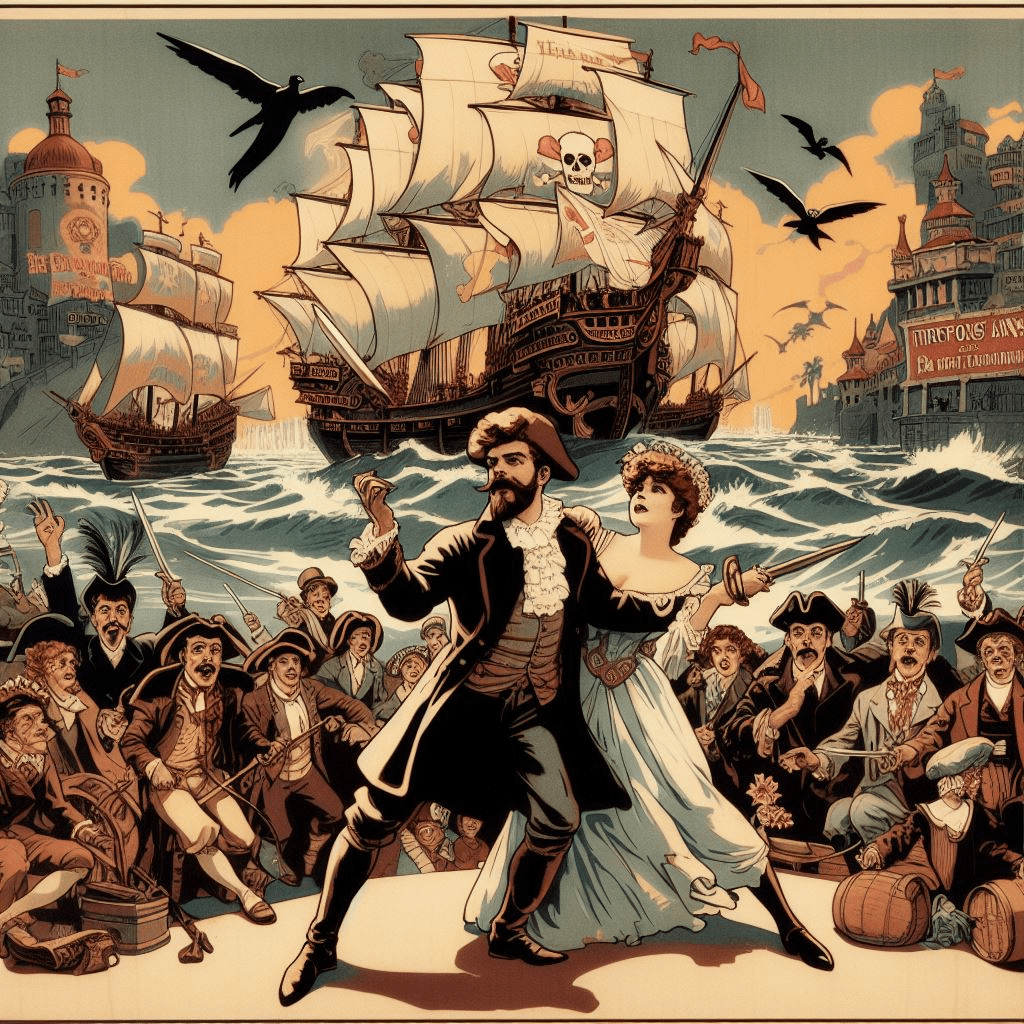
Ever the entrepreneur, Mr Stanley used his time in port in Cossack to his advantage and had his Opera Troupe perform two shows at Roebourne before performing their last show in Cossack. The Cossack show was a performance of Gilbert and Sullivan’s Pirates of Penzance and took place on Saturday 13 March 18865.
I have been unable to find a review of the Cossack performance of this opera, but when it was performed in Perth the previous October it received a review that said –
The acting was very spirited, the costumes pretty, the children acquitted themselves admirably in their dancing, but the actors said their words very quickly, and some songs were ‘absolutely gabbled’.6
Image generated by DALL-E
Who was Mr Stanley and how did he get into show business? The only biography I can find of Harry Stanley was supplied by him to a Perth newspaper in 18857. His life had so many self-reported highlights and makes me wonder if he embellished his life story.
Stanley was born in England but after a childhood supposedly touring Europe he joined the Royal Navy and served in the Crimean War. He came to Australia in the mid-1850s, worked on a steamship out of Melbourne before heading for the goldfields, where he was stuck up by the notorious bushranger Black Johnston. After failing to find his fortune, Stanley joined a Theatrical Troupe where he found success playing the character of Rob Roy. He moved from Troupe to Troupe, in various roles before forming his company and managing the Lyceum Theatre and Hotel in Sandhurst.
Stanley travelled to South Africa in 1870 with the American War Panorama Troupe but was unfortunately shipwrecked on the way. Luckily he saved the Panorama and just so happened to be on the diamond fields of Kimberley when they raised the British flag. Stanley was received by African presidents and kings during that trip. He spent time as a guest of the Nizam at Hyderabad and was asked to lecture on war to the Sikh regiments. Stanley then went to Burma, where he was presented with a medal from the King and subsequently travelled to Siam, where he stayed at the palaces of the kings.
Perhaps colourful renditions of life stories come with show business. After leaving Cossack it was reported that Mr Stanley was struck insensible by lightning for three hours while on deck of the SS Natal8. Fortunately, Stanley had recovered by the time he reached Singapore.
Stanley and his Opera Troupe seem to have spent the next few years performing in the East, visiting “the colonial port cities with large European populations where there was a high demand for the sort of shows he staged9.
Stanley returned to Australia to settle some business in 1896, but while in Newcastle his heart condition suddenly worsened, and he died (without a will). Stanley was nearly 60 years old10. The Freemasons in Calcutta raised money for his wife and daughters to return to Australia. Entertainments such as Mr Stanley’s Opera Troupe were facing competition from newer forms of entertainment such as roller skating. The story of Harry Stanley and his Opera Troupe is a colourful one. What other larger than life people’s stories are awaiting discovery in Western Australia’s Ghost Towns?
Sources
Presentation to Mr and Mrs Stanley. The Inquirer and Commercial News, February 1886, p. 5. ↩︎
Perth Local Court. Western Mail, 2 January 1886, p. 10. ↩︎
Farewell to Stanley’s Opera Troupe. The Daily News, 6 November 1885, p. 3. ↩︎
One of the most frequent questions that is asked is how do we decide what communities are included on our list of Ghost Towns. Other frequently asked questions are – how do you choose what towns to work on? and when will my favourite town be included? So I thought I might run through the process from start to finish to help everyone to understand what is going on in the background.
So we started at least eight months ago now, with a preliminary list of Ghost Towns that numbered about 250. It was only ever a starting point, but it was a great way to kick everything off. We created a master list that included, not only the name of the town, but any/all alternative names. Some of the towns only ever had one name (as far as we know) but others have, over time, been known by two, three, four or even five different names. The main name for a community is known as Primary, while all the rest are known as Secondary.
A couple of great examples of this are included in our Pilot. Cossack was originally known as Tien Tsin, and by the traditional name of Bajinhurrba. In some records it is recorded as Tien Tsin Harbour or Butcher’s Inlet. And other records talk about the Lazarette (the Cossack Leprosarium). Goongarrie was originally called 90 Mile or Ninety Mile, as well as Roaring Gimlet and sometimes called Canegrass or Canegrass Swamp. When we are researching Cossack and Goongarrie, we have to also research all of the alternative names to make certain we don’t miss anyone. So the original list of 250 grew very quickly to 500 or more. Once we launched the Facebook group and started to get media coverage we received lots more leads, so that, by the time the Pilot started to actually collect data the list was nearing 700.
We chose the first four communities that are part of the Pilot early on. They were chosen because they represent a cross section of the types of community that will be found in the full list. But the question now arose – How do we decide the order in which we will proceed through the list? We needed to come up with a process that spread the workload evenly and was not influenced by any indivduals personal preference for any of the towns.
Step 1 – estimating how much work might be involved in processing any particular town on the list.
For this we turned to the State Records Office of Western Australia. SRO’s archives contain records of much of the life and history of our State, including our Ghost Towns. So we did a search on their site to determine how many records would be involved in researching each of the communities on our Master List. Of course, this won’t be the only place where we will be researching, but it gave us an idea of how big or small the task might be.
The tasks were ranked as High – more than 200 records, Medium – between 76 and 199 records, Low – between 26 and 75 records, and Small – less than 25 records. To spread the workload, we made the decision that each phase of the project would include:
High – 1 communities
Medium – 2 communities
Low – 4 to 6 communities
Small – 6 or more communities
Step 2 – Determining the order in which the communities will be processed
And now the fun starts. How do you choose the communities for each phase without fear or favour. We considered pulling names out of a hat, but then we came up with a fun game that made a very long, potentially tedious, task become fun – Scrabble tiles (just 26 tiles, no duplicates).
Starting with the list of High Primaries, we drew the first tile. G. And just like that we had the first town for Phase 2 – Gwalia. Putting the G back into the bag, we filtered the list so that we had Medium Primaries. Then we drew two tiles – B and E. And so it went all the way through the list until every community was prioritised. It took several days, but by the end we had a prioritised list.
New communities being added to the list
Since that was done nearly 100 more communities have been suggested to be added to the project. These will be considered by the Project Board and, if suitable, will be added to the prioritised list. Of course, the pressure is off as they will, of course, be added to the latest phases of the project.
Right now, we are working on the Pilot and it is going very well.
And, let me be the first to thank our wonderful Volunteers. You guys rock!
I just added 47 new ghost communities to the alphabetical listing on the website. Places like Burbidge, Hayes’ New Find and Lake Biddy! When time (and Xmas preparations permit) I will add them to the LGA and Regional lists as well.
Today, 19 Dec 2023, our Facebook Group has been changed from a public group to a private group. This has been done to protect your privacy. It will also provide controls that will make management of the group easier for our volunteer administrators.
When we started this project we had a list of about 250 Ghost Towns. It didn’t take very long before the list began to grow. As at today’s update, we have 628 (with a couple that we are holding in reserve pending confirmation of their ghostly status).
All three lists have been updated (alphabetical listing, by Region, by LGA) and the changes have been marked in the Alpha and LGA lists. There have been lots added with this update, so check it out! If you want to see what is new in your area, I suggest checking the LGA list out first, as this will tell you how many communities have been identified around you, and particularly will highlight where new entries have been added. Just remember when looking at the number of communities this includes a line entry for any known alternative names of a particular community, so that could mean that the same community is listed twice, three times or even more depending upon how many times it has changed its name over time.
A lot of new towns came to light following the broadcasts on ABC Radio and we are really grateful to everyone for their interest, enthusiasm and participation. But every day we are getting new leads, so keep checking back to see the updates and subscribe to this blog to be notified when there’s a new post.
If you want to add a ghost town or abandoned community to the list, please contact us.