Our Pilot Communities

For a project of this complexity, it is important to get the processes correct right from the beginning. To do this, we need to test our tools and work flows on real examples. So the Project team have chosen four communities that represent different types of settlement, different industries, different population profiles, so that we can work out the bugs before the full teams start work.

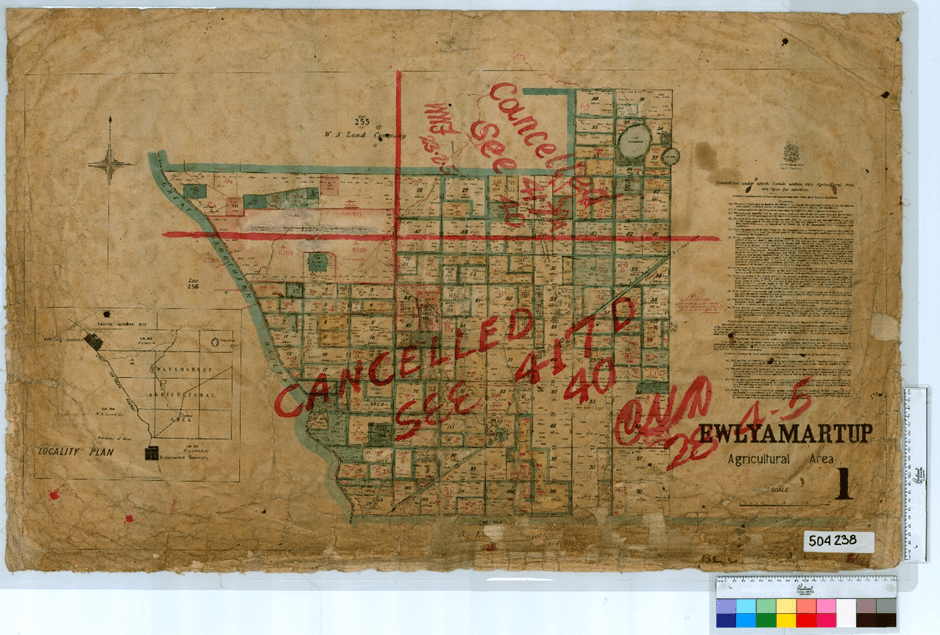
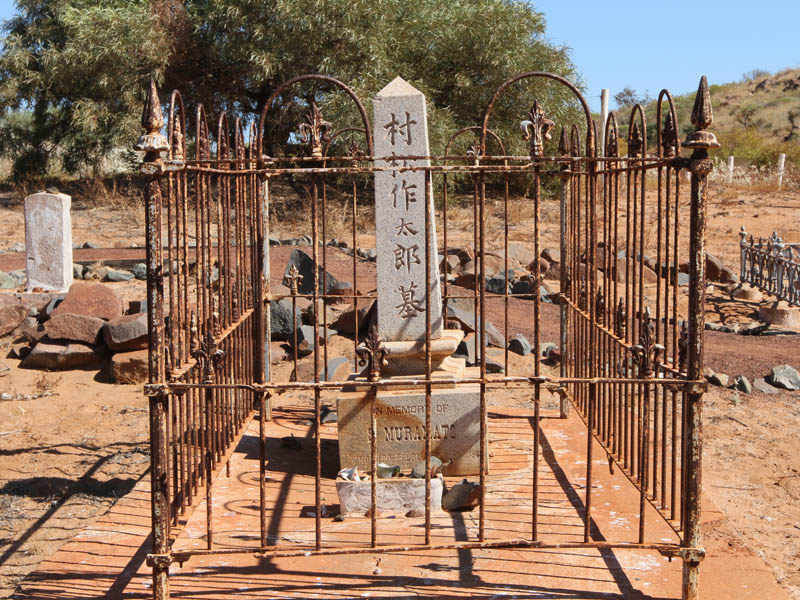
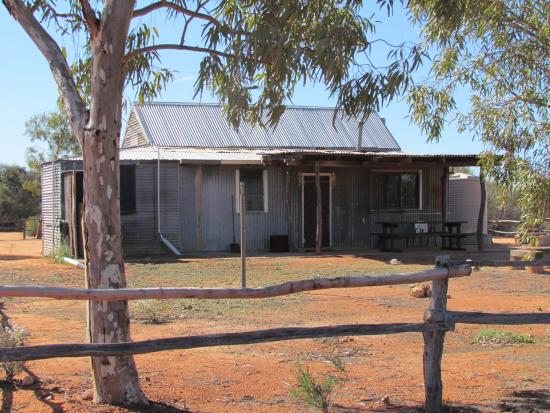
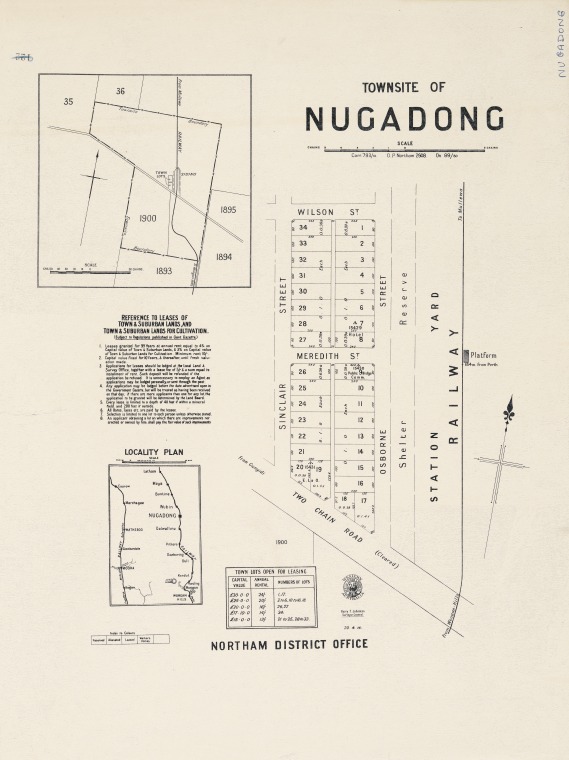
Cossack, Goongarrie, Nugadong, Goodwood Timber Mill

Cossack

Before Broome, Cossack, at the mouth of the Harding River in the Pilbara, was the hub of the pearling industry in Western Australia. Originally named Tien Tsin in 1863, the name was changed to Cossack in 18711 and the townsite was officially declared in 1872. The area is also known by the traditional name Bajinhurrba.

Apart from the pearling industry, it was a major port for the Pastoral industry and, in the 1880s, hundreds of prospectors arrived there searching for gold in the Pilbara. The major buildings in area during this period included a stone wharf, the bonded store and customs house, a post and telegraph office, police barracks, court house, school, tramway and a selection of stores. Chinese, Malays, Japanese and Afghans all came to the area, and many of them, including prisoners, were involved in the construction of the Jarman Island Lighthouse2. By the 1890s, Cossack was a thriving community. However, on 4 April 1898 a major cyclone destroyed much of the town34. By 1900 the pearling fleet had moved north to Broome and by 1910 the municipality was dissolved.

That wasn’t the end of the story. In 1910, a site on Butcher’s Inlet was gazetted as a quarantine reserve for a leprosarium and this remained in operation until 1931 when the remaining fourteen patients were transferred to Darwin5.

People continued to live in Cossack in small numbers until after World War II, but by 1950 it had become a ghost town. The remaining buildings have now been restored, and Cossack has become something of a tourist destination in recent years.

Goongarrie

In 1893 a group of goldminers named Frost, Pickersgill, Bennett and Cahill discovered gold in an area6 about 84Km north of Kalgoorlie. Initially known as 90 Mile (the estimated distance to Coolgardie) or Roaring Gimlet (the sound of the wind blowing through the Gimlet trees)7, the town was gazetted in 1895. The town was located on the railway line that ran between Menzies and Kalgoorlie.

At its peak the town had a water supply, police presence, transport services (coach and later rail), post and telegraph, hotels and a boarding house, a miner’s institute including a library, and a full range of retail including two restaurants.

By 1903 the population was down to 66 while the 1921 postal directory contained only 25 entries8. Eventually the town site became first a pastoral station (also known as Goongarrie) and now part of the Goongarrie National Park.

Nugadong

The settlement at Nugadong grew up around a railway siding on the Wongan Hills to Mullewa Railway in 19139. The Gregory brothers first explored the area in 1846 for agricultural and pastoral potential but no settlement took place for many year10s. In 1894 the Midland Railway, linking Perth and Geraldton, was completed and this brought settlers.

Our research into Nugadong hasn’t gone far yet, but we do know that, in 1922, Arthur Jenner and Tom Hodgson took up war service land there, as did Harry & Jesse Atkinson in 1948 who raised a family of six on a farm there11.

Until the 1970s there was a race track called Nugadong in the area, and the Dalwallinu air field is located by the Nugadong Rail Siding.

The town of Dalwallinu was originally called South Nugadong12.

Goodwood Timber Mill

The Goodwood Timber Mill was chosen as a pilot site to represented the many Timber communities in our list. It is proving to be extremely ghostly. What do we know (or think we know) so far – not a lot!

  • Most records refer to the settlement simply as “Goodwood”.
  • We have some births registered at Goodwood between 1885 and 1888
  • We have a drowning in 1886
  • On 11 March 1891, J. A. Evans advertised “All houses, buildings and fences at Goodwood Saw Mill” for immediate sale13.

That’s about it. But the search is ongoing. And, after all, we did want to know the sort of challenges we would face during the project, didn’t we!

Sources:
  1. Aussie Towns. Cossack, WA. https://www.aussietowns.com.au/town/cossack-wa. Accessed 16 Sep 2023 ↩︎
  2. Lighthouses of Australia Inc. Jarman Island Lighthouse. https://lighthouses.org.au/wa/jarman-island-lighthouse/. Accessed 16 Sep 2023 ↩︎
  3. Aussie Towns. Cossack, WA. https://www.aussietowns.com.au/town/cossack-wa. Accessed 16 Sep 2023 ↩︎
  4. The Daily News (Perth, WA). The Storm at Cossack. Terrible Disasters. Tue 5 Apr 1898 p.4. https://trove.nla.gov.au/newspaper/article/82072700# Accessed 16 Sep 2023 ↩︎
  5. inHerit. Cossack Lazarette. http://inherit.stateheritage.wa.gov.au/Public/Inventory/Details/6f71b8fa-05b3-49b8-8149-ae5045b50868. Accessed 17 Sep 2023 ↩︎
  6. WA Now and Then. Goongarrie. http://www.wanowandthen.com/Goongarrie.html. Accessed 16 Sep 2023 ↩︎
  7. Wikipedia. Goongarrie, Western Australia. https://en.wikipedia.org/wiki/Goongarrie,_Western_Australia. Accessed 17 Sep 2023 ↩︎
  8. Outback Family History. Goongarrie – Western Australia : Goongarrie Postal Directory 1921. https://www.outbackfamilyhistory.com.au/records/record.php?record_id=165&town=Goongarrie/%2090%20Mile Accessed 17 Sep 2023 ↩︎
  9. Morawa District Historical Society. The Ghost Towns and Wayside Inns of Western Australia https://morawamuseum.org.au/ghosttowns-intro.html. Accessed 17 Sep 2023 ↩︎
  10. Kitchener 1978. Introduction to Buntine and Nugadong Reserves. p.9. ↩︎
  11. Dalwallinu Shire. Pioneer & Past Family Directory. https://www.dalwallinu.wa.gov.au/explore/about-dalwallinu/pioneer-past-families.aspx. Accessed 17 Sep 2023 ↩︎
  12. Wikipedia. Dalwallinu, Western Australia. https://en.wikipedia.org/wiki/Dalwallinu,_Western_Australia. Accessed 17 Sep 2023 ↩︎
  13. Southern Times, Bunbury WA. Notice. Mon 30 Mar 1891 p.7. Advertising. http://nla.gov.au/nla.news-article16485525. Accessed 14 Sep 2023 ↩︎

What is a Ghost Town?

One of the question we are frequently asked is “What is meant by the term “Ghost Town”? What follows is an attempt to answer that question.

A ghost town is a term used to describe a once-thriving or populated settlement or community that has been largely abandoned and has few or no permanent residents remaining. These towns typically experienced a decline in economic activity or some other significant change in circumstances that led to their abandonment. There are various reasons why a town may become a ghost town, including:

  1. Economic downturn: Many ghost towns were originally established as mining towns or as centers of economic activity linked to industries like mining, timber, agriculture, or manufacturing. When these industries declined or collapsed, people left in search of better opportunities elsewhere.
  2. Resource depletion: In cases where a town’s existence was tied to the extraction of a finite resource, such as coal or minerals, once those resources were exhausted, the town often declined and was abandoned.
  3. Changes in transportation: The construction of new transportation routes, such as highways or railroads, can bypass existing towns, leading to their economic isolation and eventual decline.
  4. Project completion: In Western Australia many of our ghost towns grew up to support the development of huge infrastructure projects, such as the Goldfields Pipeline, the Trans-Australian Railway, and the construction of water and power infrastructure. When the projects were completed, the people moved on to the next one.
  5. Government actions: In some instances, government policies or decisions, such as the establishment of new national parks or the relocation of communities for various reasons, have resulted in towns being abandoned.

Ghost towns can vary in size and historical significance. Some have been well-preserved as historical landmarks, offering a glimpse into the past, while others have deteriorated or disappeared entirely. People may visit ghost towns for tourism, historical research, or as a way to experience a unique and often eerie atmosphere associated with these abandoned places.

Some ghost towns aren’t towns at all. They were communities that grew up organically for many different reasons, such as telegraph stations, rail sidings or timber mills. Some of these communities went on to become towns and even cities, while some just disappeared.

As we work through the project, we will be assessing every community on a case-by-case basis. You can help us. Tell us what you know about these places and help us to make the right decision.