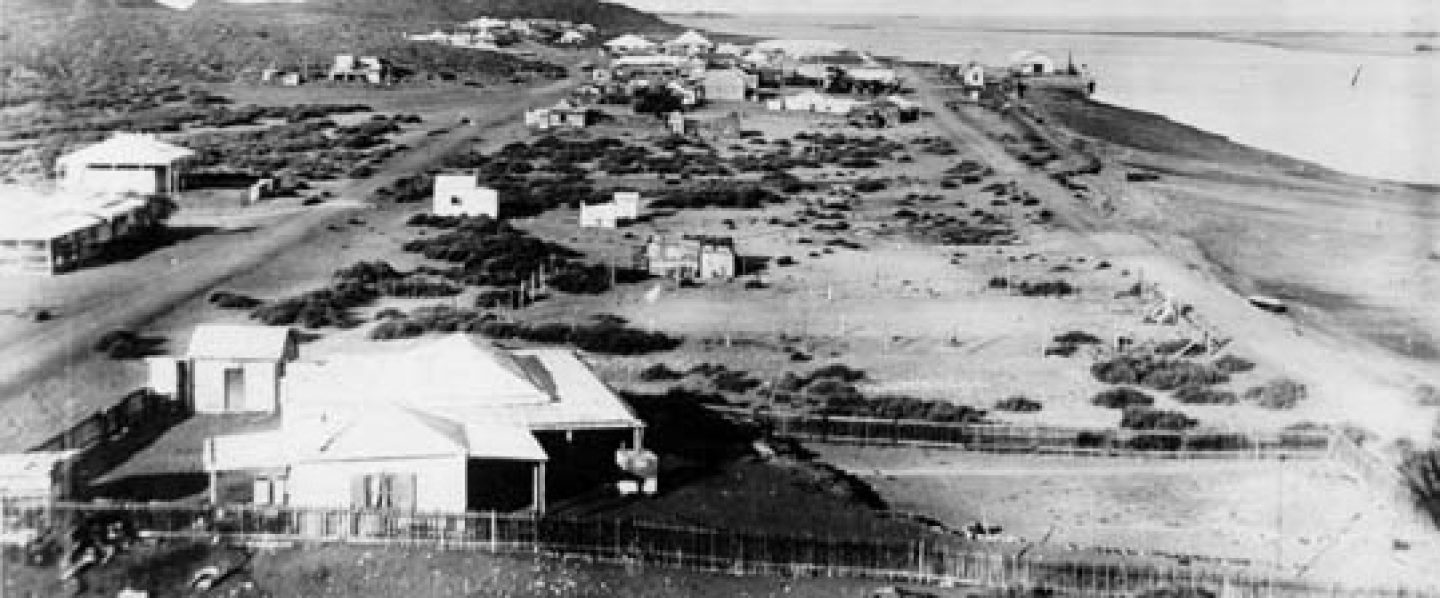
In the mid-19th century, the region we now know as Mundaring was a rugged expanse of “mundak,” or wild country, dominated by towering jarrah and wandoo forests,. It was a landscape defined by the rhythmic thud of sleeper cutters’ axes and the isolated camps of convict road parties who laboured to maintain the vital thoroughfares of the colony,. For the early settlers, these hills were a formidable barrier between the burgeoning capital of Perth and the agricultural promise of the Avon Valley. Along the main artery of travel, the York Road, law and order often felt as thin as the coastal mist, creating a perfect environment for those living outside the law.1
Christine Harris (2026)
The focal point of this narrative is a small stone structure situated near Manaring Lake at the junction of the Great Eastern and Great Southern Highways. Originally known as the Travellers Rest Inn, it was built around 1855 by Robert Doncon on “King Dick’s Road”, a route specifically financed by York settlers to bypass a more difficult government-surveyed track. By 1858, the inn had been purchased by Henry Horton and renamed Horton’s Half-Way House. Described by visitors as a “primitive sort of house,” its sitting room was famously furnished with great sofas that frequently served as makeshift beds for weary travellers.2
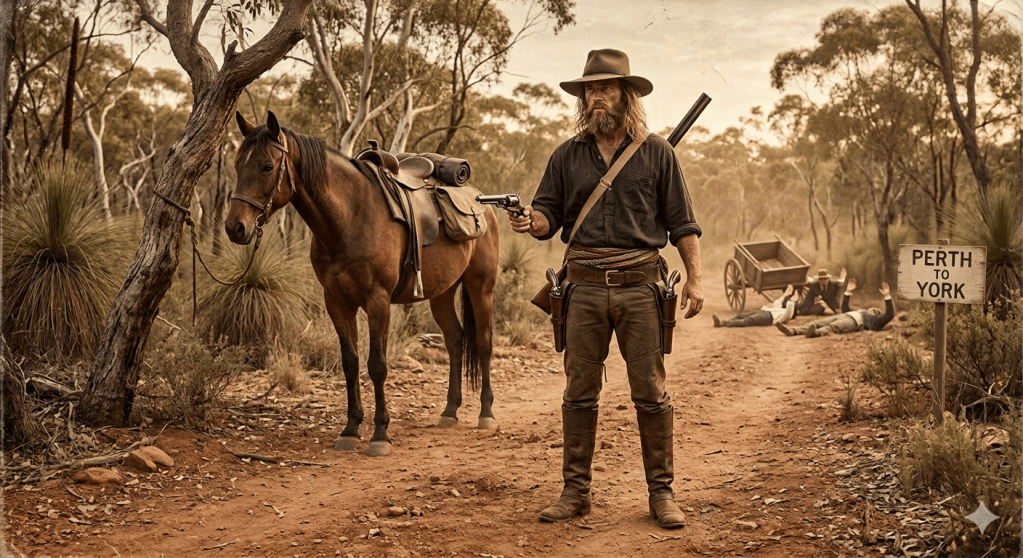
In November 1860, this humble outpost became the stage for a dramatic moment in Western Australian colonial history. James Lilly, an escaped bushranger, was at large in the district. In a time when the bush offered near-limitless sanctuary to fugitives, Lilly was a significant concern for the small, scattered populations of sawyers and pioneers. Bushrangers like Lilly represented a direct challenge to the safety of the mail routes and the security of isolated homesteads in the “high places” of the range.3
The capture of Lilly at Horton’s inn was a rare and decisive victory for colonial authorities. Drawn by the necessity of the crossroads or perhaps the rare prospect of shelter, the fugitive’s run ended at this remote stop. While the specific tactical details of the struggle are not extensively detailed in the historical record, it is confirmed that it was here that Lilly’s flight from justice was finally halted.4
Today, little remains of the site where this frontier drama unfolded. The advent of the Eastern Railway in 1884 bypassed the old York Road inns, stripping them of their economic purpose and social importance. Partially destroyed by bushfires in the 1920s and 1930s, the inn fell into a dilapidated state. What once stood as a vital haven for travellers and a site of high-stakes capture is now a collection of low stone walls, slowly deteriorating among the trees at the locality known as The Lakes. These ruins serve as a silent reminder of the days when James Lilly haunted the wild country of the Mundaring hills.5
Sources
- National Trust of Western Australia (n.d.) The Golden Pipeline: Mundaring. Retrieved 19 Mar 2026 from https://www.goldenpipeline.com.au/place/mundaring/ ↩︎
- Heritage Council of WA (2017). Travellers’ Inn Ruins. Retrieved 19 Mar 2026 from https://inherit.dplh.wa.gov.au/public/inventory/details/02f2be09-9790-45ec-99a6-2780f0b9e570 ↩︎
- ibid ↩︎
- ibid ↩︎
- ibid ↩︎
Further Reading
- FamilyHistoryWA (2025). James Farrell 2091. Retrieved 30 May 2026 from https://waconvicts.fhwa.org.au/g0/p84.htm#i2091

